
Cost Comparison of Interactive Projector Games Solutions
- Why immersive projection beats static displays for engagement
- Interaction and behavioral impact
- Cost vs outcome: value beyond price
- Standards and technology maturity
- Cost components and how to evaluate them
- Capital expenditure: hardware and software
- Installation and integration costs
- Operating expenses and maintenance
- Comparative cost table: typical solutions and 5-year TCO
- How to choose the right solution for your use case
- Use-case-driven sizing
- Software flexibility and content lifecycle
- Scalability and multi-site deployment
- Mantong Digital: manufacturer advantages and why it matters
- Who we are and what we provide
- Main product lines and technical capabilities
- Competitive differentiators
- Procurement checklist and practical tips
- Request for Proposal (RFP) essentials
- Pilot programs and acceptance criteria
- Warranty, support and content ownership
- Real-world examples and performance benchmarks
- Education and schools
- Museums and visitor attractions
- Retail and marketing activations
- FAQ
- 1. How much does an interactive projector game setup typically cost?
- 2. Are laser projectors worth the extra cost?
- 3. Should I choose off-the-shelf interactive games or custom development?
- 4. How do I measure ROI for interactive projection?
- 5. What are typical maintenance needs and costs?
- 6. Can I deploy interactive projector games outdoors?
- Contact and next steps
As someone who has designed, deployed and advised on interactive projection systems for over ten years, I want to lead with a concise summary that helps indexing and users find the core value quickly: interactive projector games combine projection, motion sensing and game software to create immersive, engaging experiences for education, museums, retail and events. The biggest cost drivers are projector type (lamp vs laser), interaction sensors (camera, LIDAR, infrared), custom software vs off-the-shelf games, installation complexity and long‑term maintenance. In this article I compare solution types, present verifiable cost ranges and total cost of ownership (TCO) considerations, and recommend procurement strategies based on real-world use cases.
Why immersive projection beats static displays for engagement
Interaction and behavioral impact
Interactive projector games are designed to provoke movement, collaboration and longer dwell time. Studies on interactive exhibits and play-based learning consistently show higher engagement and retention when visitors interact physically with content. Projection plus real-time tracking converts passive viewers into active participants; that’s why museums, family entertainment centers and retail brands invest in floor and wall projection to boost KPIs like time-on-site and conversion.
Cost vs outcome: value beyond price
When evaluating solutions I always compare not just acquisition cost but measurable outcomes: increased ticket sales, longer customer dwell time, improved learning outcomes, or advertising impressions. A slightly higher upfront cost can be more economical if it delivers 20–50% more engagement or repeat visits. That’s the essential shift from purchase price to ROI and TCO thinking.
Standards and technology maturity
Projection mapping and interactive projection build on mature projection technologies. For background on projection and mapping fundamentals see the Video projector and Projection mapping pages on Wikipedia (https://en.wikipedia.org/wiki/Video_projector, https://en.wikipedia.org/wiki/Projection_mapping).
Cost components and how to evaluate them
Capital expenditure: hardware and software
Hardware typically includes the projector, interaction sensors (cameras, IR modules, LIDAR, Kinect-style devices), mounts, media servers or PCs, and protective housings for public installations. Software can be off-the-shelf interactive games, a licensing fee for game libraries, or fully custom software development. When I price projects I itemize every element — projector lumen class, sensor type, PC GPU specs and software license terms — because small changes in any line item materially affect total cost.
Installation and integration costs
Installation covers site survey, custom mounts, projection surface preparation, cabling, power conditioning, and calibration. For large or permanent installations, integration labor can equal 20–40% of hardware costs. Outdoor or high-abuse environments require weatherproof housings and specialized mounting, further increasing installation cost.
Operating expenses and maintenance
Maintenance includes lamp replacements (for lamp-based projectors), filter cleaning, software updates and remote support. Laser projectors reduce lamp replacement costs and downtime but come at a higher purchase price. I always calculate 5-year TCO when advising clients because operating costs often exceed acquisition costs over typical lifecycles.
Comparative cost table: typical solutions and 5-year TCO
Below I present a practical cost comparison table I use with clients. All figures are ranges based on industry experience, vendor quotes and public pricing as of 2025; use these as planning estimates and request firm quotes for procurement. Warranty, installation complexity and location (country/labor rates) will shift totals.
| Solution Type | Typical Upfront Cost (USD) | Annual Ongoing Cost | 5-Year Estimated TCO | Best For |
|---|---|---|---|---|
| DIY / Consumer interactive projector setup | $800 – $2,500 (consumer projector + sensor + PC + software) | $100 – $300 (maintenance, occasional replacement) | $1,300 – $3,500 | Home, small classroom pilots |
| Commercial off-the-shelf interactive projector | $3,000 – $10,000 (commercial projector, bundled sensors/software) | $300 – $800 (support contracts, minor upkeep) | $4,500 – $14,000 | Small exhibits, retail pop-ups |
| Professional integrator installation | $10,000 – $60,000 (high-lumen laser projector, industrial sensors, custom content) | $1,000 – $5,000 (support SLA, content refresh) | $15,000 – $85,000 | Museums, permanent public installations |
| Direct-manufacturer custom solution (e.g., Mantong Digital) | $8,000 – $45,000 (custom hardware + tailored software + factory warranty) | $500 – $2,500 (factory support, on-demand updates) | $11,500 – $57,500 | Scalable deployments, multi-site rollouts |
Notes: lamp-based projectors typically sit at lower upfront costs but higher lamp replacement schedules (every 2,000–5,000 hours); laser projectors cost more but reduce replacements and downtime. These general ranges should be validated against local labor and shipping costs.
How to choose the right solution for your use case
Use-case-driven sizing
Start with your objective: Are you aiming for transient engagement (trade show booth) or a permanent attraction (museum gallery)? For temporary use, rental or consumer-grade kits can suffice. For high-traffic public venues I recommend industrial-grade laser projectors, IP-rated housings and factory-backed warranties.
Software flexibility and content lifecycle
Interactive games often require periodic content refresh to avoid novelty fatigue. Off-the-shelf libraries are cost-effective but can limit branding and analytics. Custom game development increases initial cost but yields a differentiated experience and better analytics integration. I advise clients to request a content roadmap and source code/maintenance terms as part of procurement.
Scalability and multi-site deployment
If you plan to deploy interactive projector games across multiple locations, working directly with a manufacturer or an OEM-capable partner can lower per-site cost through volume discounts and standardized kits. Factory direct suppliers can also centralize software updates and analytics collection.
Mantong Digital: manufacturer advantages and why it matters
Who we are and what we provide
Mantong Digital is a one-stop interactive projection solution provider and direct manufacturer based in Guangzhou, China, with over 10 years of industry experience. We are dedicated to providing innovative, flexible and cost-effective projection solutions, offering both hardware and software to meet various needs. Our website: https://www.mtprojection.com/.
Main product lines and technical capabilities
At ManTong, we specialize in providing customized solutions across immersive projection, interactive floor projection, interactive wall projection, immersive rooms, 3D projection, interactive projection games, projection shows, and interactive projection mapping. We design and manufacture projectors, sensors, media servers and the interactive game software that powers installations. Because we control both hardware and software, we can optimize latency, calibration routines and content pipelines for better reliability and lower TCO.
Competitive differentiators
From my experience working with integrators and end clients, the advantages of partnering with a manufacturer like Mantong include:
- Direct pricing and volume discounts for multi-site rollouts.
- Integrated warranty and support — fewer third‑party handoffs reduce resolution times.
- Faster customization: factory control over firmware and software lets us iterate quickly for bespoke interactive games and mapping projects.
- Proven product lines for both indoor and outdoor environments with IP-rated housings and robust calibration tools.
We are now looking for business partnerships worldwide. Our vision is to become the world's leading interactive projection manufacturer.
Procurement checklist and practical tips
Request for Proposal (RFP) essentials
When you issue an RFP, include: expected audience size and daily footfall, ambient light conditions, mounting constraints, desired lifetime and SLA expectations, analytics/telemetry requirements, and sample content or branding guidelines. Ask bidders to provide 5-year TCO, not just capital costs.
Pilot programs and acceptance criteria
I always recommend a short pilot phase (2–8 weeks) with clear acceptance criteria: latency <100 ms for motion response in most interactive games, uptime >99% for permanent attractions, and content refresh capabilities without full redeploy. Pilots let you validate user behavior assumptions and identify unforeseen maintenance needs.
Warranty, support and content ownership
Clarify who owns the source code for custom games and whether content will be portable. Ensure the warranty covers projector light source (lamp or laser), sensors and software updates. Ask vendors for remote support tools and options for on-site engineer response times.
Real-world examples and performance benchmarks
Education and schools
For classrooms, I favor compact laser projectors coupled with camera-based interaction. These reduce downtime and maintenance while enabling learning games. Typical per-classroom TCO is lower than fully custom museum installations and ROI can often be shown through improved learning outcomes and class participation metrics.
Museums and visitor attractions
Museums require durable hardware and bespoke content. We often recommend industrial projectors, redundant media servers and remote monitoring. Investments in calibration systems and content management save money over time through easier content updates and consistent exhibit performance.
Retail and marketing activations
Retail activations prioritize short-term impact and rapid deployment. Off-the-shelf interactive projector units or rental solutions work well. If a campaign runs across multiple outlets, consider a unified software backend to collect interaction data and marketing analytics.
FAQ
1. How much does an interactive projector game setup typically cost?
As shown in the cost table, costs vary widely: consumer DIY kits can be <$3k, while professional installations run from $10k to $60k or more. Expect to evaluate 5-year TCO rather than upfront cost alone.
2. Are laser projectors worth the extra cost?
Yes, for high-usage, public installations laser projectors reduce maintenance (no lamp replacements) and offer consistent color/brightness over time. The higher upfront cost often pays off in reduced downtime and lower operating expense.
3. Should I choose off-the-shelf interactive games or custom development?
Off-the-shelf solutions are faster and cheaper initially, but custom development yields stronger branding, analytics and unique visitor experiences. Choose based on budget, differentiation needs and content refresh plans.
4. How do I measure ROI for interactive projection?
Common metrics include dwell time, repeat visits, ticket sales lift, retail conversion and direct revenue from ticketed immersive experiences. Instrument installations with analytics to measure interactions and compare against baseline KPIs.
5. What are typical maintenance needs and costs?
Maintenance includes cleaning, filter changes, software updates and occasional hardware replacement. Lamp replacement schedules and costs are a significant variable; laser projectors lower recurring costs. Budget annual maintenance between $300 and $2,500 depending on scale and environment.
6. Can I deploy interactive projector games outdoors?
Yes, with IP-rated housings, high-lumen projectors and weatherproof sensors. Outdoor installations require special consideration for ambient light and vandalism protection; costs are higher due to protective enclosures and specialized mounts.
Contact and next steps
If you’re evaluating interactive projector games for your venue or campaign, I encourage you to run a short pilot to validate assumptions and quantify engagement. Mantong Digital offers end-to-end solutions from hardware manufacture to custom software and global partnership options. Visit our website to view product lines and case studies: https://www.mtprojection.com/.
For a consultation or to request a quote, contact Mantong Digital directly through the website. We provide tailored proposals, pilot programs and global deployment support. Let’s discuss how to optimize cost and maximize engagement for your project.
Top 10 interactive projector Manufacturers and Supplier Brands in 2026
The latest trends for interactive floor system in 2026 | Mantong Ultimate Insights
Compare Interactive Floor Games vs. Traditional Play Areas
Evaluating Interactive Floor Game Hardware and Sensors
One-Stop Projection Solution Provider Since 2011
What about the wall/floor material for the projection?
It’s recommended to choose a light-colored material with minimal reflectivity—pure white or light grey works best. the
common material is cement & plaster board
For optimal projection results, the surface should be free of any patterns or textures, as the projector will display content
directly onto it.
There are no specific material requirements; you may use any commonly available material in your local market, as long as it
meets the above conditions.
What information do you need to know before making the proposal/solution?
We know that everyone wants to know the price, but the price of our products is determined by many factors since most of our products are custom, so no ready price list. In order to fast understand what you need, can you send us an inquiry like this?
For example: I am really interested in your immersive projection products, we are a company in the USA and want to install some in my restaurant. It is about 50 meters long, and 5m in width. Projection size you can decide but the length should be not less than 20 meters. We want some content about SeaWorld because our place is all about the sea. Thank you.
What's the application of Immersive projection ?
It can be used in various venues, such as art exhibition, entertainment venues, educational institution, Wedding hall /Banquet/Bar,Yoga Studio and so on. It often involves advanced projection techniques, multimedia content, and interactive elements to engage and captivate the audience's senses.
Are you trader or manufacturer ?
We are direct manufacturer who specialize in providing one-stop solution for different outdoor & indoor projection project with our stable software and qualified projectors
What's Immersive Projection ?
Immersive projection refers to a technology that creates a captivating and all-encompassing visual experience for viewers by projecting images or videos onto large surfaces, such as walls, floors, or even entire rooms. This technology aims to immerse the audience in a simulated environment, blurring the boundaries between the physical and virtual worlds.
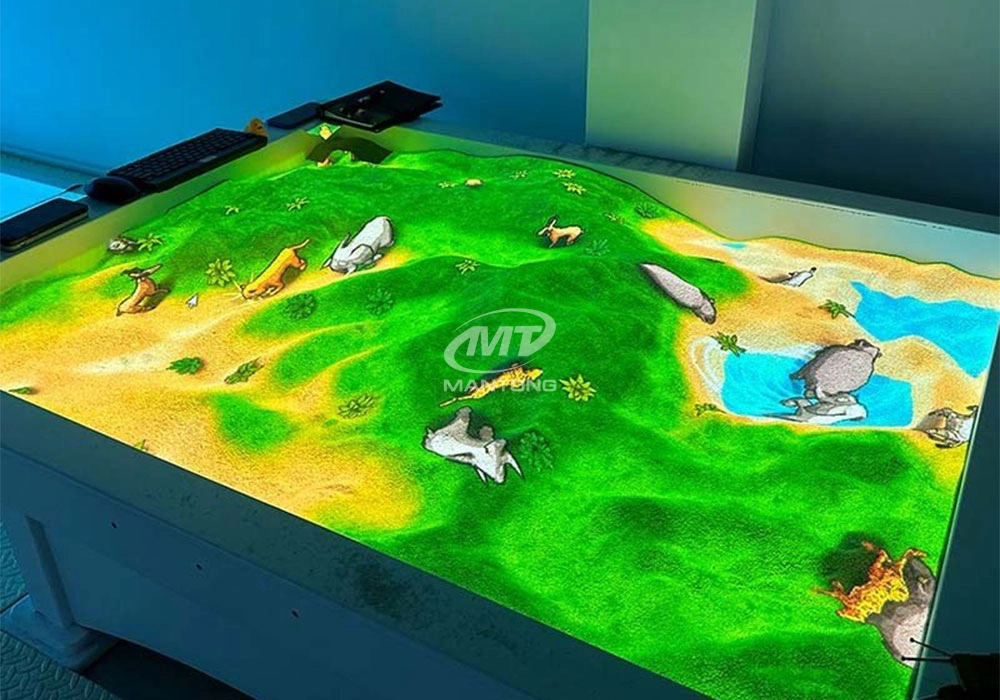
Interactive Sandbox Projection Mapping Games For Kids Play Park
Bring imagination to life with interactive sandbox projection mapping games designed for kids’ play parks. Using cutting-edge projection technology and real-time motion sensing, children can dig, build, and explore virtual worlds directly in the sand. Educational, engaging, and endlessly fun — it’s the perfect blend of play and learning.
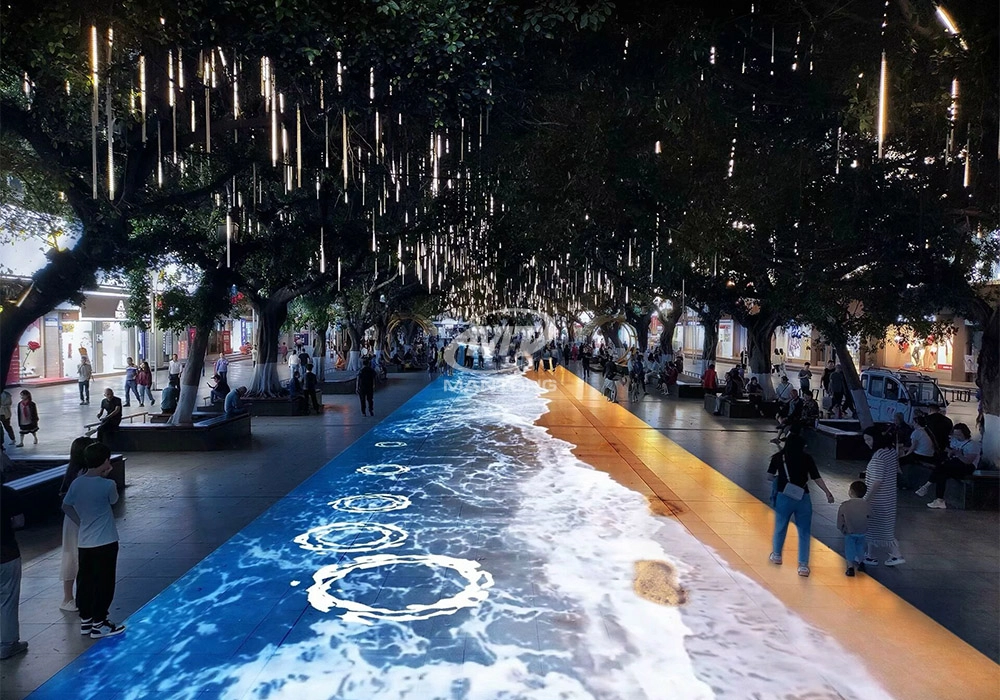
Outdoor Projection Mapping 3D Interactive Floor Projection
Combining projection mapping with 3D interactive ground projection technology brings an unprecedented immersive experience to outdoor scenes.
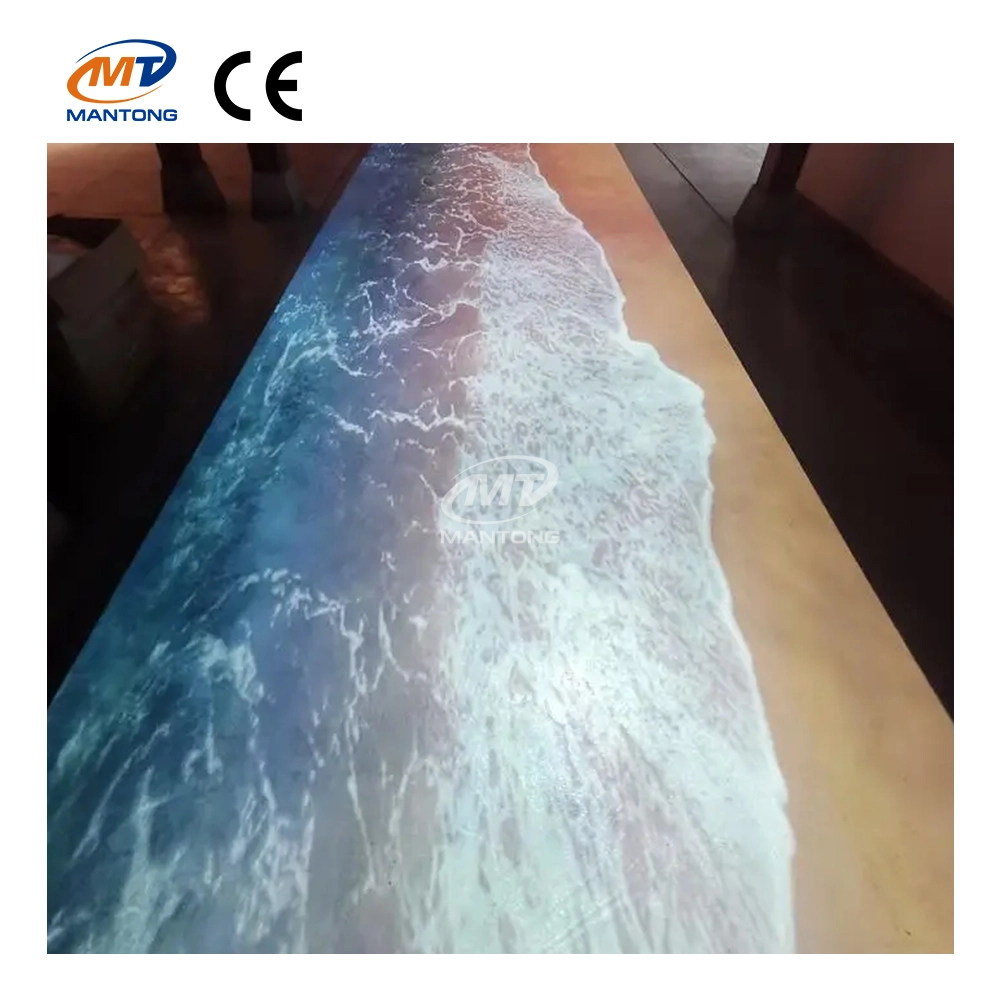
Indoor Interactive Floor Projector System - Customized Design & Installation Support
Indoor interactive floor projections display dynamic themed videos on the floor, commonly used in venues aiming to enhance brand influence or attract foot traffic, such as restaurants, hotel corridors, and brand car retail stores.
By using projectors and compatible software, the interactive content is projected onto the floor, encouraging engagement between people and the projected visuals. A single 5500-lumen indoor floor projector can cover an area of 5 m × 3 m. Typically, each project will use at least 3 units to ensure broad coverage and optimal visual effects.
We also offer customized design and installation support to enhance the interactive experience for your venue.
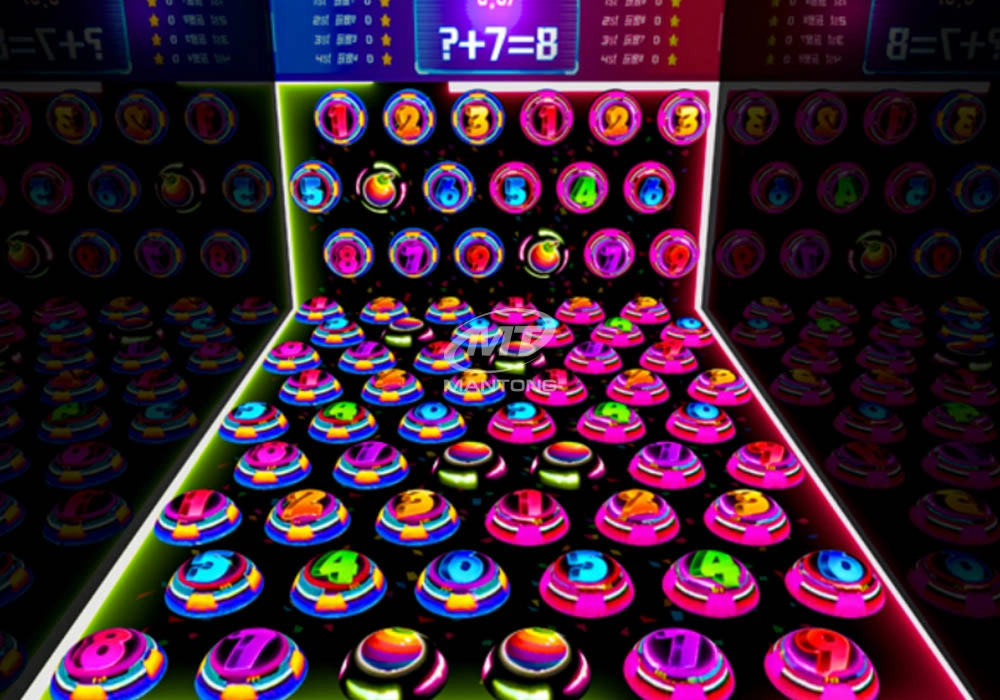
Amusement Rapidly Rotating Bouncing Sphere Interactive Wall Floor Projection Sports Games
Rapidly Rotating Bouncing Sphere is an interactive space where participants jump on rotating spheres. As they step on it, the spheres surface will show special interactivity
Jumping on spheres of the same color in succession causes them to pop, releasing light particles. The more consecutive jumps, the greater the reward—caterpillars appear, and eventually, all spheres of that color burst, filling the space with light and even more caterpillars.

Kaida Business Center, Shixin Road, Panyu District,Guangzhou City, Guangdong Province, China.
ManTong
ManTong
ManTong