
Interactive Sandbox Projection Mapping Games for Kids — Immersive Play for Parks
- Design Principles for Children’s Interactive Play Spaces
- Child-centered interactivity and safety
- STEAM-led engagement and learning outcomes
- Durability and maintainability in public settings
- What the Interactive Sandbox Projection Offers
- Immersive projection mapping and AR sandbox experiences
- Multi-game library and customization
- Multi-user, social play mechanics
- Technical Specs, Integration & Installation
- Hardware stack: projector, depth camera, and controller
- Software architecture and content management
- Site planning, power and connectivity
- Benefits for Parks, Parents and Educators
- Increase dwell time and revenue
- Measurable educational impact
- Accessible and inclusive play
- Why Choose Mantong Digital
- Manufacturer confidence & turnkey delivery
- Proven integration with projection mapping standards
- Customization and global partnership opportunities
- Frequently Asked Questions (FAQ)
- Q: Is the interactive sandbox suitable for outdoor parks?
- Q: What age range benefits most from the sandbox?
- Q: How much space is required?
- Q: Can content be localized or branded?
- Q: What maintenance is needed?
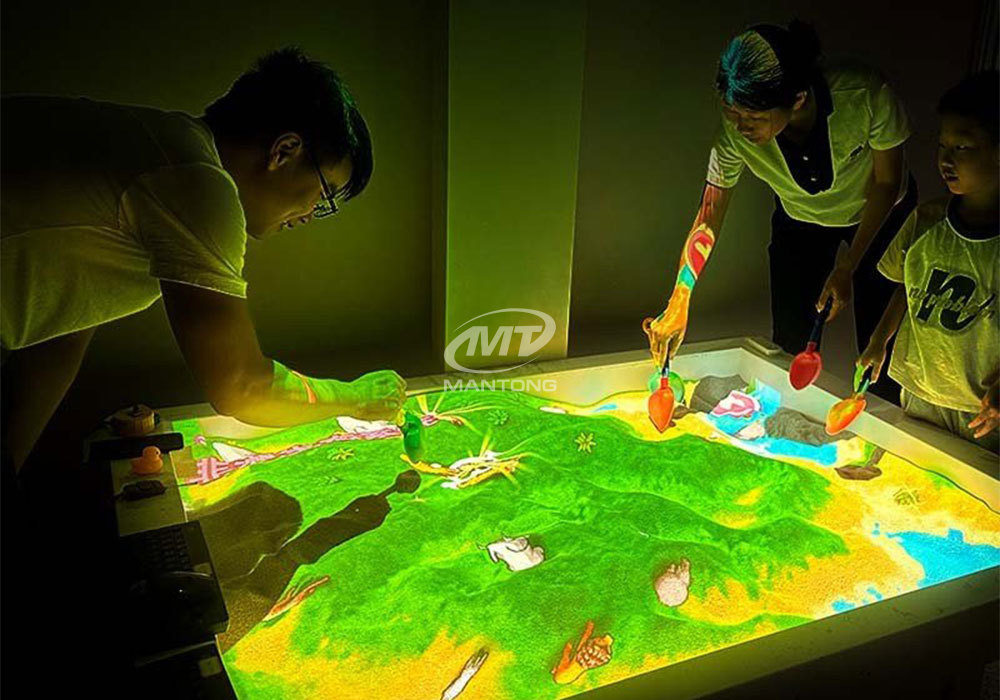
Mantong Digital, a Guangzhou-based interactive projection manufacturer, offers an interactive sandbox projection mapping solution designed for kids’ play parks and public play spaces. This turnkey product combines depth-sensing hardware, short-throw projection, and custom software to create dynamic topography-based games that increase dwell time, support STEAM learning and adapt to indoor or sheltered outdoor installations. Recommended for park operators, museum planners and commercial playground integrators looking for reliable, customizable projection experiences in Asia and worldwide, this solution is backed by Mantong’s 10+ years of experience and full manufacturer support.
Design Principles for Children’s Interactive Play Spaces
Child-centered interactivity and safety
The design of an interactive sandbox must prioritize safe, intuitive interaction. Mantong’s solution uses non-contact depth sensors and projected visuals that respond to sand topography in real-time, minimizing moving parts and reducing physical hazards. This approach supports unrestricted, free play while meeting operator safety requirements for family play areas.
STEAM-led engagement and learning outcomes
Interactive sand experiences combine tactile exploration with visual feedback that reinforces concepts like topography, water flow and cause-and-effect—key elements of STEAM education. Well-designed games encourage cooperation, problem-solving and creativity, making the sandbox a valuable educational attraction for parks, museums and learning centers.
Durability and maintainability in public settings
Commercial playgrounds demand hardware that withstands heavy use and varied environmental conditions. Mantong offers ruggedized projector mounts, configurable housings and service plans so the interactive sandbox remains reliable with predictable maintenance windows—reducing downtime and lifecycle cost for operators.
What the Interactive Sandbox Projection Offers
Immersive projection mapping and AR sandbox experiences
The core experience is a live projection that overlays simulated water, vegetation, lava and pathways on shifting sand surfaces. This is powered by depth-sensing algorithms and real-time projection mapping, similar in concept to the Augmented Reality Sandbox popularized in research and museums (Augmented Reality Sandbox — Wikipedia). Users shape the sand and instantly see the environment respond, which keeps children engaged and encourages repeated visits.
Multi-game library and customization
Mantong’s software supports a suite of games—terrain sculpting, treasure hunts, simulated waterflow, biodiversity gardens and cooperative challenges. Operators can choose pre-built scenarios or commission custom content to fit brand, seasonal events or educational themes. The platform is multilingual and can be tailored to local curriculum or cultural motifs.
Multi-user, social play mechanics
The sandbox supports simultaneous multi-user interaction, allowing groups of children to build, solve puzzles and play competitively or cooperatively. This social dimension enhances visitor satisfaction and increases program value for family-oriented attractions.
Technical Specs, Integration & Installation
Hardware stack: projector, depth camera, and controller
Typical systems include a short-throw projector, a depth sensor (similar technology to consumer devices such as Microsoft Kinect—see Kinect — Wikipedia) and an industrial controller. Mantong supplies hardware pre-configured for optimal alignment and calibration, reducing field installation time. Options include weatherproof housings for semi-outdoor installations and anti-glare projection surfaces to ensure vivid images under ambient lighting.
Software architecture and content management
The sandbox runs on Mantong’s interactive mapping engine, which handles real-time depth processing, projection mapping and game logic. A content management interface allows operators to schedule experiences, switch game modes remotely and collect anonymized usage metrics to evaluate engagement and ROI. Integration with park management systems or ticketing platforms is supported for event-driven activation.
Site planning, power and connectivity
Proper site planning ensures optimal sightlines, projector mounting and safety zoning. Mantong provides site surveys and CAD placement recommendations to minimize shadows and maximize interaction area. Systems can operate over wired LAN or secure Wi‑Fi, and options exist for UPS-backed power to protect against outages.
Benefits for Parks, Parents and Educators
Increase dwell time and revenue
Interactive attractions that encourage engagement typically increase average visitor stay and spend. The sandbox’s replayability and multi-age appeal make it an effective upsell for family passholders, birthday packages and seasonal events. For commercial operators, measurable increases in footfall and concession sales can justify installation costs.
Measurable educational impact
By combining kinesthetic play with visual feedback, the sandbox supports cognitive development related to spatial reasoning, cause-effect learning and collaborative problem solving. This makes it attractive to educators and institutions seeking evidence-based interactive exhibits.
Accessible and inclusive play
Because the experience relies on visual and tactile engagement rather than fine motor skills, it can be adapted for children of varied abilities. Adjustable projection contrast, audio cues and staff-led modes help make the sandbox accessible and inclusive.
Why Choose Mantong Digital
Manufacturer confidence & turnkey delivery
Mantong Digital is a one-stop interactive projection solution provider and direct manufacturer based in Guangzhou, China, with over a decade of experience. Choosing a manufacturer-partner reduces lead times, ensures component compatibility and simplifies warranty and service contracts. Mantong offers full project lifecycle support: concept, content, installation and after-sales service.
Proven integration with projection mapping standards
Projection mapping and interactive projection require precise calibration and industry best practices. Mantong adheres to contemporary projection mapping techniques and can reference widely accepted methods such as those summarized in industry resources (Projection mapping — Wikipedia), ensuring predictable results on complex surfaces.
Customization and global partnership opportunities
Mantong’s modular hardware and flexible software license models allow for cost-effective scaling and content localization. The company is actively seeking global business partnerships to localize deployments and co-develop experiences for parks and attractions worldwide.
Frequently Asked Questions (FAQ)
Q: Is the interactive sandbox suitable for outdoor parks?
A: Yes—the system can be configured for sheltered outdoor areas with weatherproof housings and high-lumen projectors. Fully exposed installations are not recommended without protective enclosures.
Q: What age range benefits most from the sandbox?
A: The sandbox is ideal for children aged 3–12, but its interactive and collaborative games can be enjoyed by older visitors and families as well.
Q: How much space is required?
A: Typical installations require a footprint of 2.5–4 meters square for a compact unit, with larger setups available for parks seeking more expansive play areas. Mantong provides site planning guidance to optimize layout.
Q: Can content be localized or branded?
A: Yes. Mantong provides content customization—language localization, branded themes and curriculum-aligned educational modules are all supported.
Q: What maintenance is needed?
A: Regular cleaning of the projection surface, routine software updates and periodic sensor recalibration are standard. Mantong offers maintenance packages and remote diagnostics to minimize downtime.
Interested in bringing interactive, revenue-driving play to your park? Contact Mantong Digital for a tailored proposal and demo. Visit our product page for full details and to request a quote: interactive sandbox projection mapping. For partnerships and installations, reach out to our team at Mantong Digital—your turnkey partner for immersive projection experiences.
References and further reading: Augmented Reality Sandbox — Wikipedia; Kinect — Wikipedia; Projection mapping — Wikipedia.
Buyer's Guide: Choosing an Interactive Projector in 2025
Case Studies: Successful Interactive Floor Game Installations
Best Interactive Projector Games: The New Frontier in Classroom Engagement manufacturers and supplier brands
Safety and Compliance for Interactive Floor Projection Installations
One-Stop Projection Solution Provider Since 2011
What's Immersive Projection ?
Immersive projection refers to a technology that creates a captivating and all-encompassing visual experience for viewers by projecting images or videos onto large surfaces, such as walls, floors, or even entire rooms. This technology aims to immerse the audience in a simulated environment, blurring the boundaries between the physical and virtual worlds.
What information do you need to know before making the proposal/solution?
We know that everyone wants to know the price, but the price of our products is determined by many factors since most of our products are custom, so no ready price list. In order to fast understand what you need, can you send us an inquiry like this?
For example: I am really interested in your immersive projection products, we are a company in the USA and want to install some in my restaurant. It is about 50 meters long, and 5m in width. Projection size you can decide but the length should be not less than 20 meters. We want some content about SeaWorld because our place is all about the sea. Thank you.
What about the wall/floor material for the projection?
It’s recommended to choose a light-colored material with minimal reflectivity—pure white or light grey works best. the
common material is cement & plaster board
For optimal projection results, the surface should be free of any patterns or textures, as the projector will display content
directly onto it.
There are no specific material requirements; you may use any commonly available material in your local market, as long as it
meets the above conditions.
Are you trader or manufacturer ?
We are direct manufacturer who specialize in providing one-stop solution for different outdoor & indoor projection project with our stable software and qualified projectors
How to Write an Interactive-Effect Video Customisation Script ?
① Project Background: Briefly introduce the context in which this interactive scene will be used (e.g., exhibition, museum,
event space, children's area). Example: This scene is part of the “Underwater World” zone in a children's science museum,
designed to be engaging and exploratory.
②Visual Style / Atmosphere: What kind of visual mood are you aiming for? Please describe the color scheme, style, and any
references. it should focus solely on describing the visual aspects of the scene, supported by relevant charts or reference
images.
③ Interaction Points Overview:List each interactive hotspot along with the effect you'd like to trigger when the user
touches or clicks the area. example: when player touch the clownfish, it will swims away with bubble trail (animation effect)
and produce the bubble sound ( sound effect requirement )
④ Static Visual Reference:including but not limited to background image/video, a list of major visual elements (e.g., coral,
rocks, seaweed, fish), which elements should be interactive?
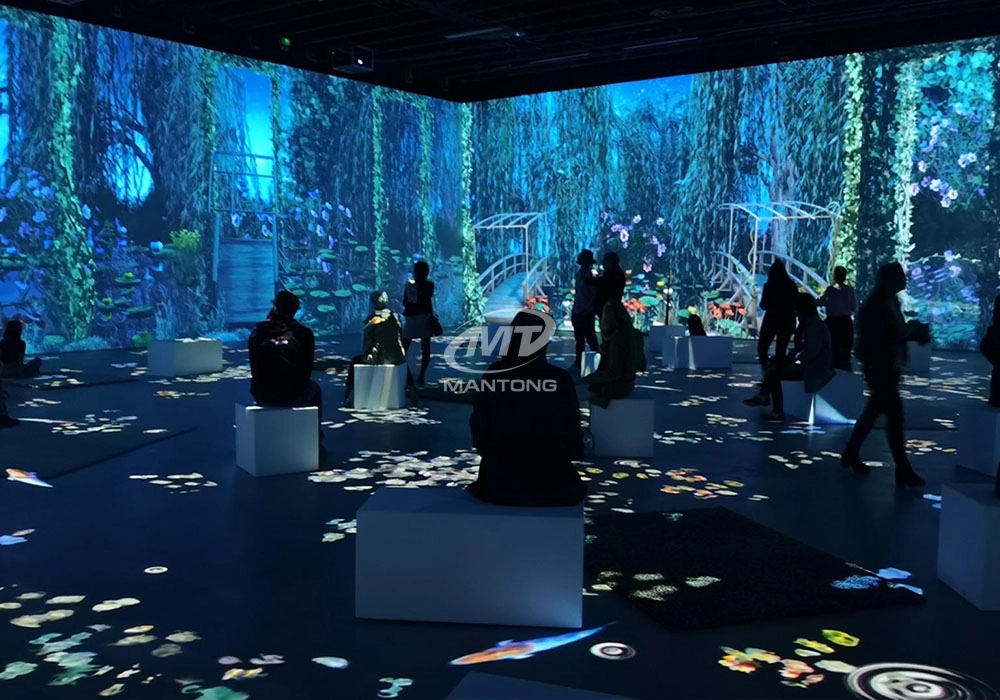
Mantong 6500LM High-Lumen Projector for Large-Scale Immersive Room Projection
Transform any space with Mantong's immersive projection mapping systems. Our high-lumen projectors (up to 6500 LM) and custom software create captivating interactive experiences for floors and walls. Ideal for museums, events, retail, and hospitality. Each kit includes professional ceiling mounting and 80+ pre-loaded video contents and is backed by a 12-month warranty and CE certification. We offer full customization and support to bring your vision to life.
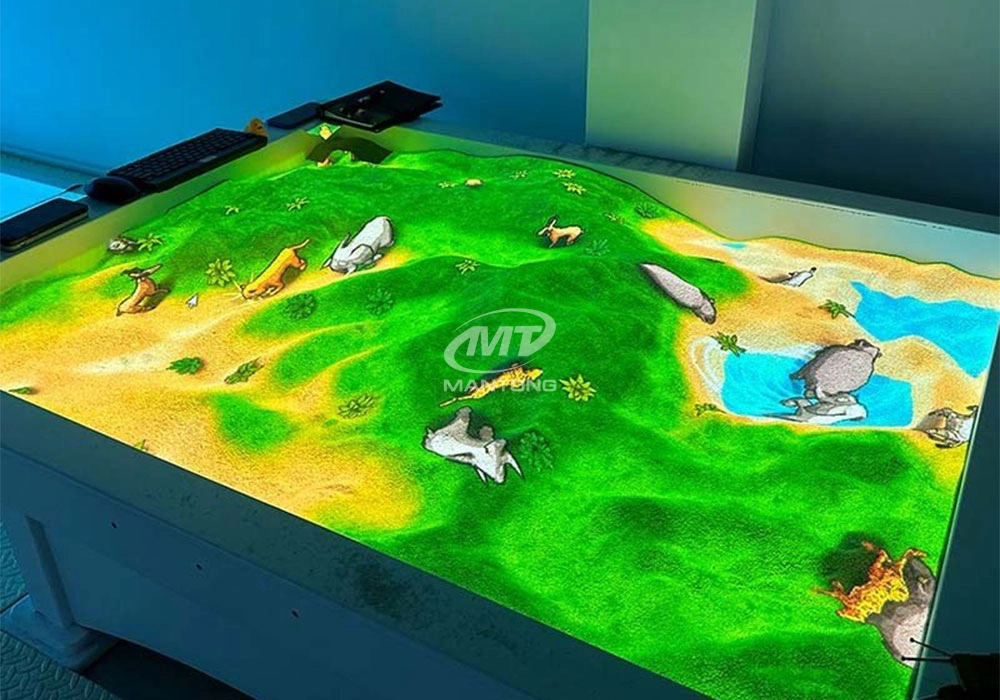
Interactive Sandbox Projection Mapping Games For Kids Play Park
Bring imagination to life with interactive sandbox projection mapping games designed for kids’ play parks. Using cutting-edge projection technology and real-time motion sensing, children can dig, build, and explore virtual worlds directly in the sand. Educational, engaging, and endlessly fun — it’s the perfect blend of play and learning.
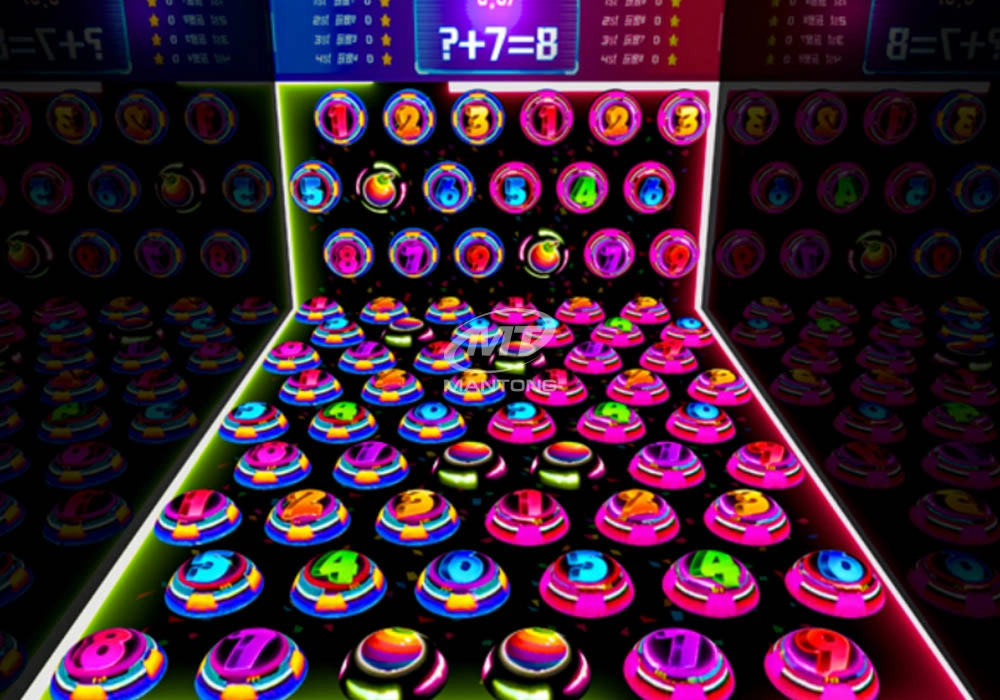
Amusement Rapidly Rotating Bouncing Sphere Interactive Wall Floor Projection Sports Games
Rapidly Rotating Bouncing Sphere is an interactive space where participants jump on rotating spheres. As they step on it, the spheres surface will show special interactivity
Jumping on spheres of the same color in succession causes them to pop, releasing light particles. The more consecutive jumps, the greater the reward—caterpillars appear, and eventually, all spheres of that color burst, filling the space with light and even more caterpillars.
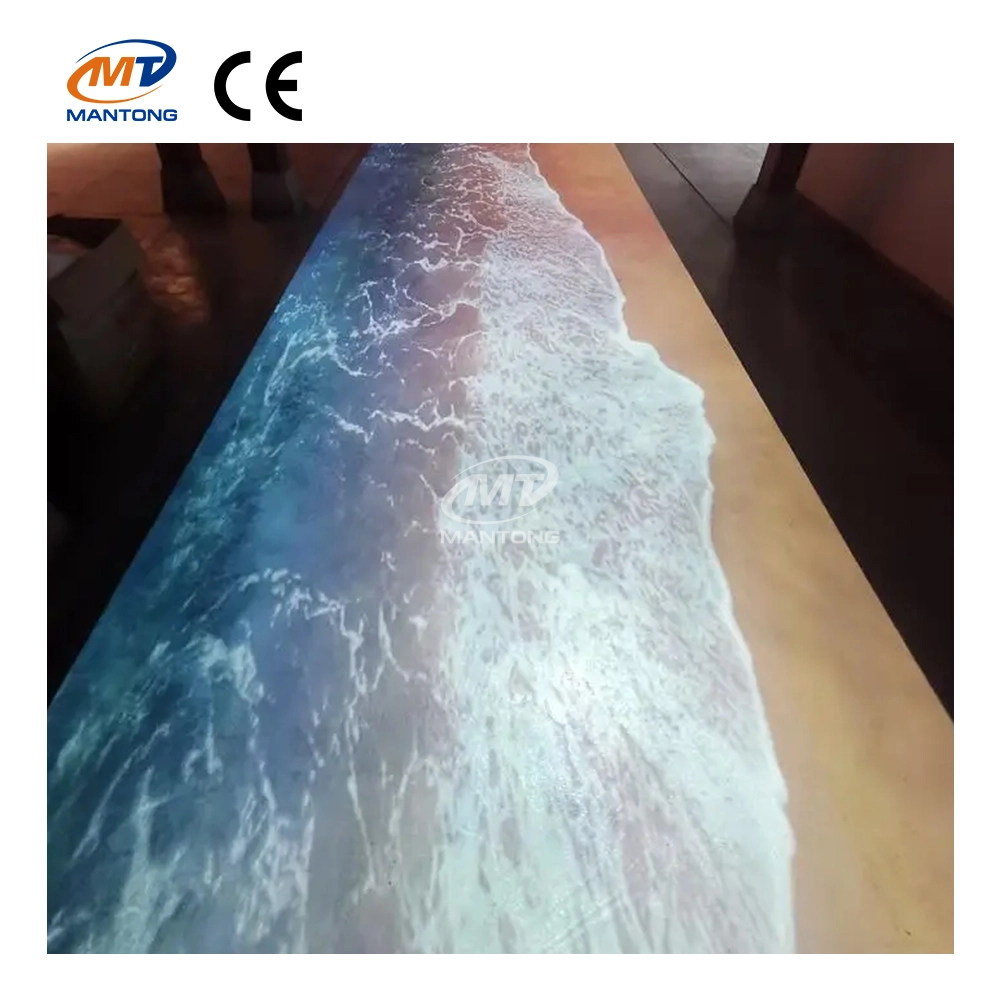
Indoor Interactive Floor Projector System - Customized Design & Installation Support
Indoor interactive floor projections display dynamic themed videos on the floor, commonly used in venues aiming to enhance brand influence or attract foot traffic, such as restaurants, hotel corridors, and brand car retail stores.
By using projectors and compatible software, the interactive content is projected onto the floor, encouraging engagement between people and the projected visuals. A single 5500-lumen indoor floor projector can cover an area of 5 m × 3 m. Typically, each project will use at least 3 units to ensure broad coverage and optimal visual effects.
We also offer customized design and installation support to enhance the interactive experience for your venue.

Kaida Business Center, Shixin Road, Panyu District,Guangzhou City, Guangdong Province, China.
ManTong
ManTong
ManTong