
Licensing and Content Rights for Interactive Projector Games
- Why licensing matters for interactive projection experiences
- Commercial and legal exposure in interactive projector games
- Business value of clear rights and licensing models
- Authoritative frameworks to understand
- Types of content rights and license models
- Copyrighted assets: music, video, 3D models and artwork
- Software licenses: proprietary vs open source
- Comparison table: common license types and use-cases
- Managing third-party content and user-generated content (UGC)
- Licensing third-party IP (music, film clips, franchises)
- User-generated content: consent and release forms
- Technical tools to reduce legal risk
- Practical steps for compliance, contracting and distribution
- Contract clauses I recommend
- International deployment and territorial issues
- Insurance, escrow and dispute mitigation
- Mantong Digital: how a manufacturing partner can help with compliant deployments
- Who we are and what we deliver
- How Mantong supports licensing and rights management
- Competitive strengths and credentials
- Checklist and best-practice playbook (implementation-ready)
- Pre-production checklist
- Deployment checklist
- Post-deployment governance
- FAQs
- 1. Do I need a license to show an interactive projector game in a public space?
- 2. Can I use Creative Commons assets in commercial interactive projector games?
- 3. How do I handle music licensing for projection mapping shows?
- 4. What if users upload content that infringes third-party rights?
- 5. Are open-source engines safe to use for commercial installations?
- 6. How long should I license third-party content?
- Closing and contact
I’m an industry consultant with extensive experience in interactive projection and interactive projector games. In this article I summarize how developers, venue operators and content licensors can navigate copyright, licensing and distribution for immersive projection experiences. I focus on actionable steps: choosing the right licenses for assets and software, structuring commercial agreements, handling user-generated content (UGC), complying with jurisdictional rules, and practical technologies that reduce infringement risk while preserving creative flexibility.
Why licensing matters for interactive projection experiences
Commercial and legal exposure in interactive projector games
Interactive projector games combine software, audiovisual assets, trademarks, and sometimes real-time captured user content. Each element can carry distinct rights. Because installations often occur in public or commercial venues (museums, retail, events), improper licensing can trigger claims for copyright infringement, trademark misuse, or breach of performer rights. The economic stakes are real: claims can lead to takedown orders, statutory damages, or loss of revenue from product recalls.
Business value of clear rights and licensing models
From a commercial perspective, clear licensing enables predictable revenue, broader distribution, and partnerships with content owners (studios, music publishers). A robust rights strategy makes it easier to scale interactive projector games across regions and to license bundles (hardware + software + content) to end customers while minimizing friction.
Authoritative frameworks to understand
Start with international and national frameworks: the WIPO Berne Convention for copyright basics, the U.S. Copyright Office / DMCA for takedown and safe harbor procedures, and practical fair use guidance such as Stanford’s Fair Use resources (Stanford Fair Use) to evaluate risky uses.
Types of content rights and license models
Copyrighted assets: music, video, 3D models and artwork
Most interactive projector games rely on audiovisual content that is copyrighted. For each asset you must determine whether you need a synchronization license (for music used with visuals), a master use license, or a mechanical/composition license when music is reproduced. For 3D models and artwork, obtain model licenses covering commercial display and derivative works.
Software licenses: proprietary vs open source
Software components in interactive projector games (game engines, middleware, sensor drivers) use varying licenses. Open source like those listed by the Open Source Initiative can reduce costs but may impose copyleft obligations that affect distribution. Proprietary SDKs require written terms that permit commercial deployment on embedded devices or kiosks.
Comparison table: common license types and use-cases
| License Type | Typical Use-Case | Pros | Cons |
|---|---|---|---|
| Exclusive (rights-managed) | Flagship installations, custom content | Monetary High Quality, competitive advantage | Higher cost, limited reuse |
| Non-exclusive / Royalty-free | Standard game assets, portable games | Lower cost, flexible reuse | No exclusivity; potential content saturation |
| Creative Commons (CC BY/CC BY-NC) | Educational or community projects | Simple attribution, encourages sharing | Restrictions (non-commercial/derivatives) may block commercial use |
| Open-source (permissive vs copyleft) | Engine components, tooling | Lower cost, community contributions | Copyleft may require source disclosure |
For Creative Commons variants see Creative Commons.
Managing third-party content and user-generated content (UGC)
Licensing third-party IP (music, film clips, franchises)
When you license commercial music or franchise characters, negotiate clear scopes: territory, duration, media (on-premise, online streaming), and sublicensing rights. For interactive projector games used at events, ensure public performance rights are included (often handled by PROs like ASCAP/BMI in the U.S., PRS in the UK). When in doubt, require written confirmation from rights holders.
User-generated content: consent and release forms
Many interactive projector games capture participant expressions or allow content uploads. You should implement explicit consent and release mechanisms: opt-in agreements, age gating, and terms that grant you (and your clients) a license to display, modify and archive UGC. For minors, require parental consent. Keep records of consent to defend against subsequent claims.
Technical tools to reduce legal risk
Use automated asset management systems and rights databases to track licenses. Embed metadata into assets (creator, license, expiry). For UGC, implement moderation workflows and quick takedown processes. For music, content ID systems can detect unlicensed tracks before deployment.
Practical steps for compliance, contracting and distribution
Contract clauses I recommend
In my contracts for interactive projector games I commonly include: representations and warranties of right ownership, indemnity provisions for IP infringement, clear delivery and acceptance criteria, and termination rights if legal issues arise. Also define who is responsible for obtaining public performance licenses in venues.
International deployment and territorial issues
Copyright and moral rights vary by country. When deploying interactive projector games globally, secure worldwide or country-specific rights depending on your expansion plan. Be mindful of moral rights (droit moral) that may prevent certain modifications to authors’ works in jurisdictions like France.
Insurance, escrow and dispute mitigation
Consider IP infringement insurance for large-scale deployments. For critical software, use code escrow to protect clients while preserving your IP. Establish escalation procedures and jurisdiction clauses to reduce litigation costs.
Mantong Digital: how a manufacturing partner can help with compliant deployments
Who we are and what we deliver
Mantong Digital is a one-stop interactive projection solution provider and direct manufacturer based in Guangzhou, China, with over 10 years of industry experience. We are dedicated to providing innovative, flexible and cost-effective projection solutions, offering both hardware and software to meet various needs. At ManTong, we specialize in providing customized solutions for a wide range of application scenarios through innovative projection technology. Whether it's immersive experiences, interactive entertainment or outdoor lighting and projection shows, our solutions can transform your ideas into stunning visual effects. Our projection technology provides customized solutions for a variety of scenarios, delivering immersive and interactive visual experiences.
How Mantong supports licensing and rights management
From my experience working with manufacturers, a close supplier like Mantong can reduce licensing friction in several ways: bundling licensed content when requested, integrating rights metadata into playback software, and providing managed cloud services that enforce license scopes (for example, geofencing content or enforcing time-limited licenses). Mantong also provides turnkey hardware-software bundles that simplify contractual relationships by centralizing responsibilities.
Competitive strengths and credentials
Our competitive advantages include: direct manufacturing (lower BOM cost), over a decade of industry experience, and an R&D team that develops projection mapping, interactive floor projection, and immersive room solutions compatible with licensing controls. Mantong’s main products and strengths include immersive projection, interactive floor projection, interactive projection, interactive wall projection, immersive room, 3D projection, interactive projector games, Projection Show, and interactive projection mapping. We are now looking for business partnerships worldwide. Our vision is to become the world's leading interactive projection manufacturer. Visit our website: https://www.mtprojection.com/.
Checklist and best-practice playbook (implementation-ready)
Pre-production checklist
- Audit all assets: document authors, licenses, expiries and permitted uses.
- Decide license model for each asset (exclusive, non-exclusive, CC, custom).
- Confirm public performance and synchronization licenses for music.
- Draft user consent mechanisms for UGC and test them for the target jurisdiction.
Deployment checklist
- Embed rights metadata and implement license enforcement in playback software.
- Provide moderation and takedown workflows for venue operators.
- Obtain documentation for insured deployments (policy details, limits).
Post-deployment governance
- Maintain a rights database and renew licenses proactively.
- Perform periodic audits for unauthorized use.
- Keep legal counsel briefed on new markets and local compliance changes.
FAQs
1. Do I need a license to show an interactive projector game in a public space?
Yes—public exhibition typically requires rights for music and audiovisual content, and possibly public performance licenses. You should confirm whether your asset licenses include public exhibition and obtain additional permissions if not. See the U.S. Copyright Office for guidance on performance rights.
2. Can I use Creative Commons assets in commercial interactive projector games?
It depends on the CC variant. Permissive CC licenses (like CC BY) allow commercial use with attribution. Non-commercial (CC BY-NC) prohibit commercial exploitation. Always check the exact CC license and retain attribution records. See Creative Commons.
3. How do I handle music licensing for projection mapping shows?
Music synchronization (sync) and master use licenses are often needed for audiovisual shows. Additionally, public performance rights must be cleared through relevant performance rights organizations in each territory. Negotiate clear terms around venue type and duration when signing licenses.
4. What if users upload content that infringes third-party rights?
Implement terms of service that require users to warrant ownership or licensed rights for uploads. Provide an effective takedown mechanism and maintain records of moderation actions. Consider indemnity clauses with venue clients to allocate responsibility.
5. Are open-source engines safe to use for commercial installations?
Yes, if you comply with the license. Permissive open-source licenses (MIT, BSD) pose fewer obligations, while copyleft licenses (GPL) may require you to disclose source code for modified components. Evaluate each dependency and consult legal counsel if unclear.
6. How long should I license third-party content?
License duration should match your business model: short-term for events, multi-year for permanent installations. Consider renewal windows and budget for license escalations. Where possible, negotiate options to extend at pre-agreed rates.
Closing and contact
Licensing and content rights for interactive projector games can be complex, but with a structured approach you can reduce legal risk and scale your deployments globally. If you need practical help—from asset audits to contract templates, rights-aware playback systems, or turnkey interactive projection hardware and software—Mantong Digital provides end-to-end solutions. We combine manufacturing, software engineering and industry experience to deliver compliant, high-quality immersive experiences.
Contact us for consultation or to discuss partnership opportunities: https://www.mtprojection.com/. Whether you need immersive projection, interactive floor projection, interactive wall projection, immersive rooms, 3D projection, interactive projector games, projection shows, or interactive projection mapping, we can tailor a solution to your rights and business model.
Author: I am an interactive projection consultant with years of hands-on experience implementing interactive projector games and projection mapping installations. I draw on legal frameworks including the Berne Convention and practical resources such as Stanford Fair Use to advise clients and deliver compliant deployments.
How to Choose the interactive floor projection manufacturer and supplier in China?
Multi-user Interactive Projector Walls for Collaborative Workspaces
Top Features to Evaluate in Portable Interactive Projectors
Best professional interactive table projection manufacturers and supplier brands in China
One-Stop Projection Solution Provider Since 2011
What about the wall/floor material for the projection?
It’s recommended to choose a light-colored material with minimal reflectivity—pure white or light grey works best. the
common material is cement & plaster board
For optimal projection results, the surface should be free of any patterns or textures, as the projector will display content
directly onto it.
There are no specific material requirements; you may use any commonly available material in your local market, as long as it
meets the above conditions.
What's Immersive Projection ?
Immersive projection refers to a technology that creates a captivating and all-encompassing visual experience for viewers by projecting images or videos onto large surfaces, such as walls, floors, or even entire rooms. This technology aims to immerse the audience in a simulated environment, blurring the boundaries between the physical and virtual worlds.
How to Write an Interactive-Effect Video Customisation Script ?
① Project Background: Briefly introduce the context in which this interactive scene will be used (e.g., exhibition, museum,
event space, children's area). Example: This scene is part of the “Underwater World” zone in a children's science museum,
designed to be engaging and exploratory.
②Visual Style / Atmosphere: What kind of visual mood are you aiming for? Please describe the color scheme, style, and any
references. it should focus solely on describing the visual aspects of the scene, supported by relevant charts or reference
images.
③ Interaction Points Overview:List each interactive hotspot along with the effect you'd like to trigger when the user
touches or clicks the area. example: when player touch the clownfish, it will swims away with bubble trail (animation effect)
and produce the bubble sound ( sound effect requirement )
④ Static Visual Reference:including but not limited to background image/video, a list of major visual elements (e.g., coral,
rocks, seaweed, fish), which elements should be interactive?
Are you trader or manufacturer ?
We are direct manufacturer who specialize in providing one-stop solution for different outdoor & indoor projection project with our stable software and qualified projectors
How to install the projection equipment ?
1) Install the projector in a suitable position. We will provide you with a hanger, which you need to fix on the ceiling with
screws.
2) Connect projectors, computers and other accessories through wires.
3) After completing the above 2 steps, we will carry out the edge blending steps. Our team can complete it through remote
control.
In general, installation instructions for each project need to be specified on a project-by-project basis. The above is for
reference only.
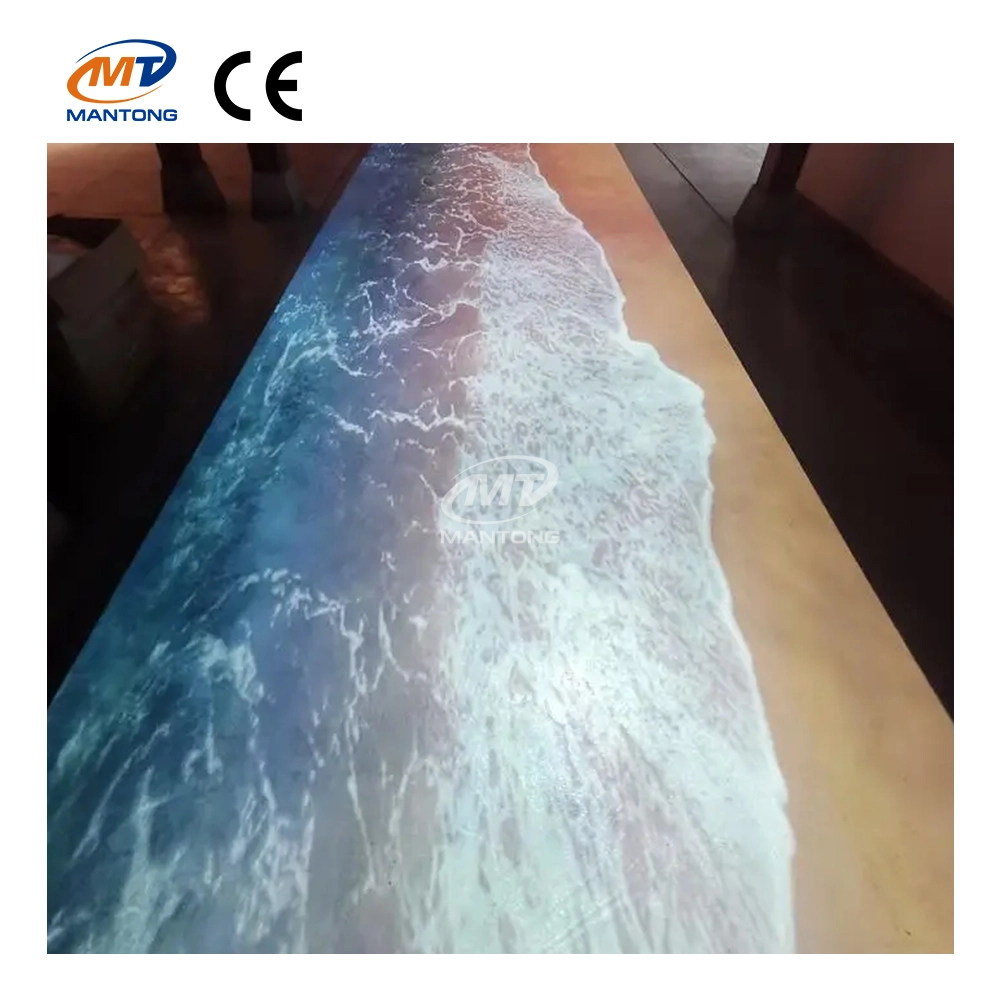
Indoor Interactive Floor Projector System - Customized Design & Installation Support
Indoor interactive floor projections display dynamic themed videos on the floor, commonly used in venues aiming to enhance brand influence or attract foot traffic, such as restaurants, hotel corridors, and brand car retail stores.
By using projectors and compatible software, the interactive content is projected onto the floor, encouraging engagement between people and the projected visuals. A single 5500-lumen indoor floor projector can cover an area of 5 m × 3 m. Typically, each project will use at least 3 units to ensure broad coverage and optimal visual effects.
We also offer customized design and installation support to enhance the interactive experience for your venue.
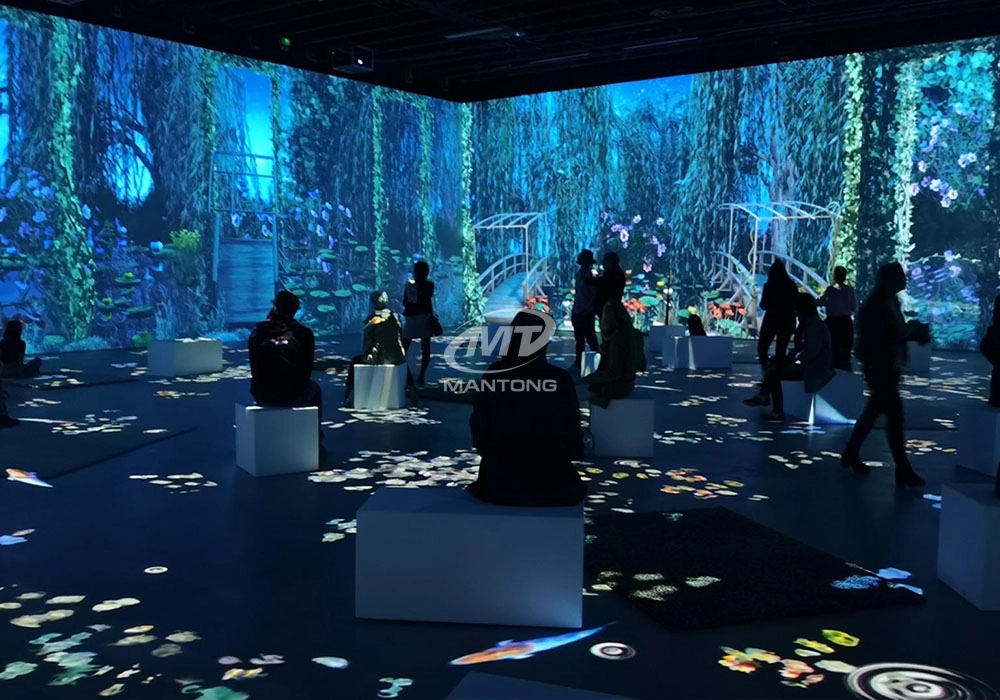
Mantong 6500LM High-Lumen Projector for Large-Scale Immersive Room Projection
Transform any space with Mantong's immersive projection mapping systems. Our high-lumen projectors (up to 6500 LM) and custom software create captivating interactive experiences for floors and walls. Ideal for museums, events, retail, and hospitality. Each kit includes professional ceiling mounting and 80+ pre-loaded video contents and is backed by a 12-month warranty and CE certification. We offer full customization and support to bring your vision to life.
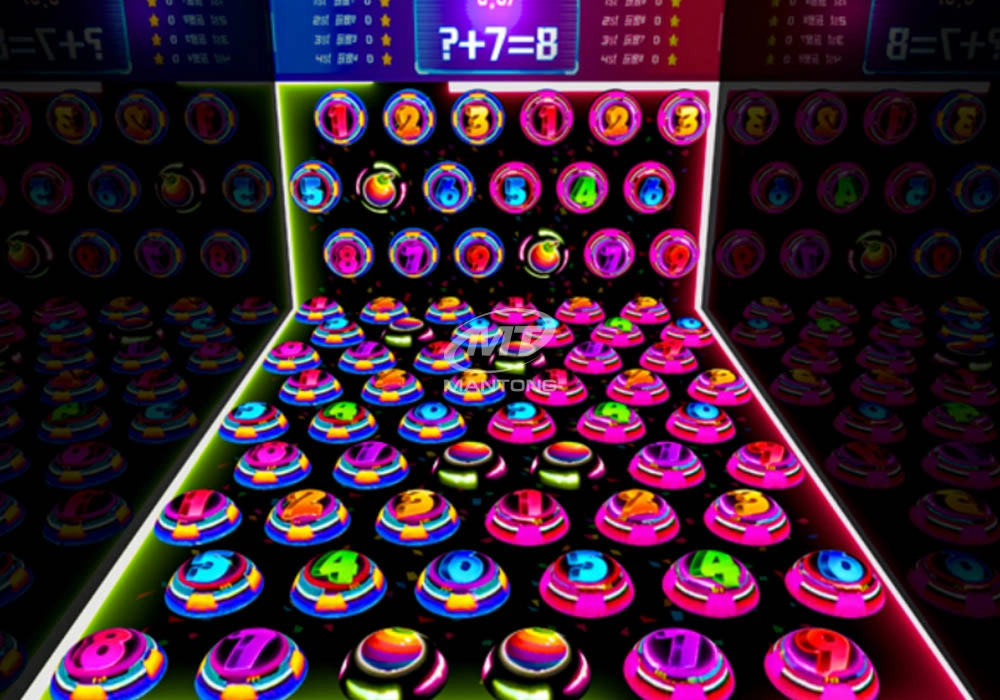
Amusement Rapidly Rotating Bouncing Sphere Interactive Wall Floor Projection Sports Games
Rapidly Rotating Bouncing Sphere is an interactive space where participants jump on rotating spheres. As they step on it, the spheres surface will show special interactivity
Jumping on spheres of the same color in succession causes them to pop, releasing light particles. The more consecutive jumps, the greater the reward—caterpillars appear, and eventually, all spheres of that color burst, filling the space with light and even more caterpillars.
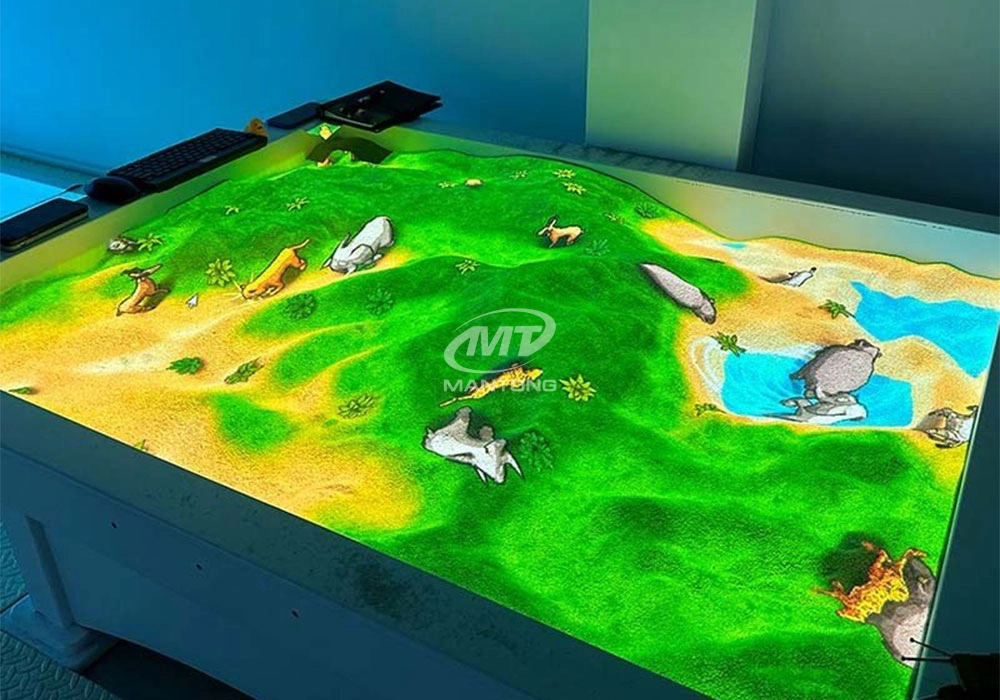
Interactive Sandbox Projection Mapping Games For Kids Play Park
Bring imagination to life with interactive sandbox projection mapping games designed for kids’ play parks. Using cutting-edge projection technology and real-time motion sensing, children can dig, build, and explore virtual worlds directly in the sand. Educational, engaging, and endlessly fun — it’s the perfect blend of play and learning.

Kaida Business Center, Shixin Road, Panyu District,Guangzhou City, Guangdong Province, China.
ManTong
ManTong
ManTong