
Multi-Site Deployments with Interactive Projection Mapping Suppliers
- Planning and Strategy for Multi-Site Projection Deployments
- Defining objectives, success metrics and governance
- Site surveys, standardization and variance management
- Budgeting, procurement and total cost of ownership (TCO)
- Technical Architecture and Synchronization
- Hardware selection, redundancy and lifecycle planning
- Network time, content synchronization and timing standards
- Calibration, color matching and perceptual consistency
- Vendor Selection: Choosing an interactive projection mapping supplier
- Evaluating manufacturing, delivery and support capabilities
- Software ecosystems, content pipeline and API openness
- Contracts, SLAs and training
- Deployment Models, Comparisons and Mantong Digital Solutions
- Deployment model comparison
- Why partner with Mantong Digital
- Global partnership, commissioning and after-sales support
- Implementation Checklist and Risk Mitigation
- Pre-deployment checklist
- Operational playbook and incident response
- Data, analytics and continuous improvement
- FAQ
- 1. What is an interactive projection mapping supplier and why choose one who is also a manufacturer?
- 2. How do you achieve consistent color and geometry across multiple sites?
- 3. What synchronization methods work best for global campaigns?
- 4. How many sites can a single supplier reasonably support?
- 5. What should I include in my SLA with an interactive projection mapping supplier?
- 6. How do I measure ROI for multi-site interactive projection installations?
- Contact and Next Steps
I have planned and overseen multi-site projection programs across retail, museum, and experiential entertainment networks. This article summarizes the operational, technical, and commercial considerations that matter when you work with an interactive projection mapping supplier to deliver consistent, scalable experiences across many locations. I focus on requirements that enable reliable rollouts, maintainable operations, measurable KPIs and vendor relationships that scale globally.
Planning and Strategy for Multi-Site Projection Deployments
Defining objectives, success metrics and governance
Before engaging an interactive projection mapping supplier, I insist on clarifying the core objectives: brand consistency, interactivity level, uptime targets, and measurable KPIs such as daily active interactions, session length, or dwell time. For multi-site programs these business metrics must be translatable into technical and operational SLAs. Typical governance elements include a central program owner, regional integrators, and a single point of accountability at the supplier for firmware/software updates and warranty claims.
Site surveys, standardization and variance management
Effective multi-site rollouts require a taxonomy of site types and a standardization strategy. I recommend classifying sites by footprint (e.g., small retail, flagship, museum gallery), environment (indoor/outdoor), and technical constraints (ceiling height, ambient light). For each class you should define a reference design—projector model, throw distance, mount, media player, and network topology. Where variance exists (heritage architecture or unique surfaces), document allowed deviations and an escalation path to design custom adaptations.
Budgeting, procurement and total cost of ownership (TCO)
Budgeting must include hardware, software licensing, installation, commissioning, training, and a realistic estimate for support and consumables (filters, lamp replacement if not LED/laser). For multi-site projects I prepare a five-year TCO model that includes projected downtime costs and expected content refresh cadence. Working with an interactive projection mapping supplier that is also a manufacturer can reduce procurement complexity and lower per-unit costs by consolidating hardware, software and support contracts.
Technical Architecture and Synchronization
Hardware selection, redundancy and lifecycle planning
I prioritize projection engines with proven reliability, local serviceability and spare-part availability. For deployments where downtime is costly, deploy N+1 redundancy, hot-swappable media players, and remote watchdogs that can reboot or failover devices. Choose projectors based on lumen requirements against ambient light, contrast ratio for surface detail, and sealed optics for dusty environments.
Network time, content synchronization and timing standards
Multi-site content synchronization can be approached at two levels: local deterministic timing for interactive responses, and scheduled media synchronization across sites for global campaigns. Use Network Time Protocol (NTP) for baseline clock alignment across displays (NTP) and consider SMPTE timecode for frame-accurate synchronization when playing identical timelines across many locations (SMPTE timecode). For interactive elements, design the system so local sensors and input processing run close to the projector (edge computing) to minimize latency, while the central server handles content distribution and analytics.
Calibration, color matching and perceptual consistency
To ensure visual consistency across sites, I implement automated camera-based calibration procedures using a controlled test pattern and camera calibration routines. Camera calibration techniques are well-documented (see camera calibration), and modern toolchains can apply geometric warp, edge blending and color profiles remotely. Regular automated calibration checks (daily or weekly) significantly reduce perceptual drift between units in different environments.
Vendor Selection: Choosing an interactive projection mapping supplier
Evaluating manufacturing, delivery and support capabilities
When evaluating suppliers I look for three core capabilities: (1) direct manufacturing or control over manufacturing partners to ensure supply chain stability, (2) regional service or certified integrators for on-site maintenance, and (3) a documented quality management process. Suppliers that are also manufacturers often provide benefits in spare part lead time and firmware customization.
Software ecosystems, content pipeline and API openness
The supplier should provide a content management system (CMS) suitable for multi-site rollout, with role-based access, staged releases (dev/staging/prod), and support for remote content upload and scheduling. Open APIs, standard media formats and support for versioning are critical. I require the ability to push patches and content securely and to pull operational telemetry for centralized monitoring and analytics.
Contracts, SLAs and training
Negotiate SLAs covering response time, mean time to repair (MTTR), software update windows, and security patching cadence. Include training packages for local technicians—both for preventative maintenance and emergency troubleshooting. A supplier who can provide onboarding curricula, troubleshooting flowcharts and remote guided repair will materially reduce long-term operational costs.
Deployment Models, Comparisons and Mantong Digital Solutions
Deployment model comparison
Below I summarize the trade-offs between localized autonomy (site-managed) and centralized control (network-managed):
| Aspect | Local Site Approach | Centralized Multi-Site Approach |
|---|---|---|
| Operational control | High local autonomy; quick adaptation | Unified policies; consistent brand delivery |
| Content updates | Manual or ad-hoc; variable quality | Scheduled, versioned, and auditable |
| Support model | Local vendors or technicians | Tiered: central + regional certified partners |
| Costs | Lower initial coordination cost, higher variance | Higher central overhead, lower per-site long-term cost |
| Scalability | Challenging to scale consistently | Designed for repeatable rollouts |
Why partner with Mantong Digital
In my experience, working with a supplier that offers both manufacturing strength and integrated software reduces coordination overhead. Mantong Digital is a one-stop interactive projection solution provider and direct manufacturer based in Guangzhou, China, with over 10 years of industry experience. We are dedicated to providing innovative, flexible and cost-effective projection solutions, offering both hardware and software to meet various needs. At ManTong, we specialize in providing customized solutions for a wide range of application scenarios through innovative projection technology. Whether it's immersive experiences, interactive entertainment or outdoor lighting and projection shows, our solutions can transform your ideas into stunning visual effects. Our projection technology provides customized solutions for a variety of scenarios, delivering immersive and interactive visual experiences. We are now looking for business partnerships worldwide. Our vision is to become the world's leading interactive projection manufacturer. Our website is https://www.mtprojection.com/
Key strengths I’ve verified when evaluating Mantong Digital:
- End-to-end offering: hardware, software, content pipeline and analytics.
- Manufacturing control: direct access to component sourcing and customization.
- Proven portfolio: immersive projection, interactive floor projection, interactive wall projection, immersive rooms, 3D projection, interactive projection games, projection shows and interactive projection mapping solutions.
- Global partnership focus and readiness to scale support networks.
Global partnership, commissioning and after-sales support
For multi-site programs I recommend embedding the supplier in your operational model: define regional integrators certified by the supplier, include spare pools at regional warehouses, and agree a remote support playbook. Mantong’s factory-direct model and emphasis on customizable solutions make them well-suited to provide certified training and spare distribution for global deployments.
Implementation Checklist and Risk Mitigation
Pre-deployment checklist
- Complete classification of site types and reference designs.
- Procurement of spares and regional warehousing plan.
- Network diagram and NTP/SMPTE synchronization plan.
- Content versioning strategy and sandbox environment for testing.
- Training plan and certification criteria for local technicians.
Operational playbook and incident response
Document incident categories (hardware fault, network outage, content corruption, calibration drift) and the required RTO/RPO for each. Provide remote-first remediation (reboot, remote patch, reflash), then regional dispatch for hardware replacement. Use telemetry to detect issues proactively—monitor projector lamp health (or laser source status), temperature, fan speed, and media player CPU/memory.
Data, analytics and continuous improvement
Collect interaction metrics, uptime statistics and calibration logs centrally. Use these data to drive periodic content refreshes, hardware refresh cycles and supplier performance reviews. I recommend quarterly business reviews with your interactive projection mapping supplier to review SLAs, hardware health, and content effectiveness.
FAQ
1. What is an interactive projection mapping supplier and why choose one who is also a manufacturer?
An interactive projection mapping supplier provides hardware, software and services to create projected interactive experiences. Choosing a direct manufacturer reduces supply chain complexity, shortens lead times for spares and enables deeper customization of firmware and optics—factors critical for consistent multi-site rollouts.
2. How do you achieve consistent color and geometry across multiple sites?
Use automated camera-based calibration and remote color profiles pushed via your CMS. Schedule regular calibration checks and maintain identical projector firmware and optics whenever possible. Reference material: camera calibration techniques (Wikipedia).
3. What synchronization methods work best for global campaigns?
For campaign-level sync, use NTP for basic clock alignment (NTP) and SMPTE timecode for frame-accurate timelines (SMPTE). Local interactivity should remain edge-local to maintain low-latency responses.
4. How many sites can a single supplier reasonably support?
Capacity depends on the supplier’s manufacturing and support footprint. A supplier with regional warehouses, certified integrators and a robust remote CMS can support hundreds to thousands of locations. Plan a phased rollout and validate processes across pilot regions before scaling.
5. What should I include in my SLA with an interactive projection mapping supplier?
Include MTTR, response time for critical and non-critical incidents, software update windows, security patch cadence, calibration support, training obligations, and clear acceptance criteria for commissioned sites.
6. How do I measure ROI for multi-site interactive projection installations?
Define KPIs before deployment such as visitor dwell time, engagement rate, incremental sales lift, social shares, and repeat visits. Combine onsite sensors and analytics from the supplier CMS to correlate interactions with business outcomes.
Contact and Next Steps
If you’re planning a multi-site deployment and would like help scoping objectives, writing procurement specs or evaluating interactive projection mapping suppliers, I can help design a repeatable rollout and vendor evaluation process. For turnkey solutions, consider reaching out to Mantong Digital, a proven one-stop interactive projection solution provider. Learn more or request a proposal at https://www.mtprojection.com/.
I welcome inquiries about pilot projects, regional partnerships and technical audits. Please contact our sales team via the Mantong website to begin a conversation about your multi-site projection strategy.
Selecting the Right Provider for Interactive Floor Games
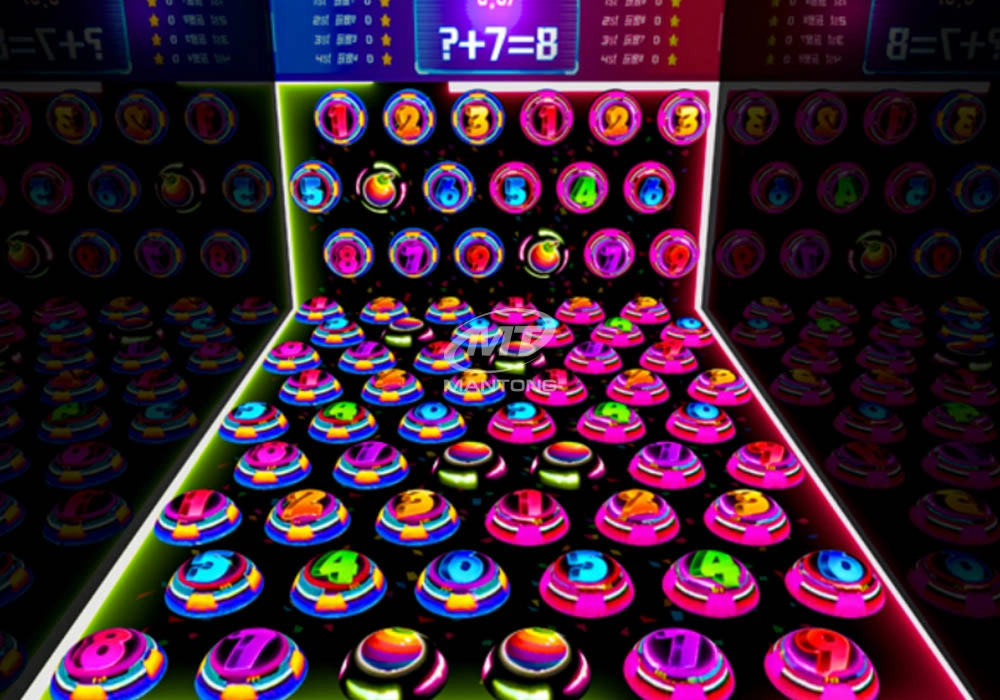
Interactive Rotating Bouncing Sphere — Wall & Floor Projection for Sports and Entertainment
Top 10 immersive projection Manufacturers and Supplier Brands
Future Trends: AI and AR in Immersive Meeting Rooms
One-Stop Projection Solution Provider Since 2011
What's the application of Immersive projection ?
It can be used in various venues, such as art exhibition, entertainment venues, educational institution, Wedding hall /Banquet/Bar,Yoga Studio and so on. It often involves advanced projection techniques, multimedia content, and interactive elements to engage and captivate the audience's senses.
How to Write an Interactive-Effect Video Customisation Script ?
① Project Background: Briefly introduce the context in which this interactive scene will be used (e.g., exhibition, museum,
event space, children's area). Example: This scene is part of the “Underwater World” zone in a children's science museum,
designed to be engaging and exploratory.
②Visual Style / Atmosphere: What kind of visual mood are you aiming for? Please describe the color scheme, style, and any
references. it should focus solely on describing the visual aspects of the scene, supported by relevant charts or reference
images.
③ Interaction Points Overview:List each interactive hotspot along with the effect you'd like to trigger when the user
touches or clicks the area. example: when player touch the clownfish, it will swims away with bubble trail (animation effect)
and produce the bubble sound ( sound effect requirement )
④ Static Visual Reference:including but not limited to background image/video, a list of major visual elements (e.g., coral,
rocks, seaweed, fish), which elements should be interactive?
What information do you need to know before making the proposal/solution?
We know that everyone wants to know the price, but the price of our products is determined by many factors since most of our products are custom, so no ready price list. In order to fast understand what you need, can you send us an inquiry like this?
For example: I am really interested in your immersive projection products, we are a company in the USA and want to install some in my restaurant. It is about 50 meters long, and 5m in width. Projection size you can decide but the length should be not less than 20 meters. We want some content about SeaWorld because our place is all about the sea. Thank you.
What about the wall/floor material for the projection?
It’s recommended to choose a light-colored material with minimal reflectivity—pure white or light grey works best. the
common material is cement & plaster board
For optimal projection results, the surface should be free of any patterns or textures, as the projector will display content
directly onto it.
There are no specific material requirements; you may use any commonly available material in your local market, as long as it
meets the above conditions.
What's Immersive Projection ?
Immersive projection refers to a technology that creates a captivating and all-encompassing visual experience for viewers by projecting images or videos onto large surfaces, such as walls, floors, or even entire rooms. This technology aims to immerse the audience in a simulated environment, blurring the boundaries between the physical and virtual worlds.
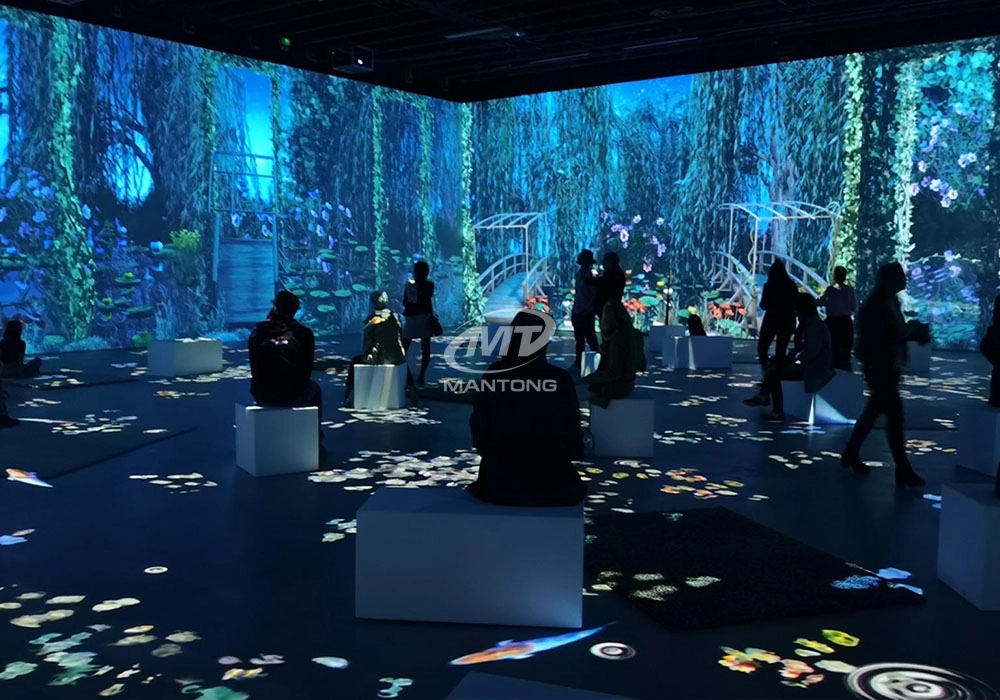
Mantong 6500LM High-Lumen Projector for Large-Scale Immersive Room Projection
Transform any space with Mantong's immersive projection mapping systems. Our high-lumen projectors (up to 6500 LM) and custom software create captivating interactive experiences for floors and walls. Ideal for museums, events, retail, and hospitality. Each kit includes professional ceiling mounting and 80+ pre-loaded video contents and is backed by a 12-month warranty and CE certification. We offer full customization and support to bring your vision to life.
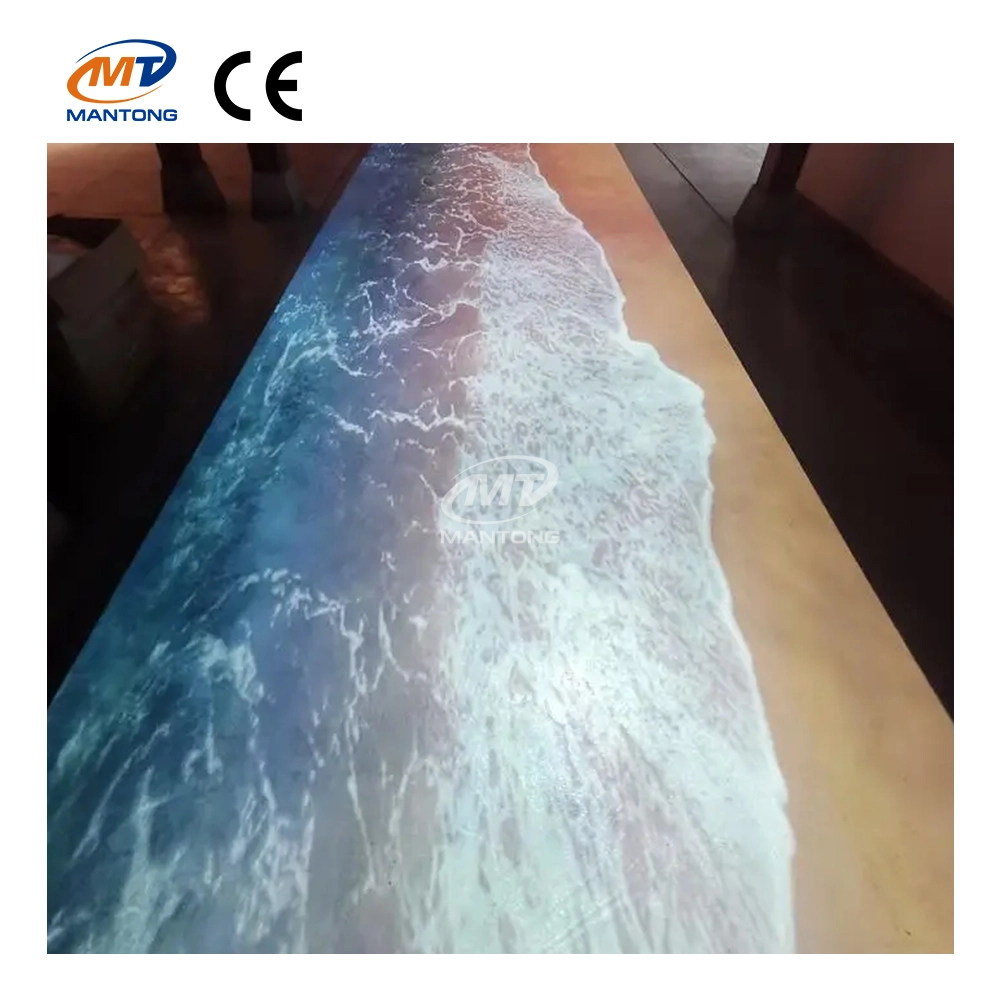
Indoor Interactive Floor Projector System - Customized Design & Installation Support
Indoor interactive floor projections display dynamic themed videos on the floor, commonly used in venues aiming to enhance brand influence or attract foot traffic, such as restaurants, hotel corridors, and brand car retail stores.
By using projectors and compatible software, the interactive content is projected onto the floor, encouraging engagement between people and the projected visuals. A single 5500-lumen indoor floor projector can cover an area of 5 m × 3 m. Typically, each project will use at least 3 units to ensure broad coverage and optimal visual effects.
We also offer customized design and installation support to enhance the interactive experience for your venue.
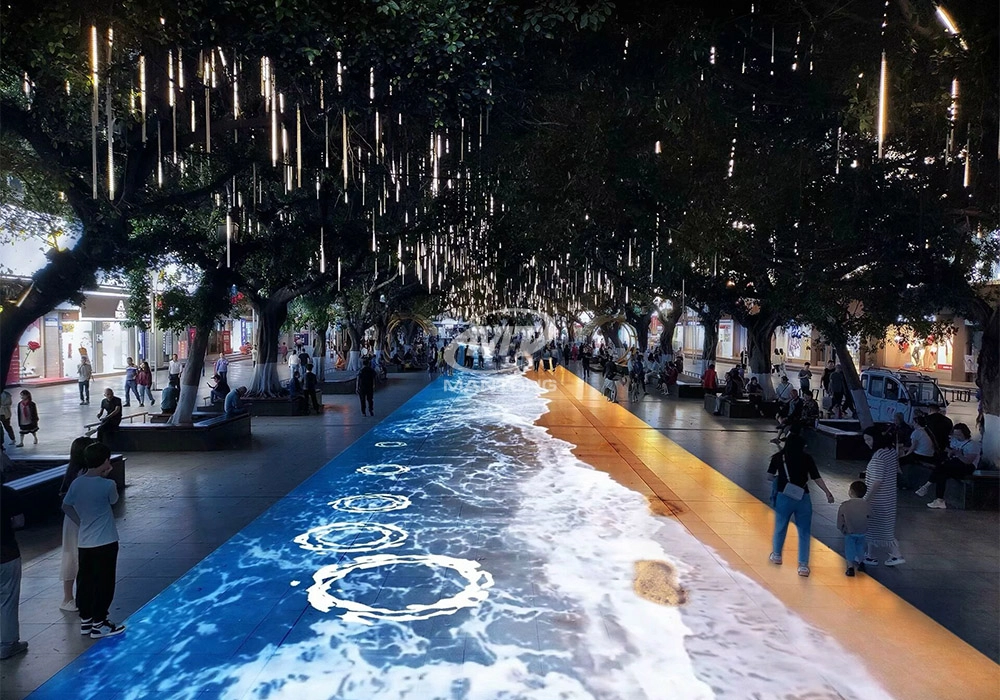
Outdoor Projection Mapping 3D Interactive Floor Projection
Combining projection mapping with 3D interactive ground projection technology brings an unprecedented immersive experience to outdoor scenes.
Amusement Rapidly Rotating Bouncing Sphere Interactive Wall Floor Projection Sports Games
Rapidly Rotating Bouncing Sphere is an interactive space where participants jump on rotating spheres. As they step on it, the spheres surface will show special interactivity
Jumping on spheres of the same color in succession causes them to pop, releasing light particles. The more consecutive jumps, the greater the reward—caterpillars appear, and eventually, all spheres of that color burst, filling the space with light and even more caterpillars.

Kaida Business Center, Shixin Road, Panyu District,Guangzhou City, Guangdong Province, China.
ManTong
ManTong
ManTong