
Portable Interactive Projector Buying Guide for Enterprise Buyers
- Choosing the Right Portable Interactive Projector for Enterprise Strategy
- Why a portable interactive projector matters for enterprise collaboration and training
- Key enterprise use cases for a portable interactive projector
- Understanding core projection technologies for portable interactive projectors
- Brightness and ambient light: choosing ANSI lumens for your portable interactive projector
- Throw ratio, projection distance and image size calculations for portable interactive projectors
- Interactive technologies: what 'interactive' means for a portable interactive projector
- Connectivity and collaboration features to look for in a portable interactive projector
- Security, manageability and firmware for enterprise deployments of portable interactive projectors
- Maintenance, lifetime and total cost of ownership (TCO) considerations for portable interactive projector purchases
- Comparative spec matrix: portable interactive projector categories
- Procurement checklist: what to require in an RFP for a portable interactive projector
- Vendor selection tips and proof-of-concept best practices for portable interactive projector deployments
- Mantong Digital: one-stop interactive projection solution provider and manufacturer
- Real-world deployment checklist for IT and AV teams evaluating a portable interactive projector
- Final recommendations: balancing portability, interactivity and enterprise requirements
- FAQ
- What is a portable interactive projector and how does it differ from a portable projector?
- How many ANSI lumens do I need for a portable interactive projector in a typical office?
- Are ultra-short-throw portable interactive projectors better for collaboration?
- What maintenance should I plan for portable interactive projectors?
- Can a portable interactive projector be used outdoors or in bright venues?
- How should enterprises evaluate security for networked portable interactive projectors?
- How do I start a trial or pilot with Mantong Digital?
- Contact and next steps
- References
Choosing the Right Portable Interactive Projector for Enterprise Strategy
Why a portable interactive projector matters for enterprise collaboration and training
Enterprises seeking more flexible collaboration, immersive training, retail engagement, and event experiences increasingly choose a portable interactive projector as a strategic tool. Unlike fixed installation projectors, portable interactive projectors combine mobility with interactive input (touch, pen, or gesture), enabling multi-room use, pop-up meetings, and temporary exhibits. For procurement teams, the right portable interactive projector reduces friction for user adoption, lowers fitting costs, and increases ROI across use cases such as conference rooms, training centers, showrooms, and temporary event spaces.
Key enterprise use cases for a portable interactive projector
Before comparing models, align purchase decisions with use cases. Here are typical enterprise deployment scenarios where a portable interactive projector is high impact:
- Executive and flexible huddle rooms: ad-hoc collaboration and BYOD meetings.
- Learning and development: interactive training, simulations, and workshops.
- Retail and experiential marketing: interactive floor/wall activations and demos.
- Events and temporary installations: trade shows and pop-up experiences.
- Museums and public spaces: projection mapping and visitor engagement.
Understanding core projection technologies for portable interactive projectors
Choice of projection engine affects image quality, maintenance, and size. Major technologies:
- DLP (Digital Light Processing): Compact, high contrast, typically lower maintenance (no alignment issues). Good for portable interactive projectors because of size and reliability. (See Texas Instruments DLP overview.)
- LCD: Strong color saturation and brightness for similar lumen ratings, but slightly larger and can have more dust-related maintenance.
- LCoS (Liquid Crystal on Silicon): Best image quality and smooth visuals; tends to be pricier and less common in ultraportable units.
Brightness and ambient light: choosing ANSI lumens for your portable interactive projector
Brightness (measured in ANSI lumens) directly affects image visibility. Enterprises must match lumens to ambient light and screen size. General recommendations:
| Environment | Suggested ANSI lumens for portable interactive projector |
|---|---|
| Darkened room (training or theater) | 1000–2500 lumens |
| Controlled office light (meeting rooms) | 2500–4000 lumens |
| Bright room or large venue | 4000–8000+ lumens |
Source: projector performance guides and industry practice — always verify vendor ANSI lumen ratings and measure in-situ when possible.
Throw ratio, projection distance and image size calculations for portable interactive projectors
Understanding throw ratio helps determine how large an image a portable interactive projector can produce at a given distance. Throw ratio = distance / image width. For example, a 0.5:1 ultra-short-throw (UST) projector will produce a 1-meter-wide image at 0.5 m distance. For enterprise buyers, choose:
- Ultra-short-throw (UST, 0.2–0.5:1) for small rooms, interactive walls, and when the projector sits close to the surface to minimize shadows.
- Short-throw (0.5–1.2:1) for flexible installations where some distance is available.
- Standard throw (>1.2:1) for large venues — less common for portable units.
Interactive technologies: what 'interactive' means for a portable interactive projector
Interactivity can be provided by different sensor systems — the choice affects responsiveness, accuracy, and setup complexity:
- Camera-based vision systems: Use a camera to track pens, fingers, or objects. Pros: multi-touch, multi-user support, and flexible surfaces. Cons: calibration and lighting sensitivity.
- IR/laser pens and sensors: Reliable in varied lighting, simpler calibration. Often limited to single- or dual-user inputs.
- Capacitive or projected capacitive overlays: High accuracy for pen and touch, but add cost and may reduce portability.
- Software-based whiteboard and collaboration: Cloud sync, multi-device annotation, and remote participants. Ensure vendor provides robust software SDKs and integrations.
Connectivity and collaboration features to look for in a portable interactive projector
Enterprises need flexible connectivity and secure collaboration features. Prioritize:
- USB-C with DisplayPort Alt Mode for single-cable video and power.
- HDMI 2.0/2.1 for legacy devices and 4K sources.
- Wireless screen mirroring: Miracast, AirPlay, Chromecast built-in, or vendor wireless gateways.
- Ethernet and Wi‑Fi (dual-band) for networked management, firmware updates, and cloud collaboration tools.
- Bluetooth for accessories and portable audio.
- Multiple input ports to support hybrid BYOD meetings and redundant connectivity.
Security, manageability and firmware for enterprise deployments of portable interactive projectors
Networked projectors can be attack surfaces. Require vendors to provide:
- Secure firmware update mechanisms (signed firmware, over-the-air with authentication).
- Support for network isolation (VLANs) and management via MDM or AV management platforms.
- Authentication for admin interfaces and audit logging.
Maintenance, lifetime and total cost of ownership (TCO) considerations for portable interactive projector purchases
TCO goes beyond purchase price. Key factors:
- Light source: LED and laser sources have longer lifetimes (20,000–30,000+ hours) and predictable decay; lamp-based units require replacement costs and downtime.
- Warranty and service: Multi-year onsite or carry-in warranties reduce risk. Check response times and spare parts availability.
- Calibration and software updates: Ongoing software licensing for collaboration features can add recurring costs.
- Accessories: Carry cases, mounting hardware, interactive pens, and sensors.
Comparative spec matrix: portable interactive projector categories
| Category | Typical Brightness (ANSI lumens) | Typical Throw Ratio | Light Source | Strengths |
|---|---|---|---|---|
| Pocket portable interactive projector | 200–1000 | 1.0–2.0 | LED | Highly portable, battery options, quick set-up |
| Enterprise portable interactive projector (meeting rooms) | 2500–4000 | 0.5–1.2 | Laser/LED | Balanced brightness, durability, interactive features |
| Portable high-brightness interactive projector (events) | 4000–8000+ | 0.3–1.5 | Laser | Large venues, outdoor use, projection mapping capable |
Procurement checklist: what to require in an RFP for a portable interactive projector
Use this checklist when writing an RFP or evaluating vendors:
- Use case and target ambient light conditions; required screen sizes.
- Required interactive input type (pen, touch, multi-user gestures).
- Minimum ANSI lumens, resolution (Full HD or 4K), and contrast ratio.
- Throw ratio and mounting options; include site measurements.
- Connectivity must-have list (USB-C, HDMI, wireless protocols, Ethernet).
- Security and firmware update policy; support SLAs for onsite service.
- TCO analysis template: purchase, maintenance, licensing, accessories, energy consumption.
- Request for demonstration units or trial period with your staff and networks.
Vendor selection tips and proof-of-concept best practices for portable interactive projector deployments
To reduce procurement risk:
- Insist on onsite demos with your AV team and end users using the same network and room conditions.
- Test interactive accuracy, latency, and multi-user behavior with real content.
- Validate firmware update processes and security features in your environment.
- Ask for references and examples of similar enterprise deployments.
Mantong Digital: one-stop interactive projection solution provider and manufacturer
Mantong Digital is a one-stop interactive projection solution provider and direct manufacturer based in Guangzhou, China, with over 10 years of industry experience. We are dedicated to providing innovative, flexible and cost-effective projection solutions, offering both hardware and software to meet various needs.
At ManTong, we specialize in providing customized solutions for a wide range of application scenarios through innovative projection technology. Whether it's immersive experiences, interactive entertainment or outdoor lighting and projection shows, our solutions can transform your ideas into stunning visual effects. Our projection technology provides customized solutions for a variety of scenarios, delivering immersive and interactive visual experiences.
We are now looking for business partnerships worldwide. Our vision is to become the world's leading interactive projection manufacturer. Our website is https://www.mtprojection.com/
Mantong's competitive strengths for enterprise buyers when considering a portable interactive projector:
- Direct manufacturing and factory pricing: reduced middleman markup and control over component sourcing.
- End-to-end capability: hardware, firmware and interactive software developed or integrated by the supplier.
- Customization and scenario-driven solutions: interactive floor projection, interactive wall projection, immersive rooms, and projection mapping tailored for an enterprise's brand and space requirements.
- Proven track record: over a decade of deployments in entertainment, retail, and corporate environments.
Mantong's primary products and solution strengths include: immersive projection, interactive floor projection, interactive projection, interactive wall projection, immersive room, 3D projection, interactive projection games, Projection Show, and interactive projection mapping. These product lines are focused on delivering immersive and interactive visual experiences suitable for enterprise showrooms, events, training centers, and public installations.
Real-world deployment checklist for IT and AV teams evaluating a portable interactive projector
Before rollout, confirm these items:
- Physical mount or cart compatibility and safety checks.
- Network segmentation for AV devices and secure firmware update path.
- End-user training and quick-start guides for non-technical staff.
- Replacement parts and local service partners for timely upkeep.
Final recommendations: balancing portability, interactivity and enterprise requirements
For most enterprise programs, prioritize a portable interactive projector with: laser/LED light source (for long life), 2500–4000 ANSI lumens for meeting/training rooms, ultra-short-throw optics where interaction and shadow reduction matter, robust interactive camera or IR systems (validated in your lighting), USB-C/HDMI connectivity and secure network management capabilities. Request trial units and insist on an RFP-driven POC to validate integration with your workflows and security requirements.
FAQ
What is a portable interactive projector and how does it differ from a portable projector?
A portable interactive projector combines the mobility of a portable projector with interactive input capabilities (touch, pen, gesture) and collaboration software, enabling users to annotate, manipulate content, or interact with projected applications in real time. A standard portable projector only displays content without direct interactivity.
How many ANSI lumens do I need for a portable interactive projector in a typical office?
For controlled office lighting and meeting rooms, aim for 2500–4000 ANSI lumens. Lower brightness (1000–2500) may work in darkened rooms; bright environments or large screens require 4000+ lumens.
Are ultra-short-throw portable interactive projectors better for collaboration?
UST projectors reduce shadows and presenter glare because the projector sits close to the surface. This makes them preferable for touch interaction, interactive whiteboards, and small meeting rooms — but confirm the unit's interactive accuracy and calibration process.
What maintenance should I plan for portable interactive projectors?
Maintenance includes periodic firmware updates, cleaning air filters (if present), replacing consumables for lamp-based units, checking calibration for interactive sensors, and verifying battery health for battery-powered models. Laser and LED projectors minimize consumable replacement.
Can a portable interactive projector be used outdoors or in bright venues?
Yes, but it requires high brightness (usually laser-based 4000+ ANSI lumens), appropriate lensing, and surface considerations. Outdoor use may also require weather protection and secure mounting. Test on-site before full deployment.
How should enterprises evaluate security for networked portable interactive projectors?
Require vendors to document firmware signing, update processes, admin authentication, network isolation options (VLAN), and any remote management interfaces. Include security testing in POCs and ensure devices are tracked in asset management.
How do I start a trial or pilot with Mantong Digital?
Visit Mantong Digital at https://www.mtprojection.com/ to request a demo, discuss customization, or start a proof-of-concept. Contact their sales team to arrange trials and global partnership discussions.
Contact and next steps
If you are procuring portable interactive projectors for an enterprise deployment and want a tailored solution, request a demo or a pilot. For customized immersive projection and interactive solutions, consider contacting Mantong Digital — a decade of manufacturing experience and a portfolio of immersive, interactive, and mapping products. Visit https://www.mtprojection.com/ to start a conversation or request product datasheets and a quotation.
References
- Video projector — Wikipedia. https://en.wikipedia.org/wiki/Video_projector (Accessed 2025-12-26)
- Texas Instruments: What is DLP? https://www.ti.com/dlp-chipset/what-is-dlp/ (Accessed 2025-12-26)
- ProjectorCentral: How Bright Does a Projector Need to Be? https://www.projectorcentral.com/brightness.htm (Accessed 2025-12-26)
- Grand View Research: Projector Market Overview. https://www.grandviewresearch.com/industry-analysis/projector-market (Accessed 2025-12-26)
- Mantong Digital official website. https://www.mtprojection.com/ (Accessed 2025-12-26)
Data and recommendations in this guide are based on industry standards, vendor literature, and practical deployment experience with enterprise AV systems. For site-specific advice, run an onsite proof-of-concept with your shortlisted vendors.
Why Immersive Projection Rooms Are the Next Big Trend in Interactive Marketing
Best Interactive Projector Games for Kids: Fun Meets Education manufacturers and supplier brands
Best professional water curtain projection mapping manufacturers and supplier brands in China
Design Tips for Interactive Water Projection Installations
One-Stop Projection Solution Provider Since 2011
What's the application of Immersive projection ?
It can be used in various venues, such as art exhibition, entertainment venues, educational institution, Wedding hall /Banquet/Bar,Yoga Studio and so on. It often involves advanced projection techniques, multimedia content, and interactive elements to engage and captivate the audience's senses.
What about the wall/floor material for the projection?
It’s recommended to choose a light-colored material with minimal reflectivity—pure white or light grey works best. the
common material is cement & plaster board
For optimal projection results, the surface should be free of any patterns or textures, as the projector will display content
directly onto it.
There are no specific material requirements; you may use any commonly available material in your local market, as long as it
meets the above conditions.
How to Write an Interactive-Effect Video Customisation Script ?
① Project Background: Briefly introduce the context in which this interactive scene will be used (e.g., exhibition, museum,
event space, children's area). Example: This scene is part of the “Underwater World” zone in a children's science museum,
designed to be engaging and exploratory.
②Visual Style / Atmosphere: What kind of visual mood are you aiming for? Please describe the color scheme, style, and any
references. it should focus solely on describing the visual aspects of the scene, supported by relevant charts or reference
images.
③ Interaction Points Overview:List each interactive hotspot along with the effect you'd like to trigger when the user
touches or clicks the area. example: when player touch the clownfish, it will swims away with bubble trail (animation effect)
and produce the bubble sound ( sound effect requirement )
④ Static Visual Reference:including but not limited to background image/video, a list of major visual elements (e.g., coral,
rocks, seaweed, fish), which elements should be interactive?
What information do you need to know before making the proposal/solution?
We know that everyone wants to know the price, but the price of our products is determined by many factors since most of our products are custom, so no ready price list. In order to fast understand what you need, can you send us an inquiry like this?
For example: I am really interested in your immersive projection products, we are a company in the USA and want to install some in my restaurant. It is about 50 meters long, and 5m in width. Projection size you can decide but the length should be not less than 20 meters. We want some content about SeaWorld because our place is all about the sea. Thank you.
Are you trader or manufacturer ?
We are direct manufacturer who specialize in providing one-stop solution for different outdoor & indoor projection project with our stable software and qualified projectors
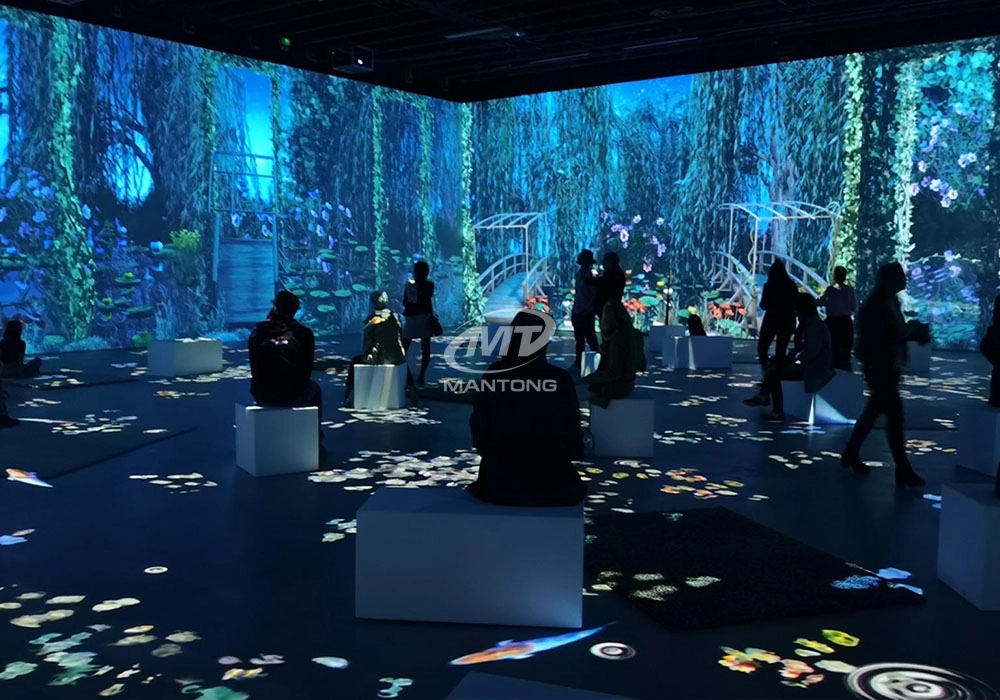
Mantong 6500LM High-Lumen Projector for Large-Scale Immersive Room Projection
Transform any space with Mantong's immersive projection mapping systems. Our high-lumen projectors (up to 6500 LM) and custom software create captivating interactive experiences for floors and walls. Ideal for museums, events, retail, and hospitality. Each kit includes professional ceiling mounting and 80+ pre-loaded video contents and is backed by a 12-month warranty and CE certification. We offer full customization and support to bring your vision to life.
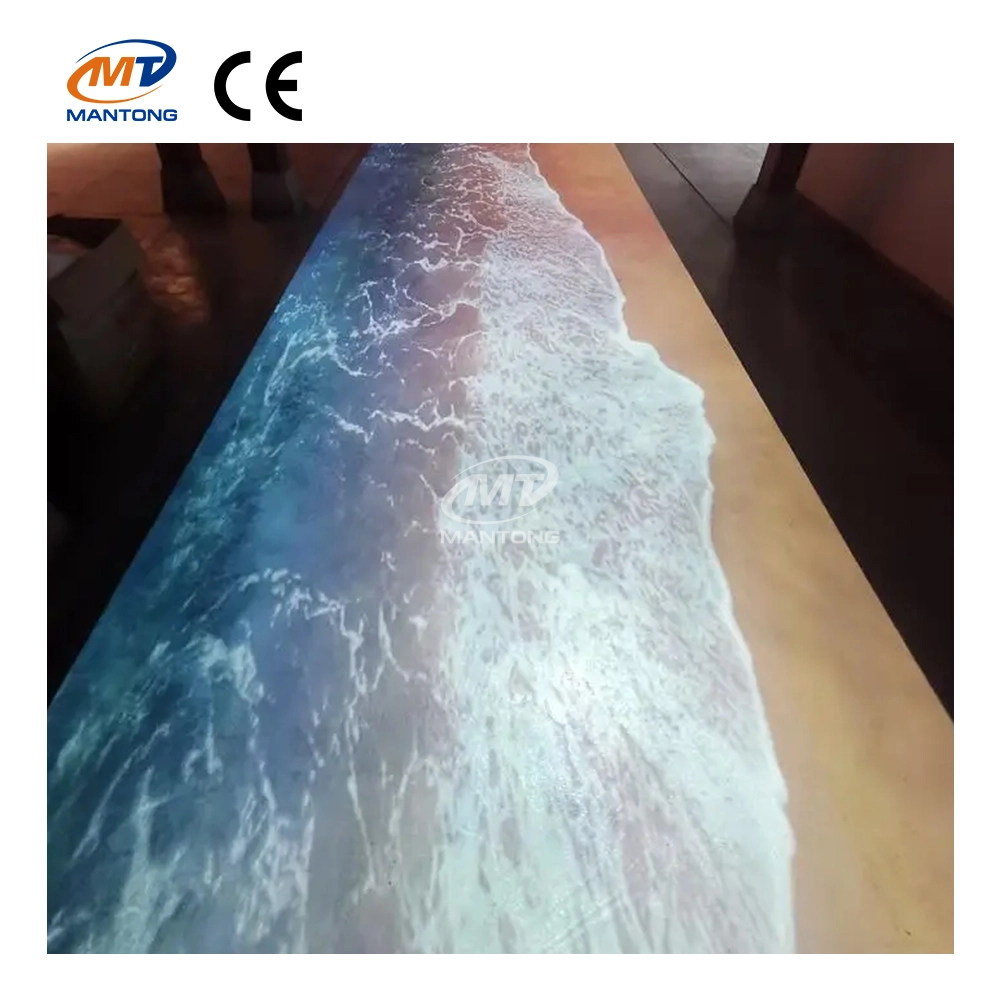
Indoor Interactive Floor Projector System - Customized Design & Installation Support
Indoor interactive floor projections display dynamic themed videos on the floor, commonly used in venues aiming to enhance brand influence or attract foot traffic, such as restaurants, hotel corridors, and brand car retail stores.
By using projectors and compatible software, the interactive content is projected onto the floor, encouraging engagement between people and the projected visuals. A single 5500-lumen indoor floor projector can cover an area of 5 m × 3 m. Typically, each project will use at least 3 units to ensure broad coverage and optimal visual effects.
We also offer customized design and installation support to enhance the interactive experience for your venue.
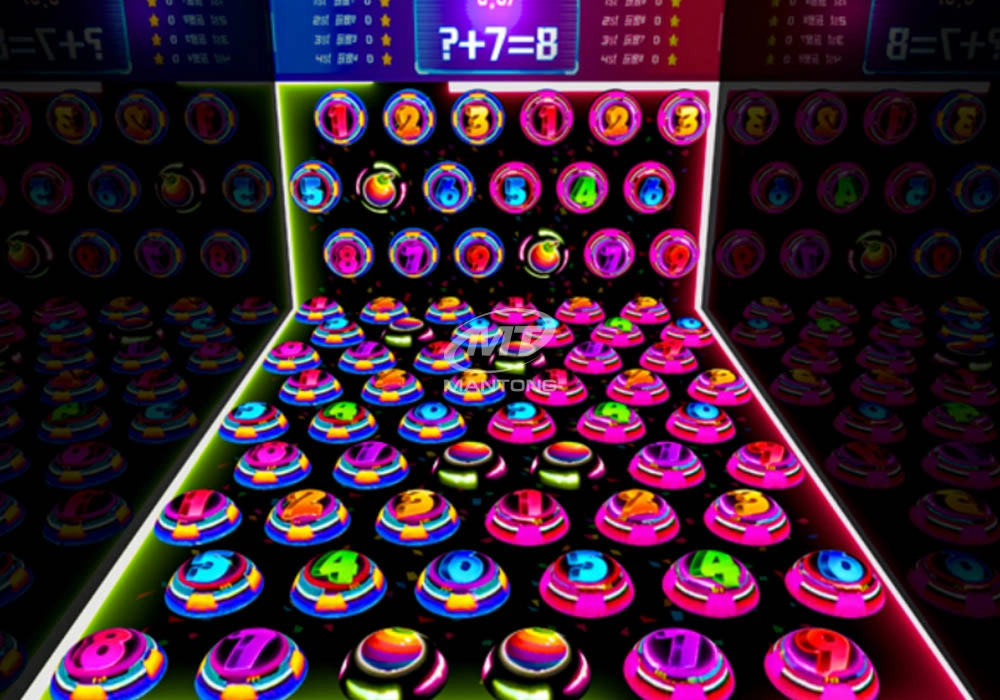
Amusement Rapidly Rotating Bouncing Sphere Interactive Wall Floor Projection Sports Games
Rapidly Rotating Bouncing Sphere is an interactive space where participants jump on rotating spheres. As they step on it, the spheres surface will show special interactivity
Jumping on spheres of the same color in succession causes them to pop, releasing light particles. The more consecutive jumps, the greater the reward—caterpillars appear, and eventually, all spheres of that color burst, filling the space with light and even more caterpillars.
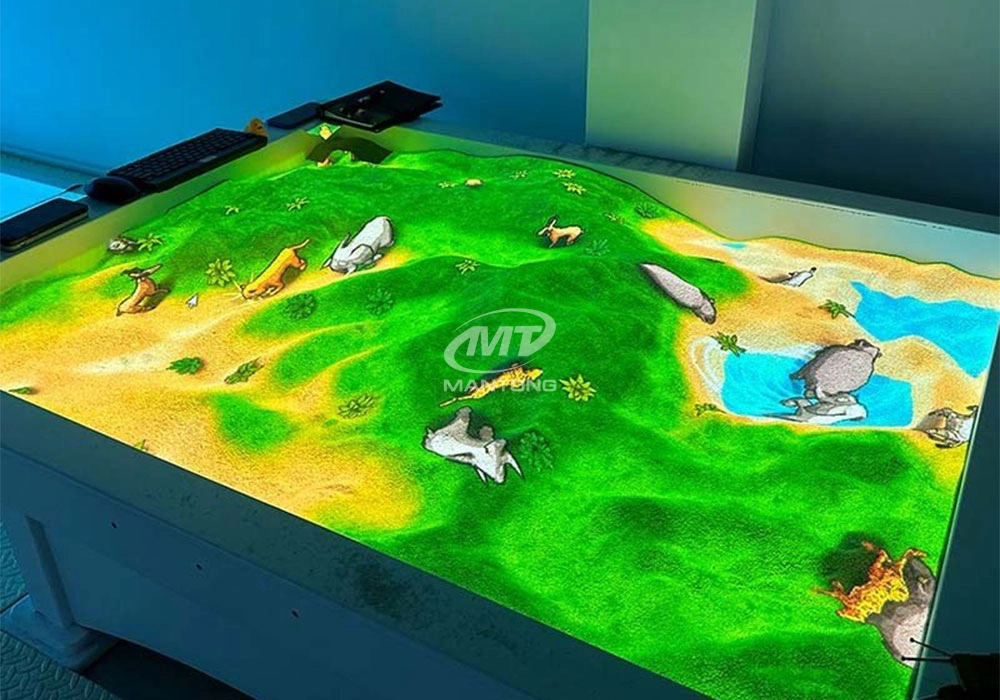
Interactive Sandbox Projection Mapping Games For Kids Play Park
Bring imagination to life with interactive sandbox projection mapping games designed for kids’ play parks. Using cutting-edge projection technology and real-time motion sensing, children can dig, build, and explore virtual worlds directly in the sand. Educational, engaging, and endlessly fun — it’s the perfect blend of play and learning.

Kaida Business Center, Shixin Road, Panyu District,Guangzhou City, Guangdong Province, China.
ManTong
ManTong
ManTong