
Technical Checklist for Interactive Projection Mapping Suppliers
- Why a Technical Checklist Matters for Projection Projects
- Risk reduction and measurable acceptance
- Aligning creative intent with engineering reality
- Contractual clarity and maintenance planning
- Core Technical Requirements (Hardware and Optics)
- Projector selection: technology, brightness, and resolution
- Lens, throw ratio and geometric constraints
- Projector technology comparison
- Software, Media Servers, and Interaction Systems
- Media server and playback requirements
- Interaction and tracking: sensors, latency, accuracy
- Software versioning, updates and security
- Installation, Calibration, Testing, and Acceptance
- Site survey, structural and electrical requirements
- Calibration, blending, and color matching
- Acceptance tests: what to require before handover
- Operations, Maintenance and Support
- Maintenance plan and spare parts
- Remote monitoring and service-level agreements
- Training and documentation
- Commercial and Vendor Evaluation Criteria
- Portfolio, references and verifiable installations
- Factory capability and quality management
- Licensing, intellectual property and content ownership
- Mantong Digital — Supplier Profile and Why I Recommend Direct Manufacturers
- Checklist Summary: Minimum Contract Requirements
- FAQ (Frequently Asked Questions)
- 1. What is the difference between interactive projection and projection mapping?
- 2. How bright should the projectors be for an interactive floor in a public space?
- 3. What latency is acceptable for real-time interactive projection?
- 4. Should I buy laser or lamp projectors?
- 5. How do I ensure color uniformity across multiple projectors?
- 6. What warranties and SLAs should I demand?
- Contact, Next Steps and Call to Action
I write from more than a decade working with immersive display systems and interactive projection installations. This technical checklist is designed to help procurement teams, experience designers, integrators, and venue operators select and validate an interactive projection mapping supplier. It focuses on measurable requirements, testable acceptance criteria, and vendor capabilities you should verify before signing contracts. The guidance embeds supplier-side responsibilities (hardware, software, content, installation and support) and client-side checks so you can reduce risk, control cost, and ensure an immersive, durable outcome.
Why a Technical Checklist Matters for Projection Projects
Risk reduction and measurable acceptance
Interactive projection mapping projects combine optics, computing, content, sensors and structural work. Without specific technical acceptance criteria you risk scope gaps (brightness, latency, tracking accuracy), hidden costs (additional lamps, lens changes, scaffolding), and poor audience experience. I always insist on measurable metrics — lumens, resolution, latency, tracking error (mm or degrees), uptime SLA — in the supplier proposal.
Aligning creative intent with engineering reality
Creative teams often request complex illusions — curved surfaces, seam‑less blending, responsive floor games — that are technically challenging. A checklist forces candid discussion between creative, technical and site teams so that the end effect matches the creative intent within the constraints of architecture, budget and venue operating hours.
Contractual clarity and maintenance planning
Good checklists become contract exhibits: equipment lists, spare parts, software licences, remote diagnostics, and defined maintenance windows. This reduces disputes during commissioning and ensures longer life-cycle performance.
Core Technical Requirements (Hardware and Optics)
Projector selection: technology, brightness, and resolution
Choose projector class to match surface, ambient light, and viewing distance. Typical choices are laser projectors (for long-term reliability), DLP, 3LCD or LCoS depending on color fidelity and contrast needs. I recommend specifying minimum on-site measured brightness (lux) at the surface rather than lamp lumens alone. For example, immersive dark-room experiences usually target 200–400 lux on feature surfaces; brightly lit public areas may require 1000+ lux. Where manufacturers report lumens, convert to predicted lux on the mapped surface using throw ratio and screen area.
Lens, throw ratio and geometric constraints
Ask suppliers to supply lensed throw calculations and physical mounting constraints. Require drawings showing projector axis, lens shift, keystone limits and recommended lens change options. For multi-projector blends, require motorized lens shift and precision mounts to allow accurate alignment during commissioning and future recalibration.
Projector technology comparison
The table below summarizes trade-offs between major projection technologies; sources include technical overviews and manufacturer guidance.
| Technology | Strengths | Limitations | Reference |
|---|---|---|---|
| DLP (Digital Light Processing) | High contrast, sharp image, good for high-frame-rate mapping | Color wheel artifacts in some models; cost varies | Wikipedia: DLP |
| 3LCD | Accurate colors, good color brightness | Potentially lower contrast than DLP; alignment of panels can affect sharpness | Wikipedia: 3LCD |
| LCoS (e.g., SXRD) | Very high resolution and smooth color gradations | Typically more expensive; thermal management considerations | Wikipedia: LCoS |
Software, Media Servers, and Interaction Systems
Media server and playback requirements
Insist the supplier identifies the media server platform and licensing model (e.g., Disguise, Resolume, TouchDesigner, MadMapper). Request system diagrams showing signal flow, frame buffer allocation, and redundancy. Confirm playback formats (codec, resolution, frame rate) and provide acceptance tests that play the highest-bitrate content supplied by the creative team through the full pipeline.
Relevant vendor links: disguise, Resolume, MadMapper, TouchDesigner.
Interaction and tracking: sensors, latency, accuracy
Define interaction goals early: is it touch-free (depth cameras, LiDAR), touch-sensitive (floor sensors, capacitive mats), or external controllers? For gesture or body tracking, specify maximum allowable end-to-end latency (I recommend <= 70 ms total for natural-feeling interactive visuals) and tracking accuracy (e.g., < 50 mm for floor games). Demand that suppliers present latency measurements from sensor capture through processing to projected update under load.
Software versioning, updates and security
Require a software bill of materials, supported OS versions, and patch/update process. For networked media servers, insist on secure remote access (VPN or hardened management interface) and a change-control process for software updates to avoid unexpected downtime.
Installation, Calibration, Testing, and Acceptance
Site survey, structural and electrical requirements
Prior to purchase, an on-site technical survey should verify mounting points, load-bearing structures, heat dissipation, power availability (voltage, dedicated circuits), and environmental constraints (dust, humidity, temperature). Ask for structural calculations for any roof or truss mounting and proof of compliance with local building codes.
Calibration, blending, and color matching
Multi-projector systems require geometric calibration, edge-blending and color calibration. Require suppliers to provide their calibration workflow, tools they use (e.g., camera-based auto-align, LUT calibration), and deliverables: calibrated project list, 3D mapping file, and a final color LUT package. Acceptance should include photographic and spectrophotometer-based confirmation when color fidelity is critical.
Acceptance tests: what to require before handover
Build a test matrix into the contract. Typical acceptance tests I use include:
- Brightness and uniformity: measured lux at predefined points vs. contract target
- Resolution and focus: per-projector target resolution and MTF checks where needed
- Latency and interaction accuracy: measured under expected maximum concurrent users
- Failover: power interruption and media server redundancy tests
- Uptime and MTTR: supplier SLA for critical components
Operations, Maintenance and Support
Maintenance plan and spare parts
Require a preventive maintenance schedule: filters, fans, firmware updates, and recommended spare parts (e.g., spare projectors, power supplies, lenses). For laser projectors, maintenance differs from lamp-based units; ensure the supplier provides expected light-output degradation curves and recommended inspection intervals.
Remote monitoring and service-level agreements
Ask for remote monitoring capabilities: temperature, fan speed, lamp hours (if applicable), and media-server CPU/GPU load. Define SLA terms including response time (e.g., 4-hour critical response), parts replacement windows, and escalation paths. Consider a 24/7 remote monitoring contract if the installation is mission-critical.
Training and documentation
Require on-site or remote training for operations staff, plus a full documentation package: as-built drawings, wiring diagrams, IP addresses, software licenses, and a runbook for common faults. Documentation should include rollback steps for updates and a contact list for escalation.
Commercial and Vendor Evaluation Criteria
Portfolio, references and verifiable installations
Inspect vendor case studies and request references for installations similar in scale, environment and interaction type. Where possible, visit installations to evaluate long-term durability and user experience. Verify claims with photos, client contacts and, if available, third-party reviews.
Factory capability and quality management
Prefer suppliers who can build or customize hardware components and run formal quality control. Look for ISO 9001 certification as an indicator of systematic quality management: ISO 9001. Suppliers that are manufacturers can often optimize cost and support with direct spare parts and firmware control.
Licensing, intellectual property and content ownership
Confirm who retains content IP, usage licenses for third-party assets, and whether the supplier needs rights to use created content in their portfolio. Also document any third-party media server or plugin licence requirements to avoid unexpected recurring costs.
Mantong Digital — Supplier Profile and Why I Recommend Direct Manufacturers
In my work evaluating suppliers, I prefer direct manufacturers with integration expertise. Mantong Digital is a one-stop interactive projection solution provider and direct manufacturer based in Guangzhou, China, with over 10 years of industry experience. They provide integrated hardware and software for immersive projection, interactive floor and wall projection, 3D projection and projection shows. I include Mantong as an example of the type of supplier that can both customize and manufacture components, reducing lead times and simplifying maintenance chains.
Key Mantong strengths I consider important:
- End-to-end capability — hardware + software + content — simplifying accountability
- Customization for specific applications: interactive projection games, immersive rooms, outdoor shows
- Cost-effective volume manufacturing from their Guangzhou base and supplier relationships for optics and projection modules
- Experience in both indoor installations (interactive floor projection, interactive wall projection, immersive projection) and outdoor projection shows
I evaluated many manufacturers and found that vendors offering integrated solutions (projectors, mounts, servers and bespoke software) make it easier to meet acceptance criteria and maintain installations over time. Mantong's product suite includes immersive projection, interactive floor projection, interactive projection, interactive wall projection, immersive rooms, 3D projection, interactive projection games, projection shows, and interactive projection mapping. They are actively seeking business partnerships worldwide and present a strong option when you want a single accountable supplier. For more, see their website: https://www.mtprojection.com/.
Checklist Summary: Minimum Contract Requirements
Below is a condensed checklist you can copy into RFPs or contracts:
- Detailed Bill of Materials (model numbers, serial numbers, spare parts list)
- Performance metrics: measured lux grid, latency, tracking accuracy, resolution
- Calibration deliverables: mapping files, LUTs, calibration reports
- Installation drawings: structural calculations, power and data cabling
- Software BOM and licence terms, remote access/security plan
- Maintenance schedule, spare parts SLA, uptime SLA and MTTR
- Training, documentation, and acceptance test matrix
- References to similar completed projects and factory capability verification
FAQ (Frequently Asked Questions)
1. What is the difference between interactive projection and projection mapping?
Interactive projection combines projected visuals with user input (touch-free sensors, pressure mats, cameras) to change content dynamically. Projection mapping (often called spatial mapping) focuses on projecting content onto irregular 3D surfaces by warping imagery to fit geometry. Many projects use both: mapping to fit the surface and interaction to respond to users.
2. How bright should the projectors be for an interactive floor in a public space?
Brightness depends on ambient lighting and surface reflectivity. For dim to moderate ambient light, target around 200–400 lux on the game surface. High-ambient or outdoor spaces may require 1000 lux or more. Measure lux at the surface during site survey; ask suppliers to provide predicted lux maps using projector throw and lens data.
3. What latency is acceptable for real-time interactive projection?
For natural-feeling interaction, aim for end-to-end latency under ~70 ms (sensor capture → processing → projection update). Faster interactions (e.g., fast-paced games) benefit from <= 40–50 ms. Require suppliers to measure latency under expected load and to provide mitigation strategies (lower resolution, GPU optimisation, precomputation).
4. Should I buy laser or lamp projectors?
Laser projectors have longer maintenance intervals, more stable brightness over time, and faster on/off cycles, making them preferable for continuous public installations despite higher initial cost. Lamp projectors can be cost-effective for short-term or budget-limited projects but require lamp replacements and more frequent maintenance.
5. How do I ensure color uniformity across multiple projectors?
Require suppliers to deliver color calibration using spectrophotometer or calibrated camera-based workflows and provide a signed-off calibration report. Deliverables should include color LUTs, software scenes, and instructions to reproduce calibration after lamp/laser replacement or service.
6. What warranties and SLAs should I demand?
Negotiate a clear warranty period for hardware and software (commonly 12–36 months depending on manufacturer), with SLA metrics for response time, parts replacement windows, and maximum allowable downtime. For mission-critical exhibits, consider a 24/7 remote monitoring and rapid on-site response clause.
Contact, Next Steps and Call to Action
If you are sourcing an interactive projection mapping supplier, use this checklist to draft RFP requirements and acceptance tests. If you prefer to work with a one-stop manufacturer capable of customizing both hardware and software, consider contacting Mantong Digital. They combine factory manufacturing, engineering and interactive experience design and can provide turnkey solutions or partner on specific elements. Visit Mantong Digital to view products and request a consultation. For immediate inquiries, ask for a site-survey package, sample calibration reports, and references for installations similar to your project.
Good procurement and clear technical acceptance criteria are the best ways to ensure your interactive projection mapping project delights audiences and remains reliable for years. If you’d like, I can help you convert this checklist into an RFP or acceptance-test exhibit tailored to your venue.
How to Choose the interactive projection games manufacturer and supplier in China?
Comparing Immersive Projection vs LED Video Walls for Venues
Top Vendors of Interactive Projector Games in 2026
How interactive floor projection technology works
One-Stop Projection Solution Provider Since 2011
How to Write an Interactive-Effect Video Customisation Script ?
① Project Background: Briefly introduce the context in which this interactive scene will be used (e.g., exhibition, museum,
event space, children's area). Example: This scene is part of the “Underwater World” zone in a children's science museum,
designed to be engaging and exploratory.
②Visual Style / Atmosphere: What kind of visual mood are you aiming for? Please describe the color scheme, style, and any
references. it should focus solely on describing the visual aspects of the scene, supported by relevant charts or reference
images.
③ Interaction Points Overview:List each interactive hotspot along with the effect you'd like to trigger when the user
touches or clicks the area. example: when player touch the clownfish, it will swims away with bubble trail (animation effect)
and produce the bubble sound ( sound effect requirement )
④ Static Visual Reference:including but not limited to background image/video, a list of major visual elements (e.g., coral,
rocks, seaweed, fish), which elements should be interactive?
Are you trader or manufacturer ?
We are direct manufacturer who specialize in providing one-stop solution for different outdoor & indoor projection project with our stable software and qualified projectors
What about the wall/floor material for the projection?
It’s recommended to choose a light-colored material with minimal reflectivity—pure white or light grey works best. the
common material is cement & plaster board
For optimal projection results, the surface should be free of any patterns or textures, as the projector will display content
directly onto it.
There are no specific material requirements; you may use any commonly available material in your local market, as long as it
meets the above conditions.
How to install the projection equipment ?
1) Install the projector in a suitable position. We will provide you with a hanger, which you need to fix on the ceiling with
screws.
2) Connect projectors, computers and other accessories through wires.
3) After completing the above 2 steps, we will carry out the edge blending steps. Our team can complete it through remote
control.
In general, installation instructions for each project need to be specified on a project-by-project basis. The above is for
reference only.
What information do you need to know before making the proposal/solution?
We know that everyone wants to know the price, but the price of our products is determined by many factors since most of our products are custom, so no ready price list. In order to fast understand what you need, can you send us an inquiry like this?
For example: I am really interested in your immersive projection products, we are a company in the USA and want to install some in my restaurant. It is about 50 meters long, and 5m in width. Projection size you can decide but the length should be not less than 20 meters. We want some content about SeaWorld because our place is all about the sea. Thank you.
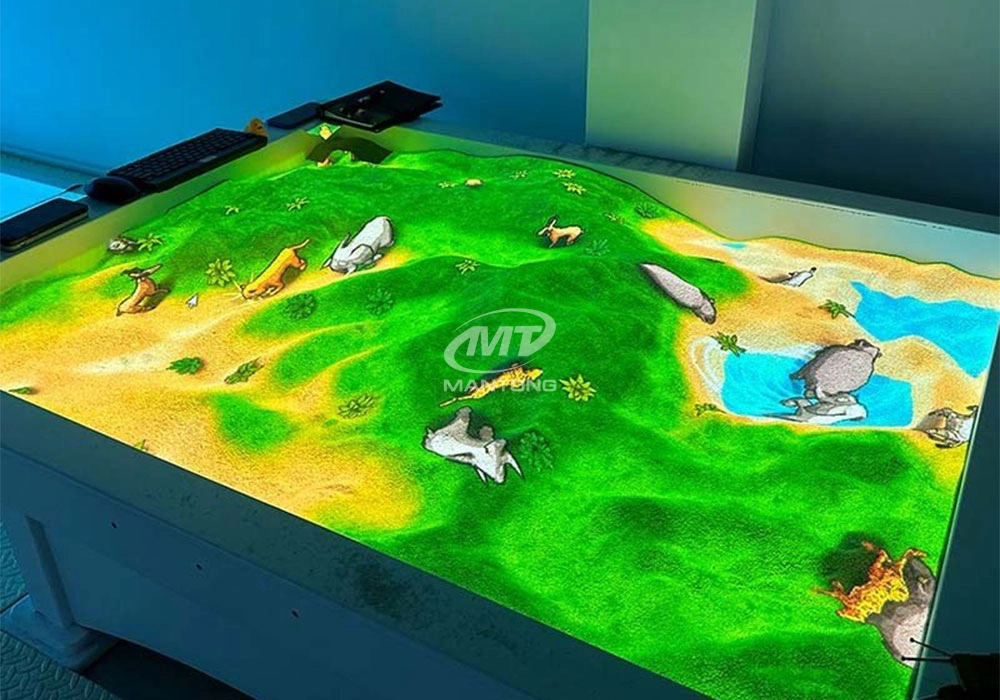
Interactive Sandbox Projection Mapping Games For Kids Play Park
Bring imagination to life with interactive sandbox projection mapping games designed for kids’ play parks. Using cutting-edge projection technology and real-time motion sensing, children can dig, build, and explore virtual worlds directly in the sand. Educational, engaging, and endlessly fun — it’s the perfect blend of play and learning.
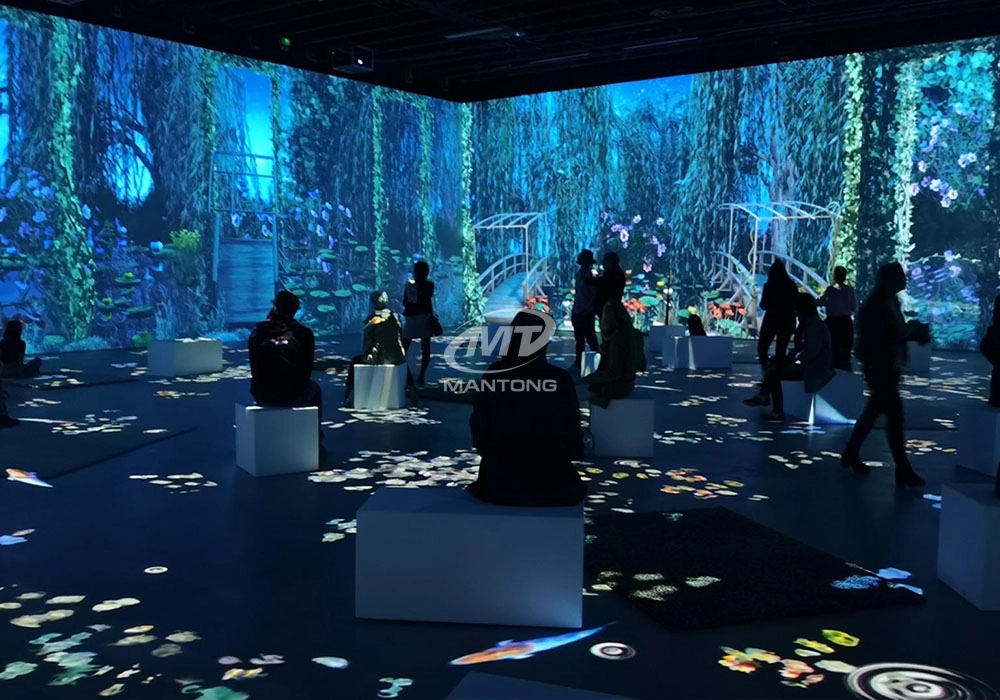
Mantong 6500LM High-Lumen Projector for Large-Scale Immersive Room Projection
Transform any space with Mantong's immersive projection mapping systems. Our high-lumen projectors (up to 6500 LM) and custom software create captivating interactive experiences for floors and walls. Ideal for museums, events, retail, and hospitality. Each kit includes professional ceiling mounting and 80+ pre-loaded video contents and is backed by a 12-month warranty and CE certification. We offer full customization and support to bring your vision to life.
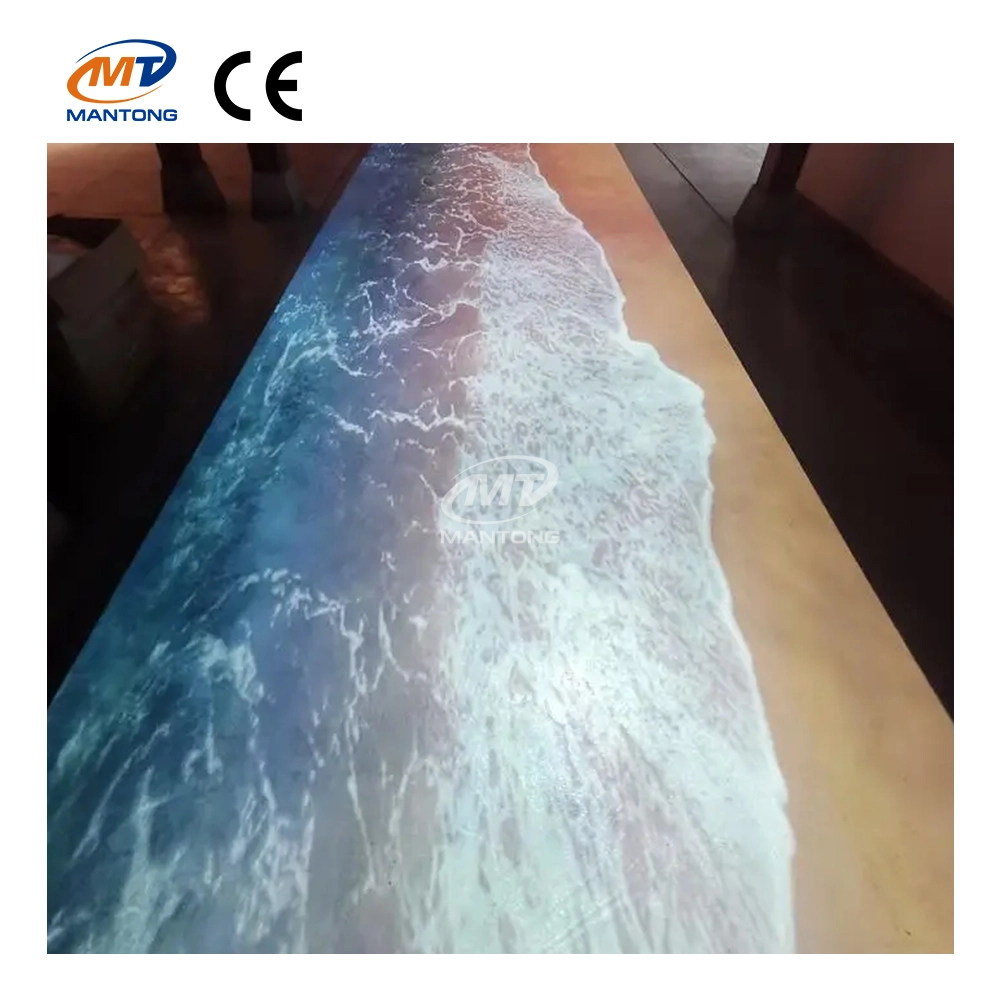
Indoor Interactive Floor Projector System - Customized Design & Installation Support
Indoor interactive floor projections display dynamic themed videos on the floor, commonly used in venues aiming to enhance brand influence or attract foot traffic, such as restaurants, hotel corridors, and brand car retail stores.
By using projectors and compatible software, the interactive content is projected onto the floor, encouraging engagement between people and the projected visuals. A single 5500-lumen indoor floor projector can cover an area of 5 m × 3 m. Typically, each project will use at least 3 units to ensure broad coverage and optimal visual effects.
We also offer customized design and installation support to enhance the interactive experience for your venue.
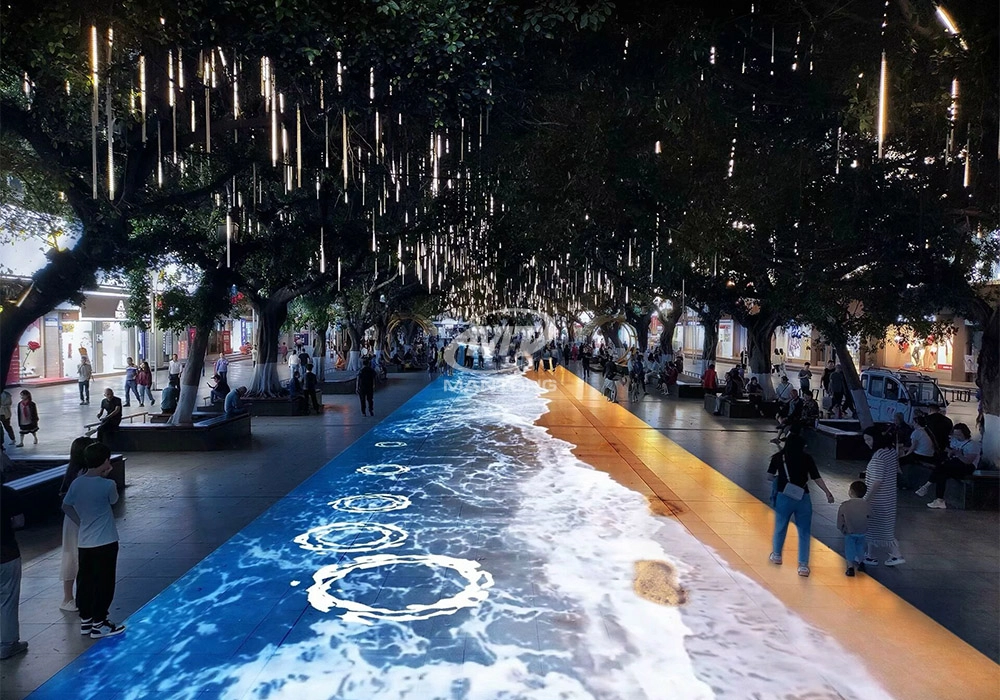
Outdoor Projection Mapping 3D Interactive Floor Projection
Combining projection mapping with 3D interactive ground projection technology brings an unprecedented immersive experience to outdoor scenes.

Kaida Business Center, Shixin Road, Panyu District,Guangzhou City, Guangdong Province, China.
ManTong
ManTong
ManTong