
The Ultimate Guide to Immersive Projection Rooms: Designing Future Experiences in 2026
This comprehensive guide explores the design, cost, and future of immersive projection rooms, detailing essential equipment, 360-degree technology, and market trends for 2026 and beyond.
- What is an Immersive Projection Room?
- Key Characteristics
- Key Takeaways: Your Immersive Projection Room at a Glance
- Why Invest in an Immersive Projection Room? Benefits Beyond Basic Viewing
- Primary Benefits
- Core Components of a State-of-the-Art Immersive Projection System
- Essential Equipment List
- Designing Your Immersive Projection Room: From Concept to Reality
- Design Phase Checklist
- Installation and Calibration: Achieving Flawless Immersion
- Step-by-Step Installation
- Applications of Immersive Projection Rooms: A World of Possibilities
- Common Use Cases
- The Cost of Immersion: A Detailed Breakdown and ROI Considerations
- Budget Allocation
- Advanced Technologies Enhancing Immersive Projection (2026 & Beyond)
- Future Trends
- Expert Tips for Optimal Performance and Longevity
- Pro Tips
What is an Immersive Projection Room?
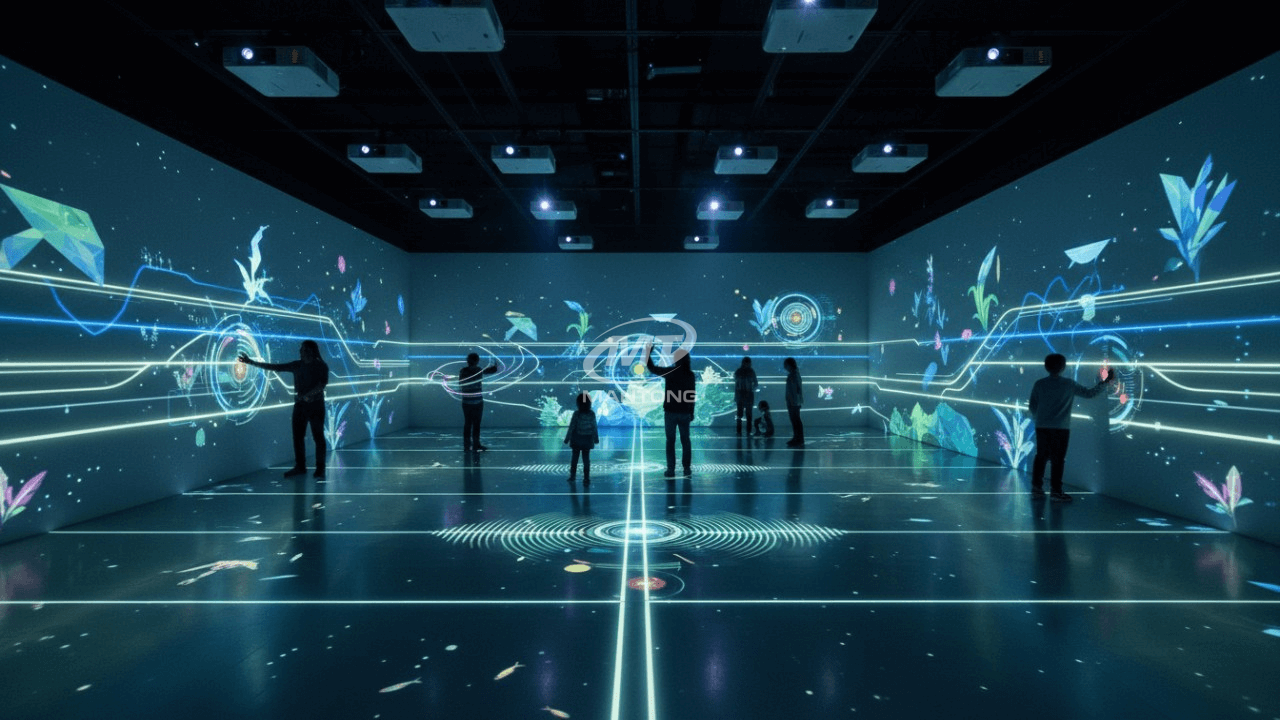
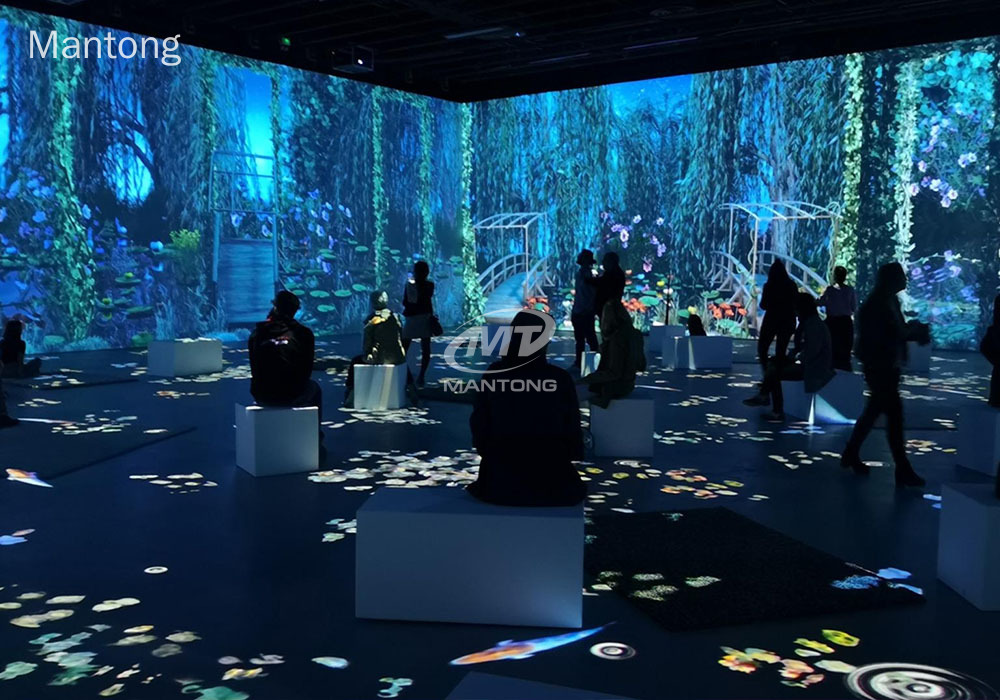
An immersive projection room is a dedicated environment designed to envelop users in a seamless, multi-sensory digital experience using 360-degree projection technology. Unlike standard viewing setups, these rooms map high-resolution visuals onto walls, floors, and ceilings to create a fully transportive atmosphere without the need for wearable headsets.
Following this definition, it is important to understand that these spaces are not merely about displaying video; they are about spatial transformation. By utilizing advanced software to blend images across multiple surfaces, the physical boundaries of the room dissolve, placing the user "inside" the content. This technology is rapidly evolving from a novelty to a core component of the "Experience Economy," where physical presence and digital storytelling merge.
Key Characteristics
· Multi-Surface Mapping: Visuals cover at least three surfaces (typically walls and floor).
· Headset-Free Immersion: Allows for shared, social experiences unlike isolated VR headsets.
· Sensory Integration: Combines visual data with spatial audio and haptic feedback.
· Real-Time Rendering: Capable of adjusting visuals instantly based on audience interaction.
Key Takeaways: Your Immersive Projection Room at a Glance
Designing an immersive room requires a strategic balance of high-lumen hardware, acoustically treated space, and generative content to achieve true presence. It is a complex integration project that yields high engagement for entertainment, education, and enterprise.
Before diving deep into the technicalities, here is a quick summary of what successful deployment involves. Planning these elements early prevents costly retrofits later.
· Full Sensory Engagement: Success relies on syncing interactive projection systems with directional audio.
· Versatile Applications: One room can serve as a yoga studio, a training simulation, and an art gallery.
· Complex Integration: Requires precise alignment of hardware (projectors) and software (media servers).
· Future-Proofing: Designs must accommodate 2026 standards like AI-generated real-time content.
· Significant ROI: Commercial setups drive foot traffic and increase dwell time significantly.
Why Invest in an Immersive Projection Room? Benefits Beyond Basic Viewing
Investing in immersive environments offers higher engagement rates and retention than traditional media by converting passive viewers into active participants. This technology triggers distinct cognitive responses that make memories more vivid and learning more effective.
For businesses, the shift towards experiential marketing is undeniable. A standard screen presents information; an immersive room creates a feeling. This emotional connection is a powerful driver for brand loyalty and educational outcomes.
Primary Benefits
1. Unparalleled Engagement: Users are surrounded by content, eliminating distractions found in standard viewing.
2. Dynamic Content Delivery: The same physical space can instantly switch from a rainforest to a Mars colony.
3. Enhanced Learning Outcomes: Studies show that spatial learning aids memory retention better than flat visuals.
4. Cost-Effective Set Design: Digital scenery replaces expensive physical props and sets, allowing for infinite adaptability.
5. Future-Proofing: Infrastructure built today can support the virtual reality environments of tomorrow without physical construction.
Core Components of a State-of-the-Art Immersive Projection System
The backbone of any immersive room consists of commercial-grade laser projectors, a robust media server, and edge-blending software to create a unified image. These components must communicate flawlessly to prevent latency, which breaks the illusion of immersion.
While the projectors are the most visible element, the "brain" of the operation—the media server—is often the most critical investment. It must handle high-resolution video streams and real-time data processing simultaneously.
Essential Equipment List
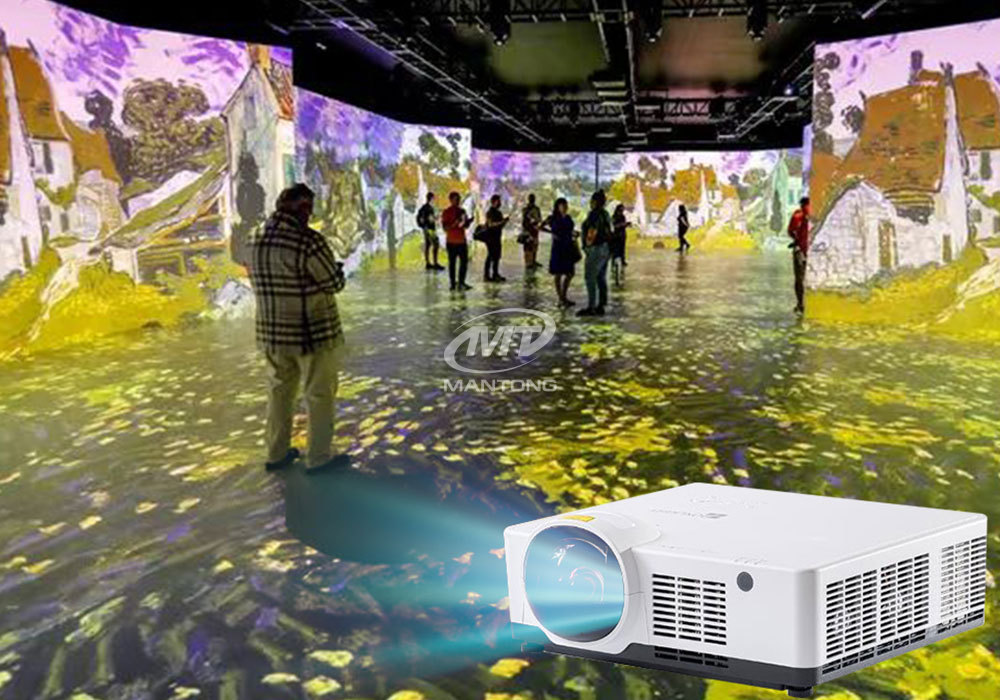
· High-Performance Projectors: 4K laser projectors with short-throw lenses are standard to minimize shadows.
· Seamless Surfaces: Matte white or gray projection paint/screens designed to reduce hot-spotting.
· Media Servers: High-GPU servers capable of mapping complex geometries in real-time.
· Spatial Audio Integration: Systems that place sound objects in 3D space to match visual cues.
· Edge Blending Processors: Hardware or software that feathers overlapping projector beams to create seamless visuals.
· Interactive Sensors: LiDAR or infrared sensors that track movement for interactive projection systems.
Designing Your Immersive Projection Room: From Concept to Reality
Successful design begins with a rigorous assessment of the physical space, prioritizing light control and surface geometry over pure square footage. A smaller, perfectly controlled room often yields a better experience than a large, uncontrolled hall.
The physics of light dictate your design. Ambient light is the enemy of projection; therefore, total blackout capability is non-negotiable. Furthermore, ceiling height determines your lens throw ratio—if ceilings are too low, users will cast large shadows on the walls.
Design Phase Checklist
1. Space Assessment: Verify room dimensions and ceiling height (minimum 10ft recommended for 360-degree setups).
2. Light Control: Install blackout curtains or permanent window plugs to ensure zero ambient light.
3. Surface Preparation: Ensure walls are perfectly flat; even minor textures will distort the projected image.
4. System Architecture: Map out projector placement diagrams to calculate overlap zones (typically 15-20%).
5. Thermal Management: Projectors generate significant heat; ensure HVAC systems can cycle air without adding noise.
Installation and Calibration: Achieving Flawless Immersion
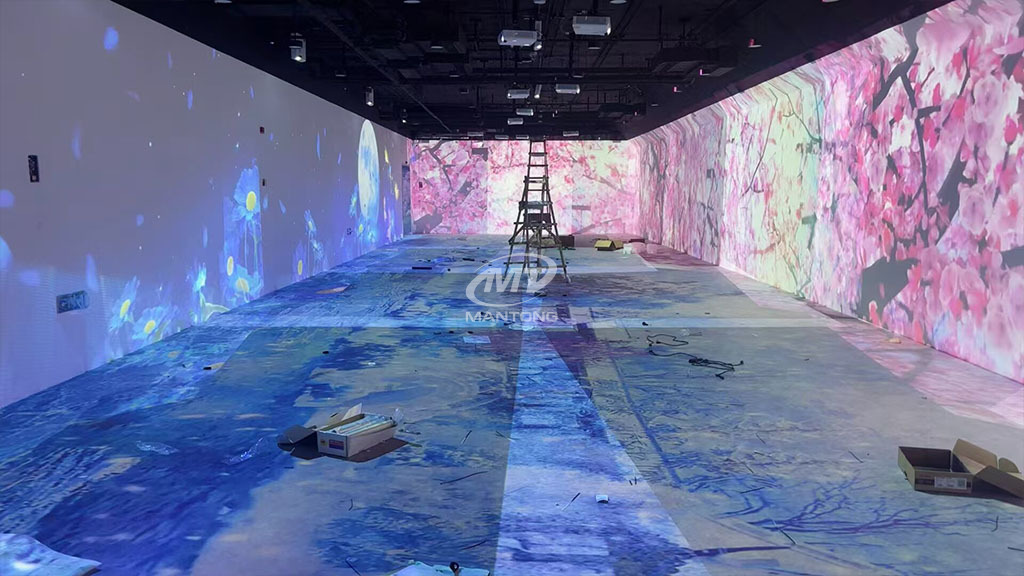
Installation focuses on the rigid mounting of hardware followed by the precise geometric warping of images to match the room's architecture. Even a millimeter of projector drift can ruin the seamless effect, making rigid mounting solutions vital.
Once hardware is physical secure, the software calibration begins. This is where the magic happens—taking separate video outputs and stitching them into a single, continuous canvas. This process, known as warping and blending, is what allows for 360-degree projection technology to function correctly.
Step-by-Step Installation
· Rigging and Cabling: Run high-bandwidth video cables (fiber optic for long runs) before closing walls.
· Geometric Alignment: Use grid patterns to warp the image so straight lines remain straight on corners.
· Edge Blending: Soften the edges where projector beams overlap to eliminate bright bands.
· Color Matching: Calibrate all projectors to the exact same color temperature and brightness levels.
· Audio Synchronization: Ensure spatial audio integration aligns perfectly with visual triggers.
Applications of Immersive Projection Rooms: A World of Possibilities
Immersive projection rooms are versatile tools used across entertainment venues, corporate training centers, and retail spaces to create memorable, shareable moments. The technology has moved beyond art installations into practical, revenue-generating applications.
According to a 2024 report by Precedence Research, the immersive technology market is projected to grow significantly, driven by the demand for shared experiences. Businesses are leveraging this to create "Instagrammable" moments that serve as organic marketing.
Common Use Cases
· Entertainment & Gaming: VR arcades and theme parks offering headset-free group gaming.
· Education & Training: Medical simulations and historical recreations that surround students with subject matter.
· Art & Culture: Digital art galleries (like the Van Gogh exhibits) that democratize access to fine art.
· Retail & Marketing: Pop-up brand activations where customers step inside a product's story.
· Corporate: Simulation rooms for safety training or data visualization centers.
The Cost of Immersion: A Detailed Breakdown and ROI Considerations
A professional immersive projection room typically costs between $50,000 for a basic setup to over $500,000 for a high-end commercial installation. Costs are heavily weighted towards high-lumen laser projectors and custom content production.
While the upfront cost is high, the ROI is driven by the flexibility of the space. Unlike a physical remodel, changing the "decor" of an immersive room costs only the price of a new video file. Data from Mordor Intelligence suggests the projection mapping market will continue to expand, indicating a strong long-term value for these assets.
Budget Allocation
· Hardware (40-50%): Projectors, lenses, servers, and audio gear.
· Installation (15-20%): Professional rigging, calibration labor, and cabling.
· Content Creation (25-30%): Custom 3D animation and interactive software development.
· Maintenance (10%): Lamp replacements (if non-laser), filter cleaning, and software updates.
· ROI Factors: Increased ticket sales, higher training retention rates, and reduced physical staging costs.
Advanced Technologies Enhancing Immersive Projection (2026 & Beyond)
The future of immersive rooms lies in the convergence of AI-driven real-time content, haptic feedback, and sustainable energy-efficient projection. By 2026, we expect rooms to not just display content, but to generate it on the fly based on audience mood and movement.
Immersive experience design is moving toward "responsive environments." Instead of playing a pre-rendered movie, the room will use AI to alter the storyline or visuals based on how people move within the space.
Future Trends
1. AI-Generated Content: Real-time environments created by generative AI, reducing production costs.
2. Haptic Feedback: Floors and walls that vibrate or change texture to match the visual cues.
3. Volumetric Capture: Holographic-style projections that appear to occupy 3D space.
4. Eco-Friendly Tech: Laser projectors with significantly lower power consumption and longer lifespans.
5. Metaverse Integration: Spaces that act as physical portals to Web3 virtual worlds.
Expert Tips for Optimal Performance and Longevity
To ensure longevity, prioritize dust protection for equipment and establish a routine calibration schedule to combat settling and drift. Commercial hardware is durable, but environmental factors like heat and dust are the primary causes of failure.
Experience shows that the most successful installations are those that plan for content updates. A stagnant room loses appeal quickly; a room with a content rotation strategy remains a destination.
Pro Tips
· Invest in Laser: Laser projectors last 20,000+ hours with minimal degradation compared to lamp-based units.
· Modular Design: Build your server racks with extra slots to upgrade graphics cards as software demands increase.
· Climate Control: Maintain a steady temperature; thermal expansion can throw off calibration by millimeters.
· Content Strategy: Budget for quarterly content refreshes to keep the experience new.
· Professional Support: Establish a service contract for bi-annual recalibration.
Once you’ve explored how to design an immersive projection room, the next logical question is why this investment matters — from boosting engagement to enhancing learning or entertainment outcomes. Check out Why You Need an Immersive Projection Room: 8 Key Benefits to uncover the core reasons organizations are embracing immersive technologies today.



One-Stop Projection Solution Provider Since 2011
What information do you need to know before making the proposal/solution?
We know that everyone wants to know the price, but the price of our products is determined by many factors since most of our products are custom, so no ready price list. In order to fast understand what you need, can you send us an inquiry like this?
For example: I am really interested in your immersive projection products, we are a company in the USA and want to install some in my restaurant. It is about 50 meters long, and 5m in width. Projection size you can decide but the length should be not less than 20 meters. We want some content about SeaWorld because our place is all about the sea. Thank you.
What's the application of Immersive projection ?
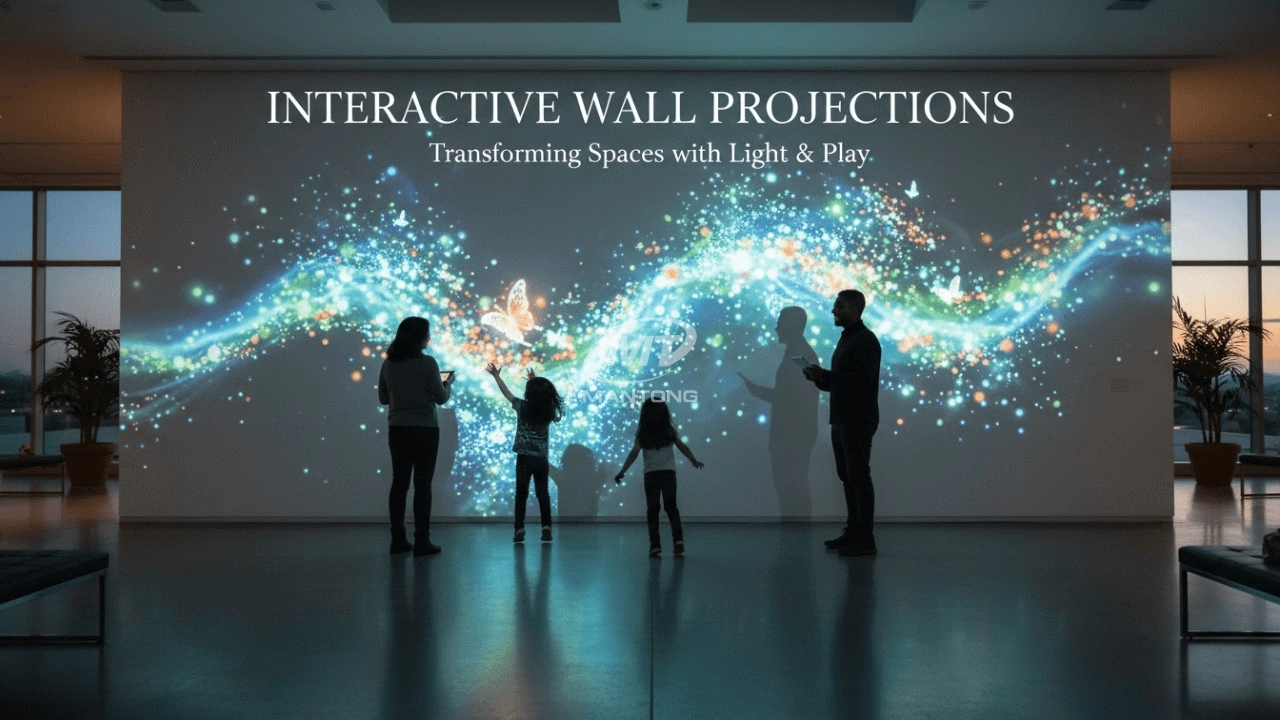
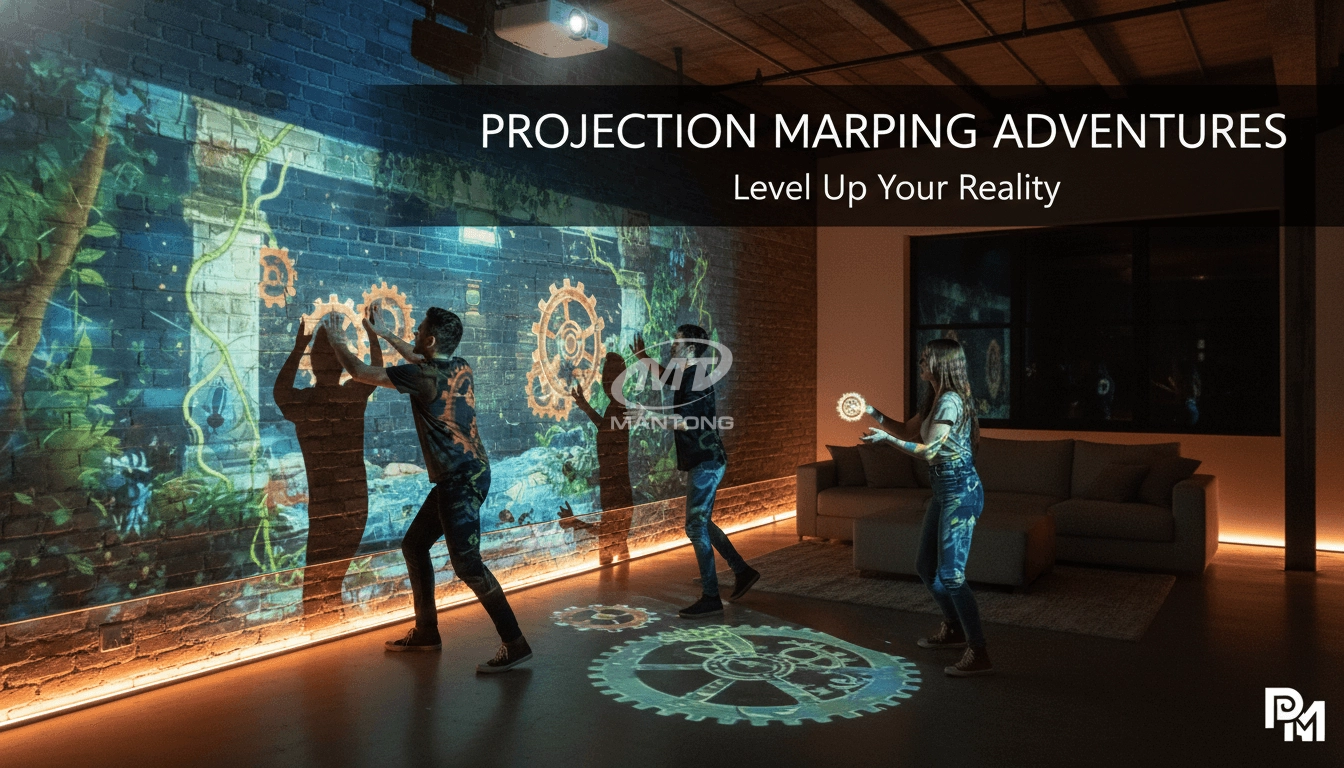
It can be used in various venues, such as art exhibition, entertainment venues, educational institution, Wedding hall /Banquet/Bar,Yoga Studio and so on. It often involves advanced projection techniques, multimedia content, and interactive elements to engage and captivate the audience's senses.
Are you trader or manufacturer ?
We are direct manufacturer who specialize in providing one-stop solution for different outdoor & indoor projection project with our stable software and qualified projectors
What's Immersive Projection ?
Immersive projection refers to a technology that creates a captivating and all-encompassing visual experience for viewers by projecting images or videos onto large surfaces, such as walls, floors, or even entire rooms. This technology aims to immerse the audience in a simulated environment, blurring the boundaries between the physical and virtual worlds.
How to install the projection equipment ?
1) Install the projector in a suitable position. We will provide you with a hanger, which you need to fix on the ceiling with
screws.
2) Connect projectors, computers and other accessories through wires.
3) After completing the above 2 steps, we will carry out the edge blending steps. Our team can complete it through remote
control.
In general, installation instructions for each project need to be specified on a project-by-project basis. The above is for
reference only.
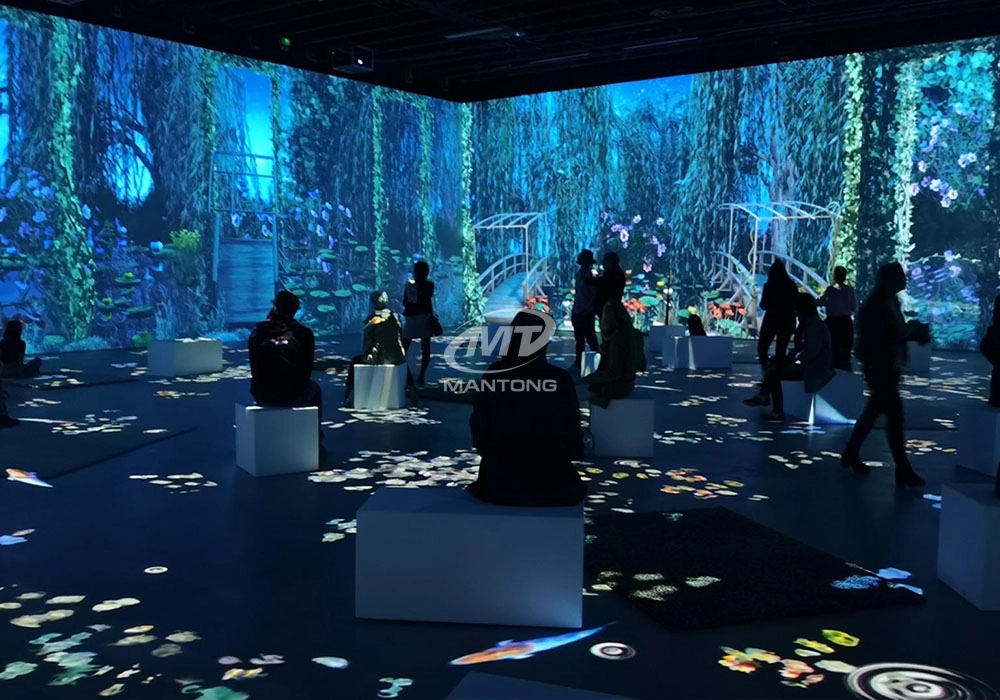
Transform any space with Mantong's immersive projection mapping systems. Our high-lumen projectors (up to 6500 LM) and custom software create captivating interactive experiences for floors and walls. Ideal for museums, events, retail, and hospitality. Each kit includes professional ceiling mounting and 80+ pre-loaded video contents and is backed by a 12-month warranty and CE certification. We offer full customization and support to bring your vision to life.
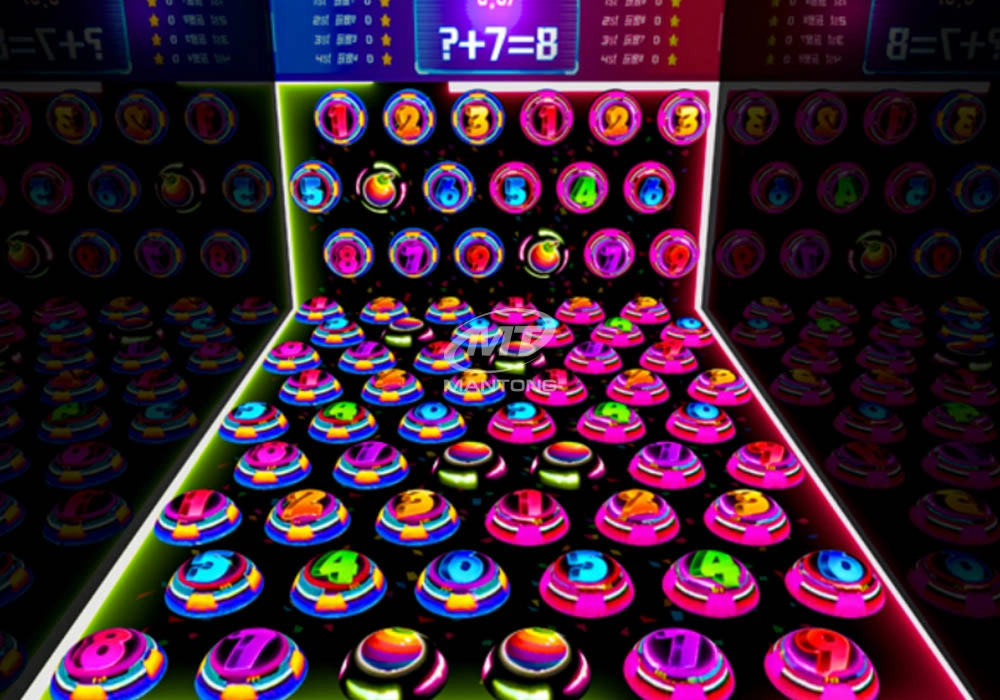
Rapidly Rotating Bouncing Sphere is an interactive space where participants jump on rotating spheres. As they step on it, the spheres surface will show special interactivity
Jumping on spheres of the same color in succession causes them to pop, releasing light particles. The more consecutive jumps, the greater the reward—caterpillars appear, and eventually, all spheres of that color burst, filling the space with light and even more caterpillars.
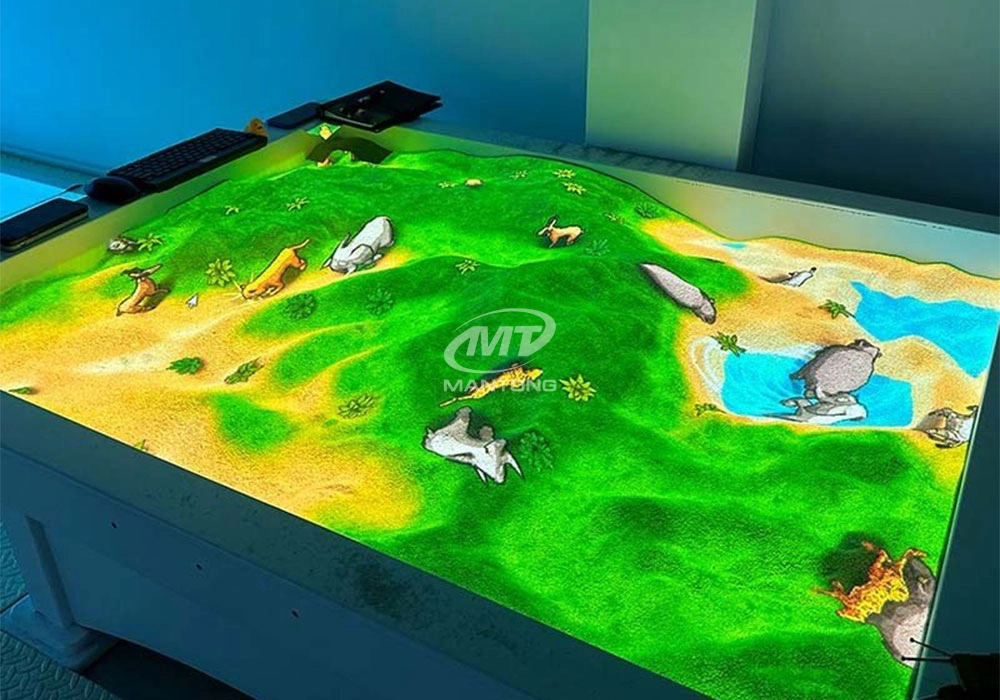
Bring imagination to life with interactive sandbox projection mapping games designed for kids’ play parks. Using cutting-edge projection technology and real-time motion sensing, children can dig, build, and explore virtual worlds directly in the sand. Educational, engaging, and endlessly fun — it’s the perfect blend of play and learning.
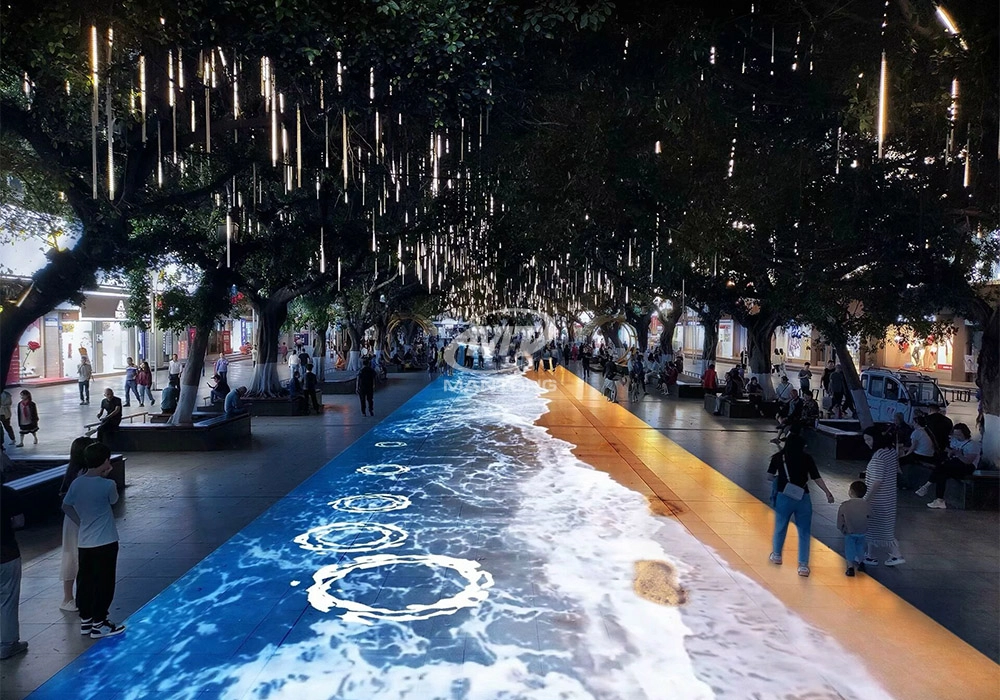
Combining projection mapping with 3D interactive ground projection technology brings an unprecedented immersive experience to outdoor scenes.
Contact Us to Start Your Interactive Projection Journey
Contact us now to discuss how to create innovative projection solutions for your space.

Kaida Business Center, Shixin Road, Panyu District,Guangzhou City, Guangdong Province, China.
ManTong
ManTong
ManTong