
The Ultimate Guide to Interactive Floor Projectors in 2026: Transform Any Space
This comprehensive guide explores interactive floor projector technology in 2026, covering motion-sensing tech like LiDAR and IR, benefits for kinesthetic learning and therapy, and practical installation advice. Learn how these immersive systems transform spaces across industries.
- Introduction
- What Is an Interactive Floor Projector?
- Core Components
- The Technology Behind the Magic: How It Works
- Motion Sensing & Tracking
- Projector Types: The Throw Ratio Factor
- Benefits of Interactive Floor Projection Systems
- Educational Value: Kinesthetic Learning
- Therapeutic & Healthcare Impact
- Applications Across Industries
- Installation, Setup & Calibration: A Practical Guide
- 1. Site Assessment
- 2. Hardware Mounting
- 3. Software Calibration
- Troubleshooting Common Issues & Maintenance
- The Future of Interactive Floor Systems (2026 and Beyond)
- Frequently Asked Questions
- What is the typical cost of an interactive floor projector system?
- Can interactive floor projectors be used outdoors?
- What kind of content or games are available?
- How difficult is it to install an interactive floor projector?
- Are interactive floor projectors safe for children and seniors?
- Can I integrate an interactive floor projector with my existing smart home?
Introduction
Imagine walking into a room where the floor ripples like water beneath your feet, crunches like autumn leaves under your steps, or lights up to reveal a digital soccer field. This is not science fiction but rather the reality created by an interactive projection floor. As we move into 2026, these systems have evolved from novel entertainment to powerful educational, rehabilitative, and marketing tools.
An interactive floor projector is a sophisticated ecosystem that combines high-brightness projection, motion-sensing technology, and real-time computing. Whether used to foster kinesthetic learning in schools or to provide low-impact physical therapy for seniors, digital floor display systems transform passive surfaces into dynamic playgrounds of light and data. In this guide, we will explore the technology, benefits, and installation best practices that define interactive floor solutions today.
What Is an Interactive Floor Projector?
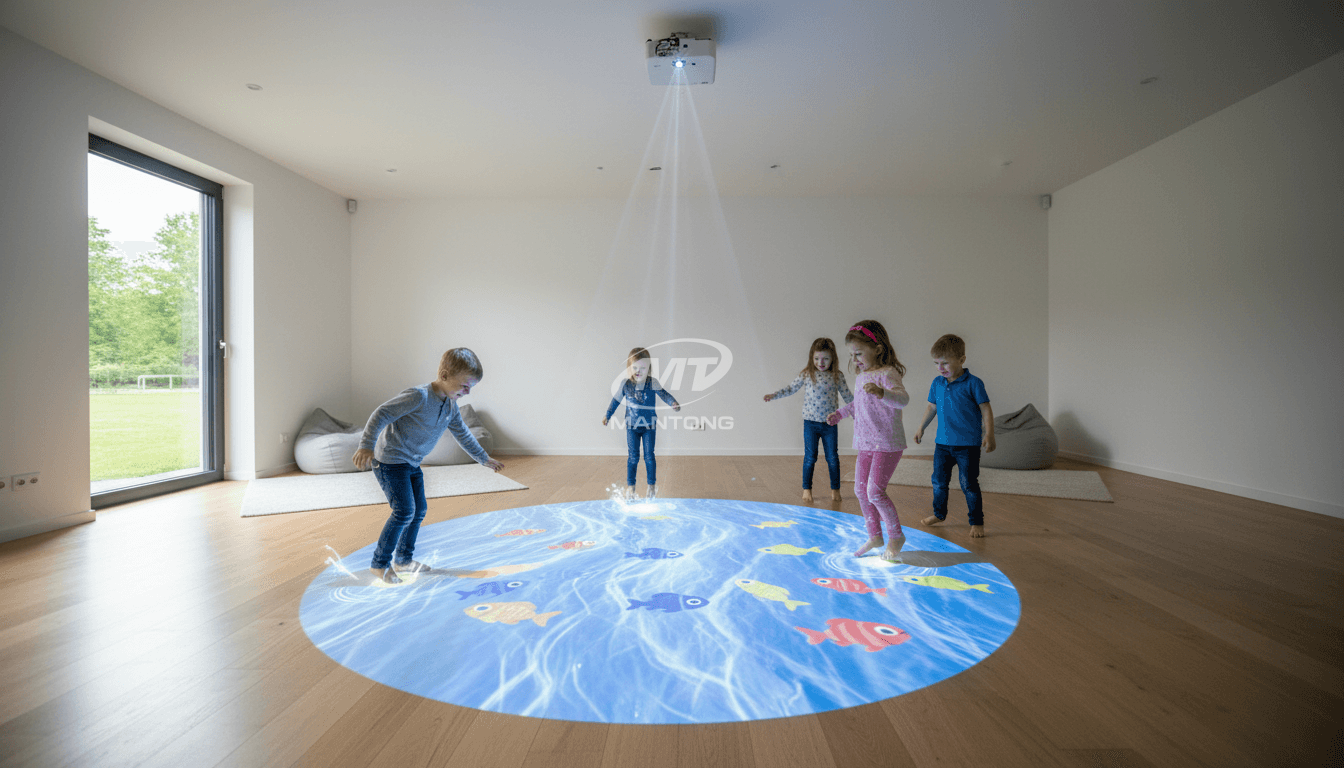
At its core, an interactive floor projector is a system that projects dynamic images onto a floor surface and changes those images in response to human movement. Unlike a standard movie projector that simply displays a pre-recorded video, these systems are "aware" of the physical world.
Core Components
· The Projector: typically a short-throw or ultra-short-throw model to minimize shadows.
· The Sensor: The "eyes" of the system, usually an infrared (IR) camera, LiDAR, or Time-of-Flight (ToF) sensor.
· The Control Unit: A computer running specialized interactive floor projector software that processes sensor data and renders graphics in real-time.
The Technology Behind the Magic: How It Works
To achieve a seamless virtual floor projection, the system must track movement with millisecond precision. Understanding the hardware nuances is critical for choosing the right setup.
Motion Sensing & Tracking
· Infrared (IR) Cameras: The most common method involves bathing the floor in invisible infrared light. When a person steps on the floor, they reflect this light back to the camera. The software interprets this reflection as a "touch" or "click."
· LiDAR (Light Detection and Ranging): As noted in technical comparisons by industry experts, LiDAR offers superior precision by using laser pulses to create a 3D map of the environment. This allows for accurate tracking even in varying lighting conditions where standard cameras might fail.
· Time-of-Flight (ToF) Sensors: These measure the time it takes for a light pulse to travel to the object and back. While generally lower resolution than LiDAR, ToF sensors are faster and increasingly affordable for consumer-grade portable interactive floor solutions.
Projector Types: The Throw Ratio Factor
For floor projection, the "throw ratio" is the most critical specification. Standard projectors require a long distance to create a large image, which means anyone walking on the floor would cast a huge shadow, breaking the immersion.
According to projection specialists like SSA Digital, Ultra-Short-Throw (UST) projectors are the gold standard for these installations. With a throw ratio under 0.4, a UST projector can cast a massive 100-inch image from just inches away, practically eliminating shadows and keeping the hardware safely out of the way.
Benefits of Interactive Floor Projection Systems
The adoption of immersive floor technology is driven by tangible benefits across various sectors, particularly in education and healthcare.

Educational Value: Kinesthetic Learning
One of the most profound applications is in education. Kinesthetic learning projectors align with the "movement-based learning" philosophy. Research cited by educational resources like Math & Movement suggests that students retain significantly more information (up to 75%) when actively participating in a task compared to passive listening (10%). By physically jumping on the answer to a math problem or stomping on virtual vocabulary words, students engage motor memory, making learning "stick."
Therapeutic & Healthcare Impact
In healthcare, interactive displays for floor systems are revolutionizing rehabilitation and elderly care. Facilities use them to encourage mobility in a safe, barrier-free environment.
· For Seniors: Games that require stepping on virtual objects can improve balance and coordination, reducing fall risks. As highlighted by SensoryOne, these projections also offer "reminiscence therapy" by projecting familiar nature scenes or interactive koi ponds that soothe anxiety in dementia patients.
· For Autism: The multisensory feedback (visual and auditory responses to movement) helps with sensory integration therapy, providing a controlled environment for cause-and-effect learning.
Applications Across Industries
· Retail & Marketing: Stores use motion-sensing floor games to arrest the attention of passersby. A logo that ripples when stepped on increases brand recall and dwell time.
· Entertainment: From arcades to wedding receptions, turning a dance floor into a reactive galaxy of stars adds a layer of interactivity that standard lighting cannot match.
· Museums: Virtual excavations where visitors "brush away" digital sand to reveal artifacts enhance engagement without risking damage to real exhibits.
Installation, Setup & Calibration: A Practical Guide
Achieving a professional-grade floor projection system benefits from careful planning. Here is a streamlined approach to installation.
1. Site Assessment
· Flooring: The floor should be light-colored and matte. Dark or glossy floors absorb or scatter light, killing the image quality. If necessary, apply a white vinyl floor mat.
· Lighting: Ambient light is the enemy of projection. Ensure the area can be dimmed, or choose a high-lumen laser projector (5,000+ lumens) for brighter spaces.
2. Hardware Mounting
Most systems are ceiling-mounted to project straight down. Ensure the mount is rigid; even micro-vibrations can de-calibrate the sensor mapping. For portable setups, "box" units containing both projector and sensor are available but require clear floor space.
3. Software Calibration
This is the most critical step. You must "map" the projection area so the computer knows exactly where the floor pixels correspond to the sensor's view.
· Masking: Use the software to mask out non-interactive areas (like furniture legs) so the system doesn't trigger false touches.
Troubleshooting Common Issues & Maintenance
Even the best interactive floor projector software can encounter hiccups.
· Drifting Calibration: If the interactive spots don't align with the image, the sensor has likely moved. Recalibrate immediately.
· Blurry Images: Check the focus ring, but also check for dust. According to maintenance guides from manufacturers like Nebula and BenQ, cleaning the lens should be done with a microfiber cloth in a circular motion—never use paper towels, which can scratch the coating.
· Overheating: Floor projectors often run for hours. Regularly clean the air filters to prevent thermal shutdowns.
The Future of Interactive Floor Systems (2026 and Beyond)
Looking ahead, the industry is moving toward AI-driven adaptability. Future systems will not just react to movement but analyze it. Imagine a physical therapy floor that automatically increases the difficulty of a game as it detects the patient's balance improving.
Furthermore, the integration of IoT (Internet of Things) will allow floor projectors to communicate with smart lighting and sound systems, creating fully immersive environments where the entire room reacts to a user's footsteps. With costs decreasing and portable interactive floor solutions becoming more powerful, this technology is set to become a staple in schools, clinics, and homes worldwide.
Frequently Asked Questions
What is the typical cost of an interactive floor projector system?
Costs vary widely based on projector quality, sensor type, and software complexity. Basic DIY setups using a standard webcam and projector can cost a few hundred dollars. However, professional, turnkey systems for schools or hospitals typically range from $3,500 to over $15,000, which includes high-brightness laser projectors, dedicated PCs, and licensed content libraries.
Can interactive floor projectors be used outdoors?
Standard systems are designed for indoor use. Sunlight easily overpowers most projectors, making the image invisible. Additionally, infrared sensors can be blinded by the IR radiation in sunlight. For outdoor use, you would need expensive, specialized high-lumen hardware and weatherproof enclosures, and it would likely only work effectively after dusk.
What kind of content or games are available?
There is a vast library of content available, ranging from educational math and spelling games to therapeutic water ripple effects and high-energy sports simulations (like virtual soccer). Many providers offer an SDK (Software Development Kit) that allows developers to create custom branded content for marketing events.
How difficult is it to install an interactive floor projector?
A permanent ceiling installation requires basic construction skills (drilling into concrete or drywall anchors) and cable management. The software side involves a calibration process that can be tricky for first-timers. However, "plug-and-play" portable box units are available that require zero installation—just place them on the floor and turn them on.
Are interactive floor projectors safe for children and seniors?
Yes, they are extremely safe. Unlike VR headsets, users maintain full situational awareness of their actual surroundings. There are no cables on the floor to trip over (in ceiling-mounted setups), and the interaction is entirely touch-free, promoting hygiene.
Can I integrate an interactive floor projector with my existing smart home?
Yes, advanced systems with open APIs can integrate with smart home controllers. This allows for scenarios like dimming the room lights automatically when the projector turns on or changing the ambient music to match the projected game theme.


One-Stop Projection Solution Provider Since 2011
How to Write an Interactive-Effect Video Customisation Script ?
① Project Background: Briefly introduce the context in which this interactive scene will be used (e.g., exhibition, museum,
event space, children's area). Example: This scene is part of the “Underwater World” zone in a children's science museum,
designed to be engaging and exploratory.
②Visual Style / Atmosphere: What kind of visual mood are you aiming for? Please describe the color scheme, style, and any
references. it should focus solely on describing the visual aspects of the scene, supported by relevant charts or reference
images.
③ Interaction Points Overview:List each interactive hotspot along with the effect you'd like to trigger when the user
touches or clicks the area. example: when player touch the clownfish, it will swims away with bubble trail (animation effect)
and produce the bubble sound ( sound effect requirement )
④ Static Visual Reference:including but not limited to background image/video, a list of major visual elements (e.g., coral,
rocks, seaweed, fish), which elements should be interactive?
What's Immersive Projection ?
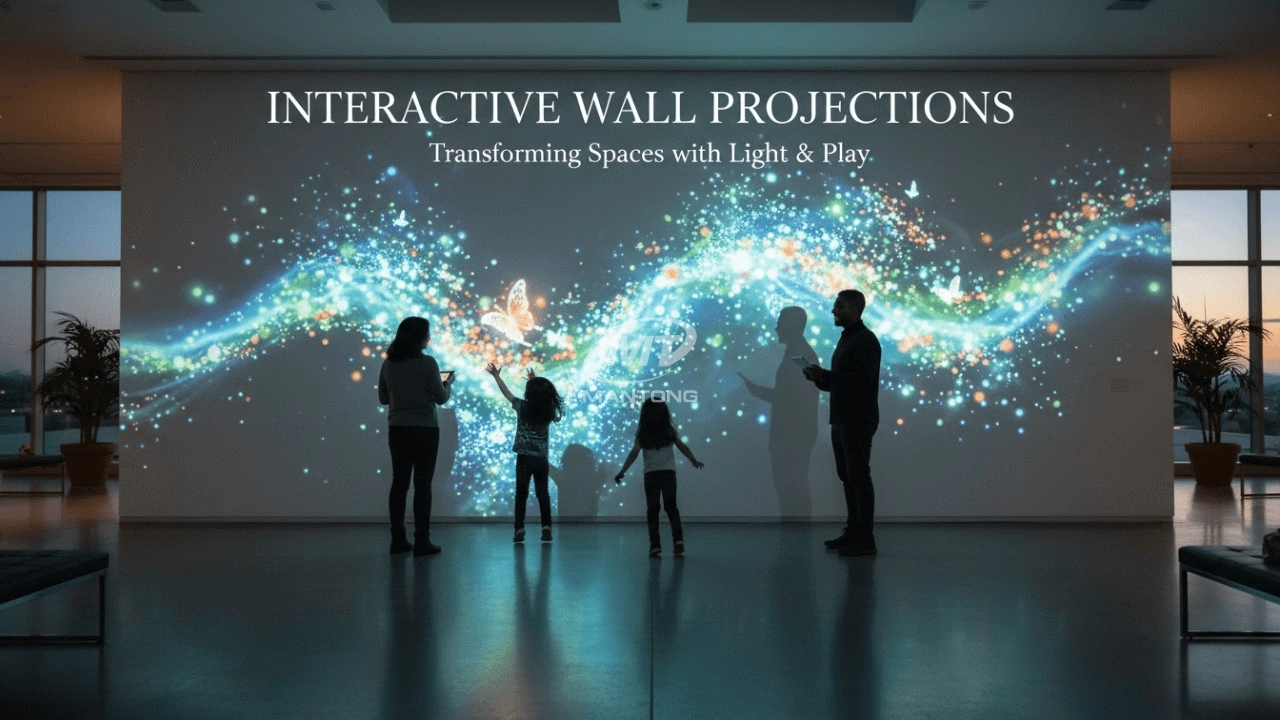
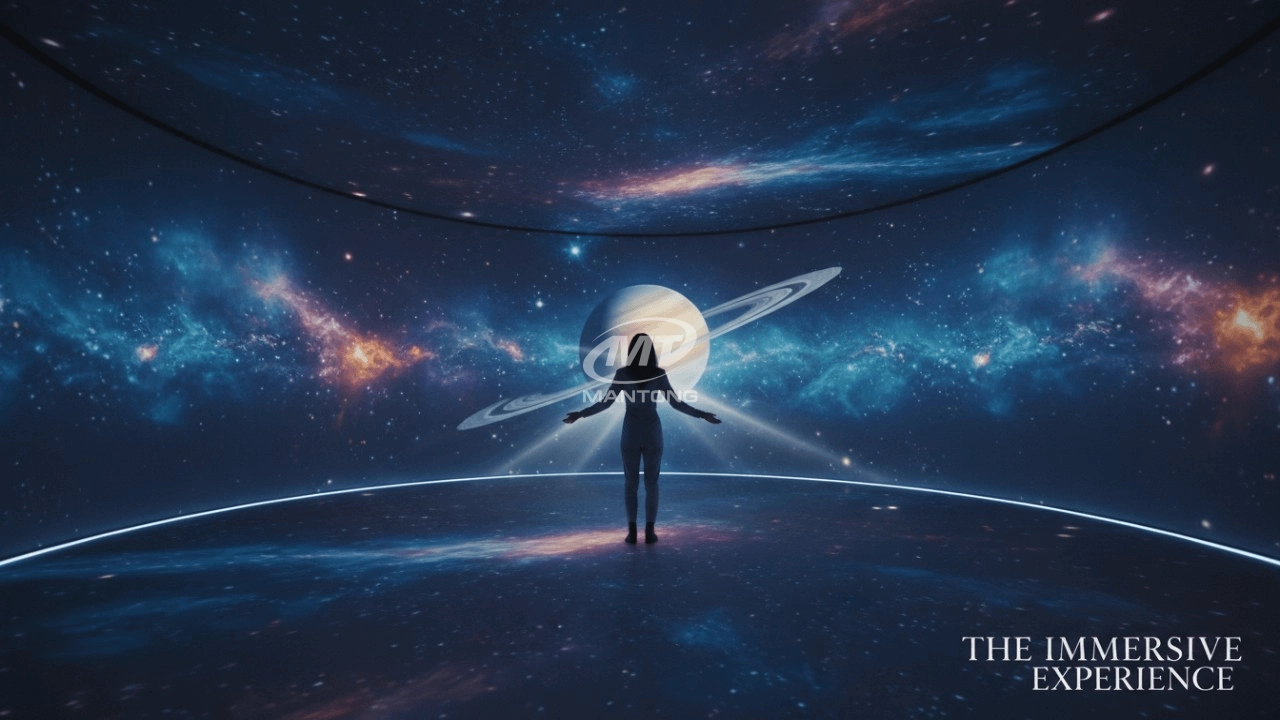
Immersive projection refers to a technology that creates a captivating and all-encompassing visual experience for viewers by projecting images or videos onto large surfaces, such as walls, floors, or even entire rooms. This technology aims to immerse the audience in a simulated environment, blurring the boundaries between the physical and virtual worlds.
Are you trader or manufacturer ?
We are direct manufacturer who specialize in providing one-stop solution for different outdoor & indoor projection project with our stable software and qualified projectors
What about the wall/floor material for the projection?
It’s recommended to choose a light-colored material with minimal reflectivity—pure white or light grey works best. the
common material is cement & plaster board
For optimal projection results, the surface should be free of any patterns or textures, as the projector will display content
directly onto it.
There are no specific material requirements; you may use any commonly available material in your local market, as long as it
meets the above conditions.
What information do you need to know before making the proposal/solution?
We know that everyone wants to know the price, but the price of our products is determined by many factors since most of our products are custom, so no ready price list. In order to fast understand what you need, can you send us an inquiry like this?
For example: I am really interested in your immersive projection products, we are a company in the USA and want to install some in my restaurant. It is about 50 meters long, and 5m in width. Projection size you can decide but the length should be not less than 20 meters. We want some content about SeaWorld because our place is all about the sea. Thank you.
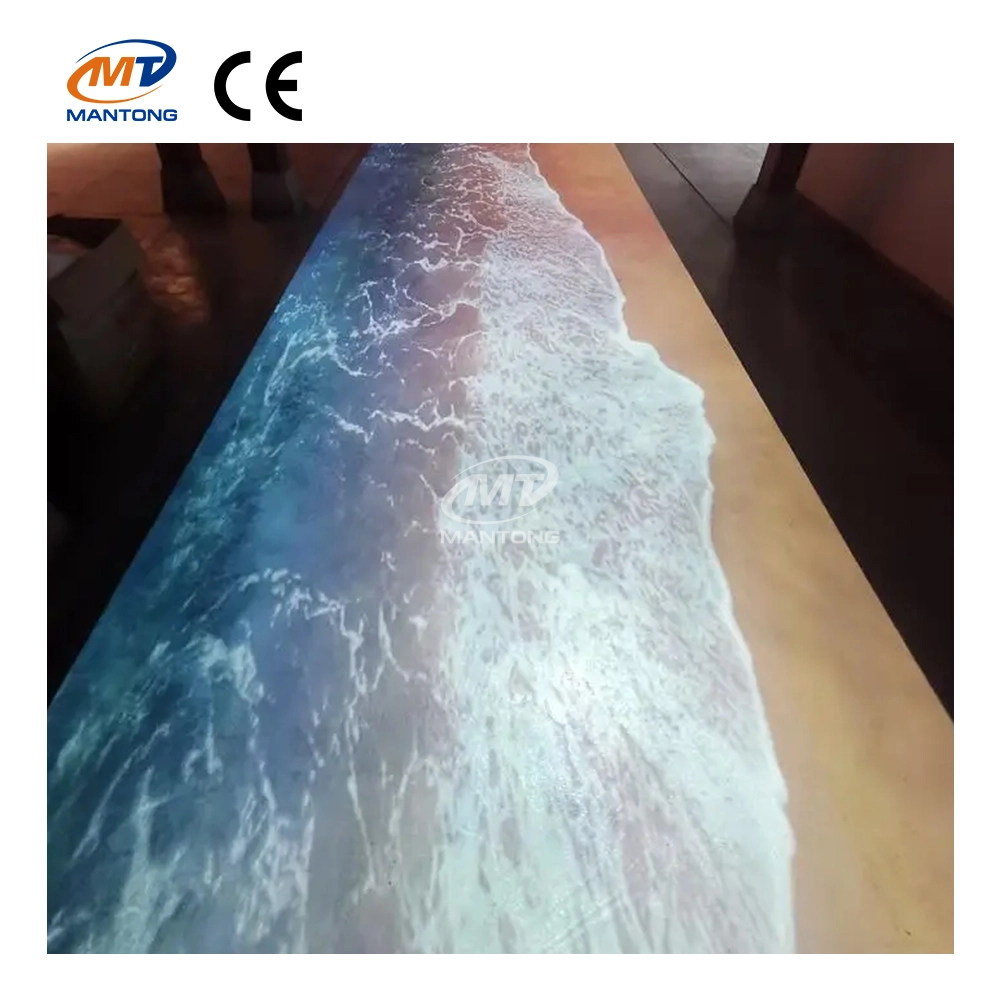
Indoor interactive floor projections display dynamic themed videos on the floor, commonly used in venues aiming to enhance brand influence or attract foot traffic, such as restaurants, hotel corridors, and brand car retail stores.
By using projectors and compatible software, the interactive content is projected onto the floor, encouraging engagement between people and the projected visuals. A single 5500-lumen indoor floor projector can cover an area of 5 m × 3 m. Typically, each project will use at least 3 units to ensure broad coverage and optimal visual effects.
We also offer customized design and installation support to enhance the interactive experience for your venue.
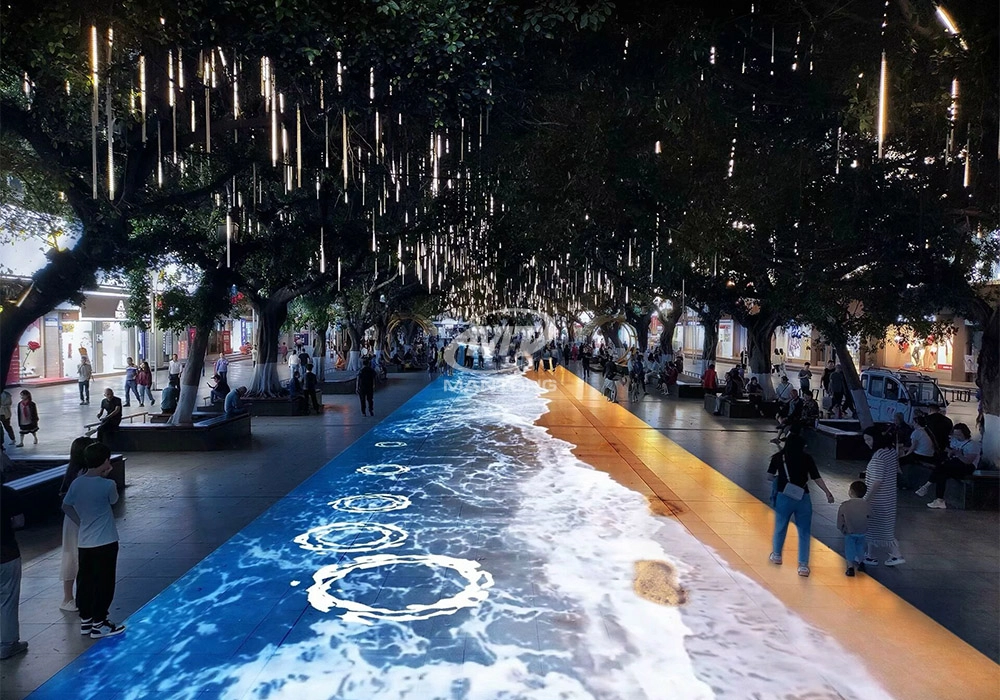
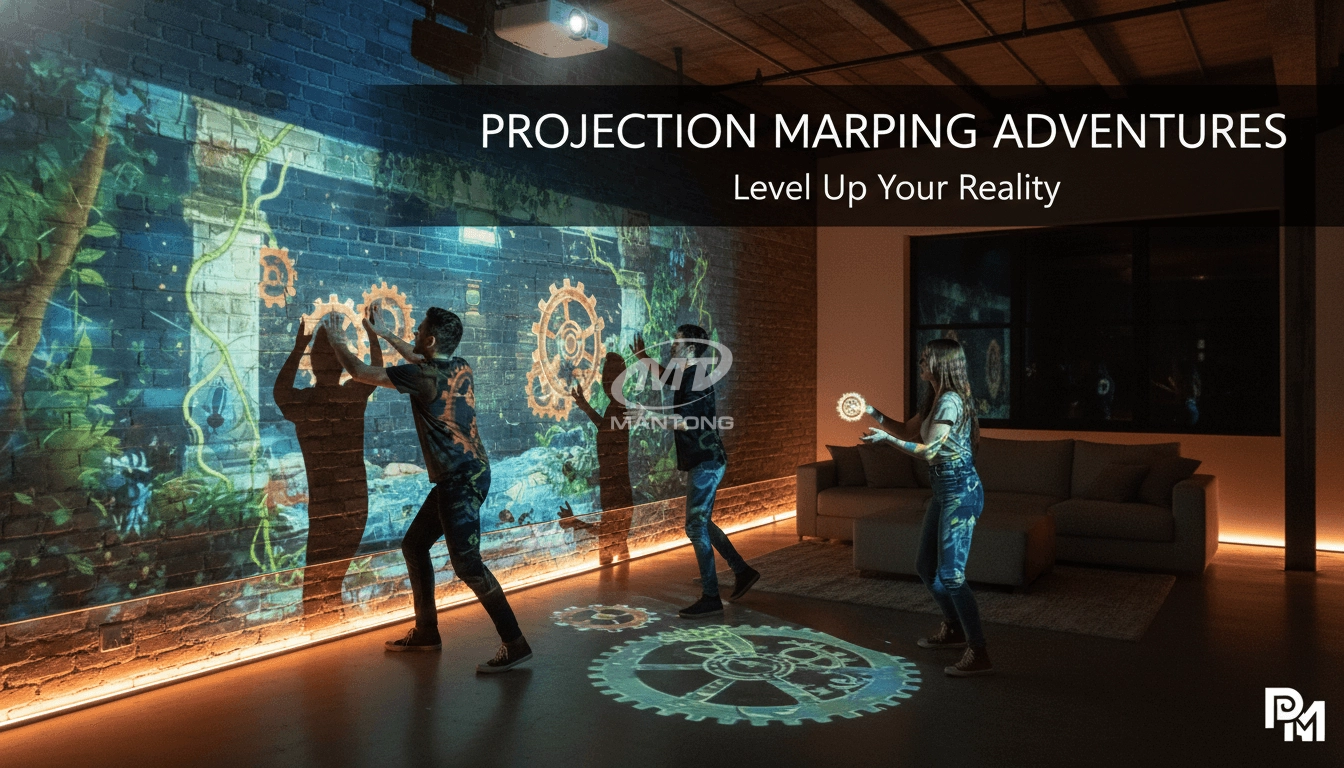
Combining projection mapping with 3D interactive ground projection technology brings an unprecedented immersive experience to outdoor scenes.
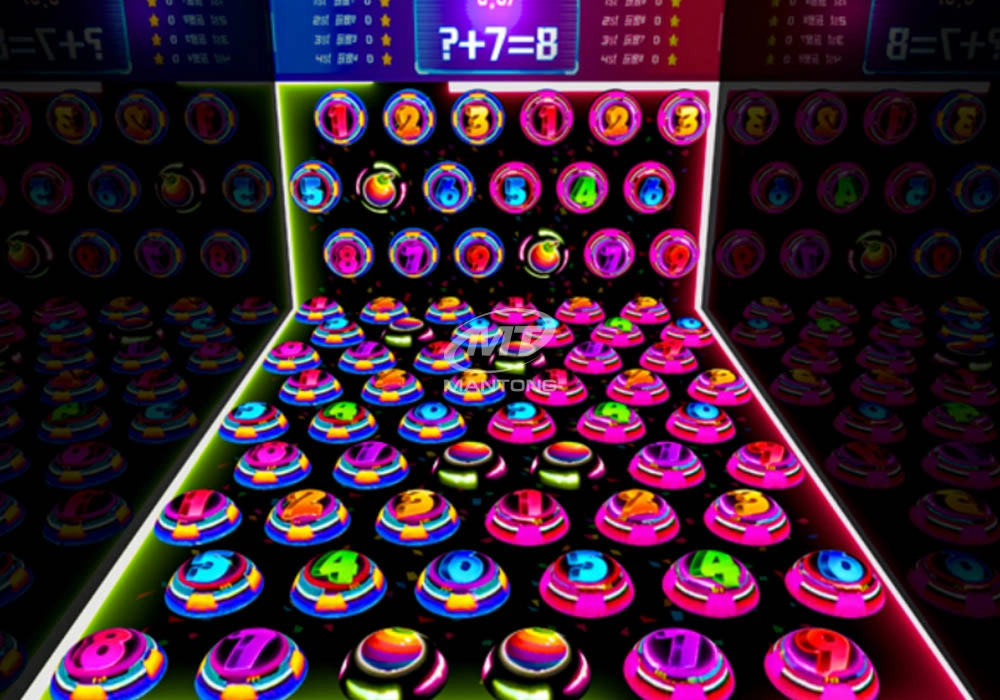
Rapidly Rotating Bouncing Sphere is an interactive space where participants jump on rotating spheres. As they step on it, the spheres surface will show special interactivity
Jumping on spheres of the same color in succession causes them to pop, releasing light particles. The more consecutive jumps, the greater the reward—caterpillars appear, and eventually, all spheres of that color burst, filling the space with light and even more caterpillars.
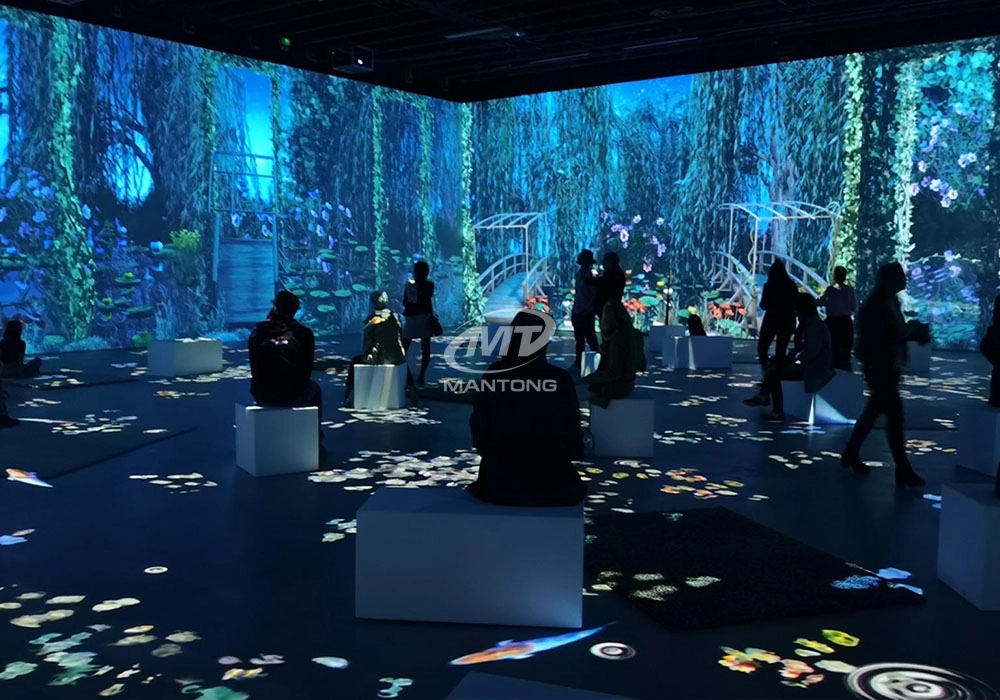
Transform any space with Mantong's immersive projection mapping systems. Our high-lumen projectors (up to 6500 LM) and custom software create captivating interactive experiences for floors and walls. Ideal for museums, events, retail, and hospitality. Each kit includes professional ceiling mounting and 80+ pre-loaded video contents and is backed by a 12-month warranty and CE certification. We offer full customization and support to bring your vision to life.
Contact Us to Start Your Interactive Projection Journey
Contact us now to discuss how to create innovative projection solutions for your space.

Kaida Business Center, Shixin Road, Panyu District,Guangzhou City, Guangdong Province, China.
ManTong
ManTong
ManTong