
Interactive Floor Projector Price Guide 2026: Your Complete Investment Breakdown
A comprehensive 2026 guide to interactive floor projector pricing, covering hardware, software, installation, and hidden costs to help you budget effectively.
- Introduction
- What is the Price Range of an Interactive Floor Projector System in 2026?
- Quick Summary: Key Takeaways for Interactive Floor Projector Pricing
- Core Components & Their Impact on Interactive Floor Projector Costs
- Deconstructing the Price: Key Factors Influencing Your Investment
- Initial vs. Total Cost of Ownership (TCO): What to Budget For Annually
- Interactive Floor Projector Systems by Application & Budget Tier (2026 Insight)
- Maximizing Your Investment: Expert Tips for Interactive Floor Projector Buyers
- Common Mistakes to Avoid When Budgeting for an Interactive Floor Projector
- Future Trends Shaping Interactive Floor Projector Prices in 2026+
- FAQ: Interactive Floor Projector Pricing
- How much does a basic interactive floor projector cost?
- What factors determine the price of an interactive projection system?
- Are there different price points for commercial vs. home use?
- What ongoing costs are associated with an interactive floor projector?
- Can I save money by installing an interactive floor projector myself?
- What is typically included in the purchase price of an interactive floor system?
- How does software impact the overall cost of an interactive floor projector?
- Is an interactive floor projector a good investment for retail spaces?
Introduction
Creating an immersive environment requires a clear understanding of the Interactive projection system cost before diving in. Whether you are transforming a retail space, a museum, or a classroom, the investment involves more than just buying a projector. In 2026, pricing structures have evolved to include advanced sensor technology, AI-driven software content, and sophisticated installation requirements. This guide breaks down the Motion floor projector pricing landscape, ensuring you have the data needed to calculate your Immersive experience technology budget accurately.
What is the Price Range of an Interactive Floor Projector System in 2026?
Interactive floor projector systems in 2026 typically range from $5,000 for basic all-in-one setups to over $50,000 for high-end, multi-projector custom installations. This wide price variance is primarily dictated by the projection size, luminosity requirements (lumens), software licensing models, and the complexity of the sensor array used for tracking motion.
While entry-level DIY kits utilizing basic webcams and lower-lumen projectors can be assembled for under $1,500, commercial-grade reliability demands a higher bracket. For a standard 10x6 foot interactive area in a well-lit retail environment, businesses should anticipate spending between $10,000 and $15,000. This investment ensures fluid motion response and sufficient brightness to combat ambient light, which is critical for user engagement.
· DIY / Entry Level: $500 – $2,500 (Best for home use or dark rooms)
· Commercial Standard: $8,000 – $18,000 (Ideal for schools, retail, and lobbies)
· Enterprise / High-End: $30,000 – $50,000+ (Museums, large event spaces, multi-zone tracking)
Quick Summary: Key Takeaways for Interactive Floor Projector Pricing
The total cost of ownership is driven heavily by software subscriptions and content creation rather than just the initial hardware purchase. Buyers often overlook that the physical projector is a one-time cost, whereas software updates and new game content represent recurring expenses that impact the long-term Interactive display solutions investment.
To ensure you are budgeting correctly, keep these core takeaways in mind:
· Hardware vs. Software: Hardware is roughly 60% of the initial cost, but software can exceed hardware costs over 3-5 years.
· Luminosity Matters: Projectors under 4,000 lumens are cheaper but often fail in commercial lighting conditions.
· Installation: Professional rigging and calibration can add $1,000 to $5,000 to the final bill.
· Scalability: Systems designed to link together (edge blending) cost significantly more due to advanced software requirements.
· Maintenance: Budget 5-15% of the initial cost annually for lamp replacements and sensor recalibration.
Core Components & Their Impact on Interactive Floor Projector Costs
The three primary cost drivers are the high-lumen projector unit, the motion tracking sensors, and the interactive software engine that binds them together. Each component varies in quality and capability, allowing for modular pricing based on performance needs.
Understanding these components helps in creating a precise Immersive experience technology budget:
1. Projector Unit (40-50% of cost):
o Lumens: Higher brightness (5,000+ lumens) is essential for retail floors but increases price.
o Throw Ratio: Ultra-short-throw lenses cost more but prevent shadows when people walk on the display.
o Lifespan: Laser projectors cost more upfront than lamp-based ones but save money on maintenance.
2. Motion Sensors & Cameras (10-20% of cost):
o IR Sensors: Cheaper, good for basic motion.
o LiDAR/Depth Cameras: More expensive, required for precise multi-user tracking and gesture control.
3. Interactive Software & Content (20-30% of cost):
o Standard Library: Pre-made effects (water ripples, soccer) are cost-effective.
o Custom Content: Branded games or specific scenarios can cost thousands in development fees.
4. Computer/Media Server (10% of cost):
o High-performance PCs with dedicated GPUs are needed to render real-time graphics without lag.
Deconstructing the Price: Key Factors Influencing Your Investment
The final price tag is most heavily influenced by the level of customization required and the physical constraints of the installation environment. A "plug-and-play" box is significantly cheaper than a ceiling-mounted system that requires structural rigging and electrical integration.
When calculating Motion floor projector pricing, consider these variables:
· Display Size: Larger floors require multiple projectors and "edge blending" software, doubling or tripling hardware costs.
· Ambient Light: High ambient light requires powerful laser projectors (6,000+ lumens), which are premium priced.
· Interactivity Level: Single-user interaction is standard; multi-user tracking (e.g., 10 kids playing soccer simultaneously) requires advanced processing power and sensors.
· Brand Reputation: Established Western brands often charge a premium for better support and warranty compared to generic imports.
· Installation Complexity: High ceilings (over 12 feet) require specialized lifts and long-throw lenses, adding to labor and parts costs.
Initial vs. Total Cost of Ownership (TCO): What to Budget For Annually
A realistic budget must include recurring costs such as software subscriptions, content updates, and hardware maintenance, which can total 15-20% of the initial purchase price annually. Ignoring TCO is a common reason why Commercial interactive floor systems ROI calculations fail over the long term.
According to recent industry data, hardware maintenance alone can erode budget reserves if not planned for. Here is what to expect annually:
· Software Licensing: Many platforms now use a SaaS model, charging $500–$2,000/year for updates and cloud management.
· Content Refresh: Keeping the floor engaging requires new games or seasonal themes. Custom content development can range from $1,000 to $10,000 per project.
· Lamp/Laser Maintenance:
o Lamp Projectors: Bulbs cost $150–$400 and last 2,000–4,000 hours.
o Laser Projectors: No bulb replacement, but the unit eventually degrades after 20,000 hours.
· Electricity: High-lumen projectors consume significant power; running a 500W system for 12 hours a day adds up in utility bills.
Interactive Floor Projector Systems by Application & Budget Tier (2026 Insight)
Different industries require vastly different specifications, meaning a school's budget will look very different from a luxury retail flagship's investment. It is crucial to match the hardware tier to the use case to avoid overspending on unnecessary features or underspending on durability.
· Entry-Level (Education & Small Play Areas): $5,000 - $12,000
o Focus: Durability and simple educational games.
o Specs: 3,500-4,000 lumens, standard throw, basic IR tracking.
o Application: Preschools, sensory rooms, small waiting areas.
· Mid-Range (Corporate & Events): $12,000 - $30,000
o Focus: Brand engagement and high-definition visuals.
o Specs: 5,000+ lumens, laser source, accurate multi-touch sensors.
o Application: Hotel lobbies, trade show booths, corporate showrooms.
· High-End (Museums & Flagship Retail): $30,000+
o Focus: Total immersion and seamless large-scale integration.
o Specs: 7,000+ lumens, 4K resolution, LiDAR tracking, custom content.
o Application: Immersive art exhibits, large mall atriums, interactive architectural mapping.

Maximizing Your Investment: Expert Tips for Interactive Floor Projector Buyers
To maximize ROI, prioritize a high-quality sensor and software package over raw projector resolution, as interaction fluidity is more important than pixel count for floor applications. Users interacting with a floor display are moving; they notice lag much faster than they notice a lack of 4K resolution.
Follow these expert strategies to protect your Interactive display solutions investment:
1. Negotiate Software Bundles: Ask for a "lifetime license" option to avoid recurring annual fees.
2. Opt for Laser: While the upfront cost is 20-30% higher, the lack of bulb replacements saves money and downtime over 3 years.
3. Content is King: A $50,000 system with boring content will fail. Allocate at least 25% of your budget to high-quality, rotating content.
4. Define ROI Metrics: For retail, track "dwell time" or "foot traffic" specifically near the projector to measure success.
5. Check Ceiling Height: Ensure your space supports the throw distance; otherwise, you will need expensive ultra-short-throw lenses.
Common Mistakes to Avoid When Budgeting for an Interactive Floor Projector
The most frequent budgeting error is underestimating the cost of professional installation and site preparation, which often exceeds the hardware cost in complex environments. Buyers frequently see the "kit price" online and assume that is the final total.
Avoid these financial pitfalls:
· Ignoring Ambient Light: Installing a standard projector near windows will result in a washed-out, invisible image.
· Forgetting Audio: Immersion is 50% sound. Budget for external speakers if the projector's built-in audio is weak (which it usually is).
· Overlooking Cabling: Long runs of HDMI and USB cables require expensive signal boosters or CAT6 extenders.
· Neglecting Support Contracts: If the system crashes on a Friday night, do you have a paid support plan to get it back up?
Future Trends Shaping Interactive Floor Projector Prices in 2026+
As of 2026, the integration of AI-generated real-time content and the miniaturization of laser projection engines are driving costs down while increasing capabilities. The market is shifting from static game libraries to dynamic, AI-responsive environments.
· AI Content Generation: Generative AI reduces the cost of custom graphics, allowing unique themes to be created in minutes rather than weeks.
· Hybrid AR/VR: Systems are beginning to integrate with mobile AR, allowing users to interact with the floor via their smartphones, adding value without hardware costs.
· Hardware Efficiency: New "lamp-free" LED and laser projectors are becoming standard, reducing long-term energy and maintenance costs significantly.
FAQ: Interactive Floor Projector Pricing
How much does a basic interactive floor projector cost?
A basic interactive floor projector system typically costs between $5,000 and $8,000 in 2026. This generally includes a 3,000-4,000 lumen projector, a basic motion sensor (IR), and a PC with pre-loaded standard effects.
What factors determine the price of an interactive projection system?
Price is determined by projector luminosity (brightness), resolution, sensor accuracy (LiDAR vs. IR), and software licensing. Custom content creation and complex installation rigging also significantly increase the final price.
Are there different price points for commercial vs. home use?
Yes, commercial systems cost 3-4x more than home systems due to the need for 24/7 operation durability and higher brightness. Home systems often use lower-grade sensors and projectors that cannot withstand continuous commercial use.
What ongoing costs are associated with an interactive floor projector?
Ongoing costs include software subscription fees, new content purchasing, electricity, and hardware maintenance. For lamp-based systems, bulb replacement every 3,000 hours is a major recurring expense.
Can I save money by installing an interactive floor projector myself?
Yes, DIY installation can save $1,000 to $5,000 in labor costs, provided you have the technical skills to mount hardware safely and calibrate the software. However, improper calibration is the leading cause of poor user experience.
What is typically included in the purchase price of an interactive floor system?
Most comprehensive kits include the projector, motion sensor, computer/server, mounting bracket, and software license. Cables and external audio systems are often sold separately or as part of an installation package.
How does software impact the overall cost of an interactive floor projector?
Software impacts cost through licensing models; one-time perpetual licenses are expensive upfront but cheaper long-term, while SaaS subscriptions lower entry costs but increase TCO. Advanced features like analytics tracking also command higher software fees.
Is an interactive floor projector a good investment for retail spaces?
**Yes, data suggests interactive displays increase customer dwell time and engagement, leading to a positive Commercial interactive floor systems ROI. Retailers often see increased foot traffic and brand recall when using interactive signage effectively.

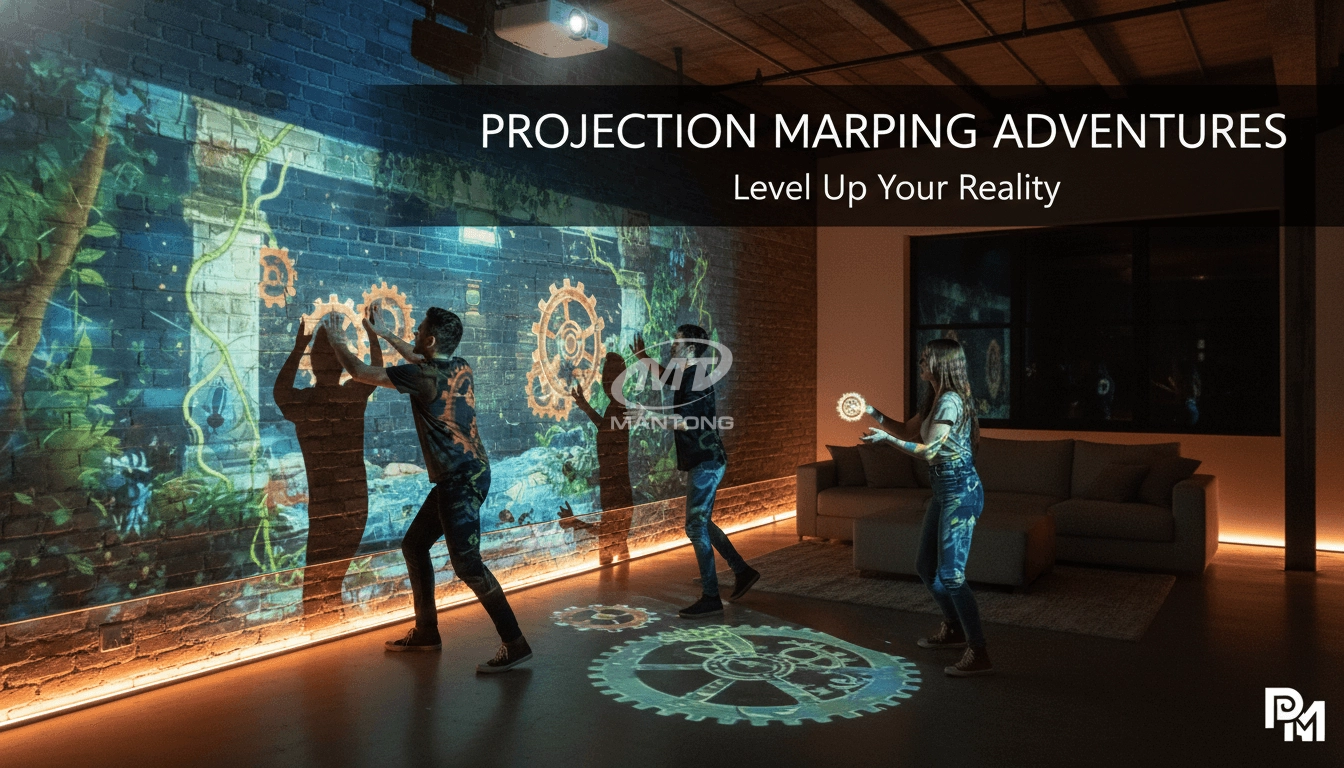

One-Stop Projection Solution Provider Since 2011
How to Write an Interactive-Effect Video Customisation Script ?
① Project Background: Briefly introduce the context in which this interactive scene will be used (e.g., exhibition, museum,
event space, children's area). Example: This scene is part of the “Underwater World” zone in a children's science museum,
designed to be engaging and exploratory.
②Visual Style / Atmosphere: What kind of visual mood are you aiming for? Please describe the color scheme, style, and any
references. it should focus solely on describing the visual aspects of the scene, supported by relevant charts or reference
images.
③ Interaction Points Overview:List each interactive hotspot along with the effect you'd like to trigger when the user
touches or clicks the area. example: when player touch the clownfish, it will swims away with bubble trail (animation effect)
and produce the bubble sound ( sound effect requirement )
④ Static Visual Reference:including but not limited to background image/video, a list of major visual elements (e.g., coral,
rocks, seaweed, fish), which elements should be interactive?
What about the wall/floor material for the projection?
It’s recommended to choose a light-colored material with minimal reflectivity—pure white or light grey works best. the
common material is cement & plaster board
For optimal projection results, the surface should be free of any patterns or textures, as the projector will display content
directly onto it.
There are no specific material requirements; you may use any commonly available material in your local market, as long as it
meets the above conditions.
What's Immersive Projection ?
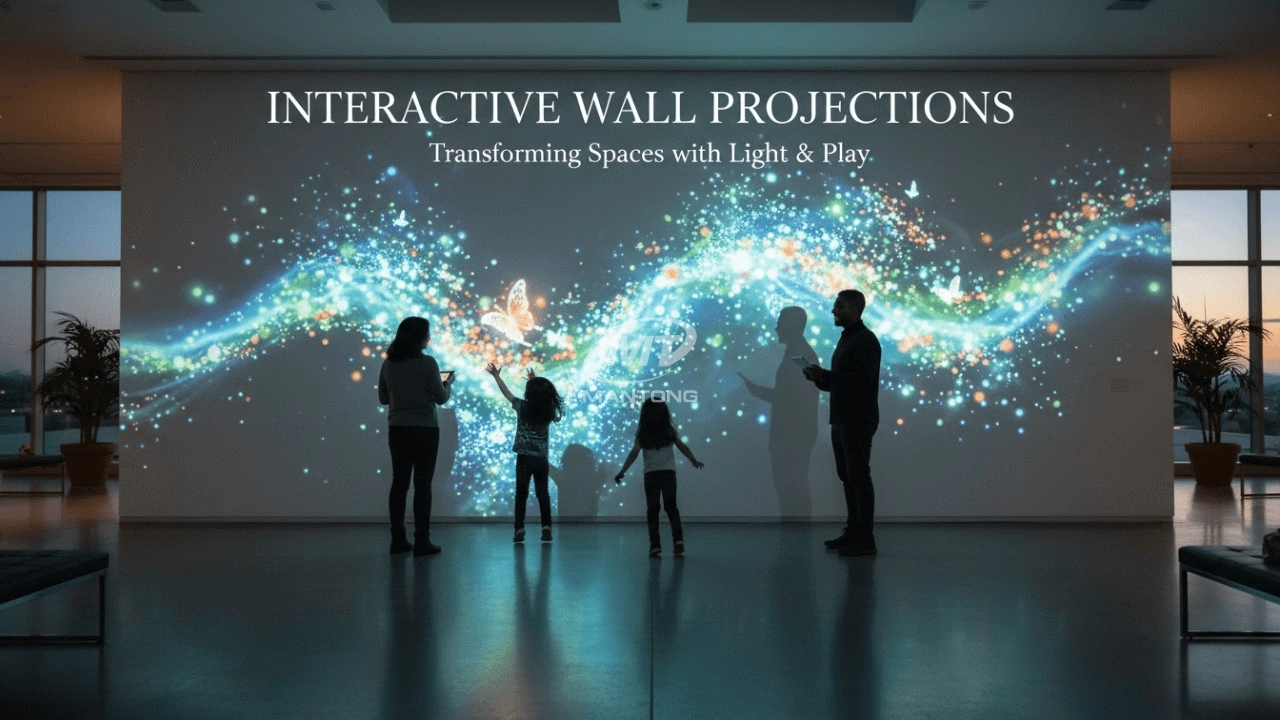
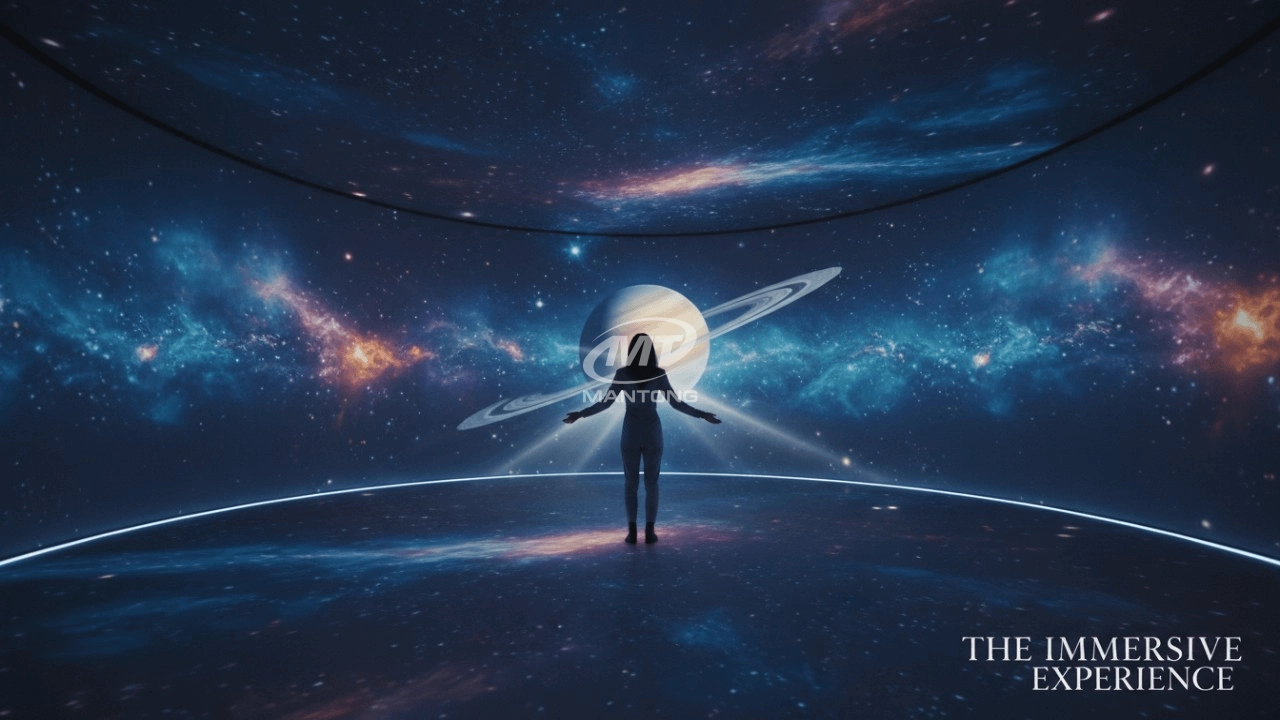
Immersive projection refers to a technology that creates a captivating and all-encompassing visual experience for viewers by projecting images or videos onto large surfaces, such as walls, floors, or even entire rooms. This technology aims to immerse the audience in a simulated environment, blurring the boundaries between the physical and virtual worlds.
Are you trader or manufacturer ?
We are direct manufacturer who specialize in providing one-stop solution for different outdoor & indoor projection project with our stable software and qualified projectors
What's the application of Immersive projection ?
It can be used in various venues, such as art exhibition, entertainment venues, educational institution, Wedding hall /Banquet/Bar,Yoga Studio and so on. It often involves advanced projection techniques, multimedia content, and interactive elements to engage and captivate the audience's senses.
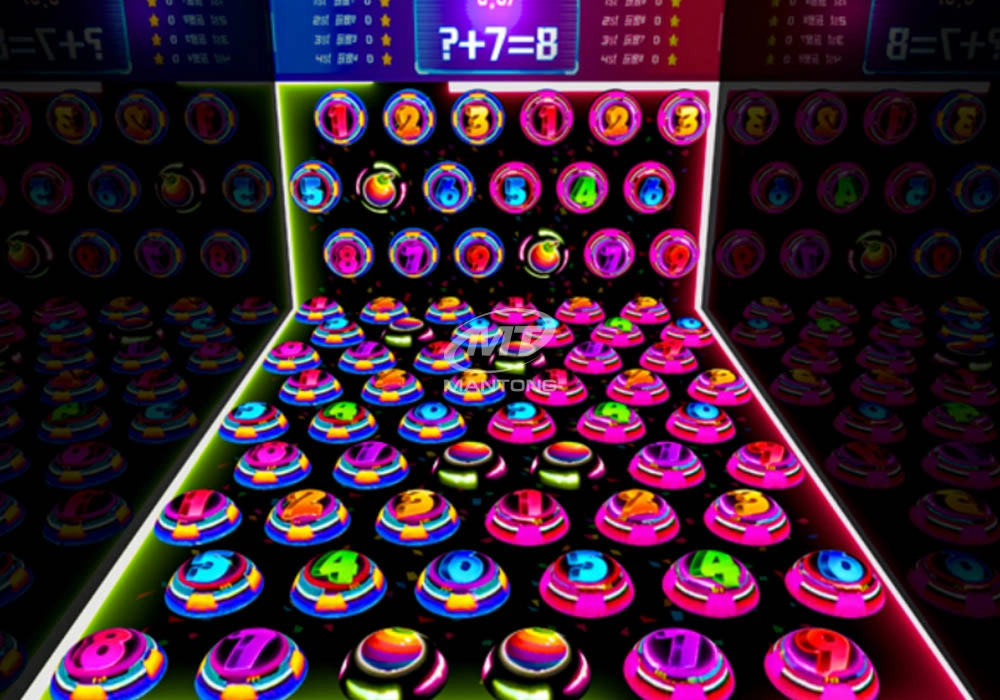
Rapidly Rotating Bouncing Sphere is an interactive space where participants jump on rotating spheres. As they step on it, the spheres surface will show special interactivity
Jumping on spheres of the same color in succession causes them to pop, releasing light particles. The more consecutive jumps, the greater the reward—caterpillars appear, and eventually, all spheres of that color burst, filling the space with light and even more caterpillars.
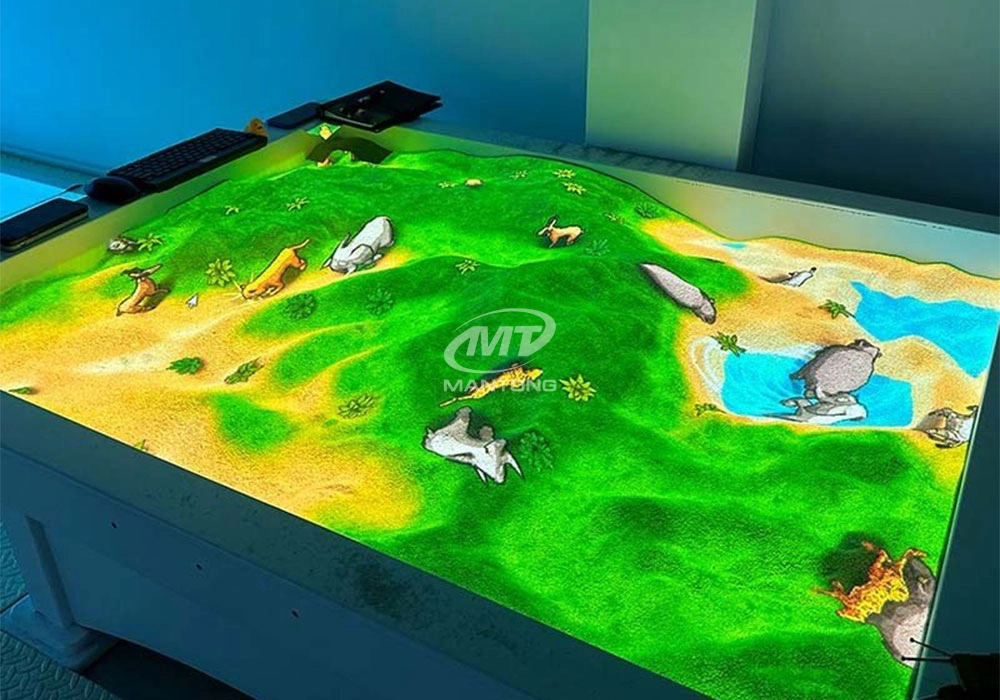
Bring imagination to life with interactive sandbox projection mapping games designed for kids’ play parks. Using cutting-edge projection technology and real-time motion sensing, children can dig, build, and explore virtual worlds directly in the sand. Educational, engaging, and endlessly fun — it’s the perfect blend of play and learning.
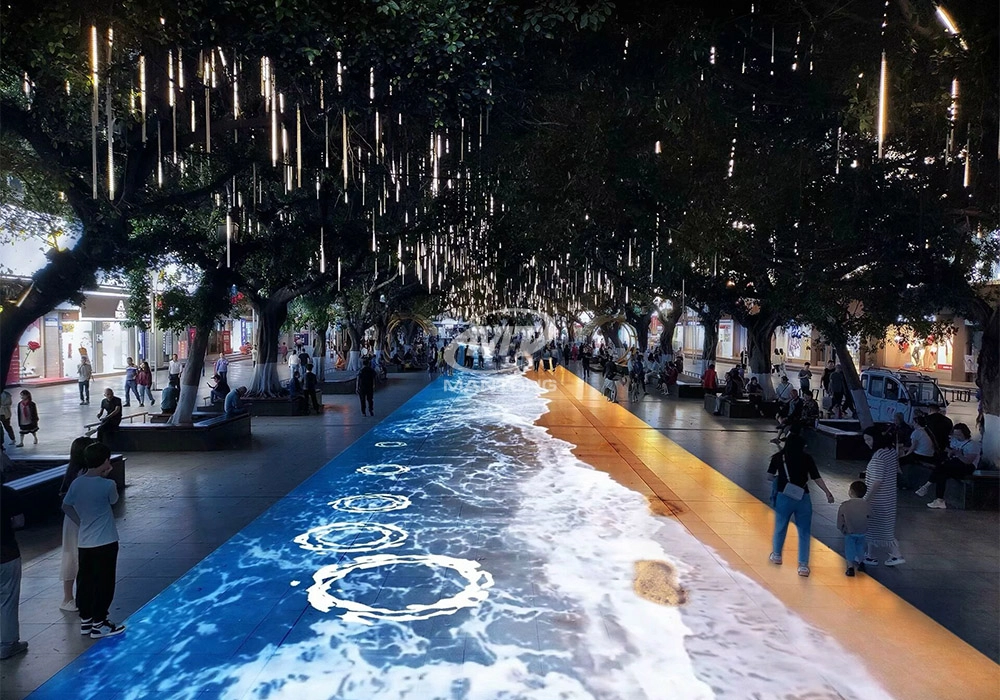
Combining projection mapping with 3D interactive ground projection technology brings an unprecedented immersive experience to outdoor scenes.
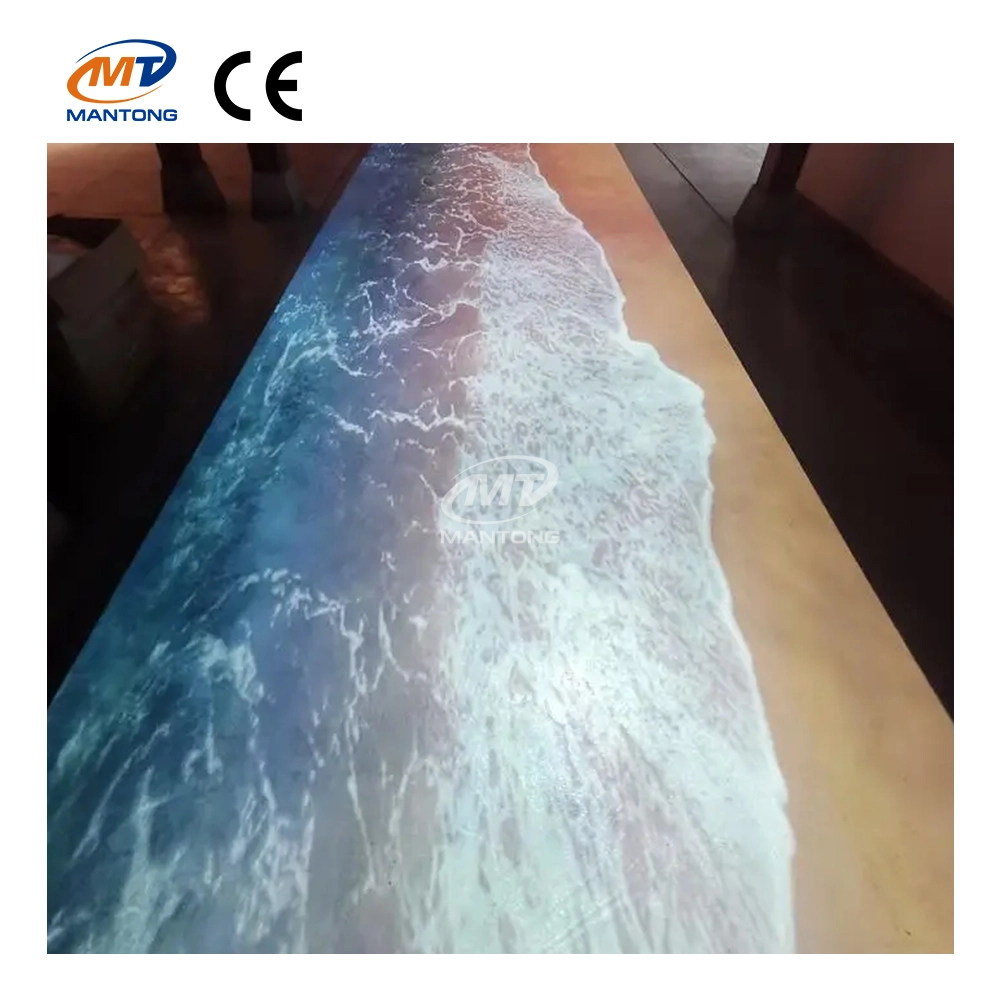
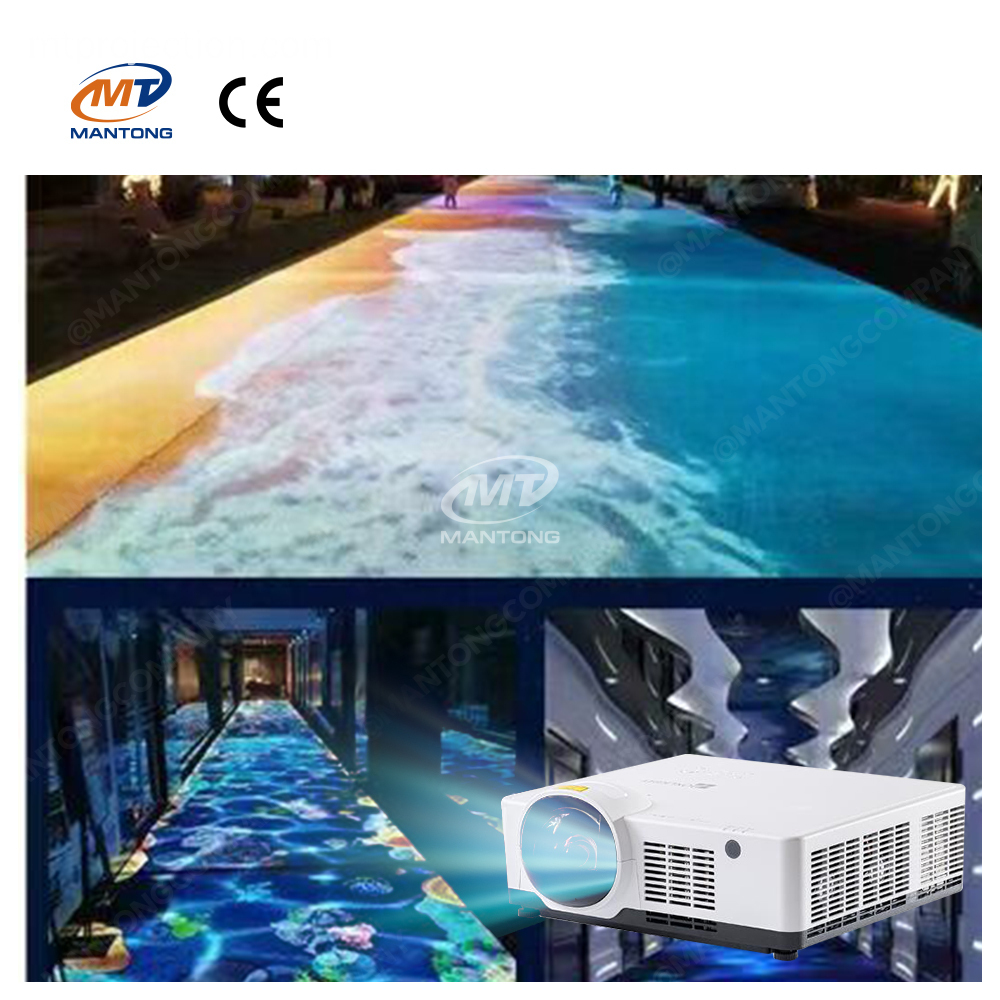
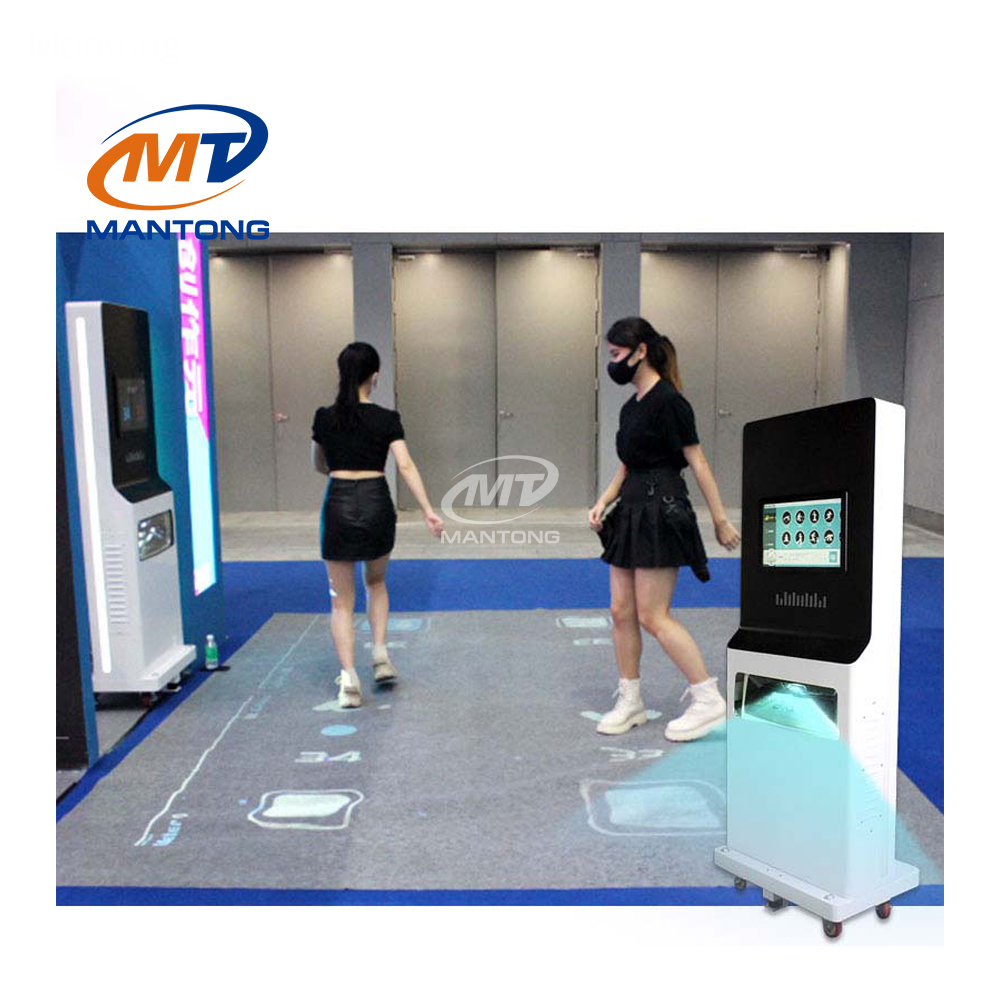
Indoor interactive floor projections display dynamic themed videos on the floor, commonly used in venues aiming to enhance brand influence or attract foot traffic, such as restaurants, hotel corridors, and brand car retail stores.
By using projectors and compatible software, the interactive content is projected onto the floor, encouraging engagement between people and the projected visuals. A single 5500-lumen indoor floor projector can cover an area of 5 m × 3 m. Typically, each project will use at least 3 units to ensure broad coverage and optimal visual effects.
We also offer customized design and installation support to enhance the interactive experience for your venue.
Contact Us to Start Your Interactive Projection Journey
Contact us now to discuss how to create innovative projection solutions for your space.

Kaida Business Center, Shixin Road, Panyu District,Guangzhou City, Guangdong Province, China.
ManTong
ManTong
ManTong