
Step into Learning: How Interactive Floor Projection Boosts Collaboration
- What Is Interactive Floor Projection and How Does It Work?
- How an Interactive Floor Projection Drives Collaborative Learning
- Top Benefits of Interactive Floor Projection for Collaborative Learning
- Encourages Teamwork and Communication
- Promotes Active Learning and Engagement
- Supports Multi-Sensory Learning Experiences
- Adaptable to Various Learning Styles
- Tips for Integrating Interactive Floor Projection into Your Curriculum
- Set Up an Interactive Floor Projection with Mantong
Imagine a classroom where students aren't passively sitting at their desks listening to a lesson. Instead, they're actively engaged in the learning process: moving, interacting, and learning. This is the magic of interactive floor projection. This technology-based method transforms average floors into interactive learning environments, engaging students in ways that traditional methods simply cannot.
Collaboration is at the heart of interactive floor projection. It transforms the classroom into an engaging, interactive space where students can collaborate to solve problems, play interactive games, and interact with lessons in a practical manner. The result? Better insight into the content and a more pleasant learning process.
In this blog, we will deconstruct the process of interactive floor projection, discuss how it facilitates collaborative learning, and outline its most important advantages for the classroom.
What Is Interactive Floor Projection and How Does It Work?
Before discussing the advantages of interactive floor projection, it is important to understand what it is and how it can be used in a classroom or learning setting.
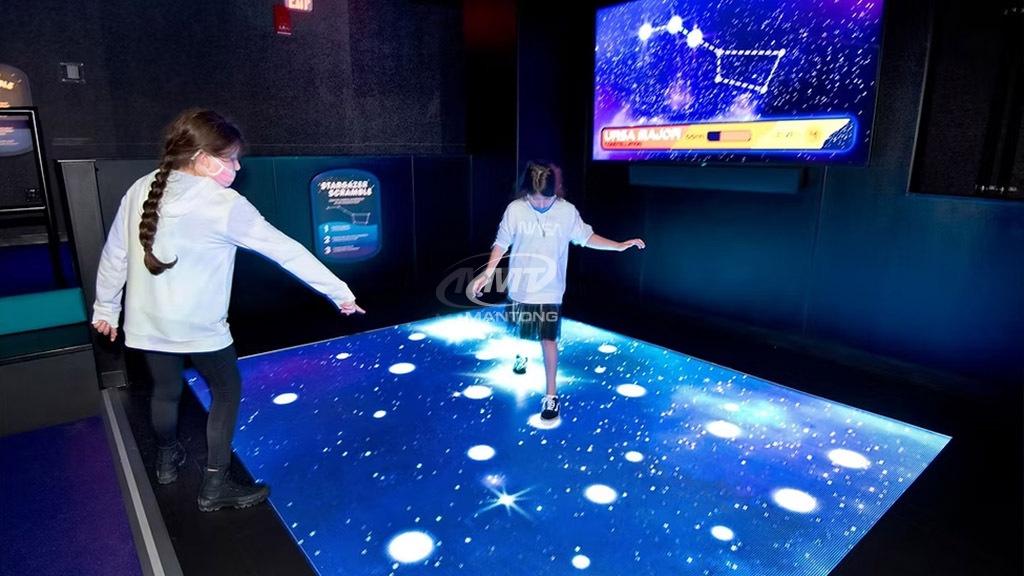
Interactive floor projection involves using projectors and motion sensors or cameras to produce interactive visual content on flat surfaces, typically floors. When a student enters the designated area, the system senses their movement and activates actions on the floor screen. The combination of motion tracking and real-time visual feedback allows for immersive experiences in which students can physically engage with educational materials.
There are several key components to an interactive floor projection system:
- Projection Unit: This can be a ceiling-mounted or floor-facing projector capable of displaying high-resolution images and videos. Modern projectors often support 4K content and bright images, even in well-lit classrooms.
- Motion Tracking Sensors: Infrared cameras or depth sensors track movement within the projection area. These sensors detect when students step, jump, or move objects, ensuring accurate interaction with the projected content.
- Software Engine: The software interprets the motion data and translates it into dynamic visual responses. This allows educators to create customized activities, from interactive floor projection games to educational simulations.
- Interactive Content: Examples of the content include interactive floor projection games that teach math, language, and physics concepts and interactive floor projection mapping experiences that tell stories and explore themes.
This combination of components allows students to actively participate in lessons instead of passively receiving information. Unlike old-fashioned whiteboards or screens, interactive floor projection makes the entire classroom an interactive learning space.
It can be especially useful in early childhood and elementary education, where physical movement plays a key role in cognitive development. It can also be used in STEM laboratories, art studios, and special education settings to enable children with different learning styles to learn in the way that works best for them.
How an Interactive Floor Projection Drives Collaborative Learning
Learning is most effective when students can interact with both content and each other. An interactive floor projection system naturally encourages collaboration because it requires students to share a space, communicate, and work together to reach goals.
For instance, imagine a math game projected on the floor in which students must solve puzzles to move a virtual character across a map. In this scenario, children often divide tasks, discuss strategies, and encourage one another, thereby fostering teamwork and problem-solving skills. The physical nature of the interaction—stepping, jumping, or guiding objects—enhances engagement and strengthens the retention of concepts.
Several factors make interactive floor projection particularly effective for collaborative learning:
- Shared Space: Unlike tablets or laptops, the interactive floor is a communal platform. Multiple students can interact simultaneously, which promotes group learning and social interaction.
- Immediate Feedback: Students see the results of their actions in real-time, which helps them understand cause-and-effect relationships and learn from mistakes collectively.
- Role Differentiation: Many interactive games allow students to take on different roles, encouraging leadership, cooperation, and negotiation among peers.
- Inclusive Participation: The floor projection environment accommodates students of various physical abilities and learning styles, allowing everyone to participate and contribute meaningfully.
Moreover, interactive floor projection is not limited to traditional classrooms. It can also be applied in museums, libraries, and STEM centers to encourage cooperative learning in informal educational settings.
Top Benefits of Interactive Floor Projection for Collaborative Learning
It does not take long before one can understand why interactive floor projection is becoming popular in learning institutions once the mechanics are known. Its advantages are not limited to novelty, but it has a direct effect on learning outcomes.
Encourages Teamwork and Communication
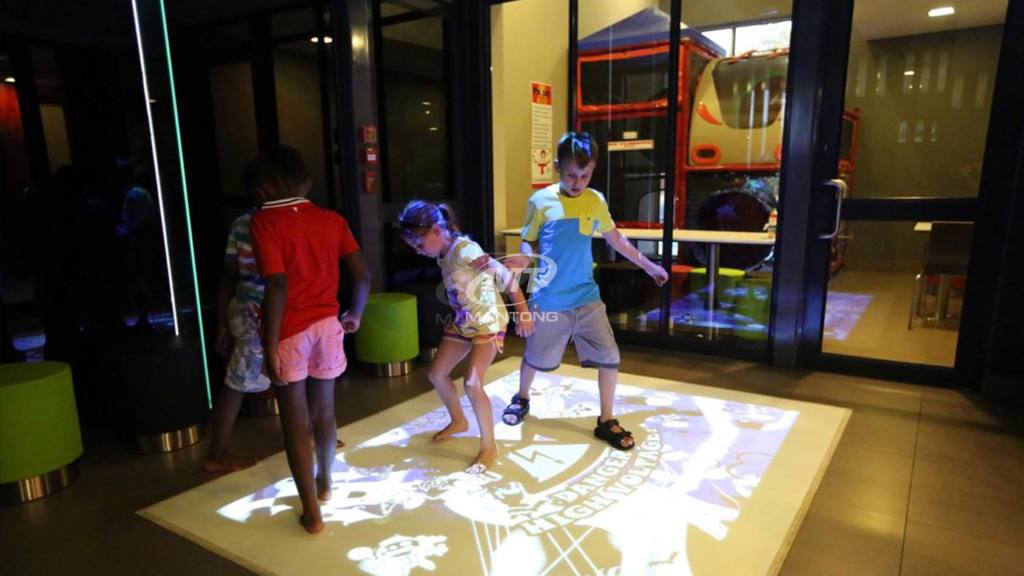
One of the most prominent benefits of interactive floor projection is that it inherently promotes collaborative work among students. Most floor-based games require students to work together to achieve goals, such as moving objects in a puzzle, catching virtual objects, or coordinating movements in rhythm-based games. This type of interaction encourages verbal communication, listening skills, and conflict resolution.
For example, an interactive geometry game could require students to use shapes to create patterns. This activity requires students to talk about strategies, share tasks, and coordinate actions. It is a practical teamwork exercise that supplements traditional learning.
Promotes Active Learning and Engagement
Physical movement has been associated with higher cognitive performance and memory retention. With interactive floor projection, students are not passively receiving information while sitting; rather, they are moving and exploring in direct contact with the subject matter. This participatory learning style has been found to enhance concentration, inspiration, and understanding.
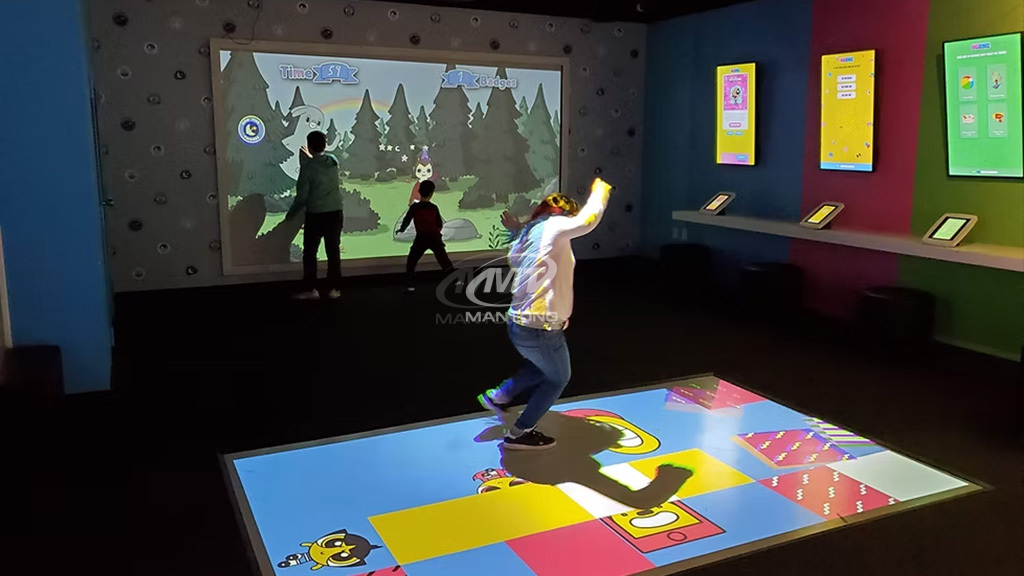
For example, students can hop over numbered tiles during a math lesson or step on letters to form words. The kinesthetic activity makes the learning process multisensory and exciting. Interactive floor projection mapping can further enhance this by turning floors into themed environments, such as a rainforest or a solar system, making lessons memorable and engaging.
Supports Multi-Sensory Learning Experiences
Contemporary pedagogy focuses on multisensory learning, which involves using the visual, auditory, and kinesthetic senses simultaneously. Interactive floor projection is the best way to achieve this. Students can view colorful images, listen to matching sounds, and engage physically, which supports learning in various ways.
For example, a music classroom could have an interactive floor projection system that displays notes and rhythms on the floor. Students can step on different notes to produce sounds, providing a multi-sensory learning experience that enhances auditory and motor coordination while making abstract concepts concrete.
Adaptable to Various Learning Styles
Students do not all learn in the same way. Some are visual learners, some are kinesthetic learners, and some learn well in a group. Interactive floor projection supports different learning styles because it offers flexible content. Educators can design games that focus on various skills, such as problem solving, creativity, language, and STEM disciplines. Each student can participate in a way that suits him or her best.
Moreover, this technology can be useful in special education. Students with attention or sensory processing issues tend to respond well to engaging, organized, movement-based learning activities.
Tips for Integrating Interactive Floor Projection into Your Curriculum
Implementing interactive floor projection successfully requires careful planning. Here are some expert tips to ensure it complements your teaching methods:
- Define Learning Objectives
Begin by identifying the skills or concepts you want students to learn. Interactive floor projection is versatile, but activities should be purpose-driven to maximize educational value.
- Choose Age-Appropriate Activities
Tailor content to the age and abilities of your students. Younger children may enjoy color-matching or counting games, while older students might tackle complex problem-solving simulations.
- Create Rotational Groups
In classrooms with limited floor space, rotate students in small groups. This ensures everyone participates actively and maintains engagement without overcrowding.
- Integrate with Lesson Plans
Use interactive floor projection as a supplement, not a replacement, for traditional teaching methods. It works best when combined with discussion, reflection, and assessment.
- Leverage Data and Feedback
Many interactive floor projection systems allow tracking of student interaction and progress. Teachers can use this data to assess engagement, identify learning gaps, and adapt activities accordingly.
- Train Educators
Teachers should be comfortable with both the technology and its pedagogical applications. Training ensures smooth classroom integration and maximizes educational impact.
Set Up an Interactive Floor Projection with Mantong

When schools and learning centers plan interactive floor projections, it is important to work with a reputable provider. Mantong Digital is a Guangzhou, China-based, one-stop interactive projection solution provider with more than 10 years of industry experience. They provide interactive floor projection systems, customized games, and immersive mapping experiences, as well as the necessary hardware and software.
Mantong ensures that schools receive a solution that suits their space, curriculum, and students' needs. Their multi-user systems provide accurate motion tracking and contain educational materials that can be incorporated. Through their partnership with Mantong, schools can transform regular classrooms into exciting, interactive learning spaces that encourage physical activity, creativity, and collaboration.
When setting up an interactive floor projection with Mantong, consider the following:
- Room Layout: Ensure sufficient floor space and ceiling height for optimal projection and movement.
- Projector Specifications: Mantong provides high-resolution projectors capable of bright, crisp images even in classrooms with ambient lighting.
- Sensor Calibration: Properly calibrate motion sensors to detect multiple users and provide real-time feedback.
- Content Customization: Work with Mantong to tailor interactive floor projection games and mapping experiences to your curriculum.
- Maintenance and Support: Mantong offers ongoing support to ensure your system remains functional and engaging over time.
By leveraging Mantong’s solutions, educators can deliver lessons that are memorable, fun, and pedagogically effective. This is a practical way to bring collaborative learning into the 21st-century classroom.


One-Stop Projection Solution Provider Since 2011
Are you trader or manufacturer ?
We are direct manufacturer who specialize in providing one-stop solution for different outdoor & indoor projection project with our stable software and qualified projectors
What about the wall/floor material for the projection?
It’s recommended to choose a light-colored material with minimal reflectivity—pure white or light grey works best. the
common material is cement & plaster board
For optimal projection results, the surface should be free of any patterns or textures, as the projector will display content
directly onto it.
There are no specific material requirements; you may use any commonly available material in your local market, as long as it
meets the above conditions.
How to Write an Interactive-Effect Video Customisation Script ?
① Project Background: Briefly introduce the context in which this interactive scene will be used (e.g., exhibition, museum,
event space, children's area). Example: This scene is part of the “Underwater World” zone in a children's science museum,
designed to be engaging and exploratory.
②Visual Style / Atmosphere: What kind of visual mood are you aiming for? Please describe the color scheme, style, and any
references. it should focus solely on describing the visual aspects of the scene, supported by relevant charts or reference
images.
③ Interaction Points Overview:List each interactive hotspot along with the effect you'd like to trigger when the user
touches or clicks the area. example: when player touch the clownfish, it will swims away with bubble trail (animation effect)
and produce the bubble sound ( sound effect requirement )
④ Static Visual Reference:including but not limited to background image/video, a list of major visual elements (e.g., coral,
rocks, seaweed, fish), which elements should be interactive?
How to install the projection equipment ?
1) Install the projector in a suitable position. We will provide you with a hanger, which you need to fix on the ceiling with
screws.
2) Connect projectors, computers and other accessories through wires.
3) After completing the above 2 steps, we will carry out the edge blending steps. Our team can complete it through remote
control.
In general, installation instructions for each project need to be specified on a project-by-project basis. The above is for
reference only.
What's Immersive Projection ?
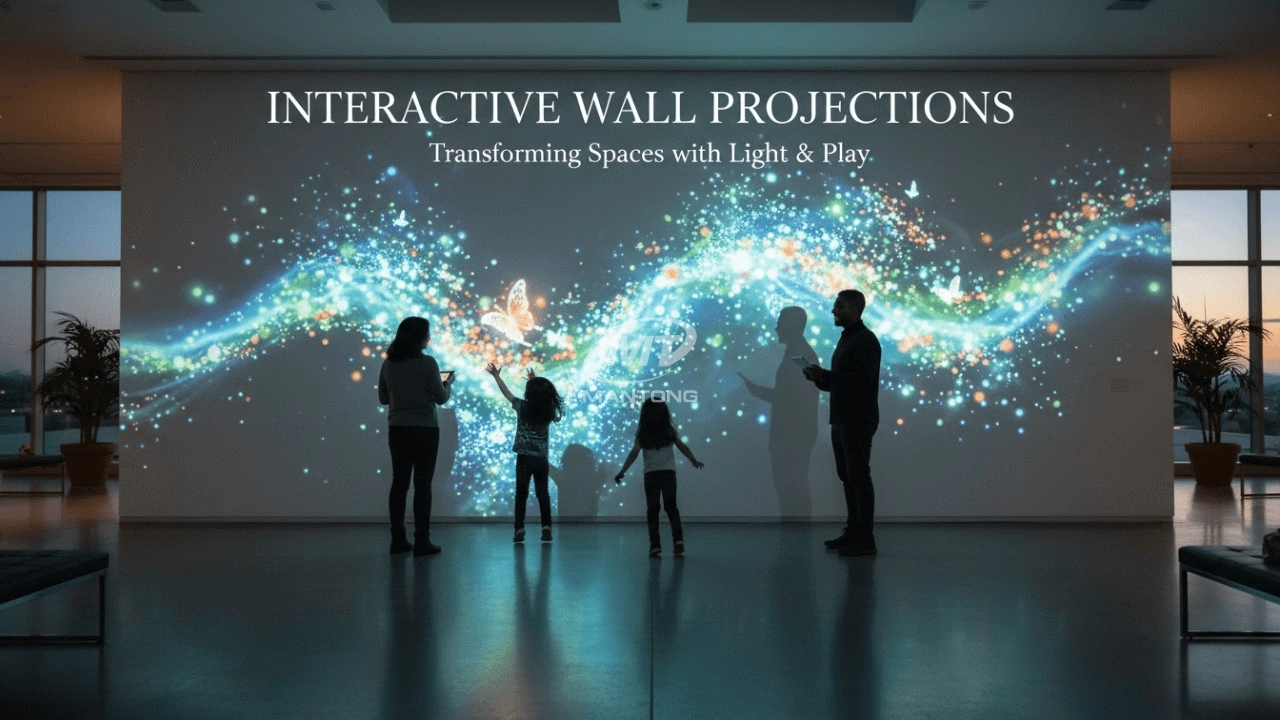
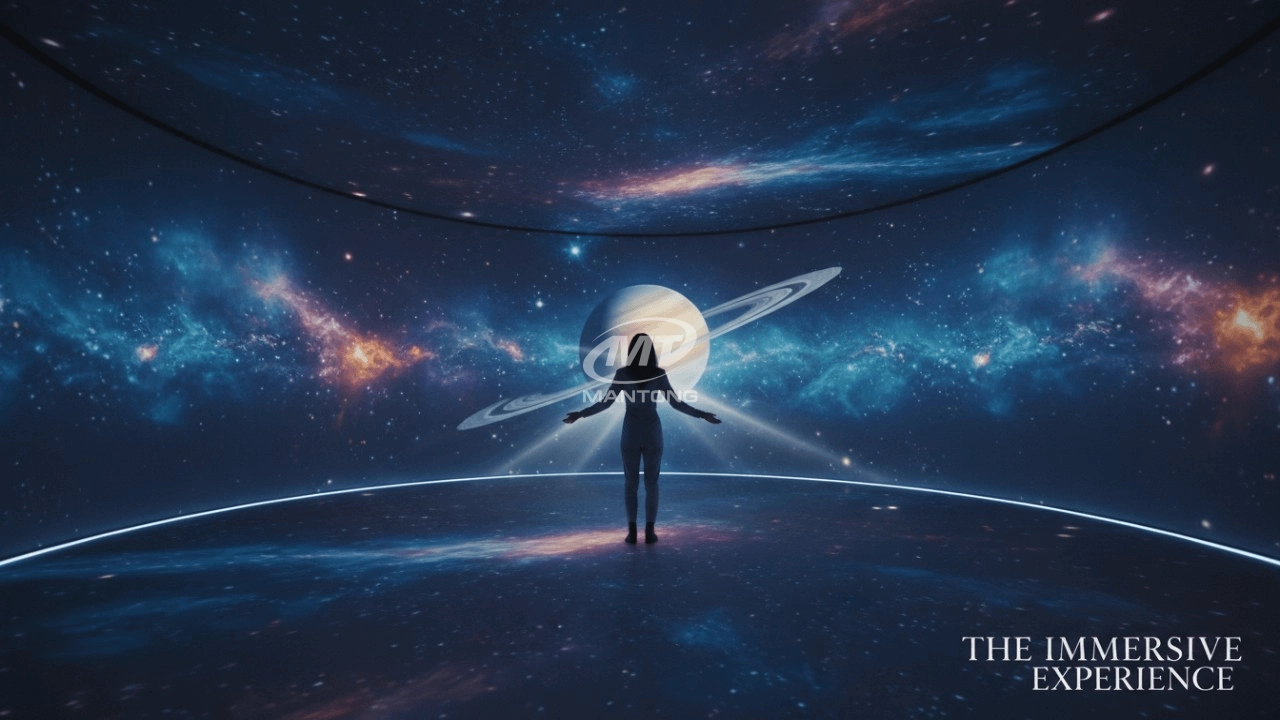
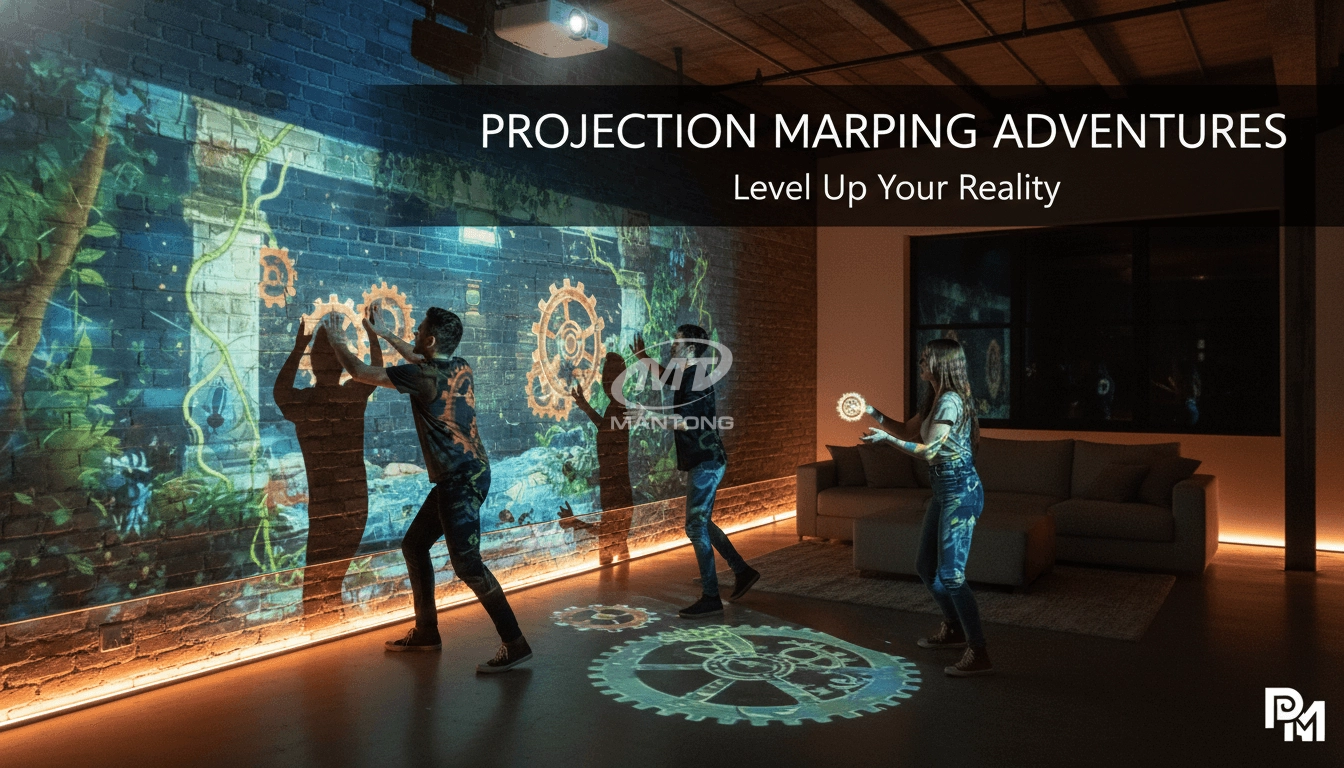
Immersive projection refers to a technology that creates a captivating and all-encompassing visual experience for viewers by projecting images or videos onto large surfaces, such as walls, floors, or even entire rooms. This technology aims to immerse the audience in a simulated environment, blurring the boundaries between the physical and virtual worlds.
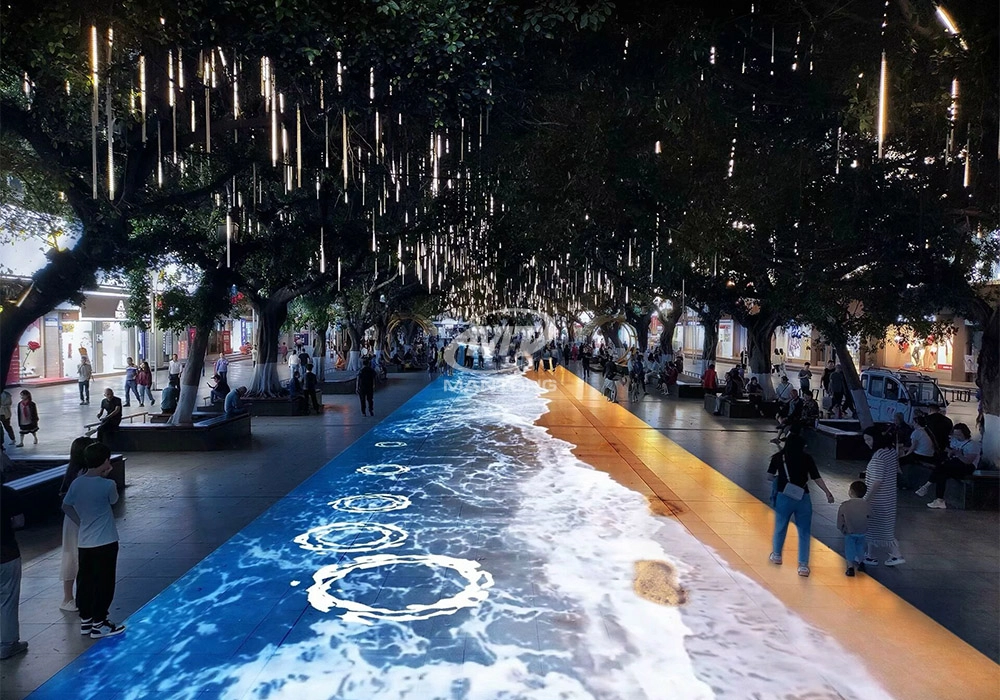
Combining projection mapping with 3D interactive ground projection technology brings an unprecedented immersive experience to outdoor scenes.
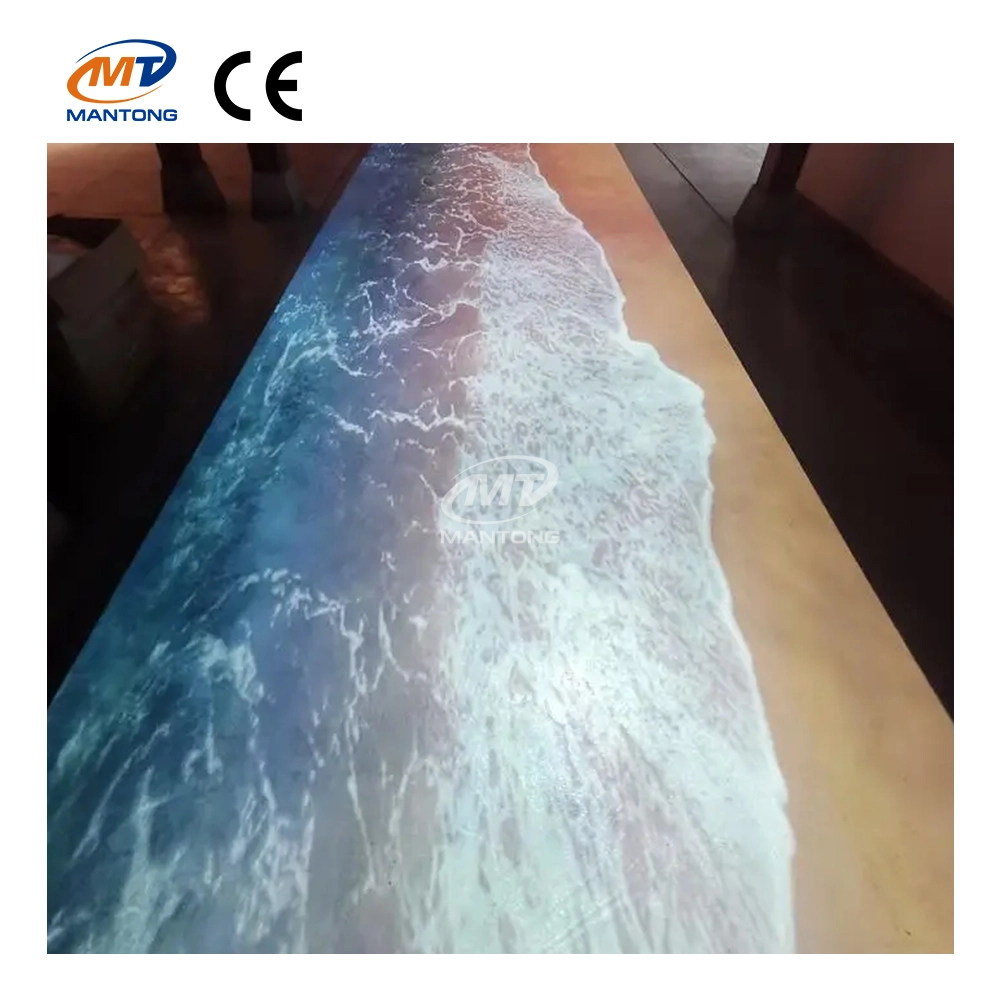
Indoor interactive floor projections display dynamic themed videos on the floor, commonly used in venues aiming to enhance brand influence or attract foot traffic, such as restaurants, hotel corridors, and brand car retail stores.
By using projectors and compatible software, the interactive content is projected onto the floor, encouraging engagement between people and the projected visuals. A single 5500-lumen indoor floor projector can cover an area of 5 m × 3 m. Typically, each project will use at least 3 units to ensure broad coverage and optimal visual effects.
We also offer customized design and installation support to enhance the interactive experience for your venue.
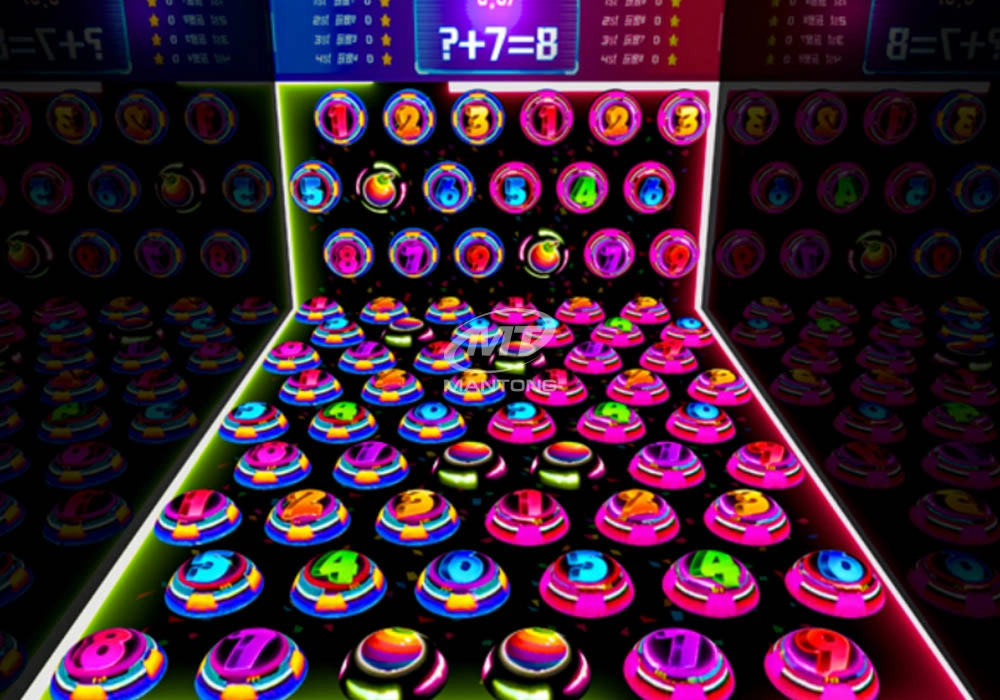
Rapidly Rotating Bouncing Sphere is an interactive space where participants jump on rotating spheres. As they step on it, the spheres surface will show special interactivity
Jumping on spheres of the same color in succession causes them to pop, releasing light particles. The more consecutive jumps, the greater the reward—caterpillars appear, and eventually, all spheres of that color burst, filling the space with light and even more caterpillars.
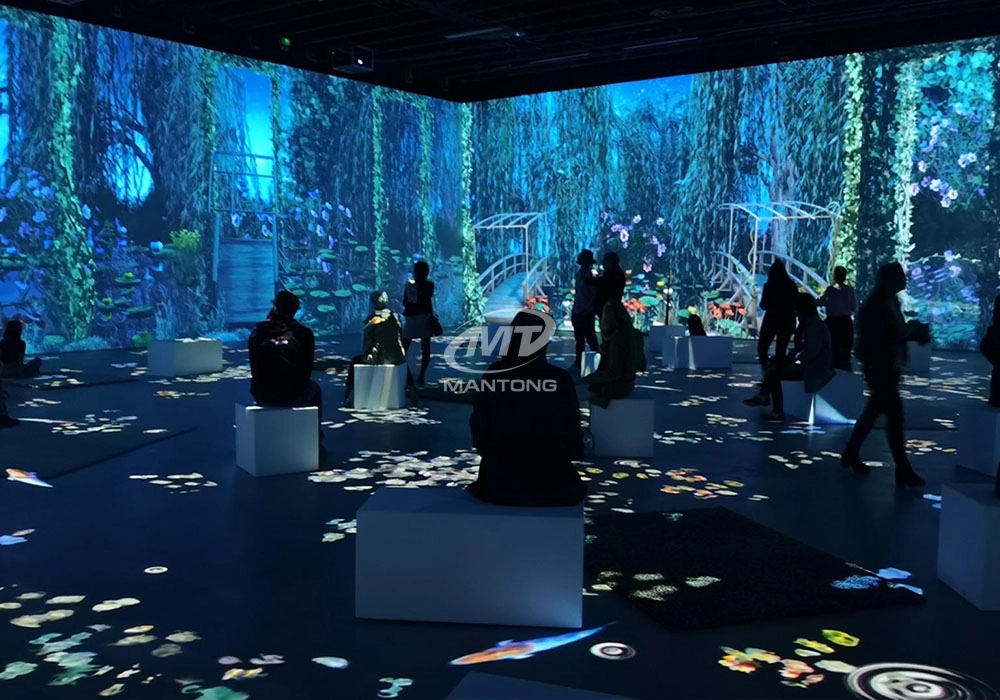
Transform any space with Mantong's immersive projection mapping systems. Our high-lumen projectors (up to 6500 LM) and custom software create captivating interactive experiences for floors and walls. Ideal for museums, events, retail, and hospitality. Each kit includes professional ceiling mounting and 80+ pre-loaded video contents and is backed by a 12-month warranty and CE certification. We offer full customization and support to bring your vision to life.
Contact Us to Start Your Interactive Projection Journey
Contact us now to discuss how to create innovative projection solutions for your space.

Kaida Business Center, Shixin Road, Panyu District,Guangzhou City, Guangdong Province, China.
ManTong
ManTong
ManTong