
What are best practices for immersive room lighting and sound? | Insights by Mantong
- Best Practices for Immersive Room Lighting and Sound in Interactive Projection
- 1. What Equipment Is Essential for Immersive Projection?
- 2. How Do Environmental Factors Affect Projection Quality?
- 3. What Are Effective Techniques for Projection Mapping?
- 4. How Can Lighting Enhance the Immersive Experience?
- 5. What Are Best Practices for Spatial Audio in Immersive Environments?
- 6. How Do I Ensure Seamless Integration of Lighting and Sound?
- 7. What Are Common Challenges in Immersive Projection and How Can They Be Overcome?
- 8. How Do I Measure the Success of an Immersive Projection Installation?
- Conclusion: Why Choose Mantong for Your Immersive Projection Needs?
Best Practices for Immersive Room Lighting and Sound in Interactive Projection
Creating an immersive environment through interactive projection requires meticulous attention to both lighting and sound. These elements are pivotal in crafting a multi-sensory experience that captivates and engages the audience. Below are key considerations and best practices to optimize lighting and sound in such settings.
1. What Equipment Is Essential for Immersive Projection?
To achieve a seamless immersive experience, the following equipment is crucial:
High-Quality Projectors: Multiple high-resolution projectors are fundamental. For instance, fine-pitch indoor modules like P1.9 and P2.5 are recommended for focal areas, while P2.5–P3.9 modules suit larger panoramas.
Audio Systems: A surround sound system with spatial audio capabilities enhances the auditory experience, providing depth and realism.
Lighting Fixtures: Dynamic LED lighting and projection mapping tools are essential for creating adaptable and engaging visual effects.
2. How Do Environmental Factors Affect Projection Quality?
Environmental conditions significantly influence the effectiveness of interactive projections:
Ambient Light: Excessive ambient light can wash out projections. It's advisable to control lighting levels and consider blackout options to maintain image clarity.
Room Geometry: Irregular surfaces and complex geometries require precise calibration and warping tools to ensure accurate image mapping.
3. What Are Effective Techniques for Projection Mapping?
Projection mapping transforms physical spaces into dynamic visual displays. Effective techniques include:
Warping Tools: Utilize software to adjust projections, ensuring they fit complex surfaces seamlessly.
Edge Blending: Combine multiple projectors to create a cohesive image, managing overlaps to prevent visible seams.
Interactive Elements: Incorporate motion sensors and interactive devices to engage the audience, allowing them to influence the projected content.
4. How Can Lighting Enhance the Immersive Experience?
Lighting plays a pivotal role in setting the mood and guiding the audience's attention:
Dynamic Color Changes: Employ colors to evoke specific emotions and highlight key elements within the projection.
Ambient and Focused Lighting: Balance ambient lighting to fill the space with focused lighting to draw attention to particular areas or objects.
Interactive Lighting: Integrate motion-activated lighting that responds to the audience's movements, enhancing engagement.
5. What Are Best Practices for Spatial Audio in Immersive Environments?
Spatial audio is crucial for creating a realistic and engaging auditory experience:
Optimal Speaker Placement: Strategically position speakers to ensure even sound distribution and minimize dead zones.
Sound Calibration: Regularly calibrate audio levels and frequencies to maintain consistency and clarity.
Interactive Sound Elements: Incorporate sound cues that respond to the audience's actions, guiding them through the experience.
6. How Do I Ensure Seamless Integration of Lighting and Sound?
Achieving harmony between lighting and sound involves:
Synchronization: Ensure that visual and auditory elements are perfectly timed to create a cohesive experience.
Professional Integration: Collaborate with experts to design and implement systems that work harmoniously.
Continuous Testing: Regularly test and adjust both lighting and sound components to address any issues promptly.
7. What Are Common Challenges in Immersive Projection and How Can They Be Overcome?
Common challenges include:
Technical Complexity: The intricate nature of immersive projection requires skilled professionals for setup and maintenance.
Cost Considerations: High-quality equipment and professional services can be expensive; however, the return on investment is often substantial due to enhanced audience engagement and experience.
Environmental Constraints: Limited control over ambient light and room acoustics can impact projection quality; careful planning and equipment selection can mitigate these issues.
8. How Do I Measure the Success of an Immersive Projection Installation?
Success can be gauged through:
Audience Engagement: Monitor interaction levels and feedback to assess the impact of the experience.
Technical Performance: Evaluate the reliability and quality of the projection and audio systems.
Return on Investment: Analyze financial metrics, including ticket sales, sponsorships, and merchandise, to determine the economic success of the installation.
Conclusion: Why Choose Mantong for Your Immersive Projection Needs?
Mantong offers comprehensive solutions for immersive projection environments, combining cutting-edge technology with expert design and implementation. Our services include:
Customized Design: Tailored solutions that align with your specific objectives and space requirements.
High-Quality Equipment: Access to the latest projectors, audio systems, and lighting fixtures.
Expert Integration: Seamless coordination of all elements to ensure a cohesive and impactful experience.
By partnering with Mantong, you can create immersive environments that captivate and engage your audience, leaving a lasting impression.
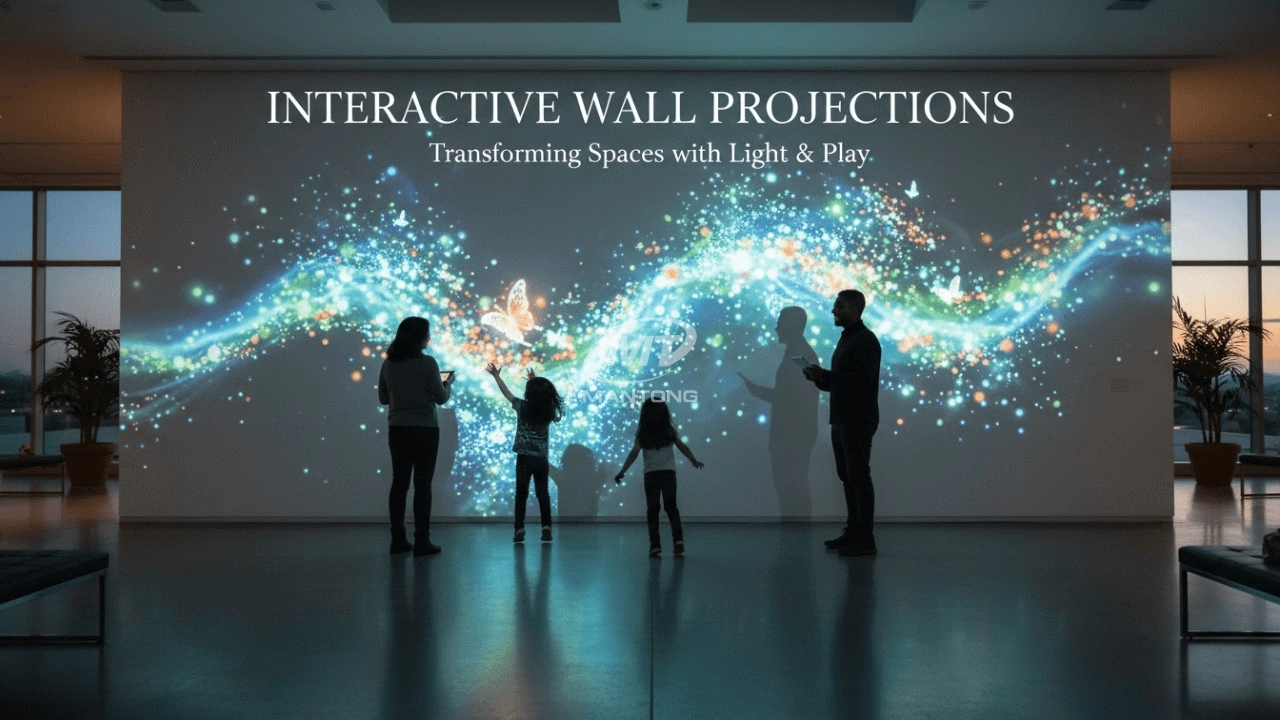
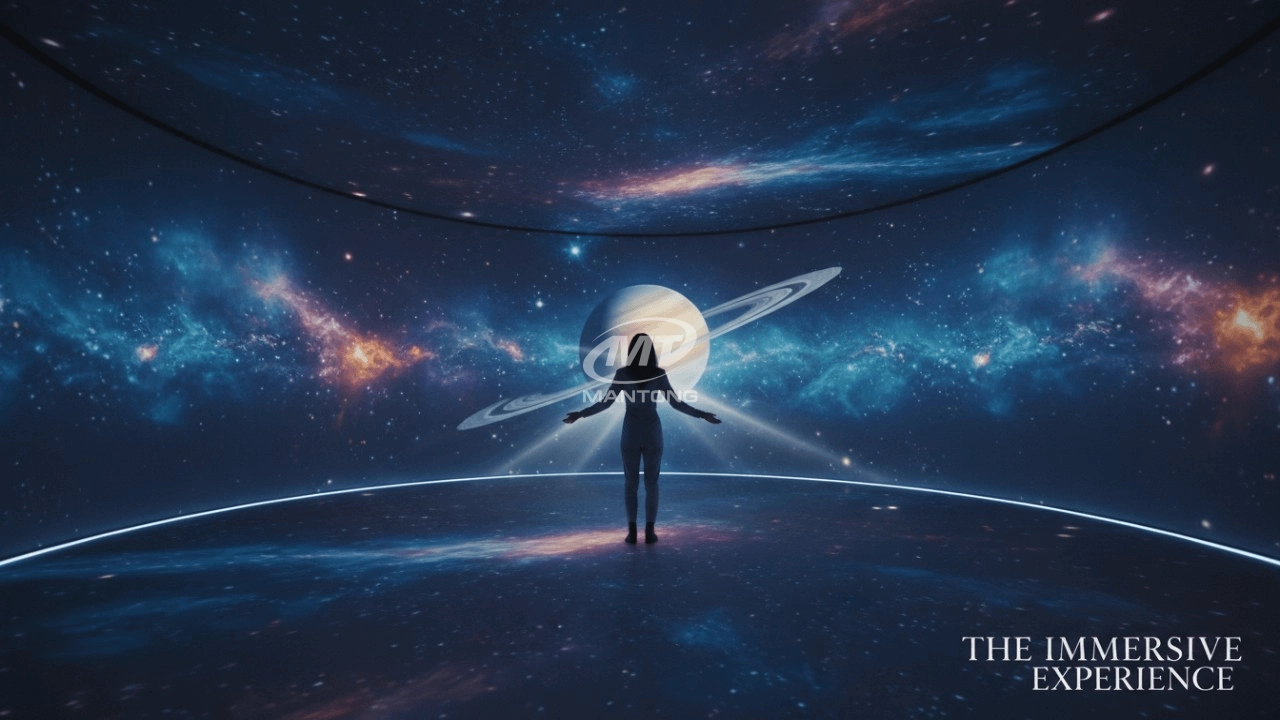


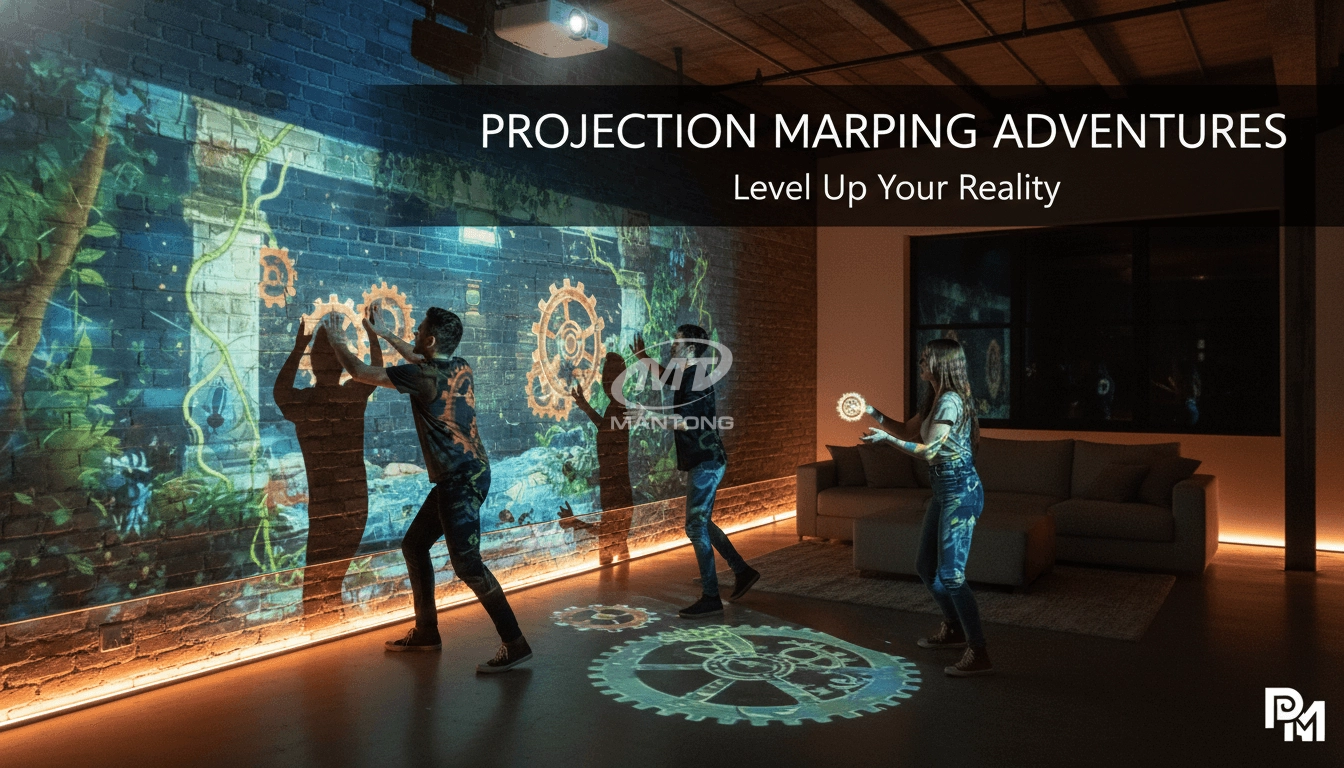
One-Stop Projection Solution Provider Since 2011
What's Immersive Projection ?
Immersive projection refers to a technology that creates a captivating and all-encompassing visual experience for viewers by projecting images or videos onto large surfaces, such as walls, floors, or even entire rooms. This technology aims to immerse the audience in a simulated environment, blurring the boundaries between the physical and virtual worlds.
How to install the projection equipment ?
1) Install the projector in a suitable position. We will provide you with a hanger, which you need to fix on the ceiling with
screws.
2) Connect projectors, computers and other accessories through wires.
3) After completing the above 2 steps, we will carry out the edge blending steps. Our team can complete it through remote
control.
In general, installation instructions for each project need to be specified on a project-by-project basis. The above is for
reference only.
What's the application of Immersive projection ?
It can be used in various venues, such as art exhibition, entertainment venues, educational institution, Wedding hall /Banquet/Bar,Yoga Studio and so on. It often involves advanced projection techniques, multimedia content, and interactive elements to engage and captivate the audience's senses.
What information do you need to know before making the proposal/solution?
We know that everyone wants to know the price, but the price of our products is determined by many factors since most of our products are custom, so no ready price list. In order to fast understand what you need, can you send us an inquiry like this?
For example: I am really interested in your immersive projection products, we are a company in the USA and want to install some in my restaurant. It is about 50 meters long, and 5m in width. Projection size you can decide but the length should be not less than 20 meters. We want some content about SeaWorld because our place is all about the sea. Thank you.
What about the wall/floor material for the projection?
It’s recommended to choose a light-colored material with minimal reflectivity—pure white or light grey works best. the
common material is cement & plaster board
For optimal projection results, the surface should be free of any patterns or textures, as the projector will display content
directly onto it.
There are no specific material requirements; you may use any commonly available material in your local market, as long as it
meets the above conditions.
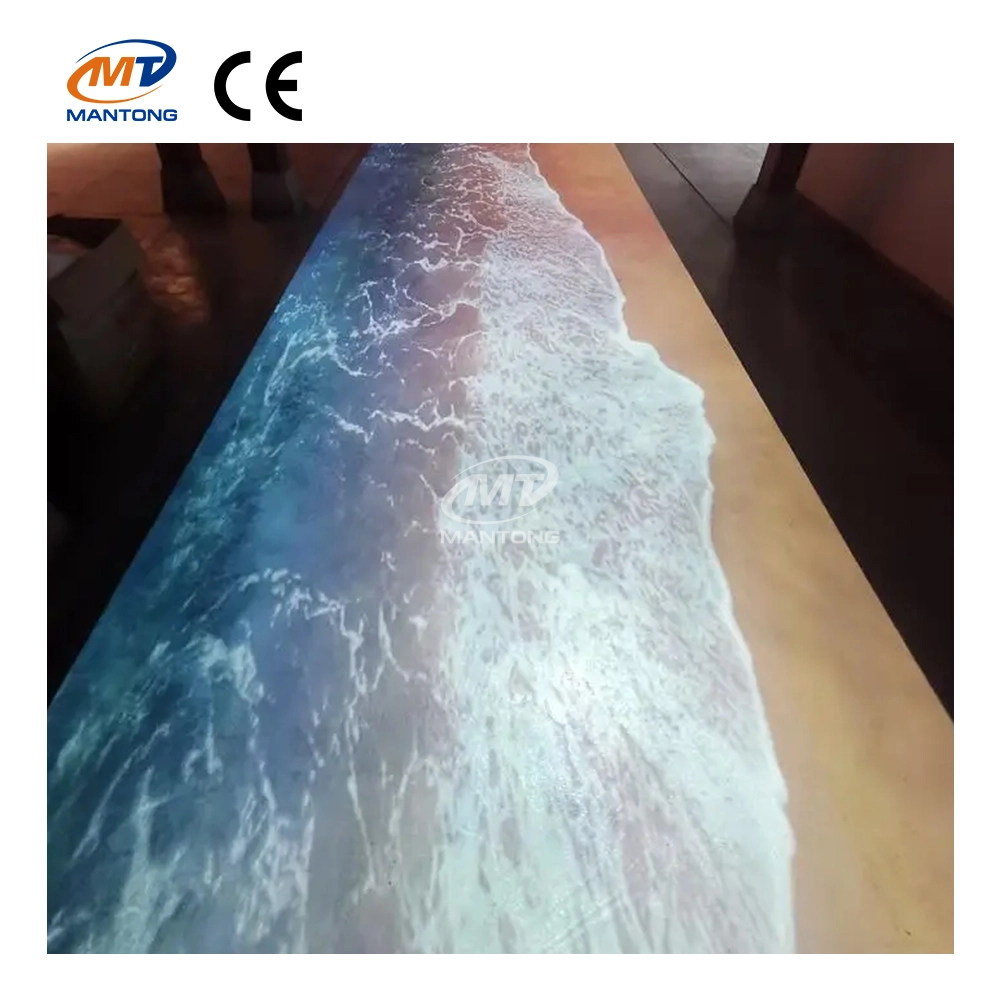
Indoor interactive floor projections display dynamic themed videos on the floor, commonly used in venues aiming to enhance brand influence or attract foot traffic, such as restaurants, hotel corridors, and brand car retail stores.
By using projectors and compatible software, the interactive content is projected onto the floor, encouraging engagement between people and the projected visuals. A single 5500-lumen indoor floor projector can cover an area of 5 m × 3 m. Typically, each project will use at least 3 units to ensure broad coverage and optimal visual effects.
We also offer customized design and installation support to enhance the interactive experience for your venue.
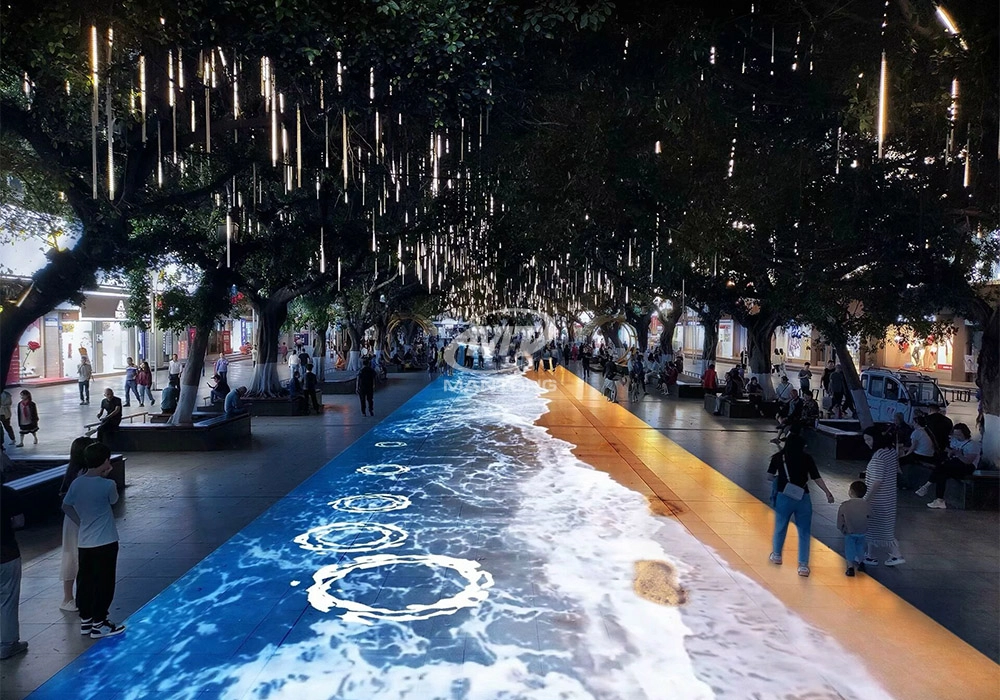
Combining projection mapping with 3D interactive ground projection technology brings an unprecedented immersive experience to outdoor scenes.
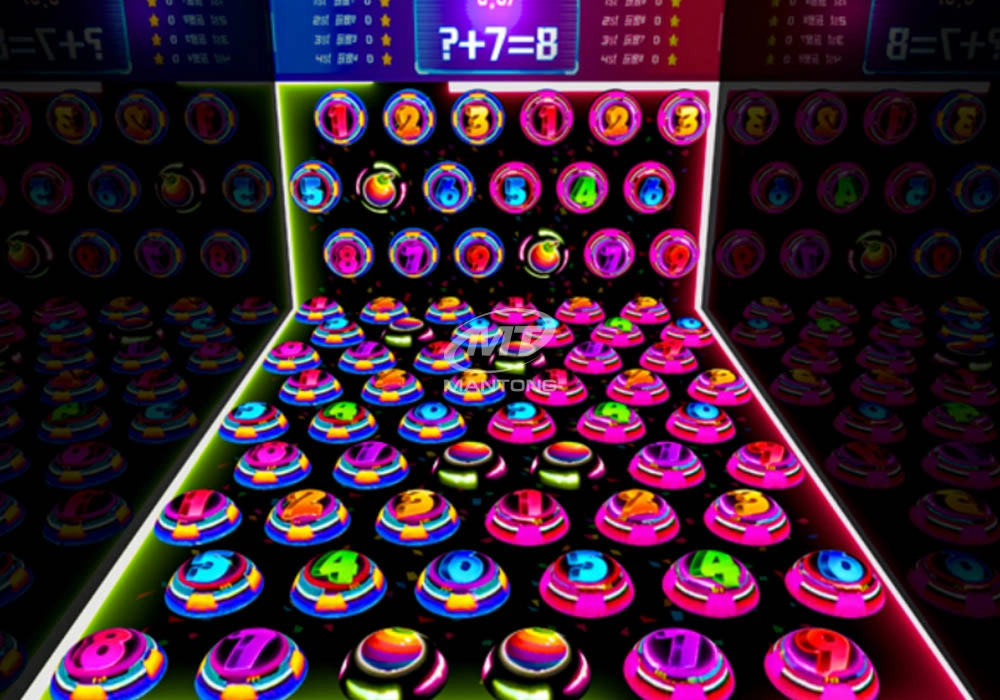
Rapidly Rotating Bouncing Sphere is an interactive space where participants jump on rotating spheres. As they step on it, the spheres surface will show special interactivity
Jumping on spheres of the same color in succession causes them to pop, releasing light particles. The more consecutive jumps, the greater the reward—caterpillars appear, and eventually, all spheres of that color burst, filling the space with light and even more caterpillars.
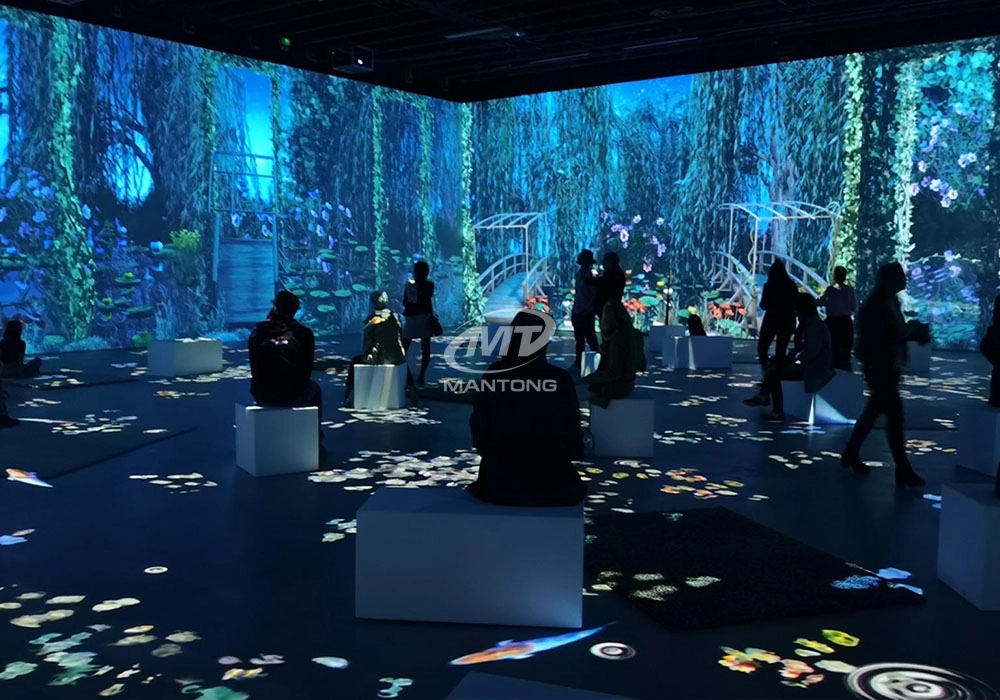
Transform any space with Mantong's immersive projection mapping systems. Our high-lumen projectors (up to 6500 LM) and custom software create captivating interactive experiences for floors and walls. Ideal for museums, events, retail, and hospitality. Each kit includes professional ceiling mounting and 80+ pre-loaded video contents and is backed by a 12-month warranty and CE certification. We offer full customization and support to bring your vision to life.
Contact Us to Start Your Interactive Projection Journey
Contact us now to discuss how to create innovative projection solutions for your space.

Kaida Business Center, Shixin Road, Panyu District,Guangzhou City, Guangdong Province, China.
ManTong
ManTong
ManTong