
Can immersive projection rooms support interactive features like motion tracking? | Insights by Mantong
- Can Immersive Projection Rooms Support Interactive Features Like Motion Tracking?
- 1. What Are Immersive Projection Rooms?
- 2. How Does Motion Tracking Enhance Interactivity in Projection Rooms?
- 3. What Are the Key Technologies Behind Interactive Projection Systems?
- 4. What Are the Applications of Interactive Projection Rooms?
- 5. What Should Industry Professionals Consider When Implementing Interactive Projection Systems?
- Conclusion: The Advantages of Mantong's Interactive Projection Solutions
Can Immersive Projection Rooms Support Interactive Features Like Motion Tracking?
Immersive projection rooms have evolved significantly, integrating interactive features such as motion tracking to create dynamic and engaging environments. This advancement has transformed various sectors, including education, entertainment, and retail, by offering personalized and participatory experiences.
1. What Are Immersive Projection Rooms?
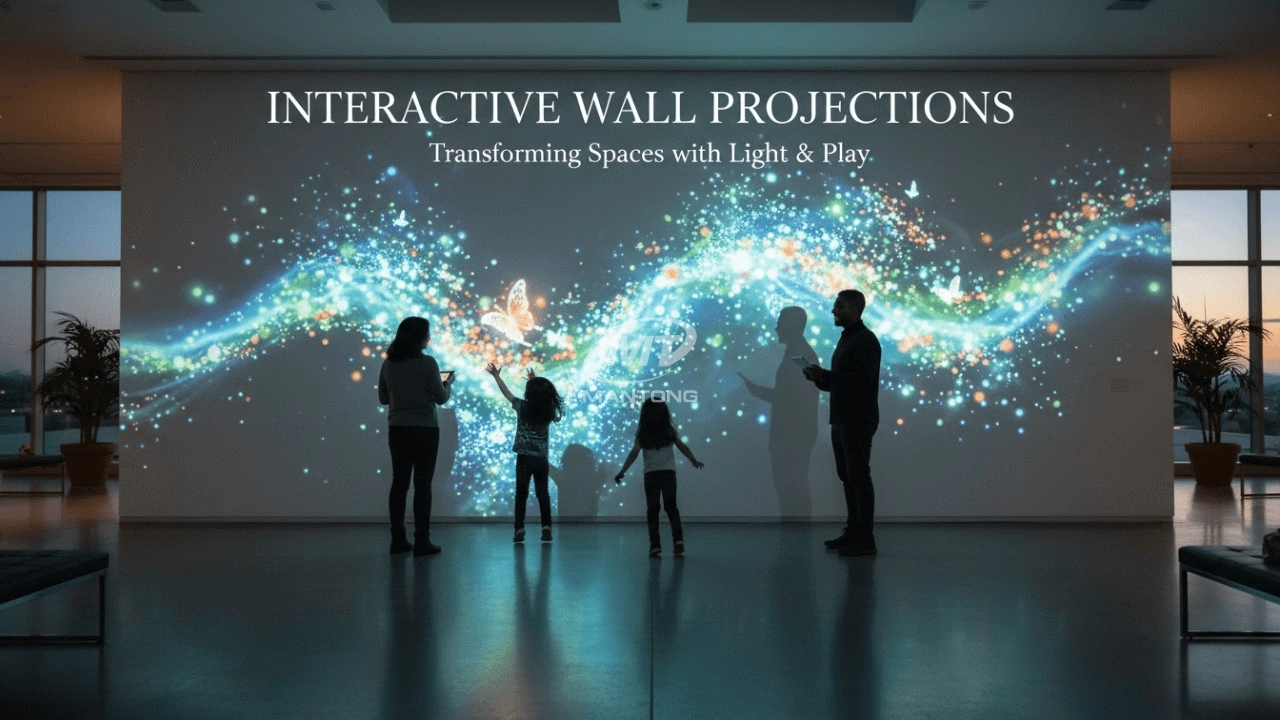
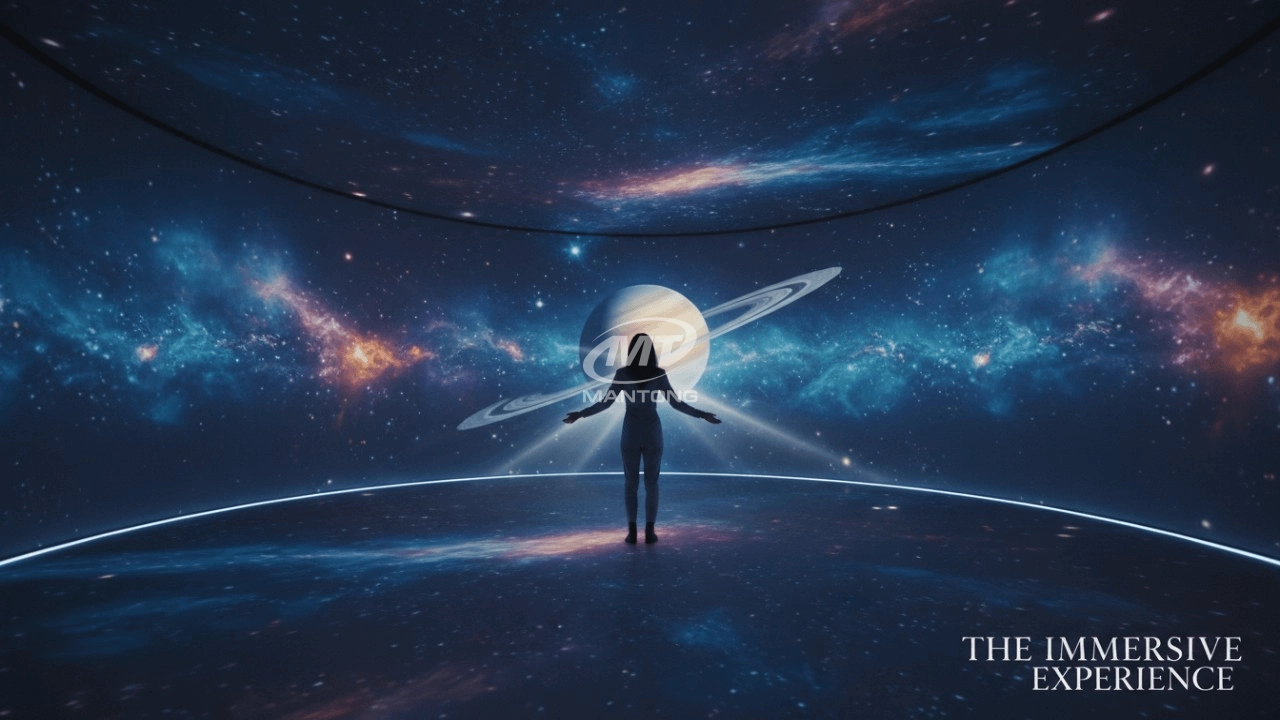
Immersive projection rooms utilize advanced projection technology to envelop users in a 360-degree visual experience. By projecting images onto walls, floors, and ceilings, these rooms create a sense of presence and immersion, often enhanced by interactive elements that respond to user movements and gestures.
2. How Does Motion Tracking Enhance Interactivity in Projection Rooms?
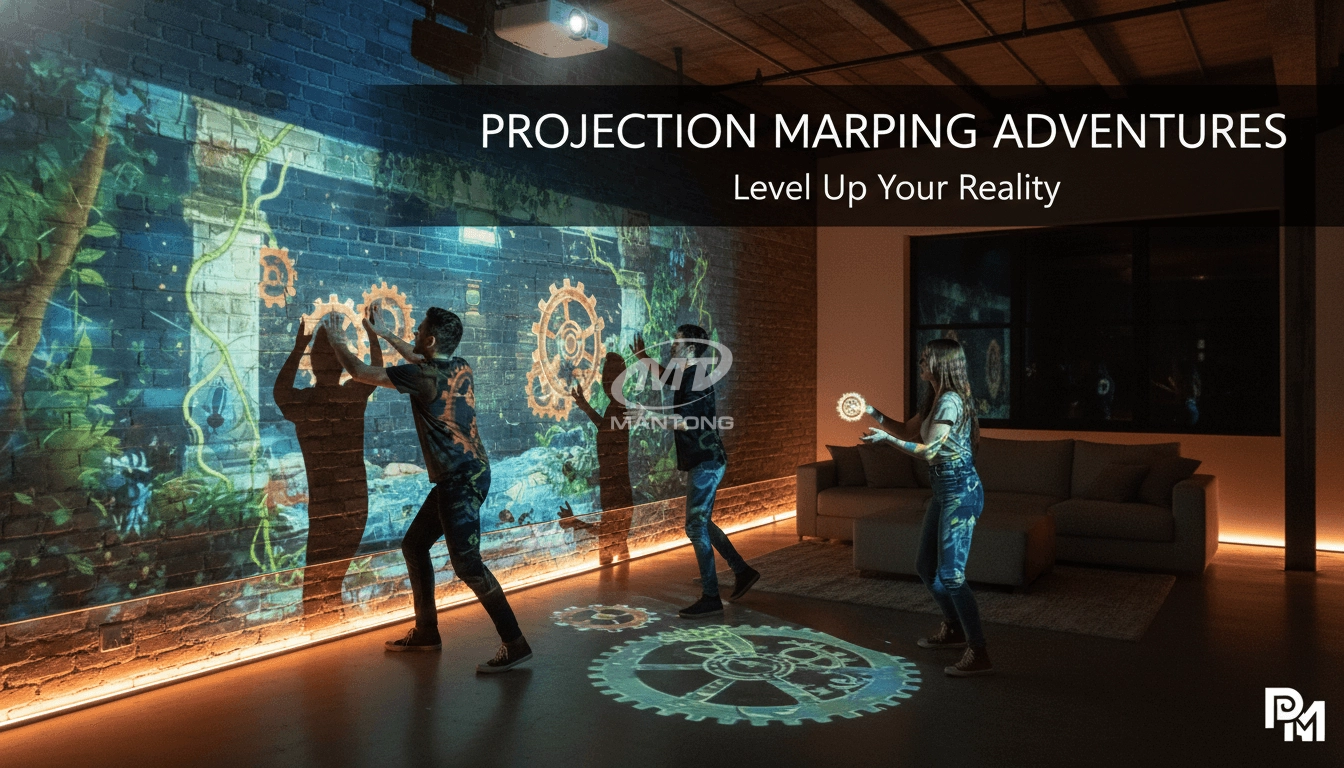
Motion tracking technology captures and analyzes user movements, allowing the projected content to respond in real-time. This interaction can manifest in various forms:
Gesture Recognition: Users can control or manipulate projected visuals through specific hand or body movements.
Proximity Detection: The system detects user presence and adjusts content accordingly, such as changing visuals when a user approaches a certain area.
Interactive Games and Simulations: Motion tracking enables users to engage with virtual environments, participate in games, or simulate real-world scenarios within the projection space.
For instance, the "Ghostly Manor" at Paultons Park in Hampshire, UK, employs motion tracking to allow guests to capture ghosts using on-board Phantom Phasers, creating an interactive and immersive experience.
3. What Are the Key Technologies Behind Interactive Projection Systems?
Several technologies contribute to the functionality of interactive projection systems:
Depth Sensors and Cameras: Devices like LiDAR and infrared cameras detect user movements and gestures, enabling precise tracking and interaction.
Software Platforms: Specialized software processes input from sensors and translates it into interactive content. For example, Motioncube offers a platform that supports various interaction modes, including motion tracking and infrared light pens.
Projectors: High-quality projectors, often with ultra-short-throw capabilities, are essential for creating seamless and immersive visuals.
4. What Are the Applications of Interactive Projection Rooms?
Interactive projection rooms have diverse applications across multiple industries:
Education: They transform traditional classrooms into interactive learning environments, enhancing student engagement and understanding.
Entertainment: Theme parks and museums use interactive projections to create immersive exhibits and attractions, offering visitors unique and engaging experiences.
Retail: Stores implement interactive projections to showcase products and engage customers, influencing purchasing decisions and enhancing brand recall.
5. What Should Industry Professionals Consider When Implementing Interactive Projection Systems?
When integrating interactive projection systems, professionals should consider:
Space and Environment: Assessing the physical space, including dimensions and ambient lighting, to ensure optimal projection quality and interactivity.
Hardware Compatibility: Selecting projectors, sensors, and software that are compatible and meet the specific requirements of the application.
Content Development: Creating or sourcing engaging and relevant content that leverages the interactive capabilities of the system.
User Experience: Designing intuitive interfaces and interactions to ensure a seamless and enjoyable user experience.
Conclusion: The Advantages of Mantong's Interactive Projection Solutions
Mantong offers cutting-edge interactive projection solutions that seamlessly integrate motion tracking and immersive visuals. Their systems are designed for versatility, catering to various applications from educational settings to entertainment venues. With a focus on user engagement and content customization, Mantong ensures that each installation delivers a unique and impactful experience, setting a new standard in interactive projection technology.


One-Stop Projection Solution Provider Since 2011
What's Immersive Projection ?
Immersive projection refers to a technology that creates a captivating and all-encompassing visual experience for viewers by projecting images or videos onto large surfaces, such as walls, floors, or even entire rooms. This technology aims to immerse the audience in a simulated environment, blurring the boundaries between the physical and virtual worlds.
What's the application of Immersive projection ?
It can be used in various venues, such as art exhibition, entertainment venues, educational institution, Wedding hall /Banquet/Bar,Yoga Studio and so on. It often involves advanced projection techniques, multimedia content, and interactive elements to engage and captivate the audience's senses.
What about the wall/floor material for the projection?
It’s recommended to choose a light-colored material with minimal reflectivity—pure white or light grey works best. the
common material is cement & plaster board
For optimal projection results, the surface should be free of any patterns or textures, as the projector will display content
directly onto it.
There are no specific material requirements; you may use any commonly available material in your local market, as long as it
meets the above conditions.
What information do you need to know before making the proposal/solution?
We know that everyone wants to know the price, but the price of our products is determined by many factors since most of our products are custom, so no ready price list. In order to fast understand what you need, can you send us an inquiry like this?
For example: I am really interested in your immersive projection products, we are a company in the USA and want to install some in my restaurant. It is about 50 meters long, and 5m in width. Projection size you can decide but the length should be not less than 20 meters. We want some content about SeaWorld because our place is all about the sea. Thank you.
How to install the projection equipment ?
1) Install the projector in a suitable position. We will provide you with a hanger, which you need to fix on the ceiling with
screws.
2) Connect projectors, computers and other accessories through wires.
3) After completing the above 2 steps, we will carry out the edge blending steps. Our team can complete it through remote
control.
In general, installation instructions for each project need to be specified on a project-by-project basis. The above is for
reference only.
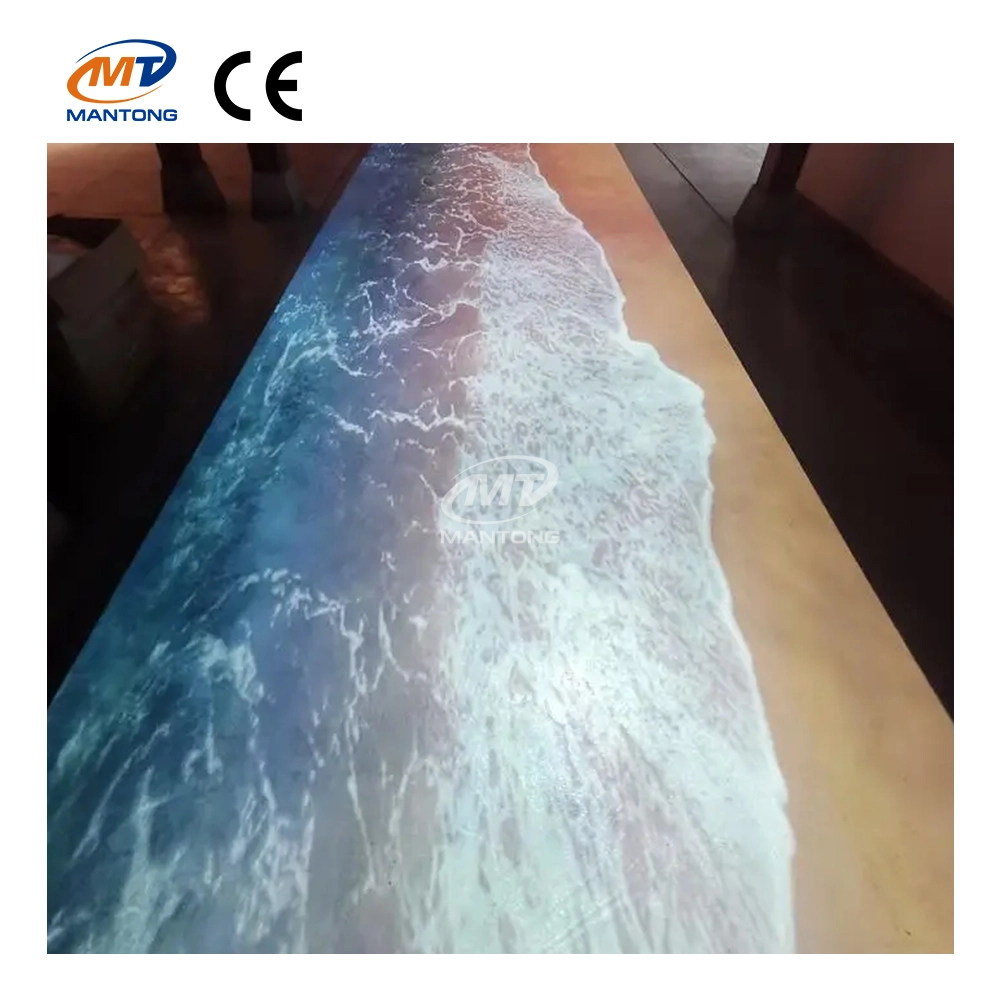
Indoor interactive floor projections display dynamic themed videos on the floor, commonly used in venues aiming to enhance brand influence or attract foot traffic, such as restaurants, hotel corridors, and brand car retail stores.
By using projectors and compatible software, the interactive content is projected onto the floor, encouraging engagement between people and the projected visuals. A single 5500-lumen indoor floor projector can cover an area of 5 m × 3 m. Typically, each project will use at least 3 units to ensure broad coverage and optimal visual effects.
We also offer customized design and installation support to enhance the interactive experience for your venue.
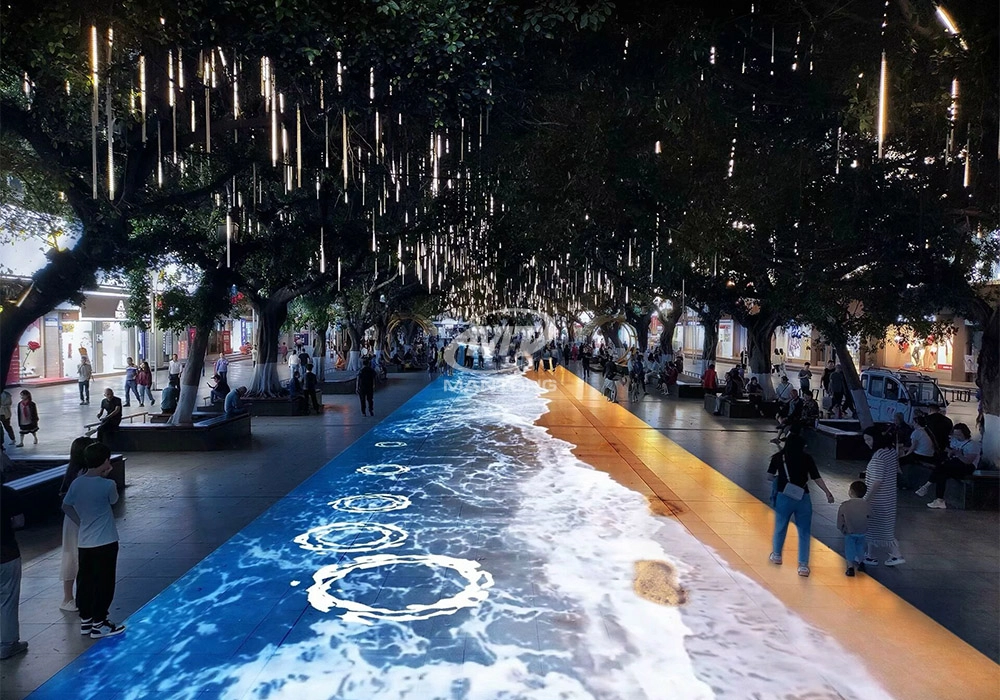
Combining projection mapping with 3D interactive ground projection technology brings an unprecedented immersive experience to outdoor scenes.
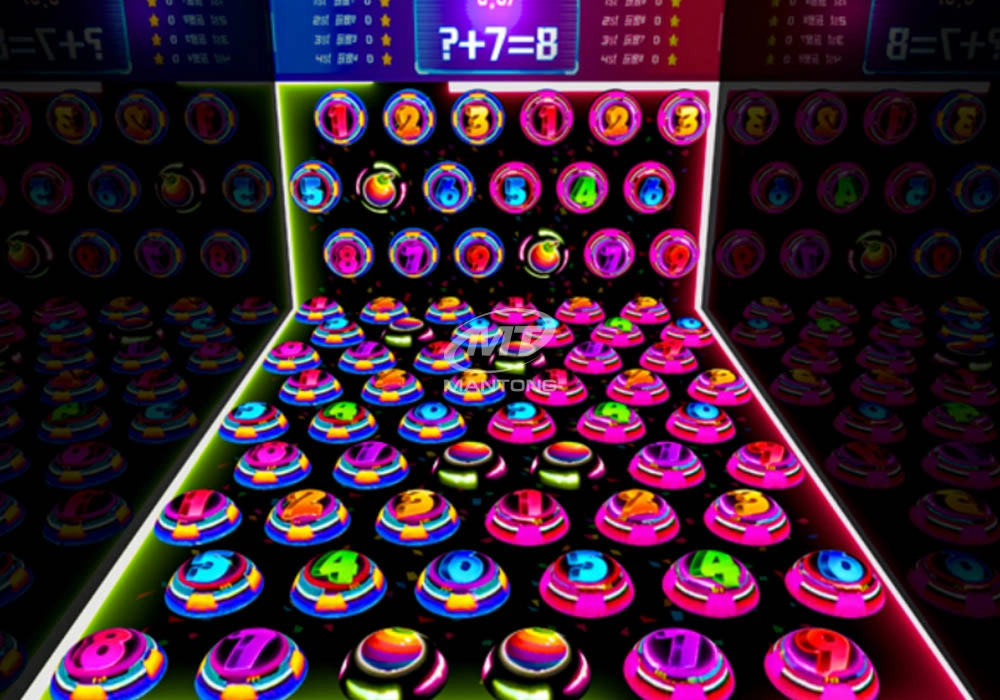
Rapidly Rotating Bouncing Sphere is an interactive space where participants jump on rotating spheres. As they step on it, the spheres surface will show special interactivity
Jumping on spheres of the same color in succession causes them to pop, releasing light particles. The more consecutive jumps, the greater the reward—caterpillars appear, and eventually, all spheres of that color burst, filling the space with light and even more caterpillars.
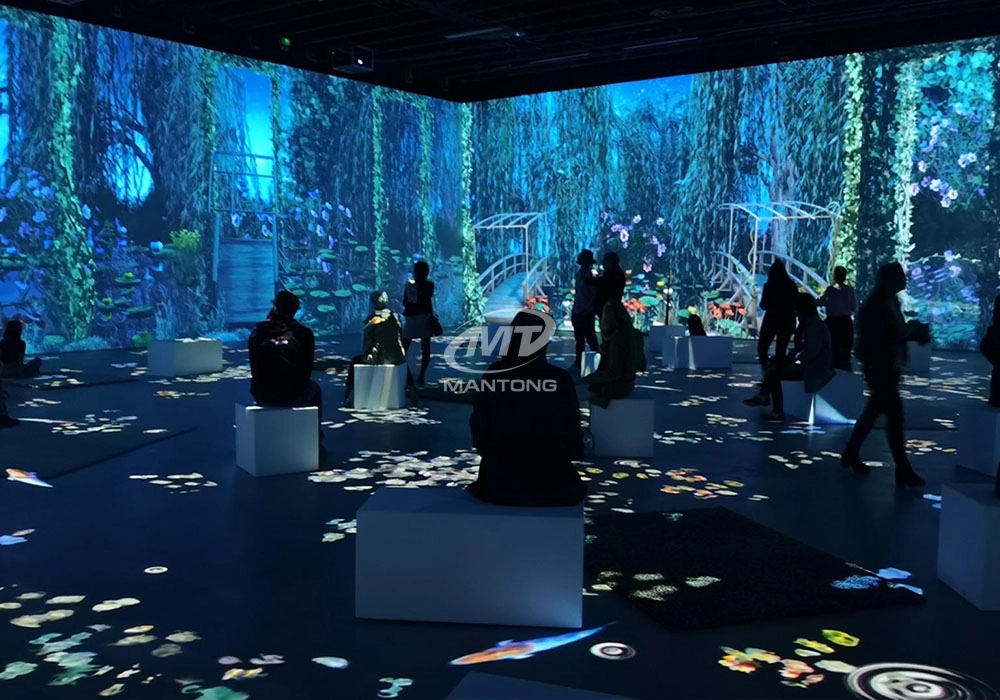
Transform any space with Mantong's immersive projection mapping systems. Our high-lumen projectors (up to 6500 LM) and custom software create captivating interactive experiences for floors and walls. Ideal for museums, events, retail, and hospitality. Each kit includes professional ceiling mounting and 80+ pre-loaded video contents and is backed by a 12-month warranty and CE certification. We offer full customization and support to bring your vision to life.
Contact Us to Start Your Interactive Projection Journey
Contact us now to discuss how to create innovative projection solutions for your space.

Kaida Business Center, Shixin Road, Panyu District,Guangzhou City, Guangdong Province, China.
ManTong
ManTong
ManTong