
Laser vs Bulb Projectors: Key Differences for 2026 Professional Usage
Find out the most important differences laser and bulb projectors have: TCO, lifespan, color accuracy, and brightness stability. Make an informed decision on the projection technology best suited for your requirements.
- Introduction
- Detailed Comparison
- 1. Light Source Utilization and Technology
- Bulb Projectors:
- Laser Projectors:
- 2. Brightness Performance
- Bulb Projectors
- Laser Projectors
- 3. Operational Lifespan
- Bulb Projectors
- Laser Projectors
- 4. Color Accuracy
- 5. Energy Efficiency
- Bulb Projectors
- Laser Projectors
- 6. Physical Design
- 7. Cost Analysis
- Application Recommendations
- Choose Bulb Projectors When:
- Choose Laser Projectors When:
- Conclusion
Introduction
In the world of professional projection systems, choosing between laser and traditional bulb-based projectors is more than a simple hardware decision. This decision affects visual performance, operational reliability, and total cost of ownership—all of which are critical considerations for businesses planning upgrades in 2026.
As projection applications continue to expand into immersive installations, digital art spaces, hybrid offices, educational settings, and large venues, it becomes essential to understand the differences between laser and bulb technology. Below, we break down the seven key differences to help you determine the ideal projection solution for your professional needs.
Detailed Comparison
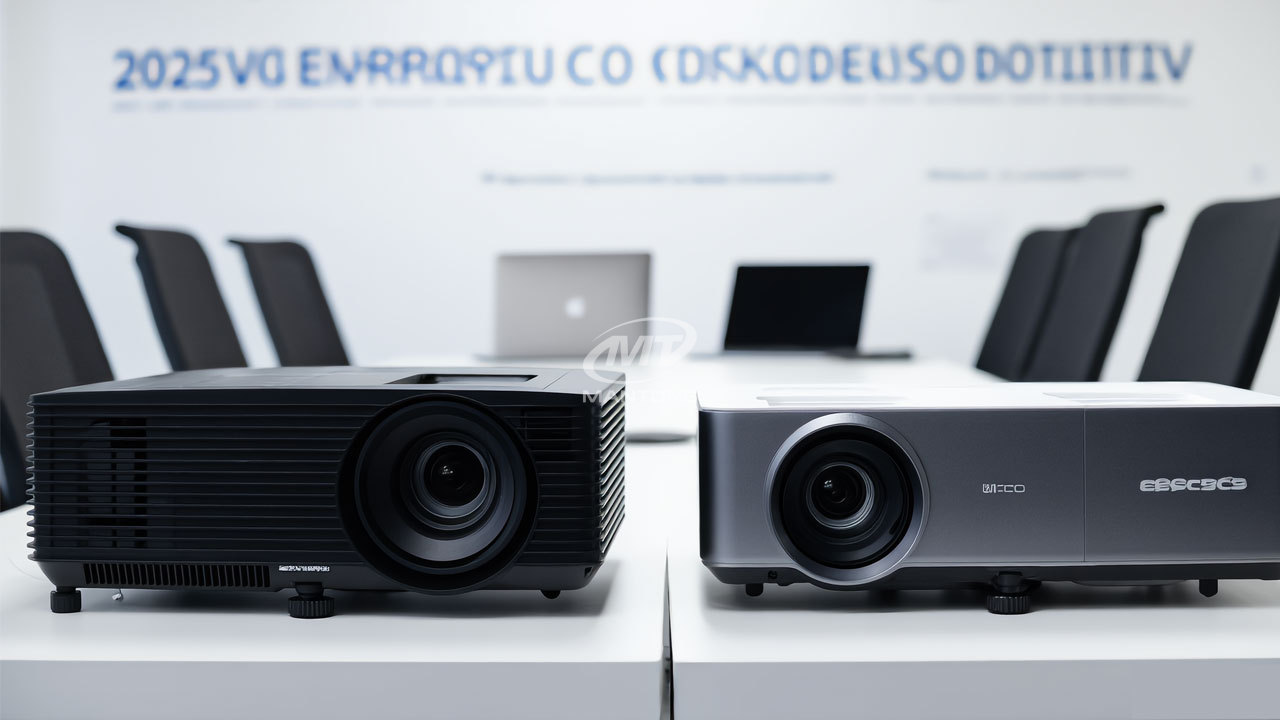
1. Light Source Utilization and Technology
Bulb Projectors:
Use high-pressure mercury or metal halide lamps
Brightness decreases gradually with every hour of use
Produce significant heat, requiring strong cooling systems
Laser Projectors:
Utilize solid-state laser diodes for stable illumination
Maintain consistent brightness for most of their lifespan
Create less heat, resulting in smoother and more reliable performance
In summary, bulb projectors degrade noticeably over time, while laser projectors offer long-term stable output.
2. Brightness Performance
Bulb Projectors
- Brightness declines rapidly after a few hundred hours.
- Image clarity and color accuracy drop as brightness decreases.
- Require frequent recalibration to maintain quality.
Laser Projectors
- Deliver 20–30% higher effective brightness compared to bulb projectors with similar lumen ratings.
- Maintain stable brightness across thousands of hours.
- Perform better in rooms with ambient lighting.
Key Point: Laser projection ensures stronger, longer-lasting brightness with minimal upkeep.
3. Operational Lifespan
Bulb Projectors
- Lifespan typically 2,000–5,000 hours, depending on mode.
- Require 2–4 bulb replacements per year for daily professional usage.
- Each replacement introduces cost, maintenance time, and downtime.
Laser Projectors
- Offer 20,000–30,000 hours of operation—up to 10× longer than bulbs.
- Require little to no maintenance beyond standard cleaning.
- Ideal for continuous or long-running environments.
Conclusion: Laser projectors dramatically reduce interruptions and service costs.
4. Color Accuracy
|
Factor |
Bulb Projectors |
Laser Projectors |
|
Initial Color Quality |
Good |
Excellent |
|
Color Saturation Over Time |
Decreases as bulb ages |
Stays consistent |
|
Performance at High Brightness |
Colors fade or wash out |
Colors remain vibrant and stable |
Laser projectors deliver superior color stability, making them ideal for design studios, content creators, simulation rooms, and visual environments requiring precise tones.
5. Energy Efficiency
Bulb Projectors
- Consume more power due to inefficient lamp technology
- Generate high heat levels, requiring larger cooling fans
- Increase both energy usage and operational noise
Laser Projectors
- Use 30–40% less electricity
- Produce lower heat, allowing quieter operation with smaller cooling systems
- Reduce overall energy costs long-term
Result: Laser systems are more eco-friendly and cost-efficient over time
6. Physical Design
|
Bulb Projectors |
Laser Projectors |
|
Large lamp housing |
Compact laser diode modules |
|
Heavier, bulkier design |
25–40% lighter and slimmer |
|
Limited placement flexibility |
Can be mounted in any orientation (360° installation) |
Laser technology enables innovative, space-efficient installations—suitable for art exhibits, theme parks, museum displays, and architectural mapping.
7. Cost Analysis
Short-Term:
Bulb Projectors: Lower initial spend.
Laser Projectors: Greater initial hit to the budget.
Long-Term (5 years):
Bulb Projectors: 3-5 replacements.
Laser Projectors: Almost no ongoing maintenance costs.
Application Recommendations
Choose Bulb Projectors When:
- You have strict budget constraints
- Usage remains under 10 hours per week
- The setup is temporary or for occasional use
- Color performance and long-term brightness are not top priorities
Choose Laser Projectors When:
- You operate in 24/7 or long-running environments such as control rooms or museums
- You require accurate color performance for design, media, or graphics work
- You want to minimize downtime and maintenance
- You need flexible installation options or compact designs for creative displays
Conclusion
As we enter 2026, laser projectors are becoming the new standard in professional environments thanks to their superior brightness, color accuracy, longer lifespan, and lower long-term costs. Although bulb projectors are still suitable for lower budgets and low usage, laser projectors clearly outperform them in most modern applications.
Understanding these technological differences will help you make a smarter, future-ready choice for your projection needs.


One-Stop Projection Solution Provider Since 2011
What information do you need to know before making the proposal/solution?
We know that everyone wants to know the price, but the price of our products is determined by many factors since most of our products are custom, so no ready price list. In order to fast understand what you need, can you send us an inquiry like this?
For example: I am really interested in your immersive projection products, we are a company in the USA and want to install some in my restaurant. It is about 50 meters long, and 5m in width. Projection size you can decide but the length should be not less than 20 meters. We want some content about SeaWorld because our place is all about the sea. Thank you.
What about the wall/floor material for the projection?
It’s recommended to choose a light-colored material with minimal reflectivity—pure white or light grey works best. the
common material is cement & plaster board
For optimal projection results, the surface should be free of any patterns or textures, as the projector will display content
directly onto it.
There are no specific material requirements; you may use any commonly available material in your local market, as long as it
meets the above conditions.
How to install the projection equipment ?
1) Install the projector in a suitable position. We will provide you with a hanger, which you need to fix on the ceiling with
screws.
2) Connect projectors, computers and other accessories through wires.
3) After completing the above 2 steps, we will carry out the edge blending steps. Our team can complete it through remote
control.
In general, installation instructions for each project need to be specified on a project-by-project basis. The above is for
reference only.
Are you trader or manufacturer ?
We are direct manufacturer who specialize in providing one-stop solution for different outdoor & indoor projection project with our stable software and qualified projectors
How to Write an Interactive-Effect Video Customisation Script ?
① Project Background: Briefly introduce the context in which this interactive scene will be used (e.g., exhibition, museum,
event space, children's area). Example: This scene is part of the “Underwater World” zone in a children's science museum,
designed to be engaging and exploratory.
②Visual Style / Atmosphere: What kind of visual mood are you aiming for? Please describe the color scheme, style, and any
references. it should focus solely on describing the visual aspects of the scene, supported by relevant charts or reference
images.
③ Interaction Points Overview:List each interactive hotspot along with the effect you'd like to trigger when the user
touches or clicks the area. example: when player touch the clownfish, it will swims away with bubble trail (animation effect)
and produce the bubble sound ( sound effect requirement )
④ Static Visual Reference:including but not limited to background image/video, a list of major visual elements (e.g., coral,
rocks, seaweed, fish), which elements should be interactive?
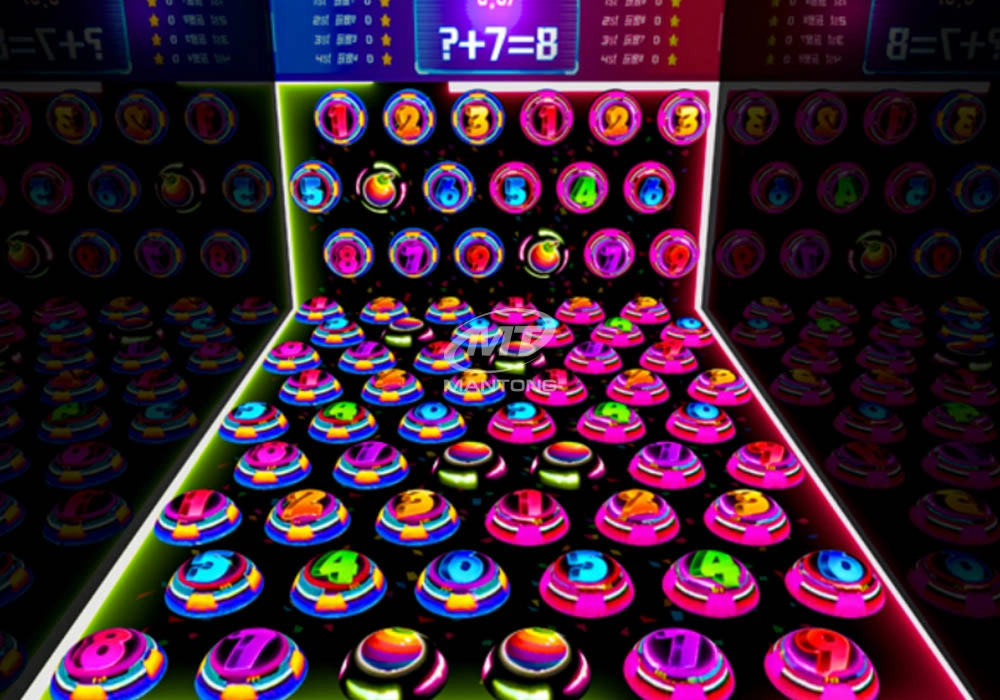
Rapidly Rotating Bouncing Sphere is an interactive space where participants jump on rotating spheres. As they step on it, the spheres surface will show special interactivity
Jumping on spheres of the same color in succession causes them to pop, releasing light particles. The more consecutive jumps, the greater the reward—caterpillars appear, and eventually, all spheres of that color burst, filling the space with light and even more caterpillars.
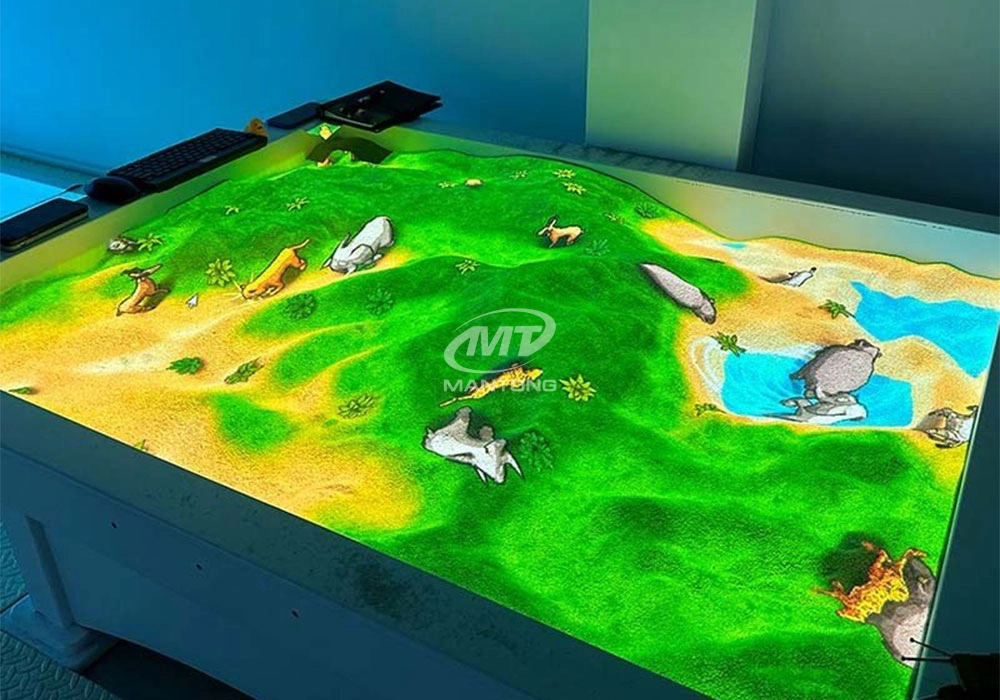
Bring imagination to life with interactive sandbox projection mapping games designed for kids’ play parks. Using cutting-edge projection technology and real-time motion sensing, children can dig, build, and explore virtual worlds directly in the sand. Educational, engaging, and endlessly fun — it’s the perfect blend of play and learning.
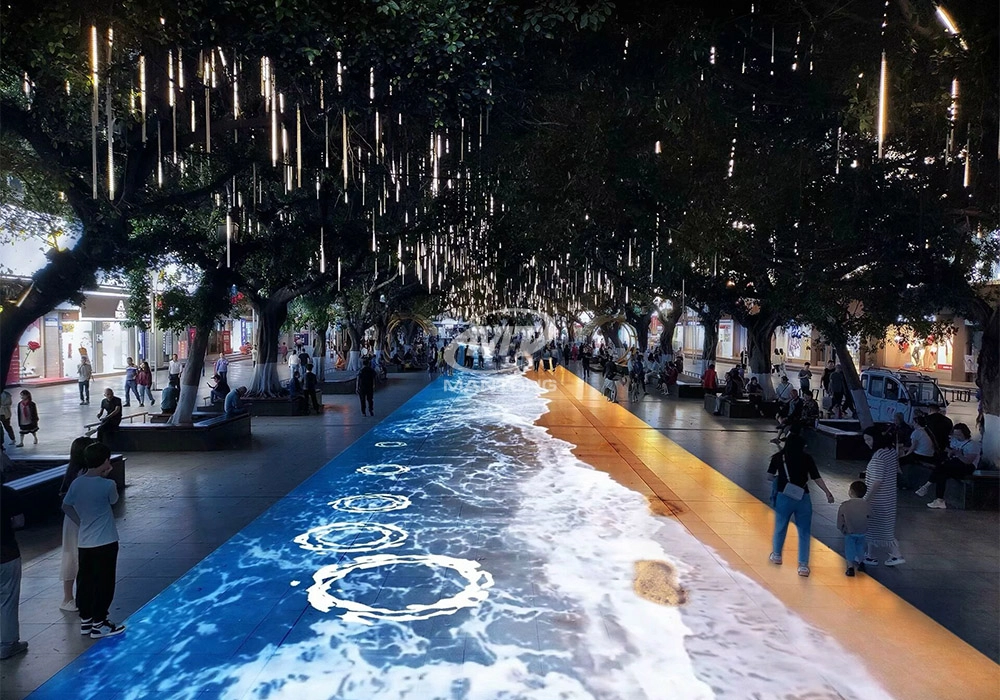
Combining projection mapping with 3D interactive ground projection technology brings an unprecedented immersive experience to outdoor scenes.
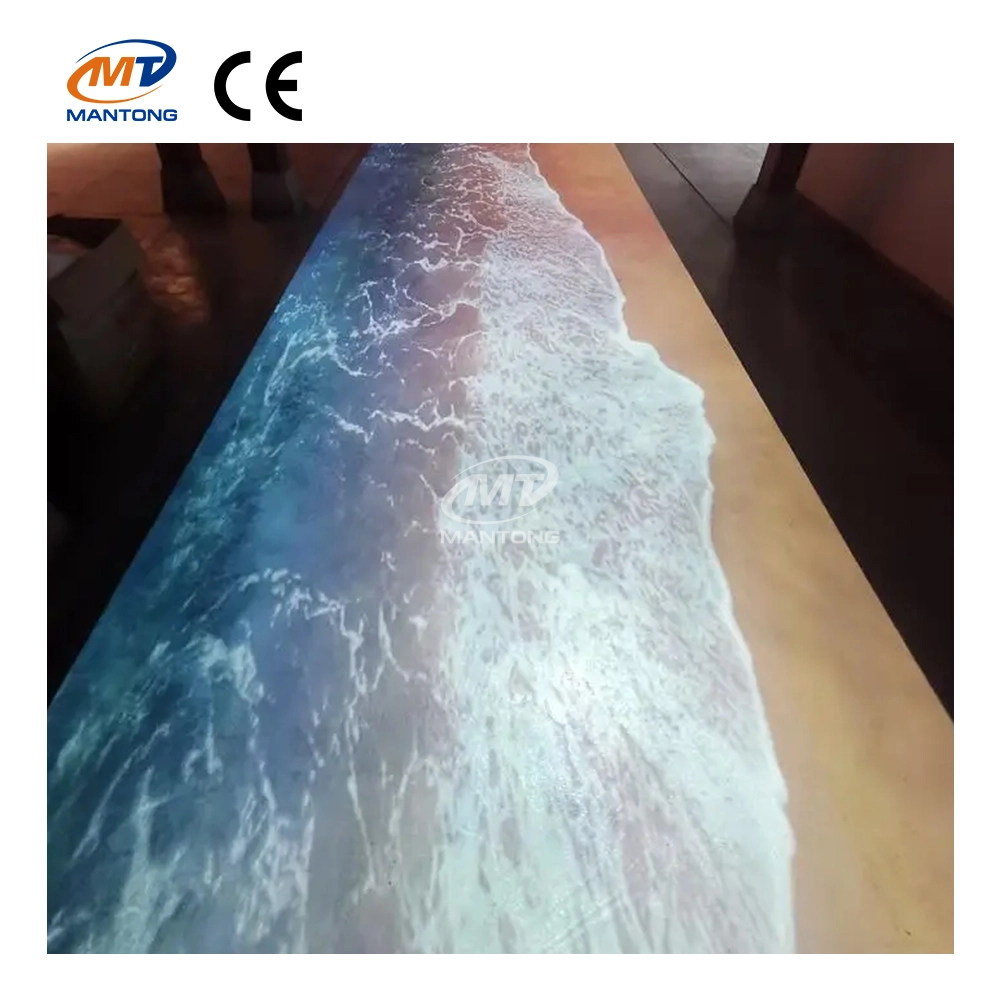
Indoor interactive floor projections display dynamic themed videos on the floor, commonly used in venues aiming to enhance brand influence or attract foot traffic, such as restaurants, hotel corridors, and brand car retail stores.
By using projectors and compatible software, the interactive content is projected onto the floor, encouraging engagement between people and the projected visuals. A single 5500-lumen indoor floor projector can cover an area of 5 m × 3 m. Typically, each project will use at least 3 units to ensure broad coverage and optimal visual effects.
We also offer customized design and installation support to enhance the interactive experience for your venue.
Contact Us to Start Your Interactive Projection Journey
Contact us now to discuss how to create innovative projection solutions for your space.

Kaida Business Center, Shixin Road, Panyu District,Guangzhou City, Guangdong Province, China.
ManTong
ManTong
ManTong