
Is rear projection required or can front projection work on water curtains? | Mantong Expert Guide
- Is Rear Projection Required or Can Front Projection Work on Water Curtains?
- Does Front Projection Work on Water Curtains in Outdoor Settings?
- What Are the Typical Projection Brightness Requirements for Water Curtains?
- How Does Water Quality and Droplet Size Affect Projection Quality?
- What Is the Cost Difference Between Front and Rear Projection Systems for Water Curtains?
- Are There Hybrid or Alternative Projection Techniques for Water Curtains?
Is Rear Projection Required or Can Front Projection Work on Water Curtains?
Interactive projection on water curtains is a popular effect used in theme parks, exhibitions, and events. Water curtains act as a semi-transparent screen, allowing projections to appear suspended in mid-air. A critical question for buyers is whether rear projection is mandatory or if front projection can be effectively used on water curtains.
Rear projection is generally preferred because the projector shines from behind the water screen, resulting in clearer and more vivid images without significant interference from ambient light or water droplets. Water droplets scatter light; front projection has to deal with this scattering and the projector light reflecting off water particles, leading to reduced contrast and brightness.
Yet, cases exist of front projection use, especially in controlled environments with low ambient light and high-lumen projectors (typically 8000 lumens or higher). However, the image quality is generally lower compared to rear projection. According to industry experts, for water curtains of 3-6 meters width, rear projection offers optimal clarity and color fidelity.
Does Front Projection Work on Water Curtains in Outdoor Settings?
Outdoor environments usually have high ambient light. Front projection on water curtains outdoors struggles with washed-out images due to sunlight and reflected water droplets. Rear projection, potentially augmented with high-contrast projectors and shading, is preferred for outdoor water curtains to maintain visual integrity.
What Are the Typical Projection Brightness Requirements for Water Curtains?
Experts recommend projectors rated 6,000 to 15,000 ANSI lumens for water curtain projections, depending on size and lighting conditions. Larger water curtains (above 5 meters wide) or bright environments require projectors at the higher end of this scale, often combined with rear projection setups for maximum impact.
How Does Water Quality and Droplet Size Affect Projection Quality?
Water quality and droplet size influence the effective surface for projection. Too fine droplets create excessive scattering diminishing image sharpness, while too coarse droplets reduce the apparent screen size. A balanced droplet size (around 0.5-1 mm diameter) creates an effective projection medium. Clean water also prevents unwanted distortion or opacity.
What Is the Cost Difference Between Front and Rear Projection Systems for Water Curtains?
Rear projection can require more equipment: larger space behind the screen, protective enclosures for projectors, and possibly additional structural elements. This increases installation costs by about 15%-30% compared to front projection setups. However, the enhanced image quality and reliability typically justify the investment for professional-grade installations.
Are There Hybrid or Alternative Projection Techniques for Water Curtains?
Emerging techniques combine holographic and laser projections with water curtains, sometimes eliminating the need for strict rear projection. Some systems use ultra-short throw lenses or curved water curtain setups to optimize front projection in limited spaces, but these require specialized equipment and customization, making rear projection still the industry standard for most applications.
In summary, although front projection can sometimes work on water curtains, rear projection is the preferred and industry-standard method to achieve vivid, high-contrast images, especially in large-scale or outdoor environments. Buyers in the interactive projection field should prioritize projector brightness, water droplet control, and system layout for best results.


One-Stop Projection Solution Provider Since 2011
What's the application of Immersive projection ?
It can be used in various venues, such as art exhibition, entertainment venues, educational institution, Wedding hall /Banquet/Bar,Yoga Studio and so on. It often involves advanced projection techniques, multimedia content, and interactive elements to engage and captivate the audience's senses.
How to install the projection equipment ?
1) Install the projector in a suitable position. We will provide you with a hanger, which you need to fix on the ceiling with
screws.
2) Connect projectors, computers and other accessories through wires.
3) After completing the above 2 steps, we will carry out the edge blending steps. Our team can complete it through remote
control.
In general, installation instructions for each project need to be specified on a project-by-project basis. The above is for
reference only.
Are you trader or manufacturer ?
We are direct manufacturer who specialize in providing one-stop solution for different outdoor & indoor projection project with our stable software and qualified projectors
How to Write an Interactive-Effect Video Customisation Script ?
① Project Background: Briefly introduce the context in which this interactive scene will be used (e.g., exhibition, museum,
event space, children's area). Example: This scene is part of the “Underwater World” zone in a children's science museum,
designed to be engaging and exploratory.
②Visual Style / Atmosphere: What kind of visual mood are you aiming for? Please describe the color scheme, style, and any
references. it should focus solely on describing the visual aspects of the scene, supported by relevant charts or reference
images.
③ Interaction Points Overview:List each interactive hotspot along with the effect you'd like to trigger when the user
touches or clicks the area. example: when player touch the clownfish, it will swims away with bubble trail (animation effect)
and produce the bubble sound ( sound effect requirement )
④ Static Visual Reference:including but not limited to background image/video, a list of major visual elements (e.g., coral,
rocks, seaweed, fish), which elements should be interactive?
What information do you need to know before making the proposal/solution?
We know that everyone wants to know the price, but the price of our products is determined by many factors since most of our products are custom, so no ready price list. In order to fast understand what you need, can you send us an inquiry like this?
For example: I am really interested in your immersive projection products, we are a company in the USA and want to install some in my restaurant. It is about 50 meters long, and 5m in width. Projection size you can decide but the length should be not less than 20 meters. We want some content about SeaWorld because our place is all about the sea. Thank you.
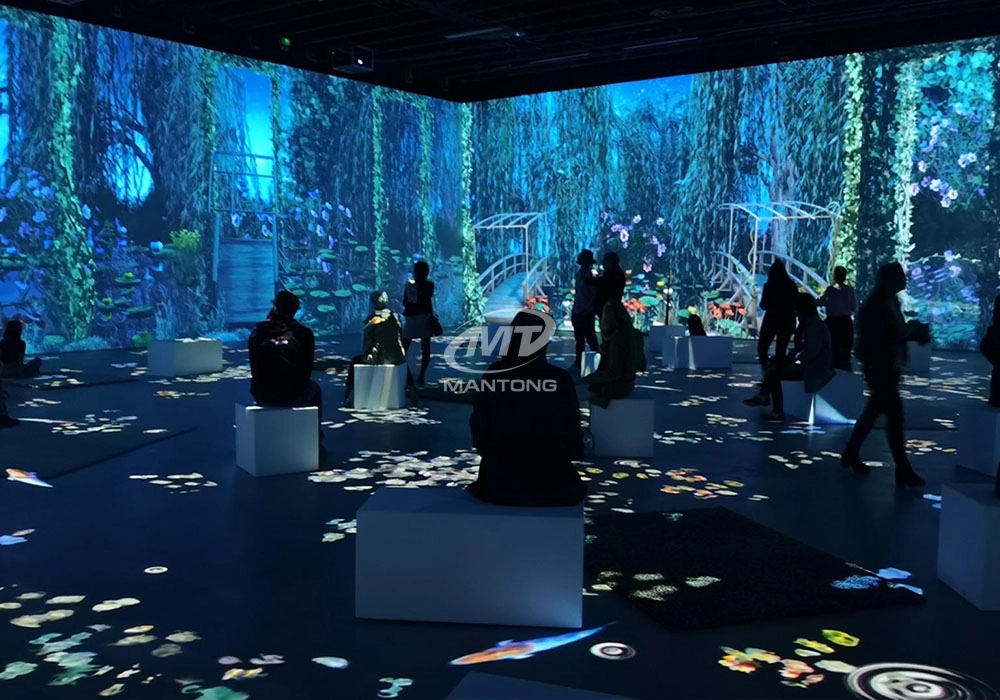
Transform any space with Mantong's immersive projection mapping systems. Our high-lumen projectors (up to 6500 LM) and custom software create captivating interactive experiences for floors and walls. Ideal for museums, events, retail, and hospitality. Each kit includes professional ceiling mounting and 80+ pre-loaded video contents and is backed by a 12-month warranty and CE certification. We offer full customization and support to bring your vision to life.
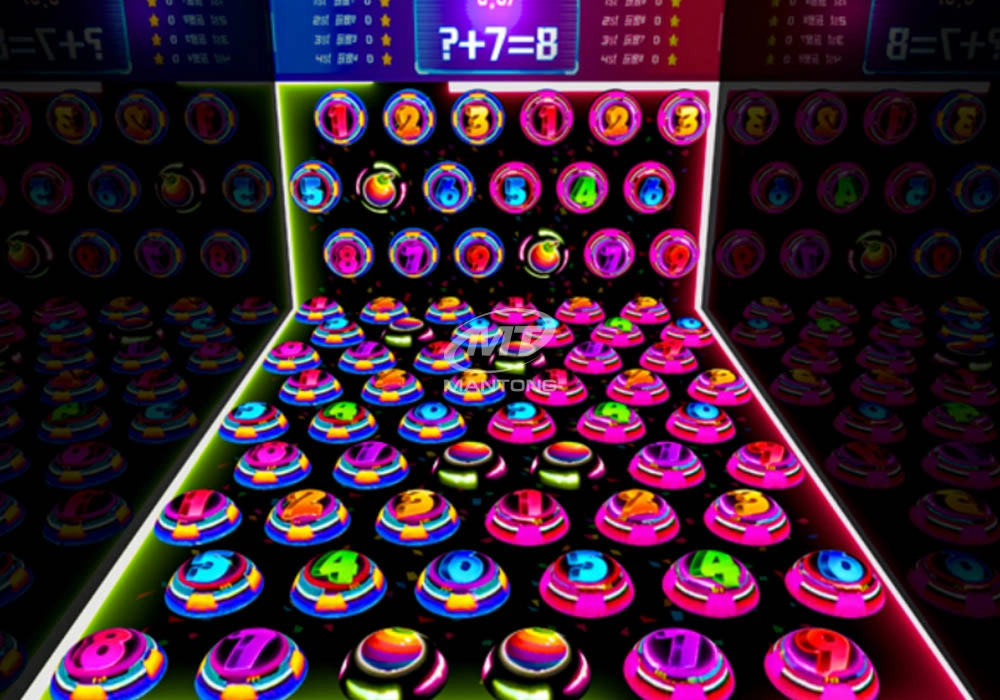
Rapidly Rotating Bouncing Sphere is an interactive space where participants jump on rotating spheres. As they step on it, the spheres surface will show special interactivity
Jumping on spheres of the same color in succession causes them to pop, releasing light particles. The more consecutive jumps, the greater the reward—caterpillars appear, and eventually, all spheres of that color burst, filling the space with light and even more caterpillars.
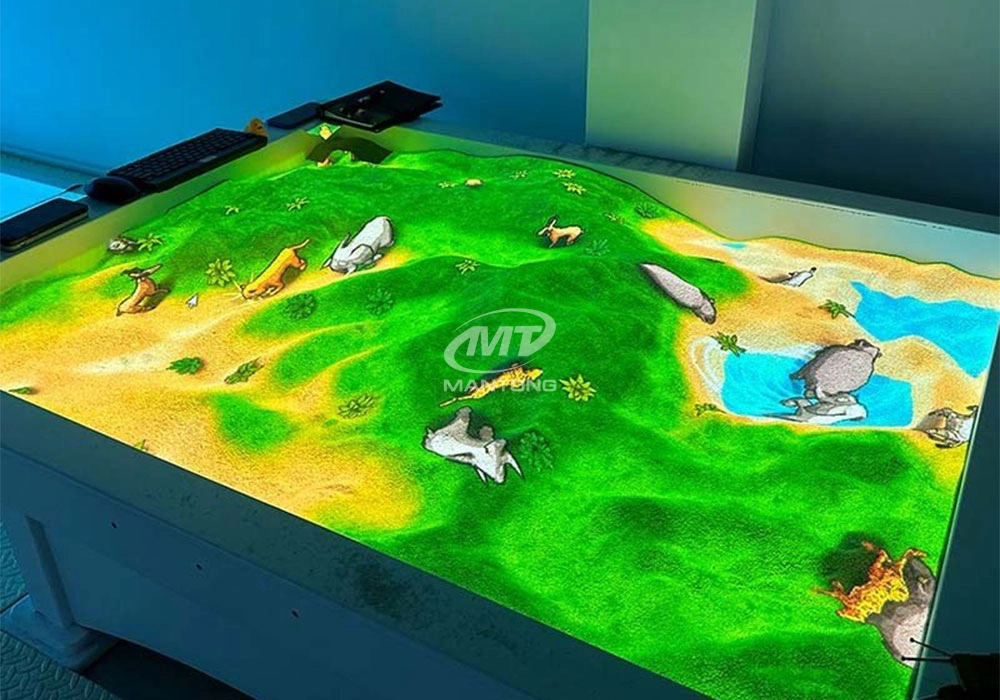
Bring imagination to life with interactive sandbox projection mapping games designed for kids’ play parks. Using cutting-edge projection technology and real-time motion sensing, children can dig, build, and explore virtual worlds directly in the sand. Educational, engaging, and endlessly fun — it’s the perfect blend of play and learning.
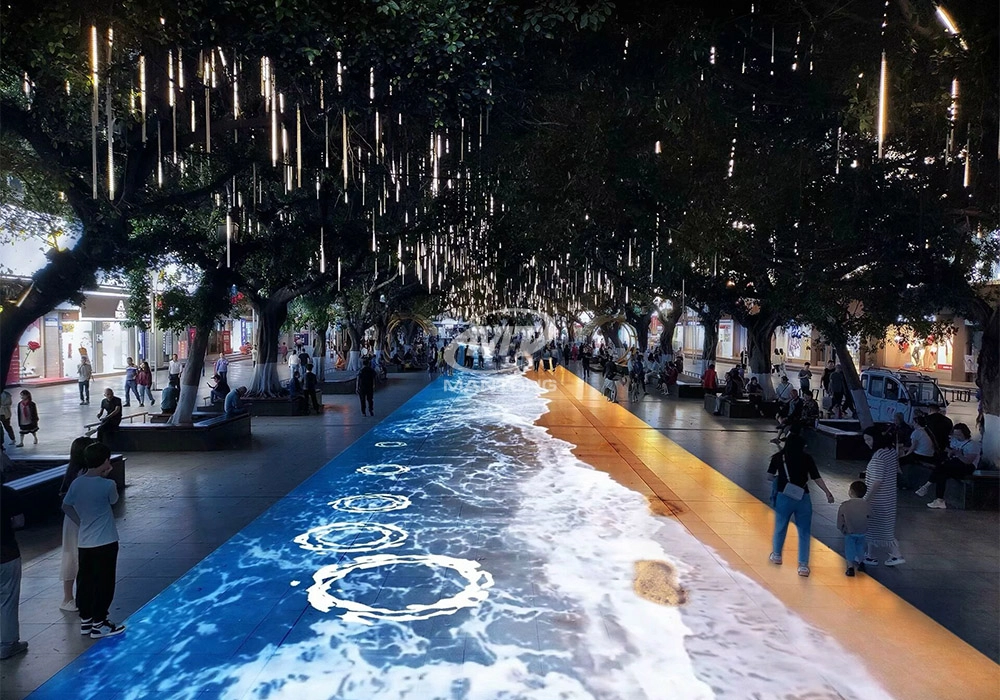
Combining projection mapping with 3D interactive ground projection technology brings an unprecedented immersive experience to outdoor scenes.
Contact Us to Start Your Interactive Projection Journey
Contact us now to discuss how to create innovative projection solutions for your space.

Kaida Business Center, Shixin Road, Panyu District,Guangzhou City, Guangdong Province, China.
ManTong
ManTong
ManTong