
What is the lifespan and maintenance requirement of restaurant projection equipment? | Insights by Mantong
- Understanding the Lifespan and Maintenance of Restaurant Projection Equipment
- What is the typical lifespan of restaurant projection equipment?
- What maintenance practices are essential for restaurant projection equipment?
- How do environmental factors impact the performance of projection equipment?
- What are the common issues faced by projection equipment, and how can they be addressed?
- How can restaurants maximize the ROI of their projection equipment?
Understanding the Lifespan and Maintenance of Restaurant Projection Equipment
In the dynamic environment of a restaurant, projection equipment serves as a pivotal element in creating immersive dining experiences. To ensure these systems operate at their best, it's essential to comprehend their expected lifespan and adhere to proper maintenance protocols.
What is the typical lifespan of restaurant projection equipment?
The longevity of projection equipment varies based on the technology employed and usage patterns:
Lamp-Based Projectors: These traditional projectors have bulbs that typically last between 2,000 to 4,000 hours. With regular, heavy use, this equates to approximately 1 to 3 years before the bulb requires replacement.
LED Projectors: Utilizing LED light sources, these projectors can achieve lifespans of 20,000 to 30,000 hours, translating to over a decade of service under typical home use conditions.
Laser Projectors: Known for their durability, laser projectors often last between 20,000 to 25,000 hours before experiencing noticeable brightness degradation.
It's important to note that these figures are influenced by factors such as usage frequency, environmental conditions, and the quality of the equipment.
What maintenance practices are essential for restaurant projection equipment?
Regular maintenance is crucial to extend the lifespan and maintain the performance of projection systems:
Cleaning: Dust accumulation can impair image quality and lead to overheating. Regularly cleaning lenses, filters, and vents is recommended. In environments with high dust levels, cleaning should be performed every 45 days to 6 months.
Software Updates: Keeping the system's software and firmware up to date ensures optimal functionality and security. Manufacturers often release updates to improve performance and address vulnerabilities.
Calibration: Periodically calibrating the projector ensures accurate color reproduction and image alignment, maintaining the quality of the projected content.
Component Inspection: Regularly checking for signs of wear, such as dimming images or unusual noises, can help identify potential issues before they escalate.
How do environmental factors impact the performance of projection equipment?
The operating environment plays a significant role in the performance and longevity of projection systems:
Ambient Lighting: Excessive ambient light can wash out projected images, reducing visibility. Implementing dimmed lighting or using blackout curtains can enhance image clarity. ((https://www.mtprojection.com/interactive-floor-projector-safety-maintenance-guide.html?utm_source=openai))
Temperature and Humidity: Extreme temperatures and humidity levels can damage internal components. Maintaining a controlled environment helps preserve equipment integrity.
Dust and Particles: Dust accumulation can obstruct airflow and degrade image quality. Regular cleaning and ensuring proper ventilation are essential to mitigate these effects.
What are the common issues faced by projection equipment, and how can they be addressed?
Projection systems may encounter several issues:
Overheating: Dust buildup can obstruct airflow, leading to overheating. Regular cleaning of filters and vents is necessary to prevent this.
Image Distortion: Misalignment or damage to lenses can cause image distortion. Ensuring proper calibration and handling can mitigate this problem.
Lamp Failure: In lamp-based projectors, bulb failure is common after extended use. Monitoring usage hours and replacing bulbs as needed is crucial.
How can restaurants maximize the ROI of their projection equipment?
To ensure a favorable return on investment:
Scheduled Maintenance: Implementing a routine maintenance schedule can prevent costly repairs and extend equipment lifespan.
Environmental Control: Maintaining optimal environmental conditions, such as temperature and humidity, can enhance equipment performance and longevity.
Staff Training: Educating staff on proper equipment handling and basic troubleshooting can prevent misuse and reduce the likelihood of issues.
By understanding the lifespan and maintenance requirements of projection equipment, restaurants can ensure consistent performance, enhance customer experiences, and protect their investment.
Mantong offers high-quality projection solutions tailored for the hospitality industry, combining durability with user-friendly features to meet the unique needs of restaurant environments.
{"seo_title": "Restaurant Projection Equipment Lifespan and Maintenance Guide", "seo_description": "Learn about the lifespan, maintenance practices, and environmental considerations for restaurant projection equipment to ensure optimal performance.", "keywords": "restaurant projection equipment, lifespan, maintenance, environmental factors, ROI, Mantong", "url_alias": "restaurant-projection-equipment-lifespan-maintenance"}


One-Stop Projection Solution Provider Since 2011
How to Write an Interactive-Effect Video Customisation Script ?
① Project Background: Briefly introduce the context in which this interactive scene will be used (e.g., exhibition, museum,
event space, children's area). Example: This scene is part of the “Underwater World” zone in a children's science museum,
designed to be engaging and exploratory.
②Visual Style / Atmosphere: What kind of visual mood are you aiming for? Please describe the color scheme, style, and any
references. it should focus solely on describing the visual aspects of the scene, supported by relevant charts or reference
images.
③ Interaction Points Overview:List each interactive hotspot along with the effect you'd like to trigger when the user
touches or clicks the area. example: when player touch the clownfish, it will swims away with bubble trail (animation effect)
and produce the bubble sound ( sound effect requirement )
④ Static Visual Reference:including but not limited to background image/video, a list of major visual elements (e.g., coral,
rocks, seaweed, fish), which elements should be interactive?
What information do you need to know before making the proposal/solution?
We know that everyone wants to know the price, but the price of our products is determined by many factors since most of our products are custom, so no ready price list. In order to fast understand what you need, can you send us an inquiry like this?
For example: I am really interested in your immersive projection products, we are a company in the USA and want to install some in my restaurant. It is about 50 meters long, and 5m in width. Projection size you can decide but the length should be not less than 20 meters. We want some content about SeaWorld because our place is all about the sea. Thank you.
How to install the projection equipment ?
1) Install the projector in a suitable position. We will provide you with a hanger, which you need to fix on the ceiling with
screws.
2) Connect projectors, computers and other accessories through wires.
3) After completing the above 2 steps, we will carry out the edge blending steps. Our team can complete it through remote
control.
In general, installation instructions for each project need to be specified on a project-by-project basis. The above is for
reference only.
What about the wall/floor material for the projection?
It’s recommended to choose a light-colored material with minimal reflectivity—pure white or light grey works best. the
common material is cement & plaster board
For optimal projection results, the surface should be free of any patterns or textures, as the projector will display content
directly onto it.
There are no specific material requirements; you may use any commonly available material in your local market, as long as it
meets the above conditions.
What's the application of Immersive projection ?
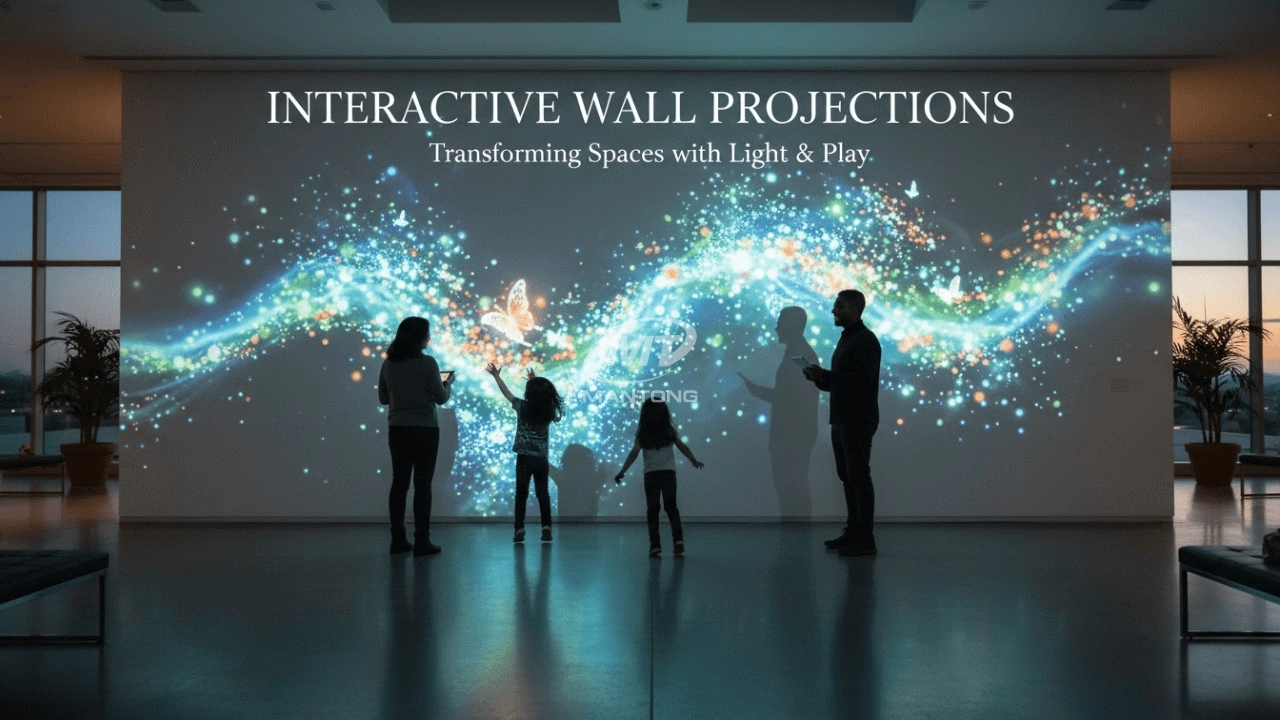
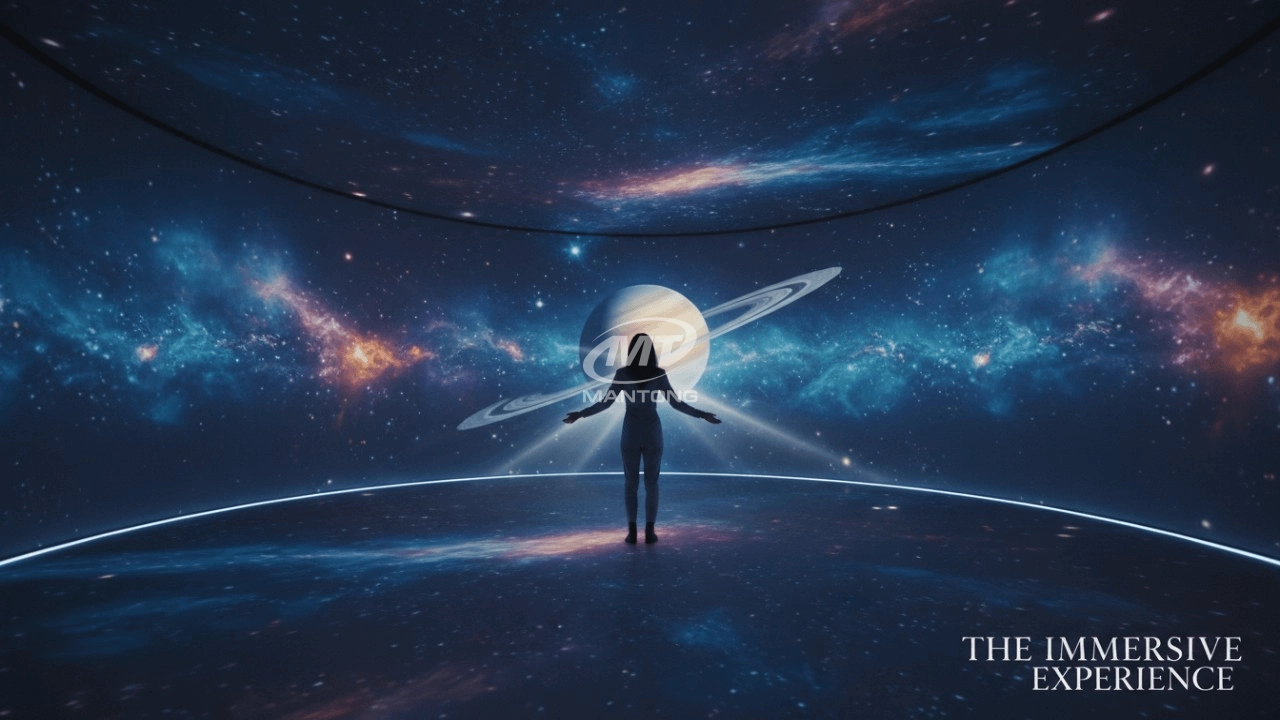
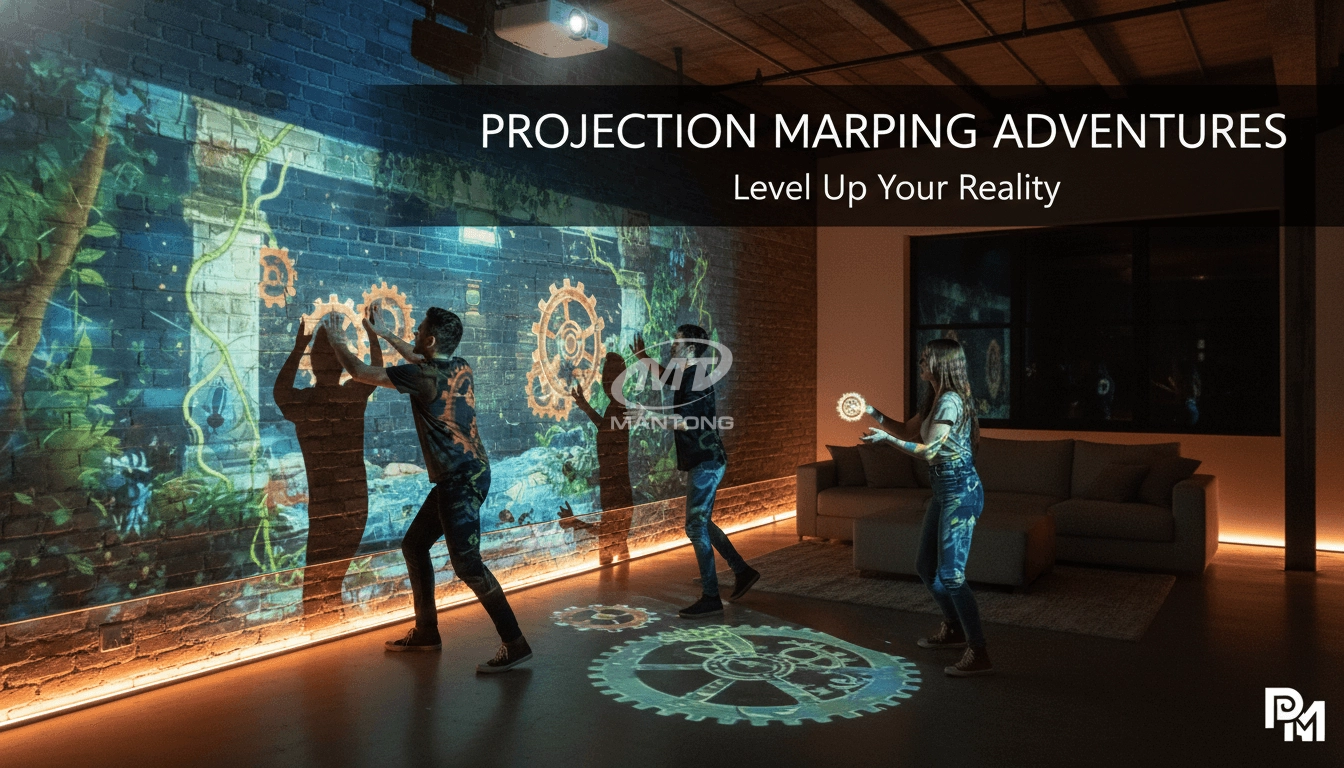
It can be used in various venues, such as art exhibition, entertainment venues, educational institution, Wedding hall /Banquet/Bar,Yoga Studio and so on. It often involves advanced projection techniques, multimedia content, and interactive elements to engage and captivate the audience's senses.
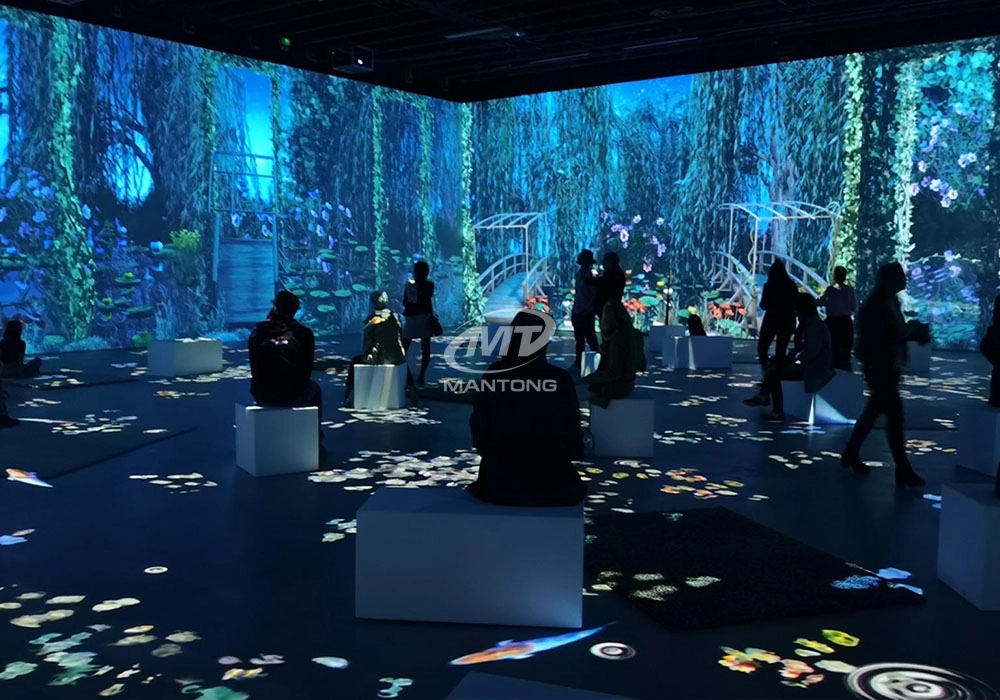
Transform any space with Mantong's immersive projection mapping systems. Our high-lumen projectors (up to 6500 LM) and custom software create captivating interactive experiences for floors and walls. Ideal for museums, events, retail, and hospitality. Each kit includes professional ceiling mounting and 80+ pre-loaded video contents and is backed by a 12-month warranty and CE certification. We offer full customization and support to bring your vision to life.
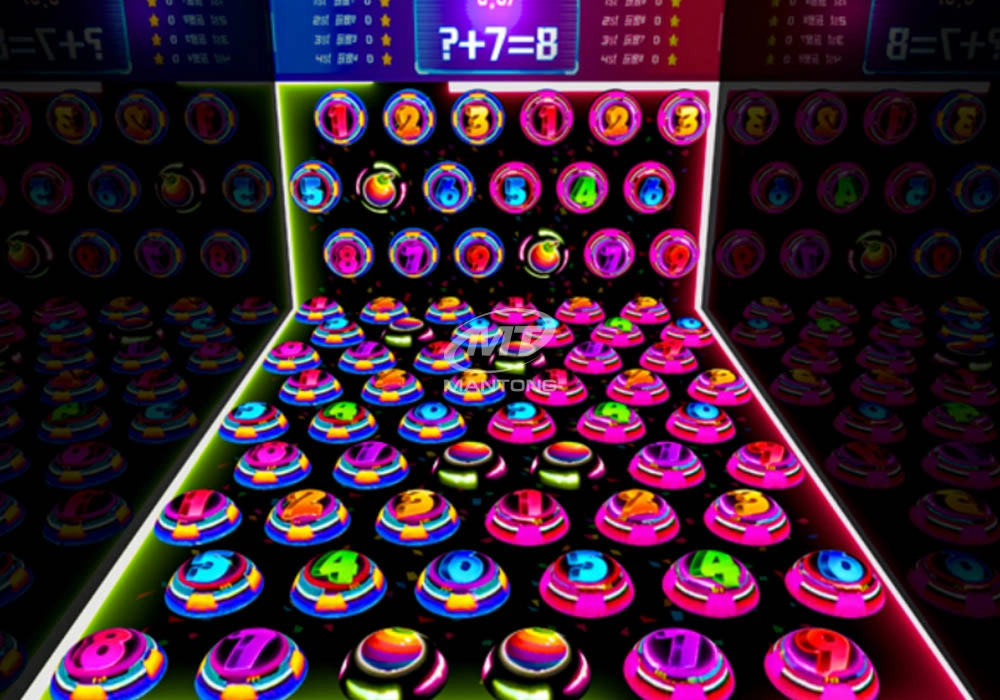
Rapidly Rotating Bouncing Sphere is an interactive space where participants jump on rotating spheres. As they step on it, the spheres surface will show special interactivity
Jumping on spheres of the same color in succession causes them to pop, releasing light particles. The more consecutive jumps, the greater the reward—caterpillars appear, and eventually, all spheres of that color burst, filling the space with light and even more caterpillars.
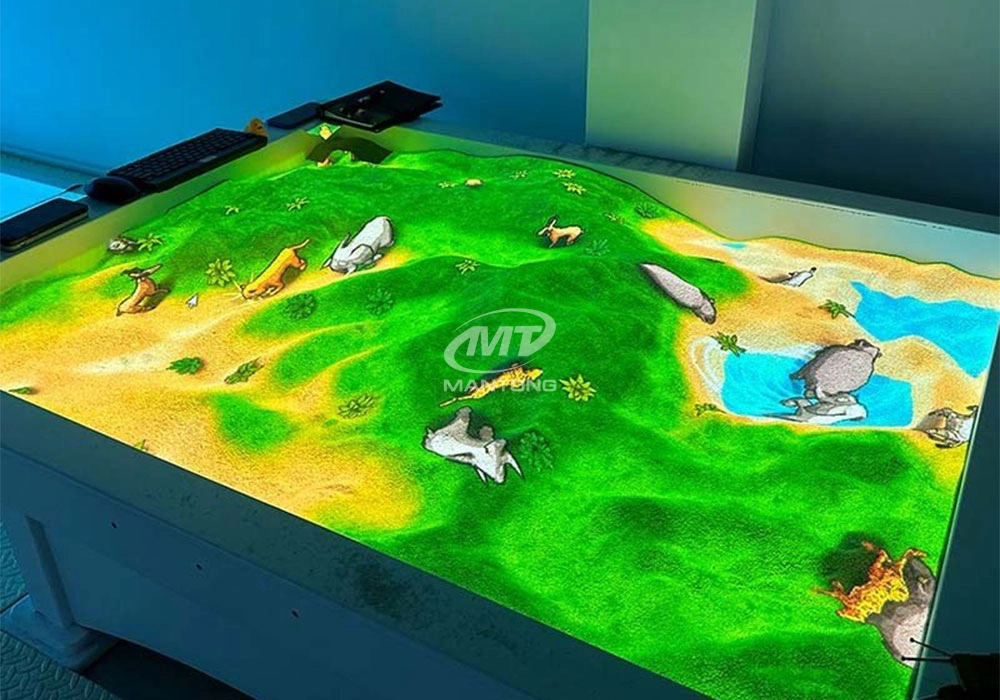
Bring imagination to life with interactive sandbox projection mapping games designed for kids’ play parks. Using cutting-edge projection technology and real-time motion sensing, children can dig, build, and explore virtual worlds directly in the sand. Educational, engaging, and endlessly fun — it’s the perfect blend of play and learning.
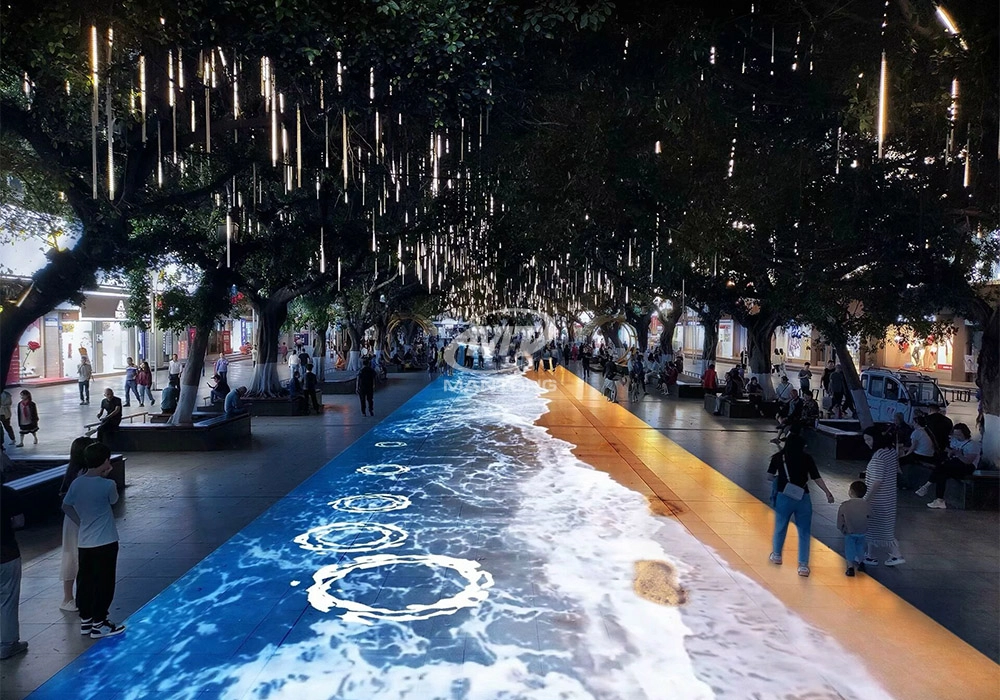
Combining projection mapping with 3D interactive ground projection technology brings an unprecedented immersive experience to outdoor scenes.
Contact Us to Start Your Interactive Projection Journey
Contact us now to discuss how to create innovative projection solutions for your space.

Kaida Business Center, Shixin Road, Panyu District,Guangzhou City, Guangdong Province, China.
ManTong
ManTong
ManTong