
What are the key equipment components needed for water curtain projection? | Mantong Expert Guide
- What are the Key Equipment Components Needed for Water Curtain Projection?
- 1. What Type of Projector is Best for Water Curtain Projection?
- 2. How is the Water Curtain (Screen) Created and Maintained?
- 3. What Pump Systems are Necessary for Stable Water Flow?
- 4. Why is Lighting Important in Water Curtain Projection?
- 5. What Control Systems are Used to Synchronize Projection and Water Flow?
What are the Key Equipment Components Needed for Water Curtain Projection?
Water curtain projection has become an innovative and impressive way to deliver interactive multimedia experiences, popular in entertainment, advertising, and events. When procuring equipment for water curtain projection systems, it's essential to understand the key components that contribute to an effective and visually stunning setup.
1. What Type of Projector is Best for Water Curtain Projection?
The projector is the heart of any water curtain projection system. High-lumen laser projectors are preferred because of their brightness and durability in outdoor and indoor settings. For instance, laser projectors with at least 8,000 lumens can ensure clear and vibrant images on the semi-transparent water screens. Laser projectors also offer a longer lifespan (20,000 to 30,000 hours) and consistent brightness compared to traditional lamp-based models.
2. How is the Water Curtain (Screen) Created and Maintained?
The water curtain itself is a critical component and is typically created using a series of precision-controlled nozzles or water jets. These produce flat, laminar water sheets that act as a projection surface. The system usually incorporates stainless steel or corrosion-resistant materials to avoid damage from constant water flow. Maintenance includes regular cleaning of nozzles to prevent clogging and ensuring the water quality to keep clarity high for optimal projection.
3. What Pump Systems are Necessary for Stable Water Flow?
Pumps are responsible for circulating water consistently and at the right pressure to form a uniform water sheet. Submersible pumps with variable speed control are common, allowing fine adjustment of flow rates, which directly affect the stability and thickness of the water curtain. Typical flow rates range from 20 to 60 liters per minute, depending on the width and height of the water curtain.
4. Why is Lighting Important in Water Curtain Projection?
Although the projector provides the main image, ambient and accent lighting helps enhance visibility and effect. LED lighting — especially RGB LEDs — around the water curtain can create mood effects that complement the projection and increase immersion. Waterproof and weather-resistant lighting fixtures are recommended to ensure longevity.
5. What Control Systems are Used to Synchronize Projection and Water Flow?
Integrated control systems coordinate projector output, pump operation, and lighting. Many systems use DMX or Art-Net protocols for real-time synchronization and remote control. Advanced software allows for programmable shows with interactive features, enabling operators to customize visual effects and respond to user interactions. Stability and responsiveness in these control systems are vital for seamless operation.
In summary, a professional water curtain projection system typically includes a high-brightness laser projector, a precision-engineered water curtain, variable-speed pumps, advanced lighting, and synchronized control systems. When selecting equipment, consider factors like projector brightness, water nozzle design, pump capacity, lighting durability, and control software capabilities to ensure a successful outdoor or indoor installation.
References:
- Barco Laser Projectors Datasheet (2023): Brightness & Lifespan
- Water Screen Technology by Crystal Display Systems
- DMX Control Protocol Documentation for Interactive Projection Systems
- Interactive Projection Industry Reports 2023 - Markets and Innovations
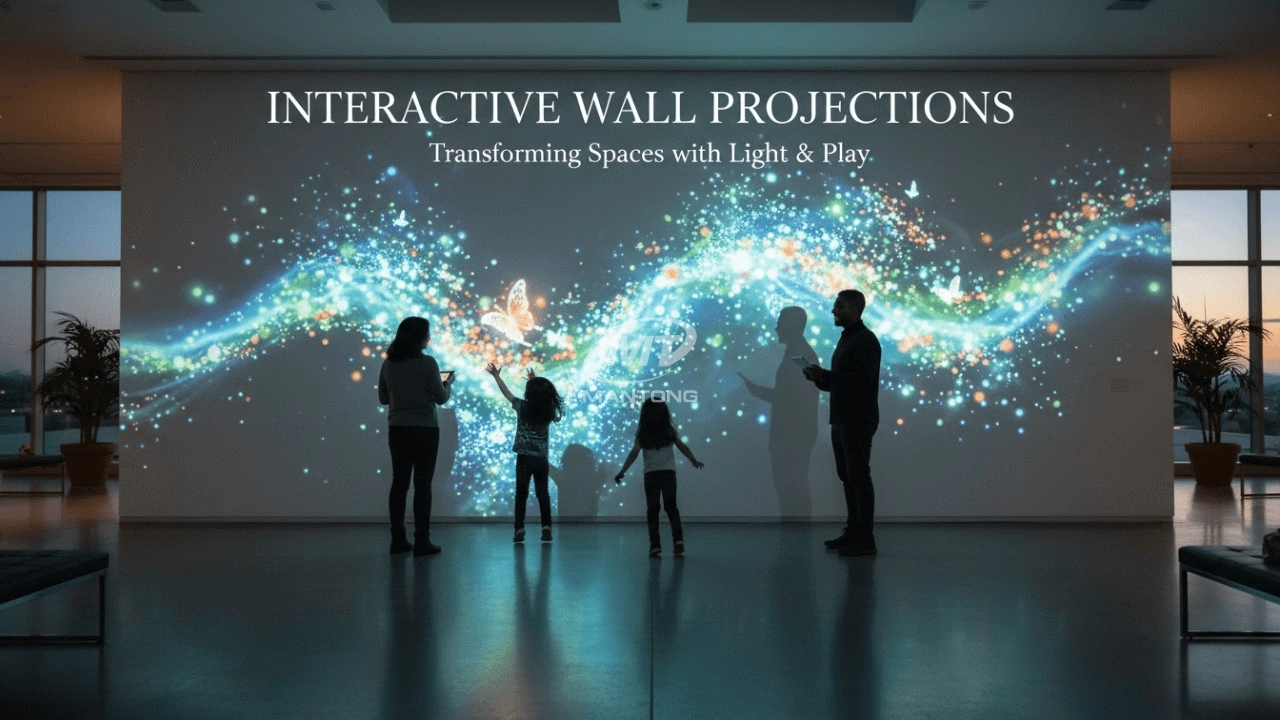
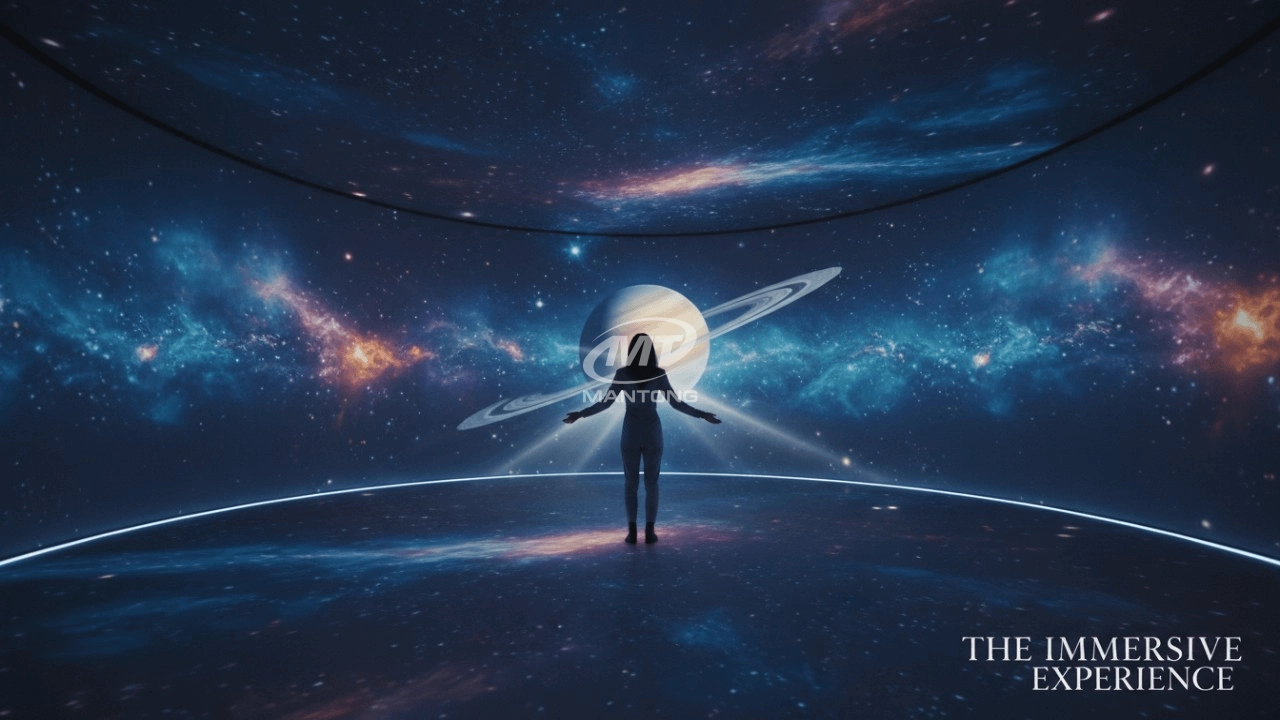


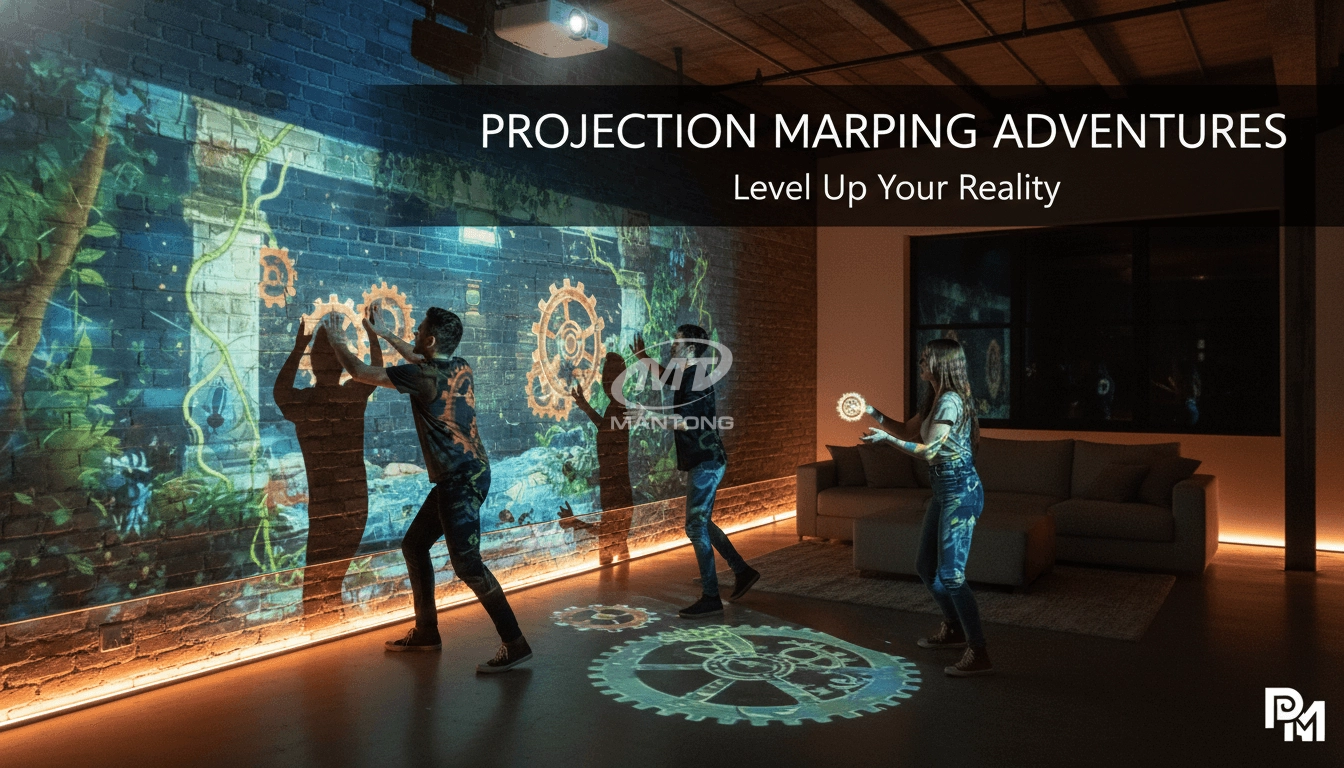
One-Stop Projection Solution Provider Since 2011
Are you trader or manufacturer ?
We are direct manufacturer who specialize in providing one-stop solution for different outdoor & indoor projection project with our stable software and qualified projectors
What about the wall/floor material for the projection?
It’s recommended to choose a light-colored material with minimal reflectivity—pure white or light grey works best. the
common material is cement & plaster board
For optimal projection results, the surface should be free of any patterns or textures, as the projector will display content
directly onto it.
There are no specific material requirements; you may use any commonly available material in your local market, as long as it
meets the above conditions.
How to Write an Interactive-Effect Video Customisation Script ?
① Project Background: Briefly introduce the context in which this interactive scene will be used (e.g., exhibition, museum,
event space, children's area). Example: This scene is part of the “Underwater World” zone in a children's science museum,
designed to be engaging and exploratory.
②Visual Style / Atmosphere: What kind of visual mood are you aiming for? Please describe the color scheme, style, and any
references. it should focus solely on describing the visual aspects of the scene, supported by relevant charts or reference
images.
③ Interaction Points Overview:List each interactive hotspot along with the effect you'd like to trigger when the user
touches or clicks the area. example: when player touch the clownfish, it will swims away with bubble trail (animation effect)
and produce the bubble sound ( sound effect requirement )
④ Static Visual Reference:including but not limited to background image/video, a list of major visual elements (e.g., coral,
rocks, seaweed, fish), which elements should be interactive?
What's the application of Immersive projection ?
It can be used in various venues, such as art exhibition, entertainment venues, educational institution, Wedding hall /Banquet/Bar,Yoga Studio and so on. It often involves advanced projection techniques, multimedia content, and interactive elements to engage and captivate the audience's senses.
What's Immersive Projection ?
Immersive projection refers to a technology that creates a captivating and all-encompassing visual experience for viewers by projecting images or videos onto large surfaces, such as walls, floors, or even entire rooms. This technology aims to immerse the audience in a simulated environment, blurring the boundaries between the physical and virtual worlds.
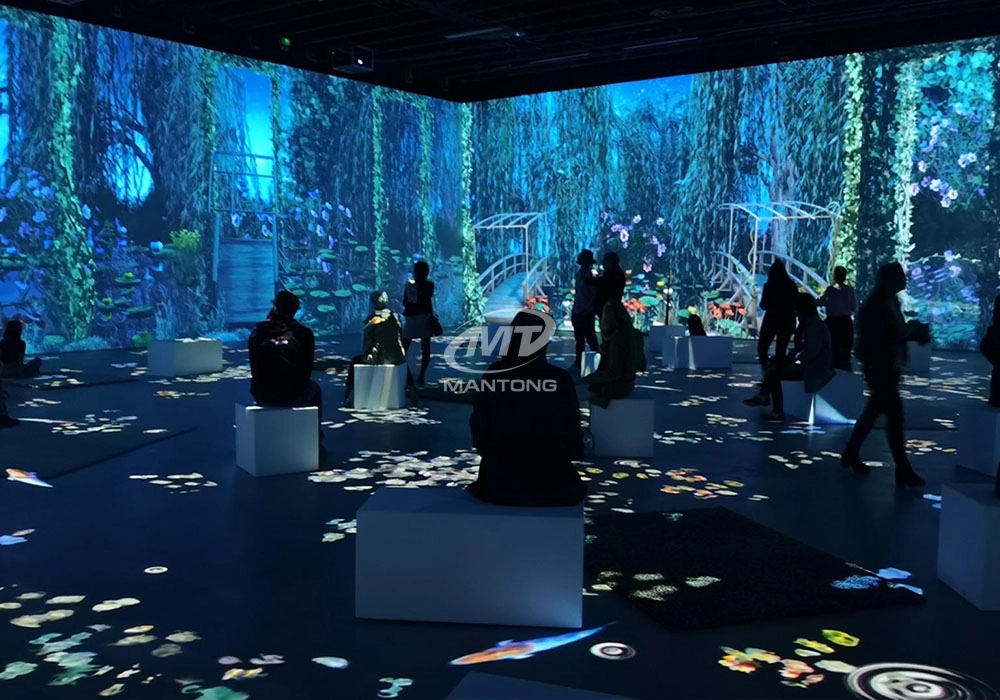
Transform any space with Mantong's immersive projection mapping systems. Our high-lumen projectors (up to 6500 LM) and custom software create captivating interactive experiences for floors and walls. Ideal for museums, events, retail, and hospitality. Each kit includes professional ceiling mounting and 80+ pre-loaded video contents and is backed by a 12-month warranty and CE certification. We offer full customization and support to bring your vision to life.
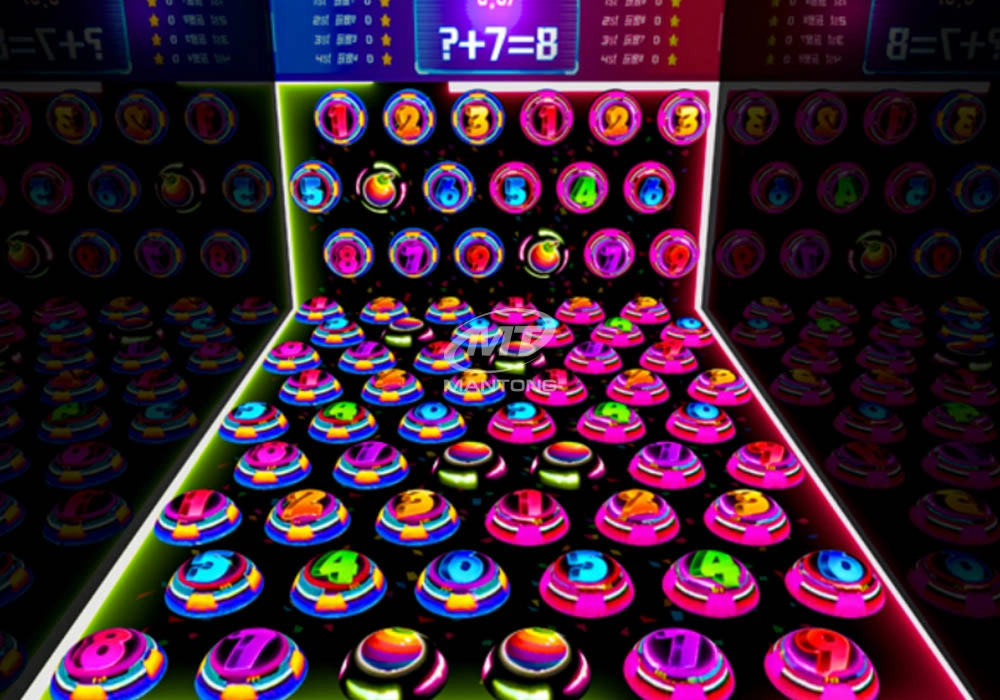
Rapidly Rotating Bouncing Sphere is an interactive space where participants jump on rotating spheres. As they step on it, the spheres surface will show special interactivity
Jumping on spheres of the same color in succession causes them to pop, releasing light particles. The more consecutive jumps, the greater the reward—caterpillars appear, and eventually, all spheres of that color burst, filling the space with light and even more caterpillars.
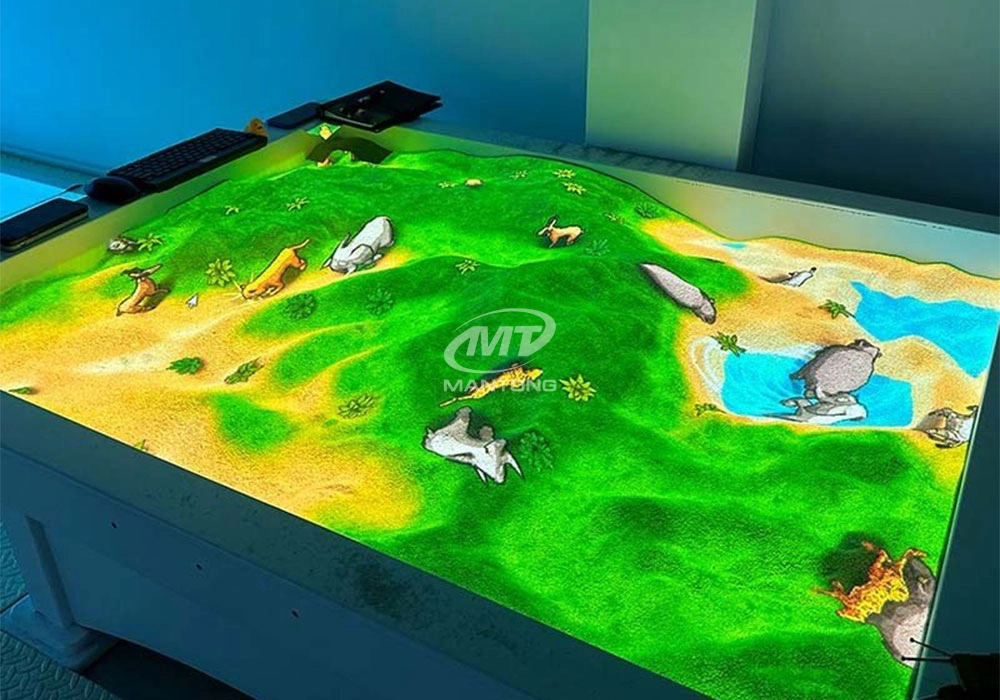
Bring imagination to life with interactive sandbox projection mapping games designed for kids’ play parks. Using cutting-edge projection technology and real-time motion sensing, children can dig, build, and explore virtual worlds directly in the sand. Educational, engaging, and endlessly fun — it’s the perfect blend of play and learning.
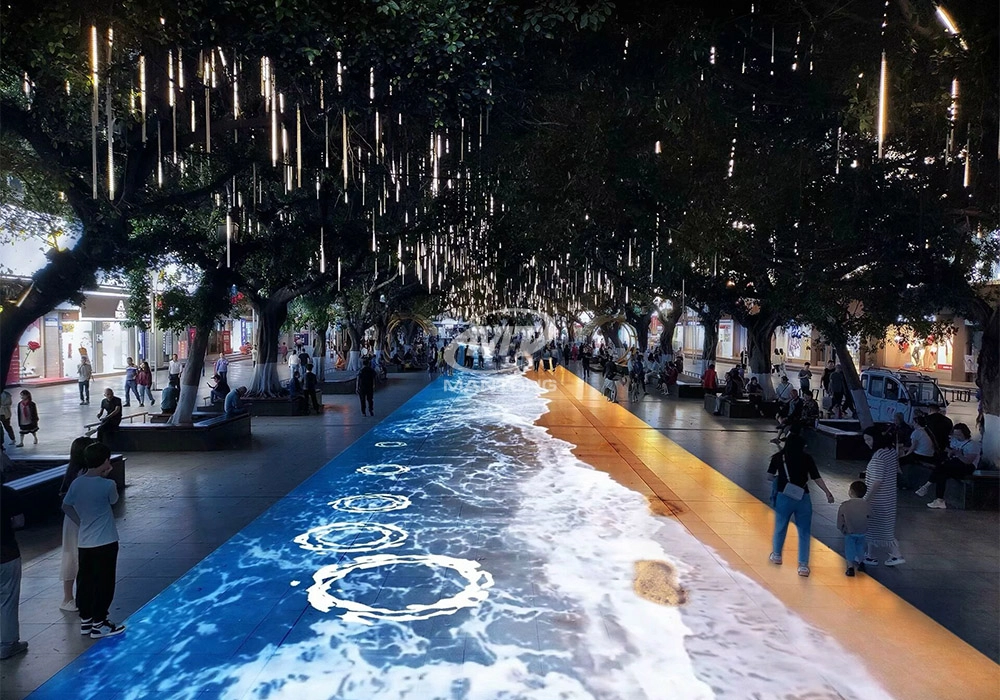
Combining projection mapping with 3D interactive ground projection technology brings an unprecedented immersive experience to outdoor scenes.
Contact Us to Start Your Interactive Projection Journey
Contact us now to discuss how to create innovative projection solutions for your space.

Kaida Business Center, Shixin Road, Panyu District,Guangzhou City, Guangdong Province, China.
ManTong
ManTong
ManTong