
What are top use cases for interactive projection mapping?
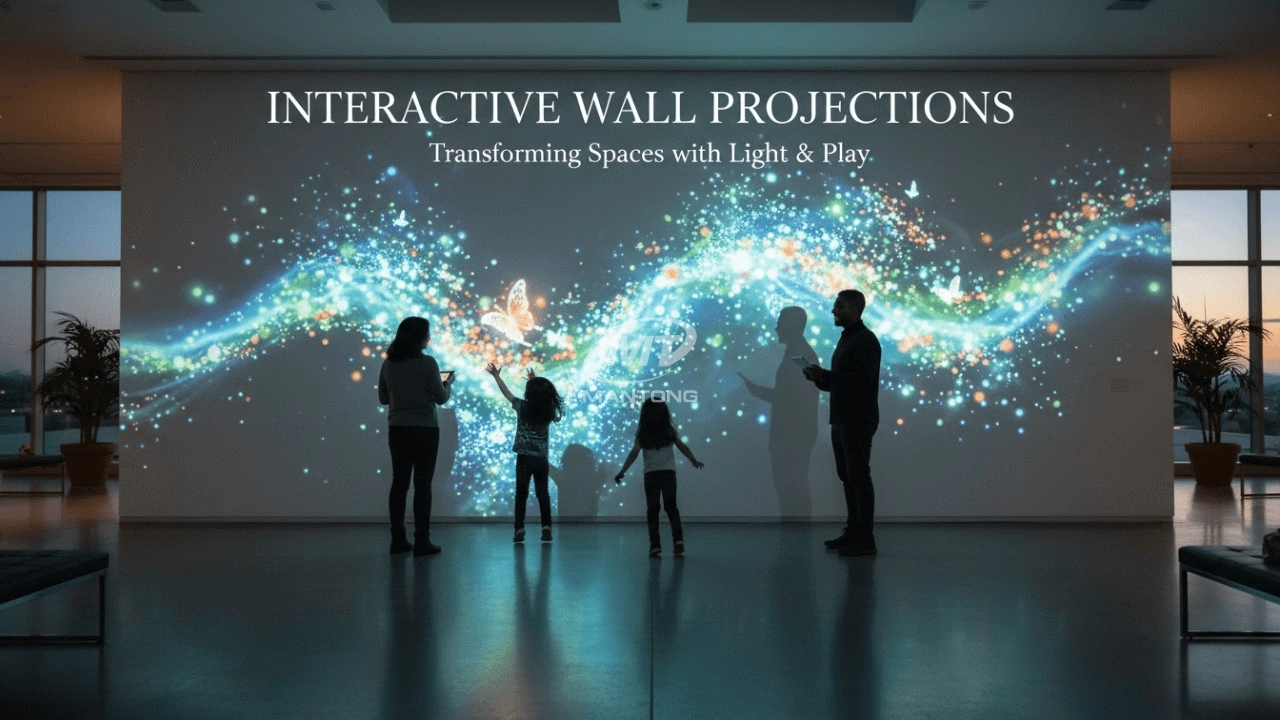
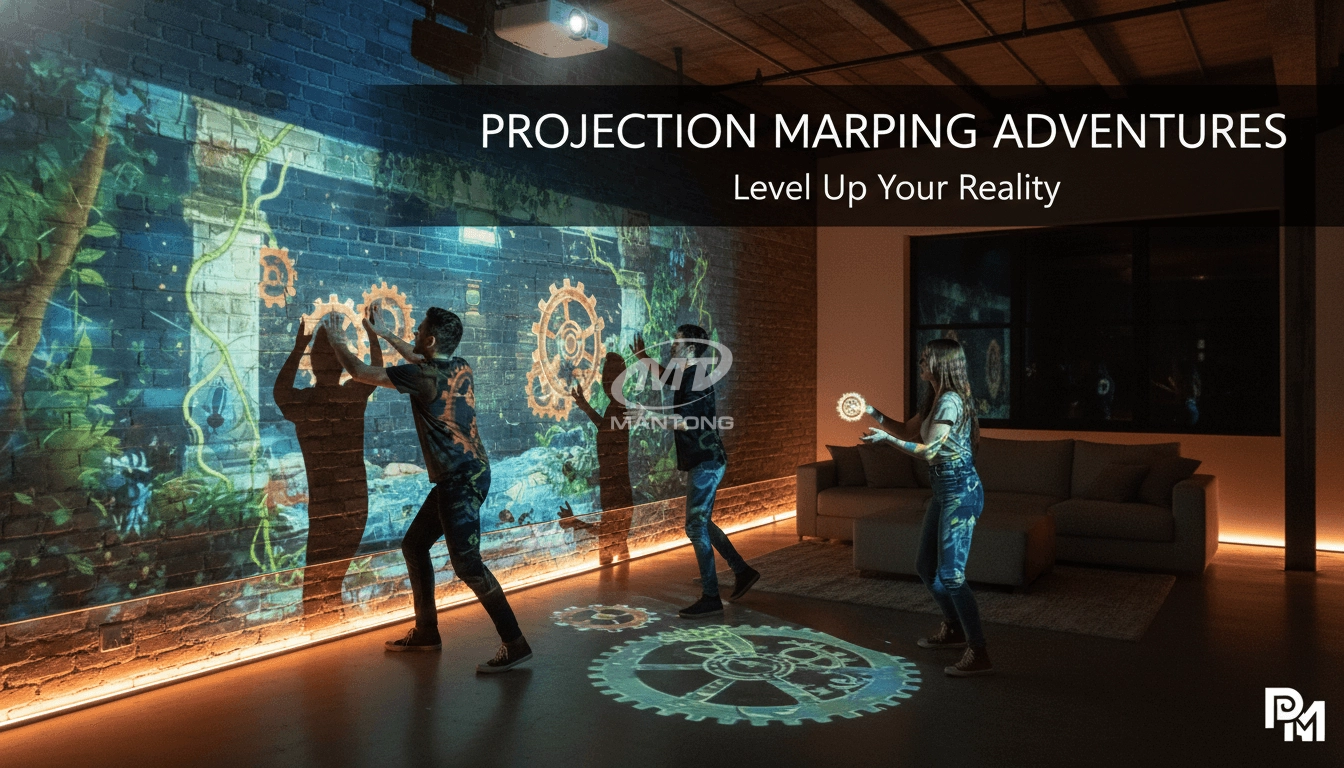
Interactive projection mapping is revolutionizing various industries by transforming physical spaces into dynamic, immersive environments. This technology projects images and videos onto three-dimensional objects, creating interactive experiences that engage audiences in innovative ways.
1. How is interactive projection mapping utilized in retail environments to enhance customer engagement?
In retail settings, interactive projection mapping captivates customers by transforming storefronts and in-store displays into dynamic visual experiences. For instance, retailers have employed projection mapping to animate mannequins and product displays, resulting in a 15% increase in foot traffic during campaign periods. This approach not only attracts attention but also differentiates brands in competitive markets by offering memorable shopping experiences.
2. What are the applications of interactive projection mapping in museums and cultural exhibits?
Museums and cultural institutions leverage interactive projection mapping to bring exhibits to life, enhancing educational value and visitor engagement. An example is the Terraform Table at London's V&A Museum, where projection mapping and machine intelligence transformed a giant sandpit into interactive landscapes. Visitors could shape mountains, valleys, and lakes with their hands, with projections updating in real-time to reflect their interactions.
3. How does interactive projection mapping enhance live events and performances?
In live events, interactive projection mapping creates immersive environments that synchronize visuals with music and performer movements. For example, during concerts, projection mapping can transform stages into evolving landscapes, such as forests or outer space, without the need for physical set changes. This technology has been utilized in large-scale public brand experiences, where projection mapping becomes more than spectacle by giving the crowd meaningful viewer control instead of a one-way show.
4. What role does interactive projection mapping play in urban planning and public art?
City planners and artists use interactive projection mapping for public art projects and urban beautification. During city festivals, entire facades are transformed into animated canvases, fostering community pride and tourism. This approach not only beautifies urban spaces but also engages the public in interactive experiences that enhance the cultural landscape.
5. How does interactive projection mapping contribute to product launches and brand activations?
During product launches and brand activations, interactive projection mapping enhances presentations by creating immersive and impactful brand stories. Brands use projection mapping to present their products with stunning effects, transforming simple products with animations, effects, and storytelling. This approach captivates audiences and leaves a lasting impression, differentiating brands in competitive markets.
6. What are the technical considerations for implementing interactive projection mapping in various applications?
Implementing interactive projection mapping requires careful consideration of several technical factors:
Surface Mapping: Accurate mapping of the projection surface is essential to ensure that images align correctly with the physical object.
Interactivity Mechanisms: Integrating sensors or cameras to detect user interactions, such as motion or touch, is crucial for creating responsive experiences.
Content Synchronization: Ensuring that projected content synchronizes seamlessly with real-time events or user actions is vital for maintaining immersion.
Hardware Selection: Choosing appropriate projectors, sensors, and computing hardware that meet the specific requirements of the application is necessary for optimal performance.
By addressing these technical considerations, organizations can effectively implement interactive projection mapping to create engaging and immersive experiences across various applications.
In conclusion, interactive projection mapping offers a versatile and impactful way to engage audiences across multiple sectors, from retail and museums to live events and urban art. By understanding its diverse applications and technical requirements, businesses and institutions can harness this technology to create memorable and interactive experiences.
For a personalized consultation or to explore how interactive projection mapping can enhance your projects, please contact us at Mira@mtprojection.com.


One-Stop Projection Solution Provider Since 2011
What's the application of Immersive projection ?
It can be used in various venues, such as art exhibition, entertainment venues, educational institution, Wedding hall /Banquet/Bar,Yoga Studio and so on. It often involves advanced projection techniques, multimedia content, and interactive elements to engage and captivate the audience's senses.
How to install the projection equipment ?
1) Install the projector in a suitable position. We will provide you with a hanger, which you need to fix on the ceiling with
screws.
2) Connect projectors, computers and other accessories through wires.
3) After completing the above 2 steps, we will carry out the edge blending steps. Our team can complete it through remote
control.
In general, installation instructions for each project need to be specified on a project-by-project basis. The above is for
reference only.
What's Immersive Projection ?
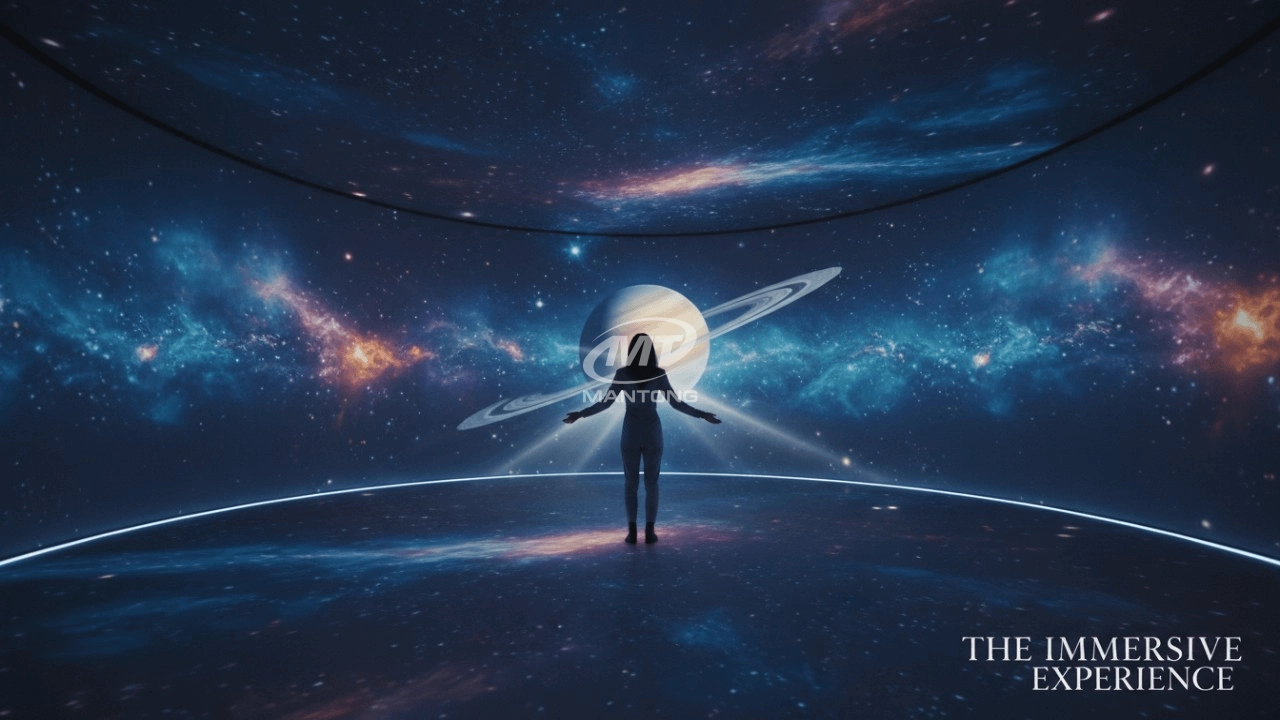
Immersive projection refers to a technology that creates a captivating and all-encompassing visual experience for viewers by projecting images or videos onto large surfaces, such as walls, floors, or even entire rooms. This technology aims to immerse the audience in a simulated environment, blurring the boundaries between the physical and virtual worlds.
Are you trader or manufacturer ?
We are direct manufacturer who specialize in providing one-stop solution for different outdoor & indoor projection project with our stable software and qualified projectors
How to Write an Interactive-Effect Video Customisation Script ?
① Project Background: Briefly introduce the context in which this interactive scene will be used (e.g., exhibition, museum,
event space, children's area). Example: This scene is part of the “Underwater World” zone in a children's science museum,
designed to be engaging and exploratory.
②Visual Style / Atmosphere: What kind of visual mood are you aiming for? Please describe the color scheme, style, and any
references. it should focus solely on describing the visual aspects of the scene, supported by relevant charts or reference
images.
③ Interaction Points Overview:List each interactive hotspot along with the effect you'd like to trigger when the user
touches or clicks the area. example: when player touch the clownfish, it will swims away with bubble trail (animation effect)
and produce the bubble sound ( sound effect requirement )
④ Static Visual Reference:including but not limited to background image/video, a list of major visual elements (e.g., coral,
rocks, seaweed, fish), which elements should be interactive?
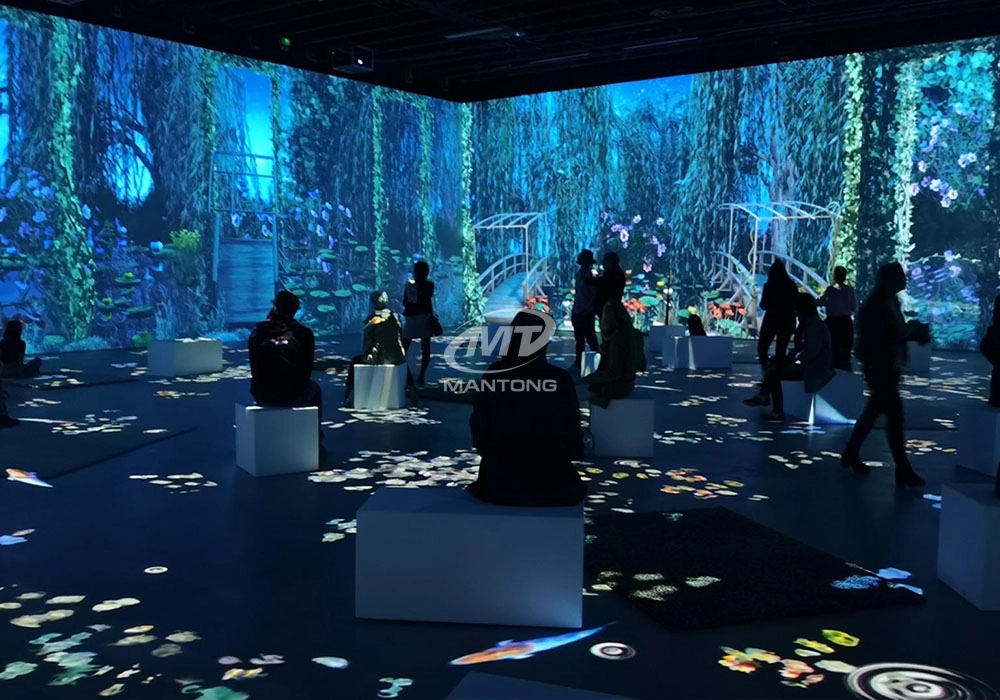
Transform any space with Mantong's immersive projection mapping systems. Our high-lumen projectors (up to 6500 LM) and custom software create captivating interactive experiences for floors and walls. Ideal for museums, events, retail, and hospitality. Each kit includes professional ceiling mounting and 80+ pre-loaded video contents and is backed by a 12-month warranty and CE certification. We offer full customization and support to bring your vision to life.
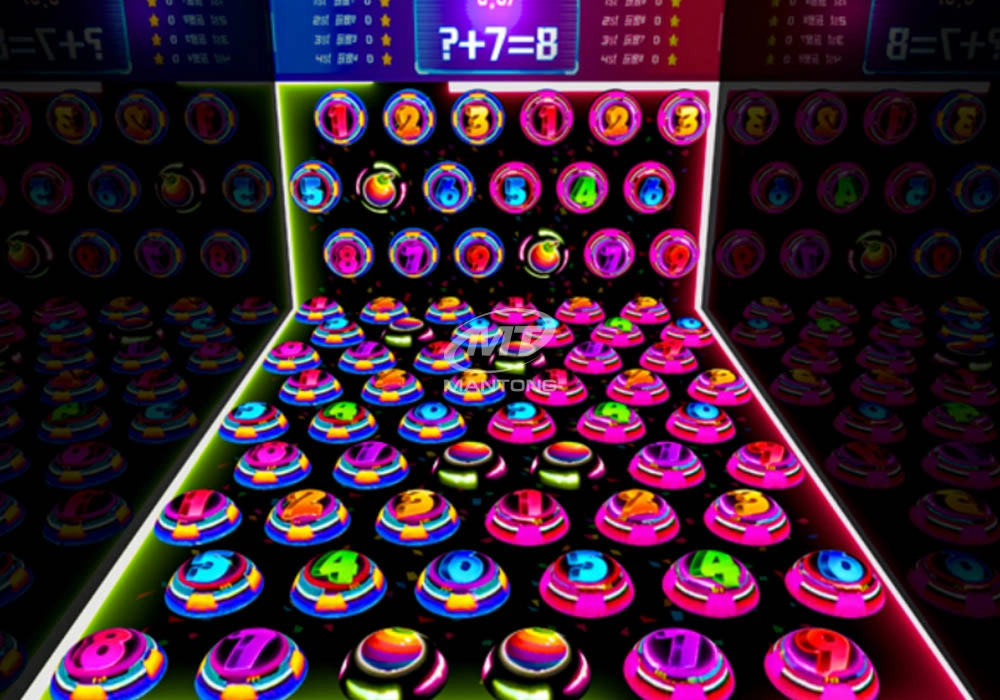
Rapidly Rotating Bouncing Sphere is an interactive space where participants jump on rotating spheres. As they step on it, the spheres surface will show special interactivity
Jumping on spheres of the same color in succession causes them to pop, releasing light particles. The more consecutive jumps, the greater the reward—caterpillars appear, and eventually, all spheres of that color burst, filling the space with light and even more caterpillars.
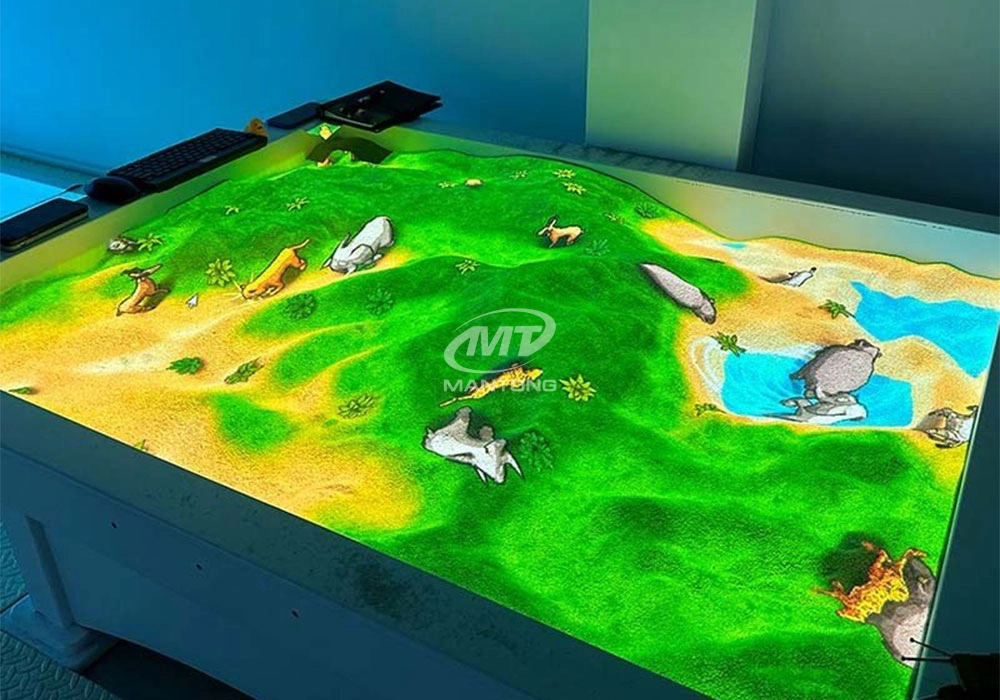
Bring imagination to life with interactive sandbox projection mapping games designed for kids’ play parks. Using cutting-edge projection technology and real-time motion sensing, children can dig, build, and explore virtual worlds directly in the sand. Educational, engaging, and endlessly fun — it’s the perfect blend of play and learning.
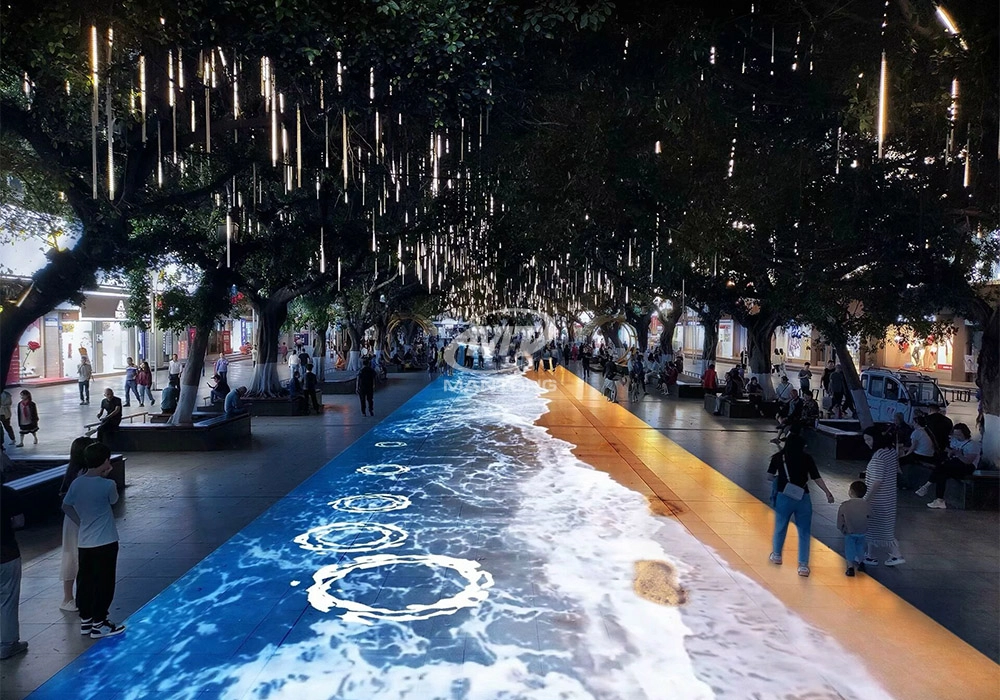
Combining projection mapping with 3D interactive ground projection technology brings an unprecedented immersive experience to outdoor scenes.
Contact Us to Start Your Interactive Projection Journey
Contact us now to discuss how to create innovative projection solutions for your space.

Kaida Business Center, Shixin Road, Panyu District,Guangzhou City, Guangdong Province, China.
ManTong
ManTong
ManTong