
How to integrate sensors into interactive projection mapping?
- 1. What are the primary challenges in achieving precise alignment between digital projections and physical surfaces in interactive projection mapping?
- 2. How can environmental factors such as ambient lighting and weather conditions impact the effectiveness of interactive projection mapping?
- 3. What are the technical complexities involved in integrating sensors into interactive projection mapping systems?
- 4. How can motion detection sensors be utilized to create dynamic and responsive content in interactive projection mapping?
- 5. What are the best practices for calibrating projectors and sensors to ensure seamless interaction in interactive projection mapping installations?
- 6. How can integrating environmental sensors enhance the adaptability and responsiveness of interactive projection mapping systems?
1. What are the primary challenges in achieving precise alignment between digital projections and physical surfaces in interactive projection mapping?
Achieving precise alignment between digital projections and physical surfaces is a fundamental challenge in interactive projection mapping. Even minor misalignments can distort images, compromising the immersive experience. This precision depends on meticulous calibration of projectors, accurate 3D modeling of the target surfaces, and the quality of the mapping software used. Advanced mapping software allows designers to warp and blend images to fit perfectly onto irregular surfaces, like when the ancient ruins of Rome's Forum were brought to life with projections that accounted for every nook and cranny.
2. How can environmental factors such as ambient lighting and weather conditions impact the effectiveness of interactive projection mapping?
Environmental factors play a significant role in the effectiveness of interactive projection mapping. Ambient lighting, especially in outdoor settings, can wash out projections, reducing visibility and impact. Weather conditions like wind, rain, or extreme temperatures can disrupt setup and operation, risking damage or misalignment. To mitigate these issues, it's essential to use high-lumen projectors and consider environmental factors during the planning phase.
3. What are the technical complexities involved in integrating sensors into interactive projection mapping systems?
Integrating sensors into interactive projection mapping systems introduces several technical complexities. The choice and placement of sensors directly affect latency, detection accuracy, and robustness under varying lighting and crowd conditions. Poor sensing can lead to false triggers, missed interactions, and a broken flow that damages engagement. Additionally, synchronizing sensor data with projection content requires advanced software and hardware coordination to ensure real-time responsiveness. ((https://www.mtprojection.com/article/integrating-sensors-floor-projection-games.html))
4. How can motion detection sensors be utilized to create dynamic and responsive content in interactive projection mapping?
Motion detection sensors are pivotal in creating dynamic and responsive content in interactive projection mapping. By analyzing real-time movement patterns, these sensors can trigger content changes, ensuring projections remain relevant as viewers enter and exit display areas. Advanced computer vision algorithms can detect gestures, facial expressions, and body positioning with high accuracy, enabling projections to shift focus automatically based on audience attention.
5. What are the best practices for calibrating projectors and sensors to ensure seamless interaction in interactive projection mapping installations?
Calibrating projectors and sensors is crucial for ensuring seamless interaction in interactive projection mapping installations. This process involves creating a mathematical model that relates every pixel of the projector to a coordinate point on the surface of the object. The standard way to do this is a Projector-Camera System (ProCam System). Here, a camera registers a set of calibration patterns cast from the projector. The system automatically computes the projector's internal and external parameters by examining the distortion in these patterns.
6. How can integrating environmental sensors enhance the adaptability and responsiveness of interactive projection mapping systems?
Integrating environmental sensors can significantly enhance the adaptability and responsiveness of interactive projection mapping systems. These sensors can automatically adjust projection parameters based on ambient conditions without manual intervention. For instance, light sensors can measure surrounding illumination levels and adjust brightness settings to maintain optimal visibility across varying lighting conditions. Temperature and humidity sensors can prevent equipment overheating while calibrating color accuracy for consistent display quality.
In conclusion, interactive projection mapping offers a transformative way to engage audiences by blending digital content with physical environments. By addressing challenges related to alignment, environmental factors, sensor integration, and calibration, and by leveraging advanced technologies like motion detection and environmental sensors, creators can craft immersive and responsive experiences that captivate and inspire.
For a personalized consultation or to request a quote, please contact us at Mira@mtprojection.com or visit our website at www.mtprojection.com.
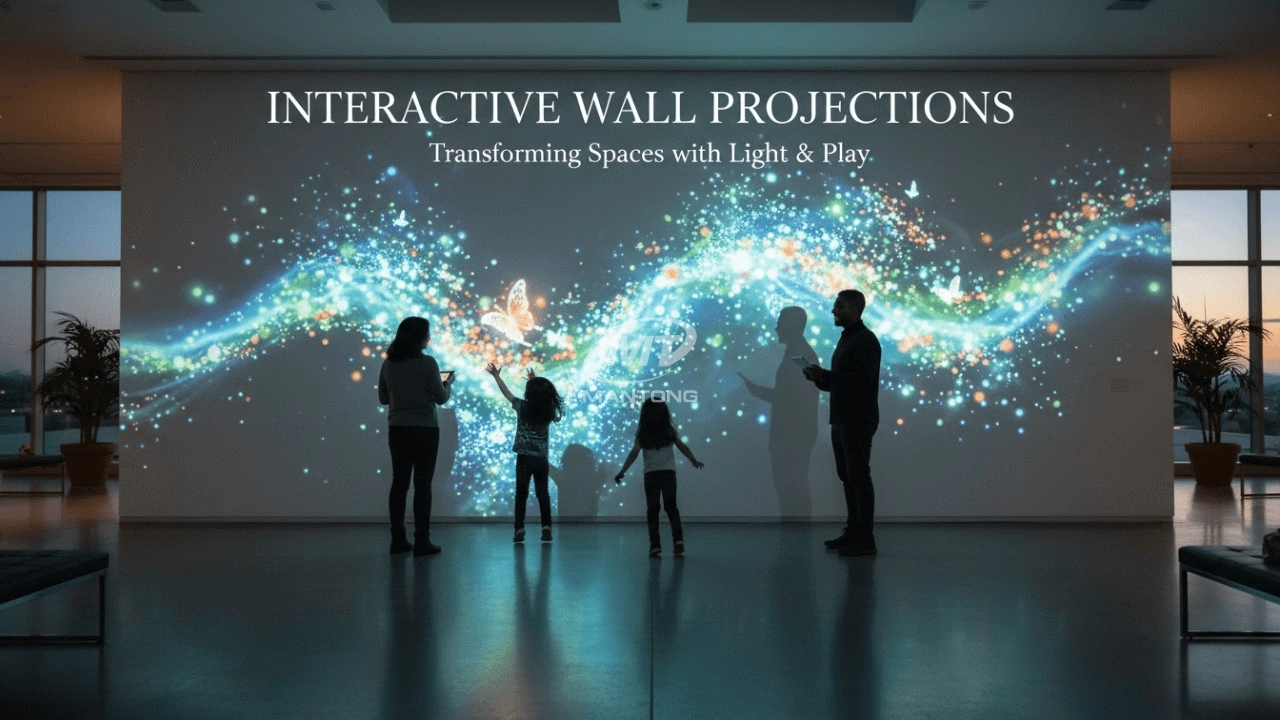
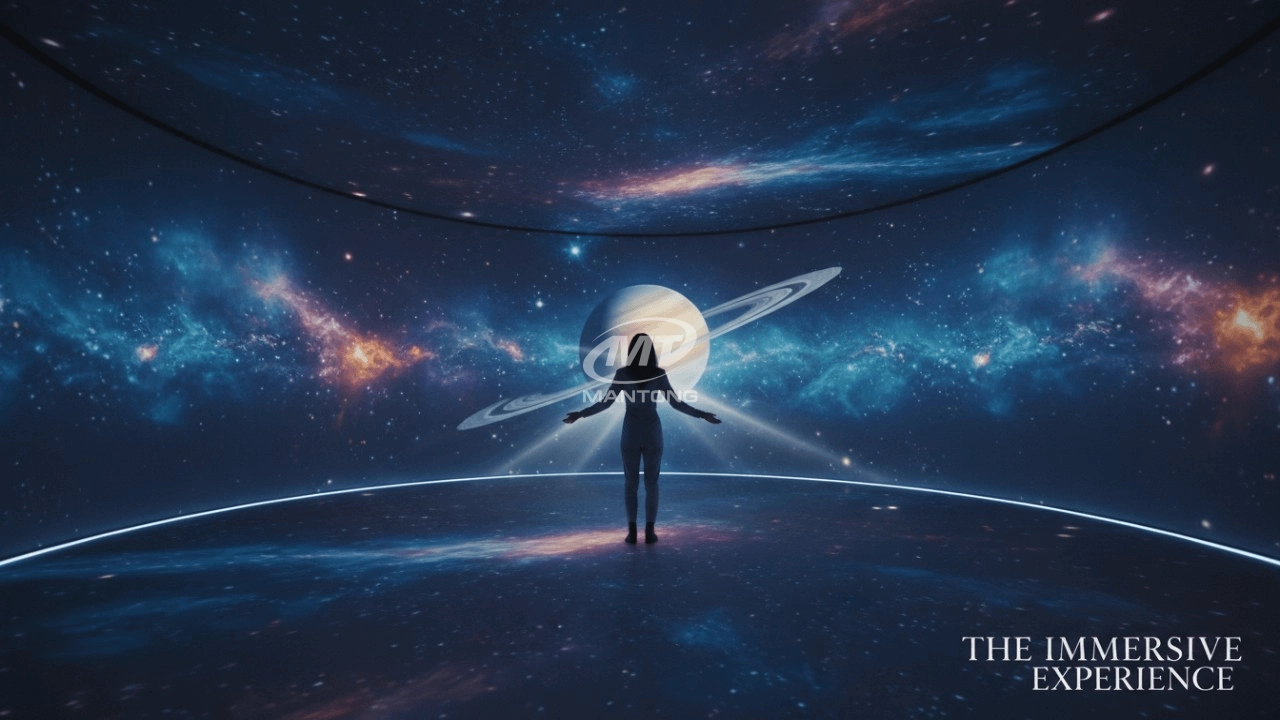


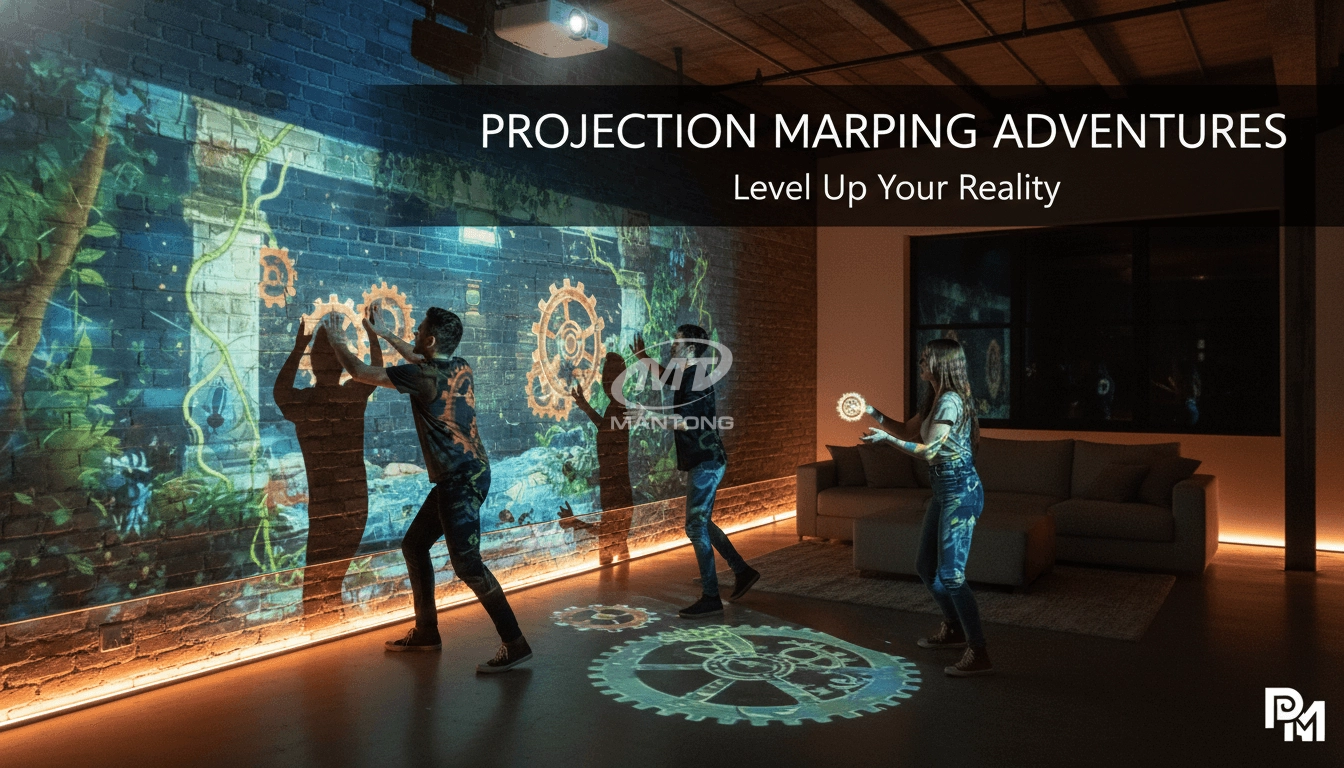
One-Stop Projection Solution Provider Since 2011
What's Immersive Projection ?
Immersive projection refers to a technology that creates a captivating and all-encompassing visual experience for viewers by projecting images or videos onto large surfaces, such as walls, floors, or even entire rooms. This technology aims to immerse the audience in a simulated environment, blurring the boundaries between the physical and virtual worlds.
How to Write an Interactive-Effect Video Customisation Script ?
① Project Background: Briefly introduce the context in which this interactive scene will be used (e.g., exhibition, museum,
event space, children's area). Example: This scene is part of the “Underwater World” zone in a children's science museum,
designed to be engaging and exploratory.
②Visual Style / Atmosphere: What kind of visual mood are you aiming for? Please describe the color scheme, style, and any
references. it should focus solely on describing the visual aspects of the scene, supported by relevant charts or reference
images.
③ Interaction Points Overview:List each interactive hotspot along with the effect you'd like to trigger when the user
touches or clicks the area. example: when player touch the clownfish, it will swims away with bubble trail (animation effect)
and produce the bubble sound ( sound effect requirement )
④ Static Visual Reference:including but not limited to background image/video, a list of major visual elements (e.g., coral,
rocks, seaweed, fish), which elements should be interactive?
What's the application of Immersive projection ?
It can be used in various venues, such as art exhibition, entertainment venues, educational institution, Wedding hall /Banquet/Bar,Yoga Studio and so on. It often involves advanced projection techniques, multimedia content, and interactive elements to engage and captivate the audience's senses.
How to install the projection equipment ?
1) Install the projector in a suitable position. We will provide you with a hanger, which you need to fix on the ceiling with
screws.
2) Connect projectors, computers and other accessories through wires.
3) After completing the above 2 steps, we will carry out the edge blending steps. Our team can complete it through remote
control.
In general, installation instructions for each project need to be specified on a project-by-project basis. The above is for
reference only.
What information do you need to know before making the proposal/solution?
We know that everyone wants to know the price, but the price of our products is determined by many factors since most of our products are custom, so no ready price list. In order to fast understand what you need, can you send us an inquiry like this?
For example: I am really interested in your immersive projection products, we are a company in the USA and want to install some in my restaurant. It is about 50 meters long, and 5m in width. Projection size you can decide but the length should be not less than 20 meters. We want some content about SeaWorld because our place is all about the sea. Thank you.
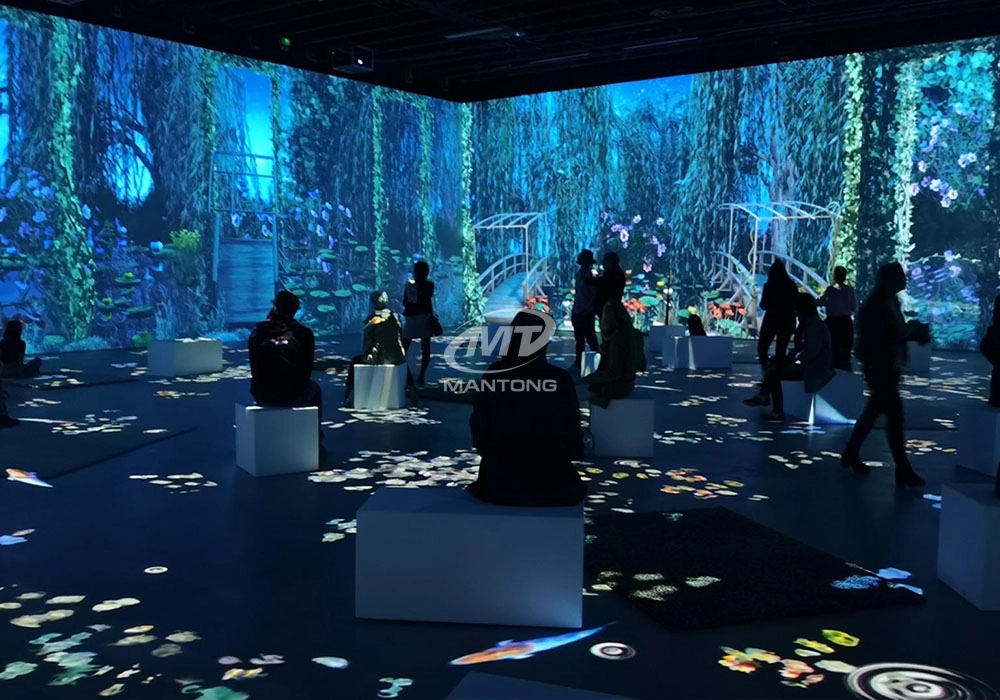
Transform any space with Mantong's immersive projection mapping systems. Our high-lumen projectors (up to 6500 LM) and custom software create captivating interactive experiences for floors and walls. Ideal for museums, events, retail, and hospitality. Each kit includes professional ceiling mounting and 80+ pre-loaded video contents and is backed by a 12-month warranty and CE certification. We offer full customization and support to bring your vision to life.
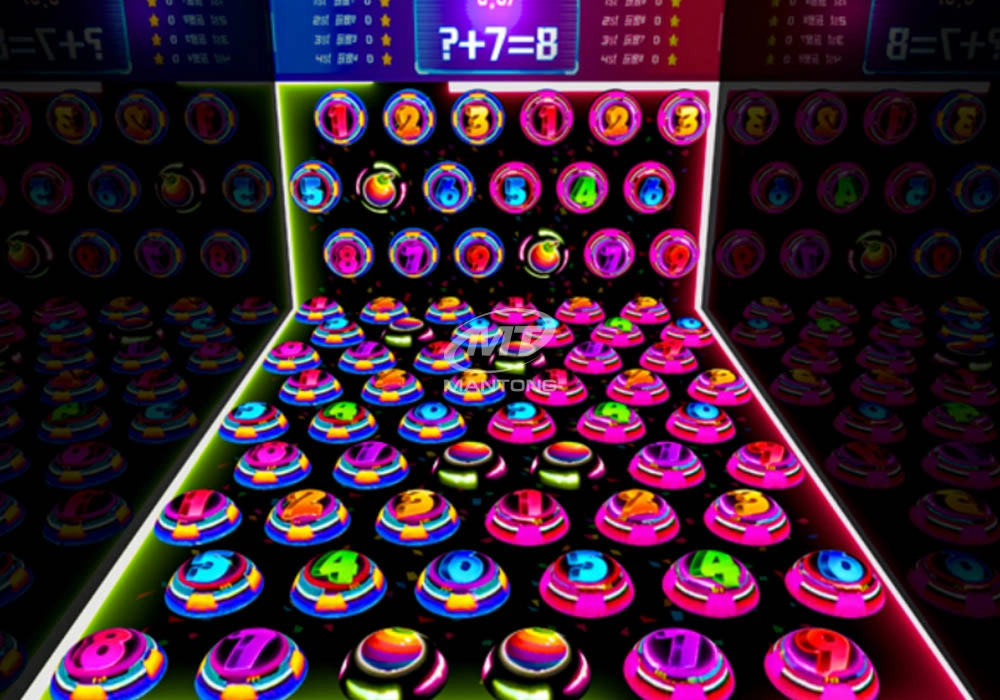
Rapidly Rotating Bouncing Sphere is an interactive space where participants jump on rotating spheres. As they step on it, the spheres surface will show special interactivity
Jumping on spheres of the same color in succession causes them to pop, releasing light particles. The more consecutive jumps, the greater the reward—caterpillars appear, and eventually, all spheres of that color burst, filling the space with light and even more caterpillars.
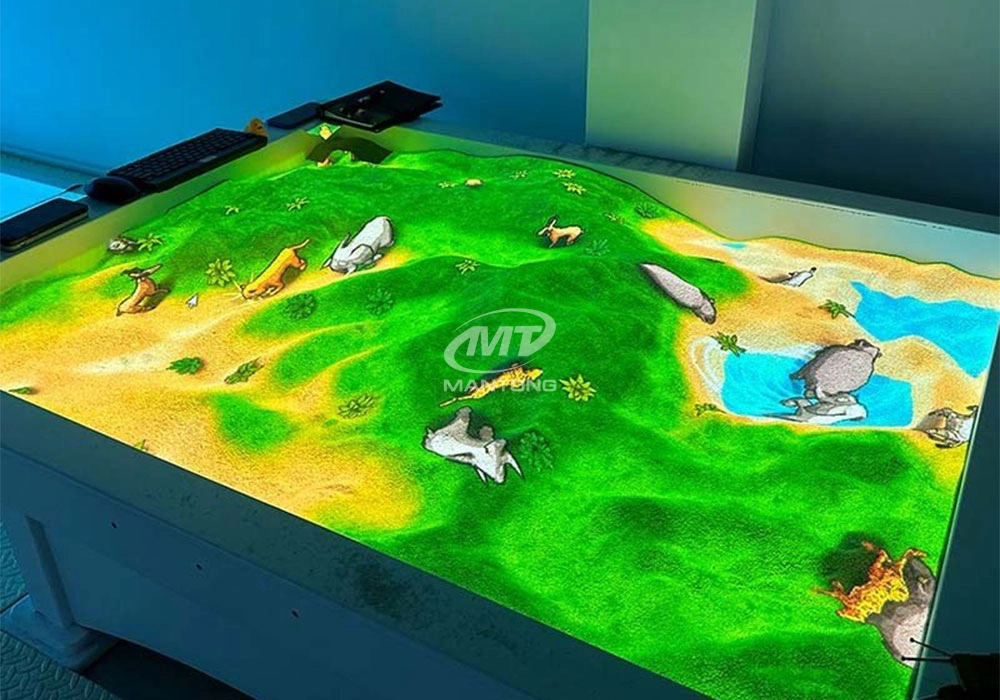
Bring imagination to life with interactive sandbox projection mapping games designed for kids’ play parks. Using cutting-edge projection technology and real-time motion sensing, children can dig, build, and explore virtual worlds directly in the sand. Educational, engaging, and endlessly fun — it’s the perfect blend of play and learning.
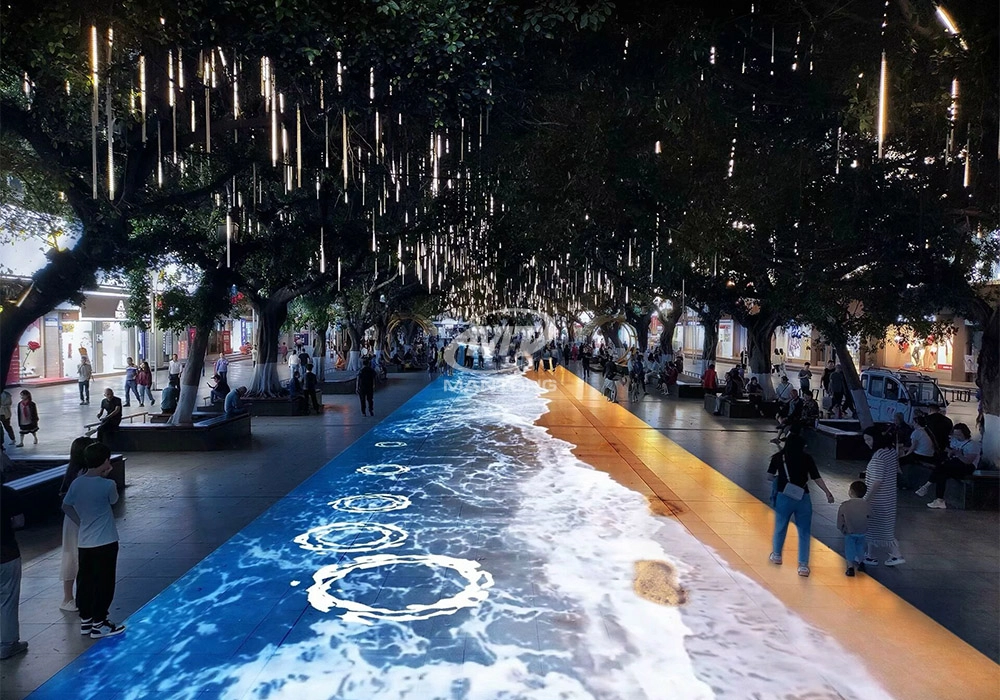
Combining projection mapping with 3D interactive ground projection technology brings an unprecedented immersive experience to outdoor scenes.
Contact Us to Start Your Interactive Projection Journey
Contact us now to discuss how to create innovative projection solutions for your space.

Kaida Business Center, Shixin Road, Panyu District,Guangzhou City, Guangdong Province, China.
ManTong
ManTong
ManTong