
Can interactive projection mapping boost retail sales and how?
- 1. How does interactive projection mapping enhance customer engagement in retail environments?
- 2. What are the key benefits of implementing interactive projection mapping in retail stores?
- 3. How can retailers measure the impact of interactive projection mapping on sales?
- 4. What are the technical requirements for setting up interactive projection mapping in a retail setting?
- 5. Are there any notable examples of retailers successfully using interactive projection mapping?
- 6. What are the costs associated with implementing interactive projection mapping in retail stores?
1. How does interactive projection mapping enhance customer engagement in retail environments?
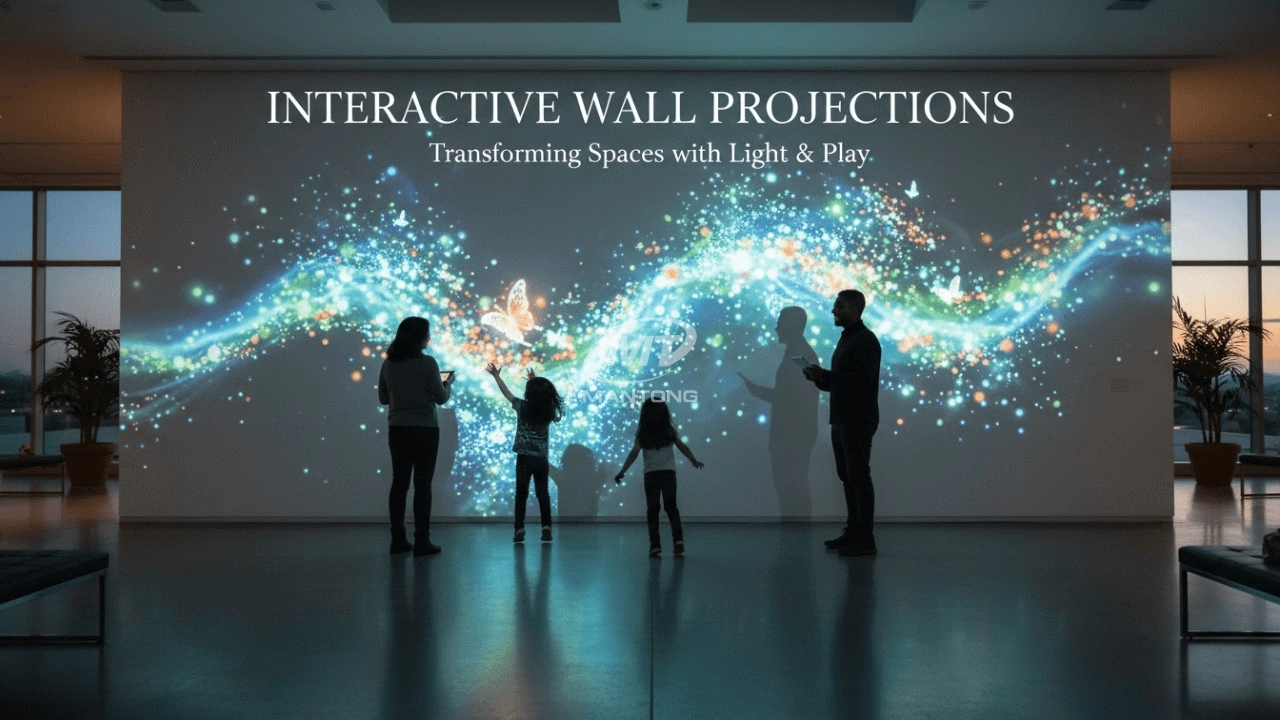
Interactive projection mapping transforms retail spaces by creating dynamic, immersive experiences that captivate customers. By projecting engaging visuals onto walls, floors, and windows, retailers can draw attention and encourage foot traffic. For instance, a flagship store utilized projections to animate mannequins and product displays, resulting in a 15% increase in foot traffic during campaign periods.
2. What are the key benefits of implementing interactive projection mapping in retail stores?
Implementing interactive projection mapping offers several advantages:
Increased Foot Traffic: Eye-catching projections attract passersby, leading to more store visits.
Enhanced Brand Visibility: Dynamic displays differentiate brands in competitive markets.
Improved Customer Experience: Interactive elements create memorable shopping experiences, fostering customer loyalty.
Cost-Effective Marketing: Projection mapping allows for quick updates to displays, reducing the need for physical changes.
3. How can retailers measure the impact of interactive projection mapping on sales?
Retailers can assess the effectiveness of interactive projection mapping by monitoring key performance indicators (KPIs) such as:
Foot Traffic: Comparing customer visits before and after implementing projections.
Sales Data: Analyzing sales figures of featured products during projection campaigns.
Customer Engagement: Tracking interactions with projected content and social media mentions.
For example, a retail chain reported a 20% increase in sales of featured products during a projection mapping campaign.
4. What are the technical requirements for setting up interactive projection mapping in a retail setting?
Setting up interactive projection mapping involves:
High-Quality Projectors: Ensuring clear and vibrant projections.
Mapping Software: Utilizing tools for precise projection alignment.
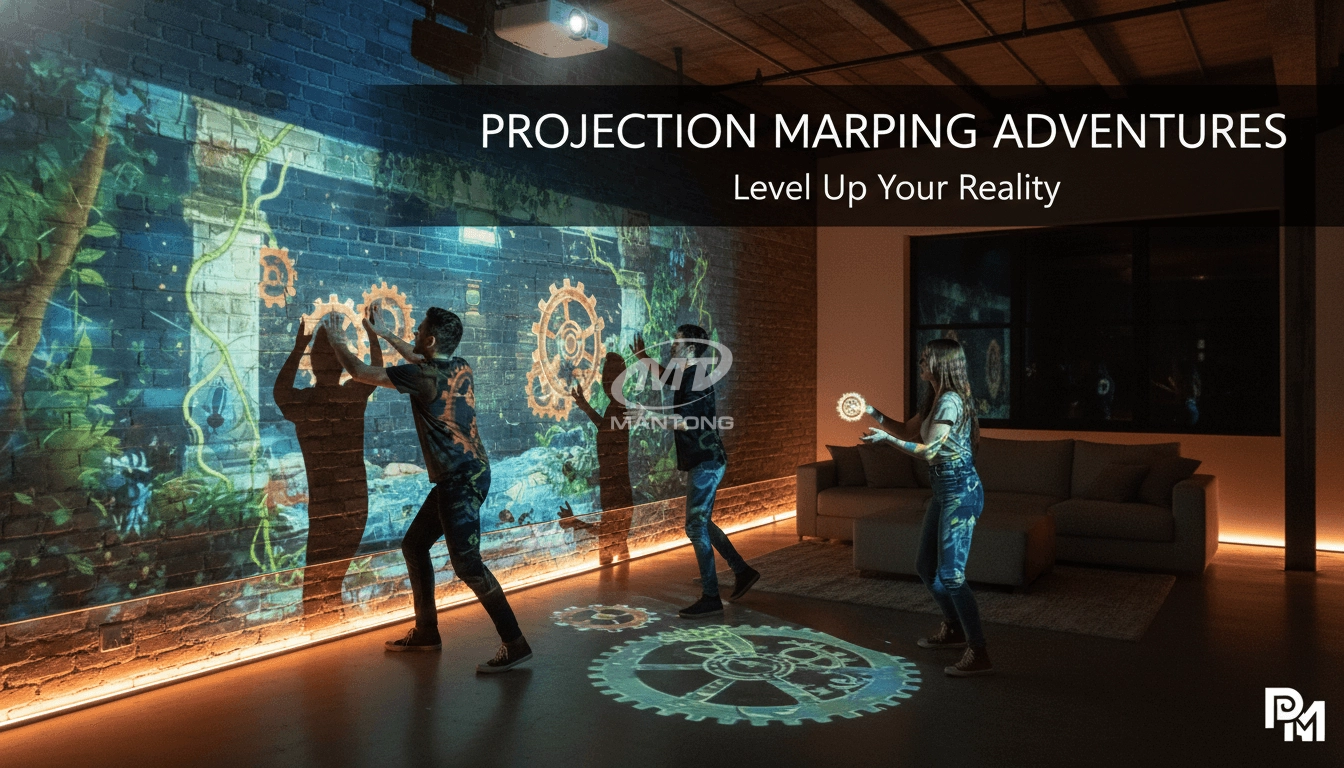
Interactive Sensors: Implementing motion or touch sensors for customer interaction.
Content Creation: Developing engaging visuals tailored to the brand and products.
Installation and Calibration: Proper setup to ensure seamless operation.
Collaborating with experienced professionals can streamline this process and ensure optimal results. ((https://www.mtprojection.com/top-8-benefits-of-an-immersive-projection-room-mantong-digital.html))
5. Are there any notable examples of retailers successfully using interactive projection mapping?
Yes, several retailers have effectively utilized interactive projection mapping:
Nike's House of Innovation: In New York City, Nike's flagship store features interactive projections that respond to shoppers' movements, enhancing the shopping experience.
Adidas' MakersLab: Located on Oxford Street, this store offers interactive stations where customers can customize products, fostering creativity and engagement.
6. What are the costs associated with implementing interactive projection mapping in retail stores?
The costs vary based on:
Scale of Installation: Larger areas require more equipment and resources.
Complexity of Content: Custom, high-quality visuals may increase costs.
Technology Integration: Incorporating advanced interactive features can add to expenses.
Maintenance: Ongoing upkeep to ensure optimal performance.
While initial investments can be significant, the potential return on investment through increased sales and customer engagement can justify the expenditure. ((https://www.mtprojection.com/top-8-benefits-of-an-immersive-projection-room-mantong-digital.html))
In conclusion, interactive projection mapping offers retailers a powerful tool to enhance customer engagement, create immersive shopping experiences, and drive sales growth. By leveraging this technology, retailers can differentiate themselves in a competitive market and build lasting connections with their customers.
For a personalized consultation and quote, please contact us at Mira@mtprojection.com or visit our website at www.mtprojection.com.


One-Stop Projection Solution Provider Since 2011
What's the application of Immersive projection ?
It can be used in various venues, such as art exhibition, entertainment venues, educational institution, Wedding hall /Banquet/Bar,Yoga Studio and so on. It often involves advanced projection techniques, multimedia content, and interactive elements to engage and captivate the audience's senses.
What information do you need to know before making the proposal/solution?
We know that everyone wants to know the price, but the price of our products is determined by many factors since most of our products are custom, so no ready price list. In order to fast understand what you need, can you send us an inquiry like this?
For example: I am really interested in your immersive projection products, we are a company in the USA and want to install some in my restaurant. It is about 50 meters long, and 5m in width. Projection size you can decide but the length should be not less than 20 meters. We want some content about SeaWorld because our place is all about the sea. Thank you.
How to install the projection equipment ?
1) Install the projector in a suitable position. We will provide you with a hanger, which you need to fix on the ceiling with
screws.
2) Connect projectors, computers and other accessories through wires.
3) After completing the above 2 steps, we will carry out the edge blending steps. Our team can complete it through remote
control.
In general, installation instructions for each project need to be specified on a project-by-project basis. The above is for
reference only.
What's Immersive Projection ?
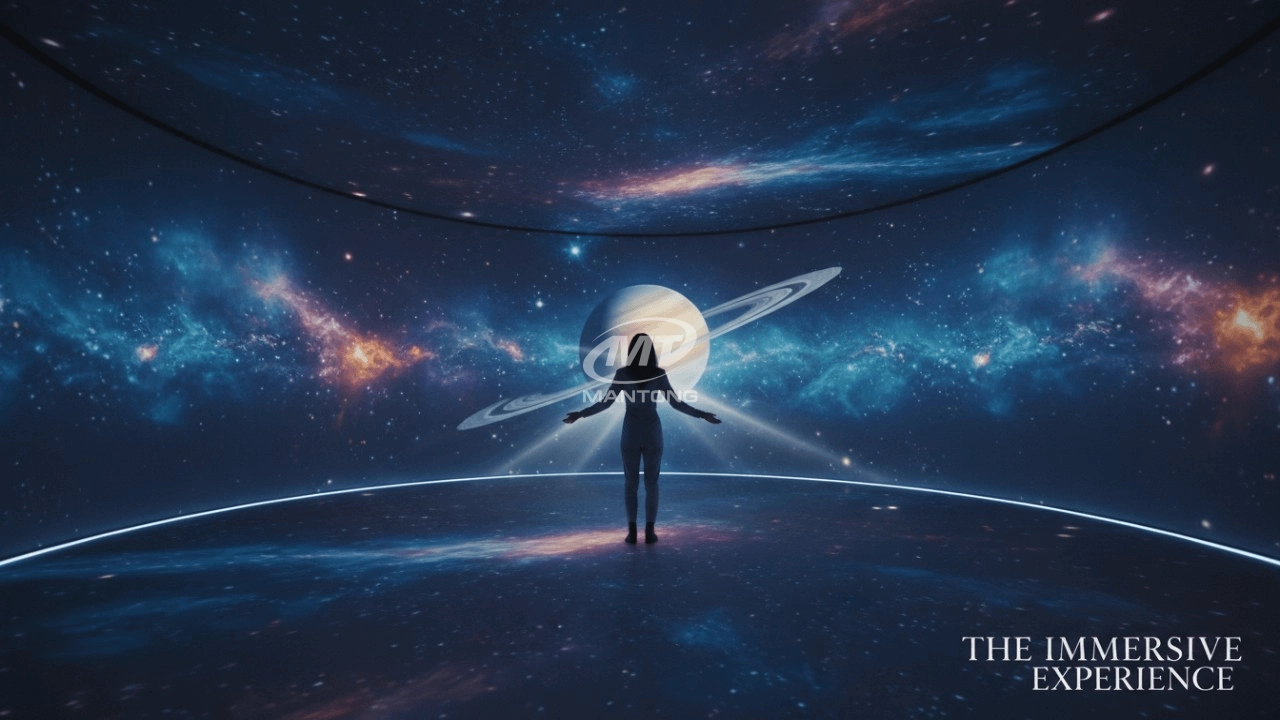
Immersive projection refers to a technology that creates a captivating and all-encompassing visual experience for viewers by projecting images or videos onto large surfaces, such as walls, floors, or even entire rooms. This technology aims to immerse the audience in a simulated environment, blurring the boundaries between the physical and virtual worlds.
How to Write an Interactive-Effect Video Customisation Script ?
① Project Background: Briefly introduce the context in which this interactive scene will be used (e.g., exhibition, museum,
event space, children's area). Example: This scene is part of the “Underwater World” zone in a children's science museum,
designed to be engaging and exploratory.
②Visual Style / Atmosphere: What kind of visual mood are you aiming for? Please describe the color scheme, style, and any
references. it should focus solely on describing the visual aspects of the scene, supported by relevant charts or reference
images.
③ Interaction Points Overview:List each interactive hotspot along with the effect you'd like to trigger when the user
touches or clicks the area. example: when player touch the clownfish, it will swims away with bubble trail (animation effect)
and produce the bubble sound ( sound effect requirement )
④ Static Visual Reference:including but not limited to background image/video, a list of major visual elements (e.g., coral,
rocks, seaweed, fish), which elements should be interactive?
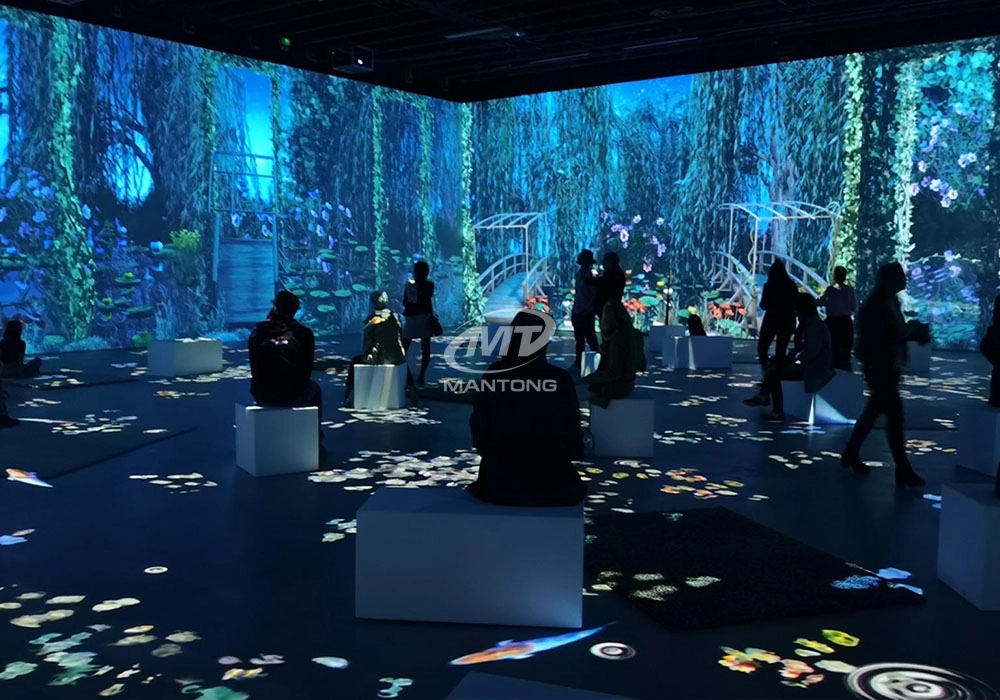
Transform any space with Mantong's immersive projection mapping systems. Our high-lumen projectors (up to 6500 LM) and custom software create captivating interactive experiences for floors and walls. Ideal for museums, events, retail, and hospitality. Each kit includes professional ceiling mounting and 80+ pre-loaded video contents and is backed by a 12-month warranty and CE certification. We offer full customization and support to bring your vision to life.
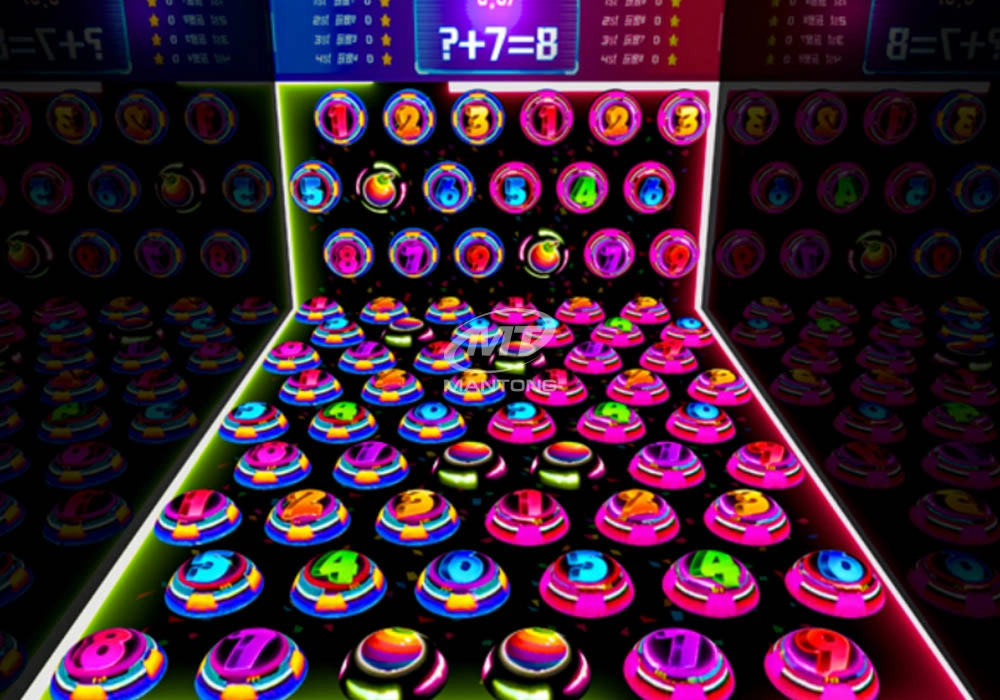
Rapidly Rotating Bouncing Sphere is an interactive space where participants jump on rotating spheres. As they step on it, the spheres surface will show special interactivity
Jumping on spheres of the same color in succession causes them to pop, releasing light particles. The more consecutive jumps, the greater the reward—caterpillars appear, and eventually, all spheres of that color burst, filling the space with light and even more caterpillars.
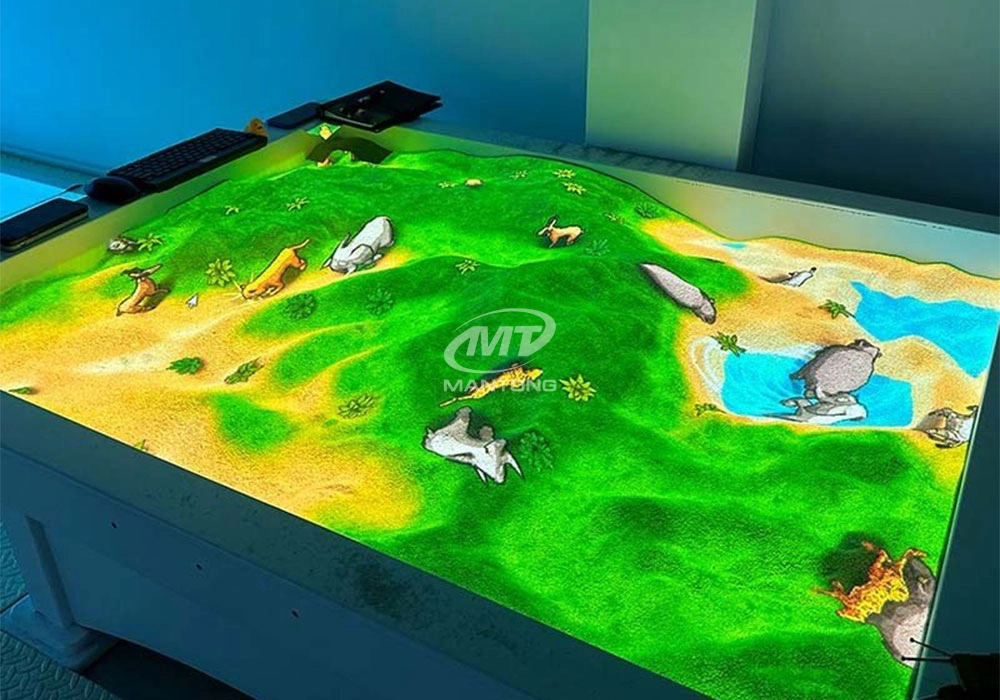
Bring imagination to life with interactive sandbox projection mapping games designed for kids’ play parks. Using cutting-edge projection technology and real-time motion sensing, children can dig, build, and explore virtual worlds directly in the sand. Educational, engaging, and endlessly fun — it’s the perfect blend of play and learning.
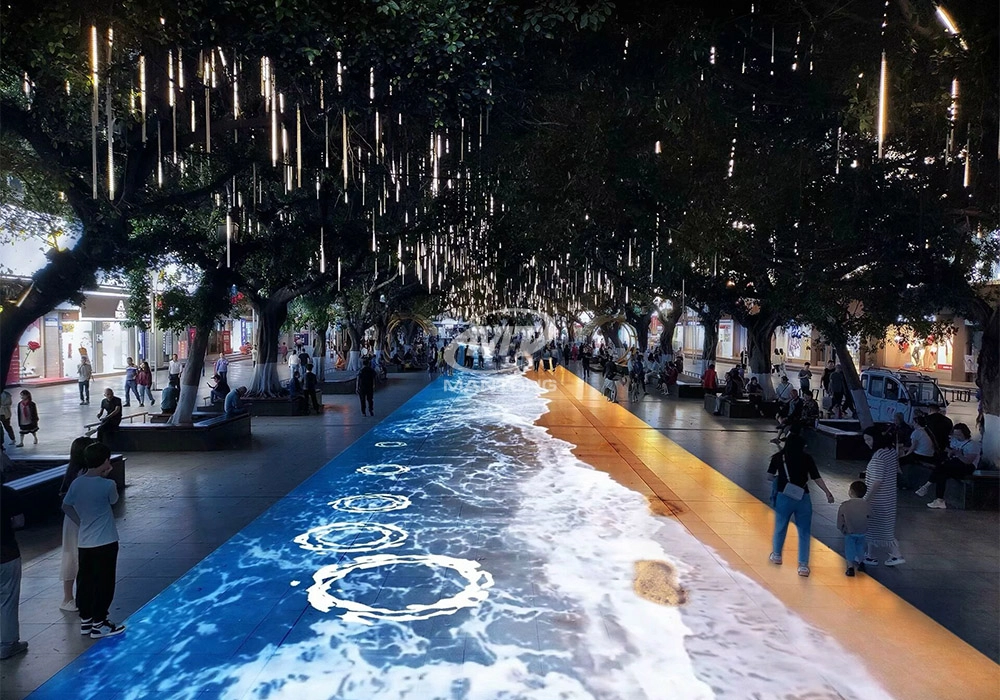
Combining projection mapping with 3D interactive ground projection technology brings an unprecedented immersive experience to outdoor scenes.
Contact Us to Start Your Interactive Projection Journey
Contact us now to discuss how to create innovative projection solutions for your space.

Kaida Business Center, Shixin Road, Panyu District,Guangzhou City, Guangdong Province, China.
ManTong
ManTong
ManTong