
How long does an interactive projection mapping setup take?
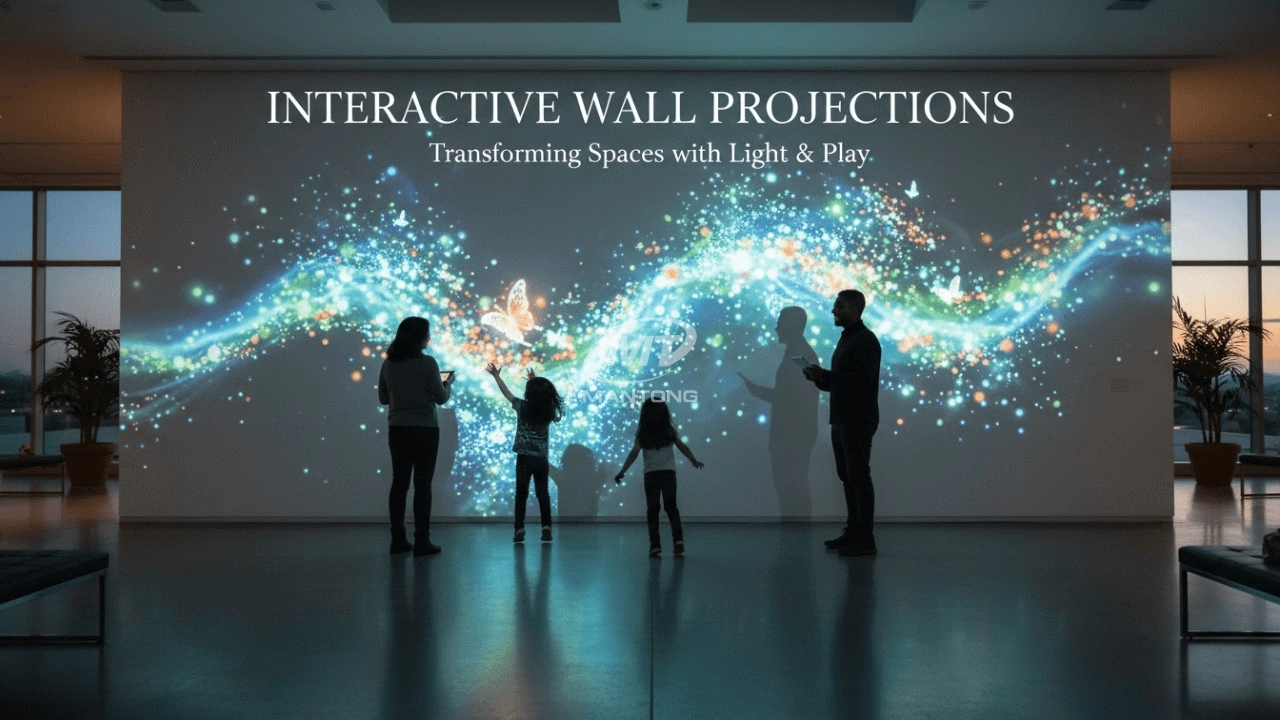
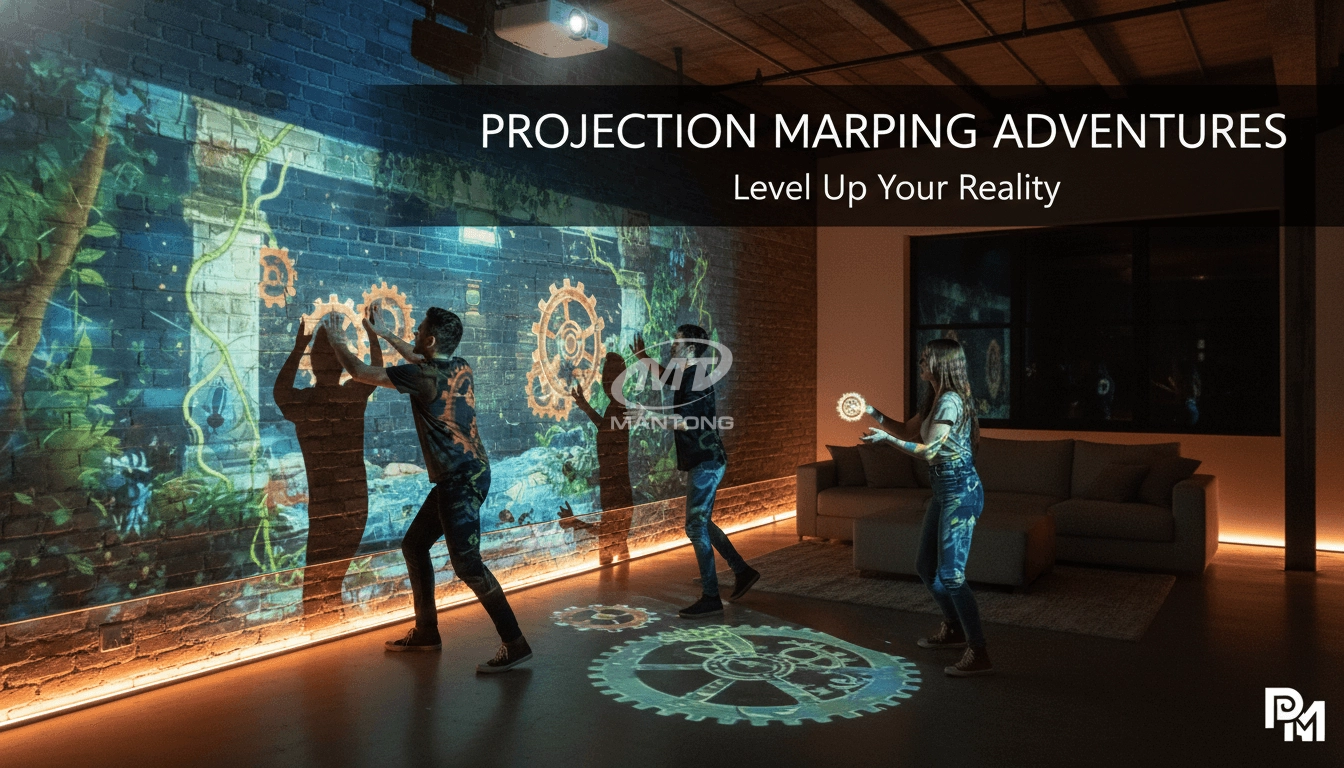
Interactive projection mapping is a transformative technology that projects visuals onto physical surfaces, creating immersive and dynamic experiences. For beginners venturing into this field, addressing specific, pain-point-oriented questions is crucial. Below are six frequently asked questions, along with comprehensive answers to guide you through the process.
1. How long does it take to set up an interactive projection mapping project?
The setup duration for an interactive projection mapping project varies based on its complexity and scale. For smaller indoor installations, the process can be completed in a few days, encompassing installation and calibration. Medium-sized exhibits may require 1–2 weeks, while large-scale outdoor architectural projections, especially those involving multiple projectors and intricate content, can take several weeks to months. This timeline includes planning, content creation, and on-site calibration. Proper planning with an experienced provider can streamline the process. ((https://www.mtprojection.com/interactive-projection-mapping-cost-guide-mantong-digital.html))
2. What equipment is essential for an interactive projection mapping setup?
Selecting the right equipment is pivotal for the success of your interactive projection mapping project. Key components include:
Projectors: Choose high-brightness projectors suitable for your environment. Indoor installations typically require projectors with 3,000–8,000 lumens, while large venues or outdoor projections may need 10,000+ lumens. Laser projectors are preferred for their longevity, offering lifespans of 20,000–30,000+ hours, compared to 2,000–5,000 hours for lamp-based projectors. ((https://www.mtprojection.com/interactive-projection-installation-guide.html))
Sensors and Tracking Hardware: Depending on the desired interactivity, incorporate sensors such as infrared (IR) cameras, depth cameras, or vision cameras with computer-vision algorithms. These sensors detect user movements or touch, enabling real-time interaction with the projected content. ((https://www.mtprojection.com/interactive-projection-installation-guide.html))
Media Servers or PCs: These devices manage and play the content, ensuring seamless integration between the interactive elements and the projections.
Mounting Structures: Secure and stable mounting solutions are essential to position projectors and sensors accurately, maintaining consistent image quality.
3. How do I create custom content for interactive projection mapping?
Creating custom content is vital for delivering a unique and engaging interactive projection mapping experience. The process involves:
Concept Development: Define the narrative or theme of your projection. Consider the story you want to tell and how it aligns with the physical space.
Design and Animation: Utilize software like Adobe After Effects or Blender to design and animate visuals. Ensure that the animations are optimized for the projection surface and can respond to user interactions.
Mapping and Calibration: Use projection mapping software to align your content precisely with the physical features of the projection surface. This step is crucial for achieving accurate and immersive visuals.
Testing and Refinement: Conduct thorough testing to identify and resolve any issues related to alignment, interactivity, or performance. Iterate on the content based on feedback and testing results.
4. What are the common challenges in interactive projection mapping, and how can they be addressed?
Beginners often encounter several challenges in interactive projection mapping:
Surface Compatibility: Not all surfaces are suitable for projection. Smooth, matte, and light-colored surfaces work best, as glossy or transparent materials can distort or reflect the projected light.
Ambient Light: Ambient light can wash out projections, especially in outdoor settings. To mitigate this, use high-brightness projectors and consider the installation time to coincide with lower ambient light conditions. ((https://www.mtprojection.com/article/outdoor-3d-interactive-floor-projection-installation.html))
Interactivity Integration: Ensuring seamless interaction between users and the projection requires careful calibration of sensors and software. Regular testing and adjustments are necessary to maintain responsiveness and accuracy.
5. How do I ensure the longevity and reliability of my interactive projection mapping installation?
To maintain the performance and durability of your installation:
Regular Maintenance: Schedule periodic cleaning, filter replacements, and sensor recalibration. For lamp-based projectors, plan for lamp replacements as needed. ((https://www.mtprojection.com/article/outdoor-3d-interactive-floor-projection-installation.html))
Environmental Considerations: Protect equipment from environmental factors such as dust, moisture, and extreme temperatures. Use protective enclosures and ensure proper ventilation.
Software Updates: Keep all software components up to date to benefit from the latest features and security patches.
6. What are the costs associated with interactive projection mapping, and how can I budget effectively?
Costs can vary widely based on the project's scale and complexity:
Entry-Level Setups: Single projector systems with basic software may start around $2,000–$5,000.
Mid-Range Systems: Multi-projector setups with moderate interactivity typically range from $10,000–$30,000.
High-End Installations: Large-scale, custom-built systems with advanced features can exceed $100,000.
When budgeting, consider equipment costs, content creation expenses, installation fees, and ongoing maintenance. It's advisable to allocate a contingency fund for unforeseen expenses.
Embarking on an interactive projection mapping project requires careful planning, the right equipment, and a clear understanding of the challenges involved. By addressing these key questions, you can set the foundation for a successful and impactful installation.
For a personalized consultation and quote, please contact us at Mira@mtprojection.com or visit our website at www.mtprojection.com.


One-Stop Projection Solution Provider Since 2011
Are you trader or manufacturer ?
We are direct manufacturer who specialize in providing one-stop solution for different outdoor & indoor projection project with our stable software and qualified projectors
What information do you need to know before making the proposal/solution?
We know that everyone wants to know the price, but the price of our products is determined by many factors since most of our products are custom, so no ready price list. In order to fast understand what you need, can you send us an inquiry like this?
For example: I am really interested in your immersive projection products, we are a company in the USA and want to install some in my restaurant. It is about 50 meters long, and 5m in width. Projection size you can decide but the length should be not less than 20 meters. We want some content about SeaWorld because our place is all about the sea. Thank you.
What about the wall/floor material for the projection?
It’s recommended to choose a light-colored material with minimal reflectivity—pure white or light grey works best. the
common material is cement & plaster board
For optimal projection results, the surface should be free of any patterns or textures, as the projector will display content
directly onto it.
There are no specific material requirements; you may use any commonly available material in your local market, as long as it
meets the above conditions.
What's the application of Immersive projection ?
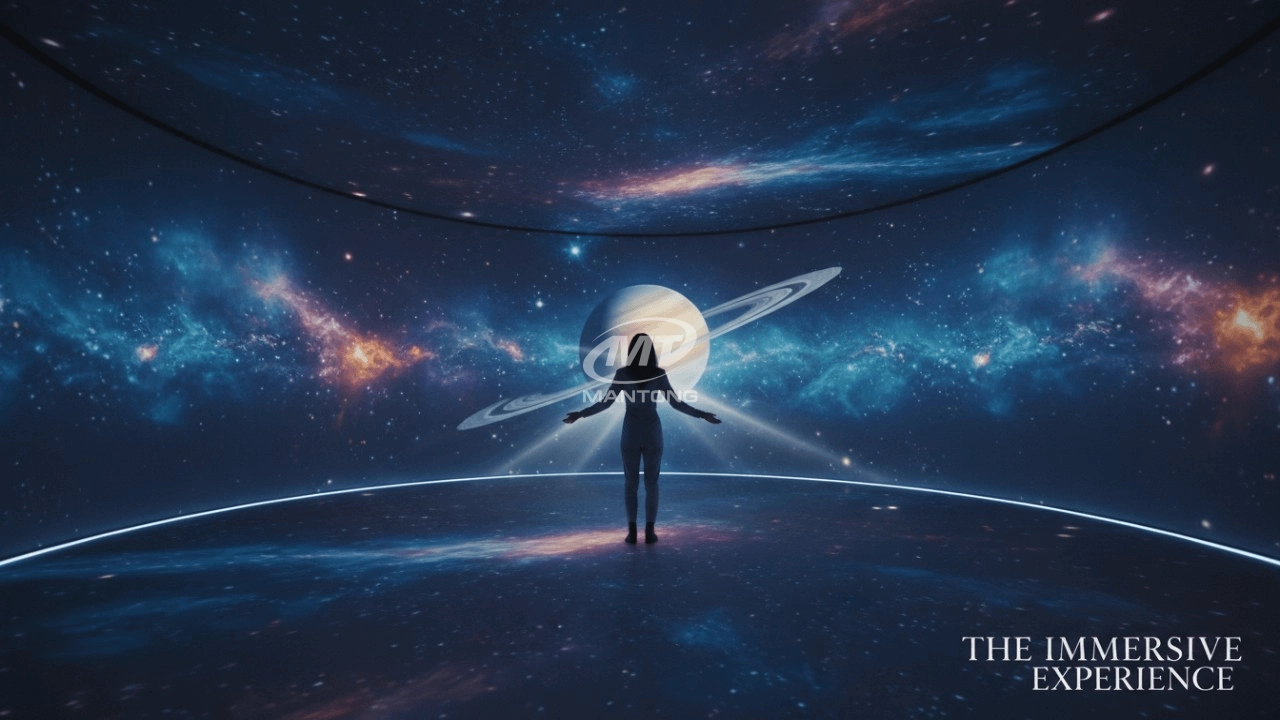
It can be used in various venues, such as art exhibition, entertainment venues, educational institution, Wedding hall /Banquet/Bar,Yoga Studio and so on. It often involves advanced projection techniques, multimedia content, and interactive elements to engage and captivate the audience's senses.
How to install the projection equipment ?
1) Install the projector in a suitable position. We will provide you with a hanger, which you need to fix on the ceiling with
screws.
2) Connect projectors, computers and other accessories through wires.
3) After completing the above 2 steps, we will carry out the edge blending steps. Our team can complete it through remote
control.
In general, installation instructions for each project need to be specified on a project-by-project basis. The above is for
reference only.
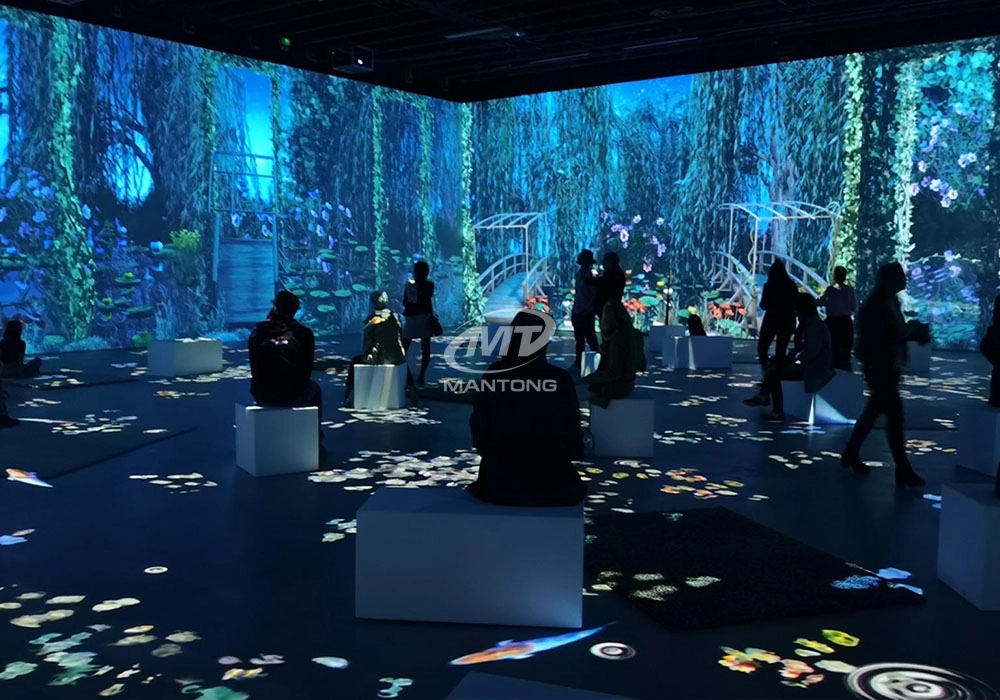
Transform any space with Mantong's immersive projection mapping systems. Our high-lumen projectors (up to 6500 LM) and custom software create captivating interactive experiences for floors and walls. Ideal for museums, events, retail, and hospitality. Each kit includes professional ceiling mounting and 80+ pre-loaded video contents and is backed by a 12-month warranty and CE certification. We offer full customization and support to bring your vision to life.
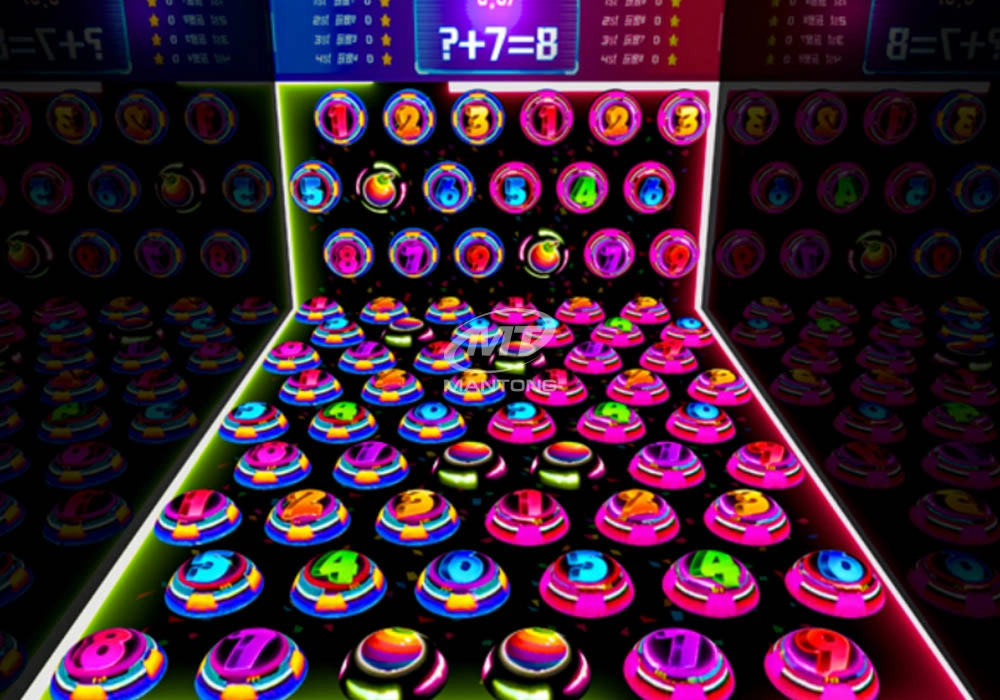
Rapidly Rotating Bouncing Sphere is an interactive space where participants jump on rotating spheres. As they step on it, the spheres surface will show special interactivity
Jumping on spheres of the same color in succession causes them to pop, releasing light particles. The more consecutive jumps, the greater the reward—caterpillars appear, and eventually, all spheres of that color burst, filling the space with light and even more caterpillars.
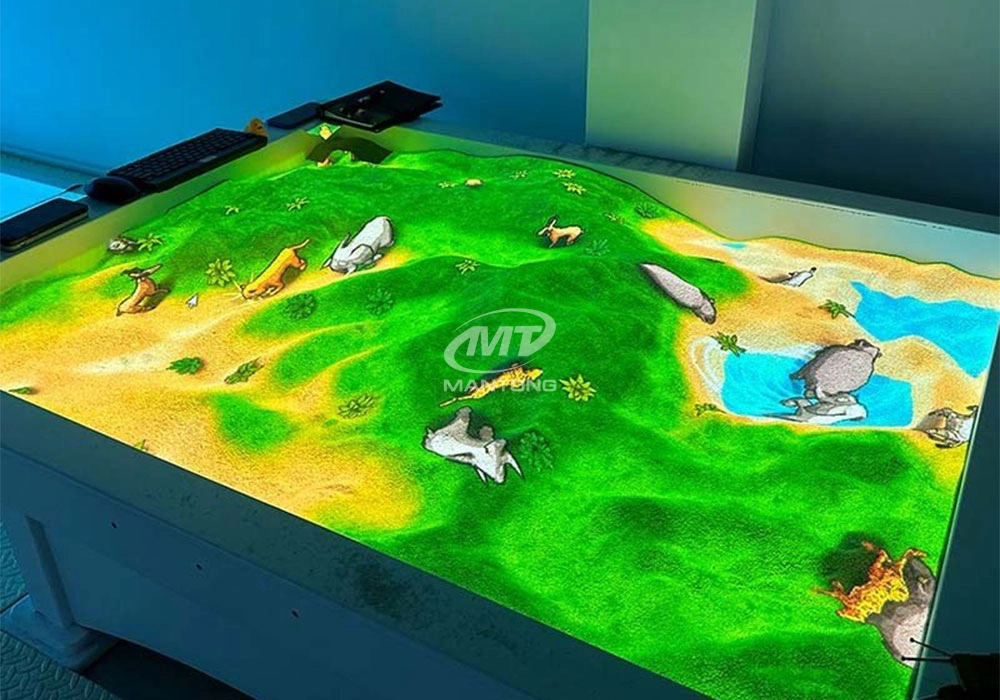
Bring imagination to life with interactive sandbox projection mapping games designed for kids’ play parks. Using cutting-edge projection technology and real-time motion sensing, children can dig, build, and explore virtual worlds directly in the sand. Educational, engaging, and endlessly fun — it’s the perfect blend of play and learning.
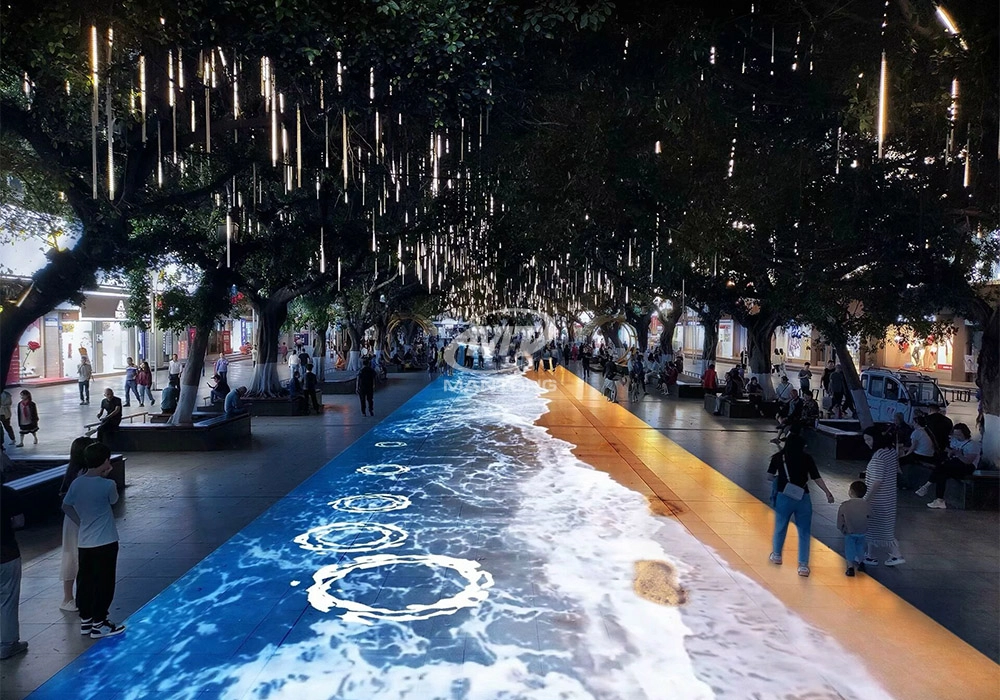
Combining projection mapping with 3D interactive ground projection technology brings an unprecedented immersive experience to outdoor scenes.
Contact Us to Start Your Interactive Projection Journey
Contact us now to discuss how to create innovative projection solutions for your space.

Kaida Business Center, Shixin Road, Panyu District,Guangzhou City, Guangdong Province, China.
ManTong
ManTong
ManTong