
How much do interactive projectors for education cost?
- Interactive Projectors for Education: A Comprehensive Guide
- 1. What Are Interactive Projectors?
- 2. How Much Do Interactive Projectors for Education Cost?
- 3. What Factors Should Be Considered When Choosing an Interactive Projector?
- 4. How Do Interactive Projectors Compare with Interactive Flat Panels (IFPs)?
- 5. What Are the Benefits of Using Interactive Projectors in Education?
- 6. How Do Interactive Projectors Integrate with Existing Classroom Technology?
- 7. What Are the Maintenance Requirements for Interactive Projectors?
- 8. How Do Interactive Projectors Enhance Collaborative Learning?
- Conclusion: Why Choose Mantong Interactive Projectors?
Interactive Projectors for Education: A Comprehensive Guide
Interactive projectors are transforming educational environments by enhancing engagement and interactivity. This guide addresses common questions to assist educators in making informed decisions when integrating this technology into their classrooms.
1. What Are Interactive Projectors?
Interactive projectors are devices that project images onto surfaces like whiteboards or walls and allow users to interact with the projected content using touch or specialized pens. They enable dynamic teaching methods, fostering collaboration and active learning.
2. How Much Do Interactive Projectors for Education Cost?
The cost of interactive projectors varies based on features, brand, and installation requirements. Here's a general breakdown:
Entry-Level Projectors: Approximately $300–$1,000. Suitable for basic interactive needs in smaller classrooms.
Mid-Range Projectors: Around $1,000–$3,000. Offer enhanced features and are ideal for larger classrooms or schools with moderate budgets.
High-End Projectors: $3,000 and above. Provide advanced functionalities and are designed for extensive use in large educational institutions.
Note: These prices are estimates and can vary based on specific models and vendors.
3. What Factors Should Be Considered When Choosing an Interactive Projector?
When selecting an interactive projector, consider the following:
Brightness: A minimum of 3,500 ANSI lumens is recommended for classrooms with ambient light.
Resolution: At least 1080p; 4K is preferable for detailed visuals.
Throw Ratio: Ultra-short-throw projectors (<0.4:1) minimize shadows and glare.
Interactivity: Multi-touch capabilities or accurate active pens enhance user engagement.
Connectivity: Ensure compatibility with devices and software used in your institution.
Source: (https://www.accio.com/plp/interactive-projectors-for-education)
4. How Do Interactive Projectors Compare with Interactive Flat Panels (IFPs)?
Interactive projectors and IFPs each have distinct advantages:
Cost: Projectors generally have a lower initial cost for larger screen sizes compared to IFPs.
Maintenance: Laser projectors offer longer lifespans (20,000–30,000+ hours) with lower maintenance, while IFPs may require calibration and occasional repairs.
Image Size: Projectors can display larger images (80–120+ inches) at a lower cost, whereas IFPs are limited to panel sizes (commonly 55–86 inches).
Durability: IFPs are typically more robust for heavy daily touch use, while projectors may require additional accessories for interactivity.
Source: (https://www.mtprojection.com/interactive-wall-projectors-for-classrooms-buyer-s-guide.html)
5. What Are the Benefits of Using Interactive Projectors in Education?
Enhanced Engagement: Interactive projectors make learning more interactive, keeping students engaged and motivated.
Collaborative Learning: They facilitate group activities and discussions, promoting teamwork and communication skills.
Versatility: Suitable for various teaching methods, including lectures, workshops, and interactive sessions.
Cost-Effectiveness: They can be more affordable than traditional interactive whiteboards, especially for larger screen sizes.
Source: (https://www.accio.com/plp/interactive-projectors-for-education)
6. How Do Interactive Projectors Integrate with Existing Classroom Technology?
Interactive projectors are designed to integrate seamlessly with various classroom technologies:
Software Compatibility: Many support popular learning management systems (LMS) like Google Classroom and Canvas.
Connectivity: They offer multiple connectivity options, including HDMI, USB-C, Wi-Fi, and Bluetooth, ensuring compatibility with various devices.
Content Sharing: Features like wireless screen sharing (e.g., AirPlay, Miracast) allow easy sharing of content from multiple devices.
Source: (https://www.accio.com/plp/interactive-projectors-for-the-classroom)
7. What Are the Maintenance Requirements for Interactive Projectors?
Maintenance needs vary based on the type of projector:
Laser Projectors: Require minimal maintenance with longer lifespans (20,000–30,000+ hours).
Lamp-Based Projectors: Need regular lamp replacements (every 2,000–6,000 hours) and filter cleaning.
Software Updates: Regular updates are necessary to ensure compatibility and access to new features.
Source: (https://www.mtprojection.com/article/interactive-projector-pricing-trends-buyers-guide-2026.html)
8. How Do Interactive Projectors Enhance Collaborative Learning?
Interactive projectors support collaborative learning by:
Multi-User Interaction: Allowing multiple students to interact simultaneously with the projected content.
Group Activities: Facilitating group discussions, brainstorming sessions, and interactive exercises.
Real-Time Feedback: Enabling instant feedback and assessment during collaborative tasks.
Source: (https://www.accio.com/plp/interactive-projectors-for-education)
Conclusion: Why Choose Mantong Interactive Projectors?
Mantong offers a range of interactive projectors tailored for educational settings, providing:
High-Quality Imaging: Ensuring clear and vibrant visuals for effective teaching.
User-Friendly Features: Intuitive interfaces and easy integration with existing classroom technologies.
Durability: Built to withstand the rigors of daily classroom use.
Comprehensive Support: Offering robust after-sales service and training for educators.
Investing in Mantong interactive projectors can enhance the learning experience, foster collaboration, and support diverse teaching methods in your educational institution.
Note: For detailed product specifications and pricing, please visit the (https://www.mantong.com).
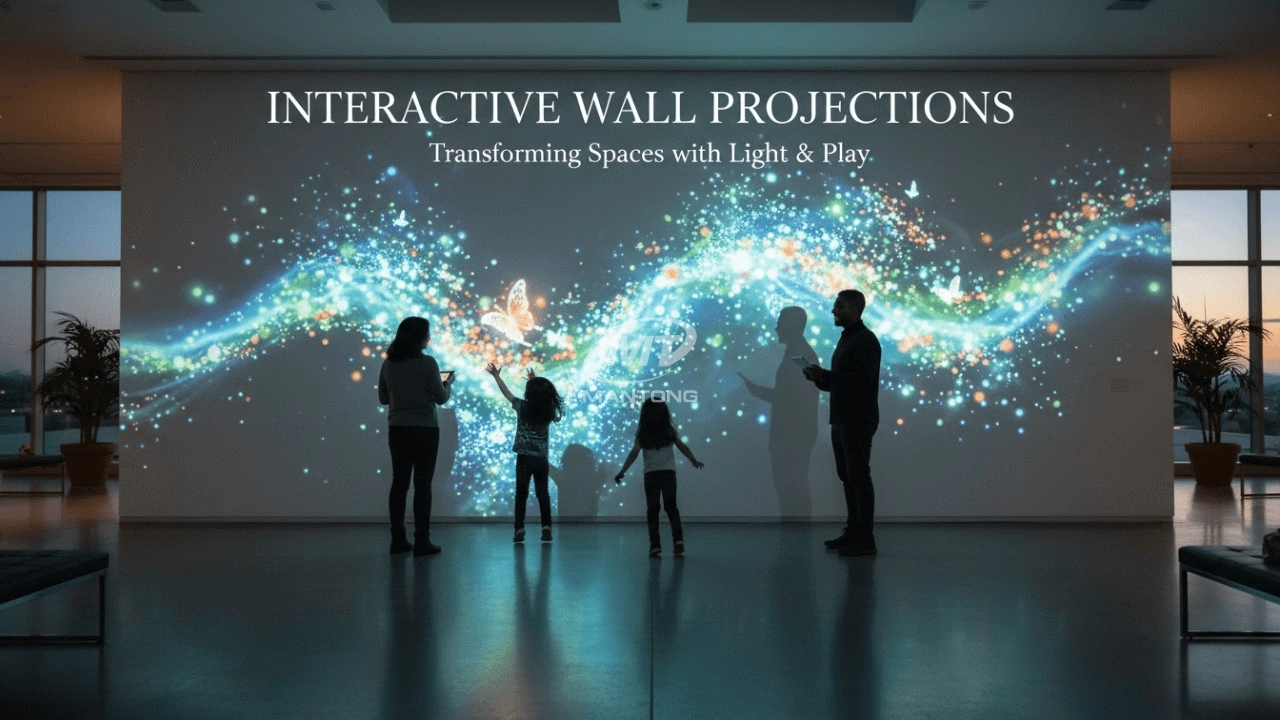
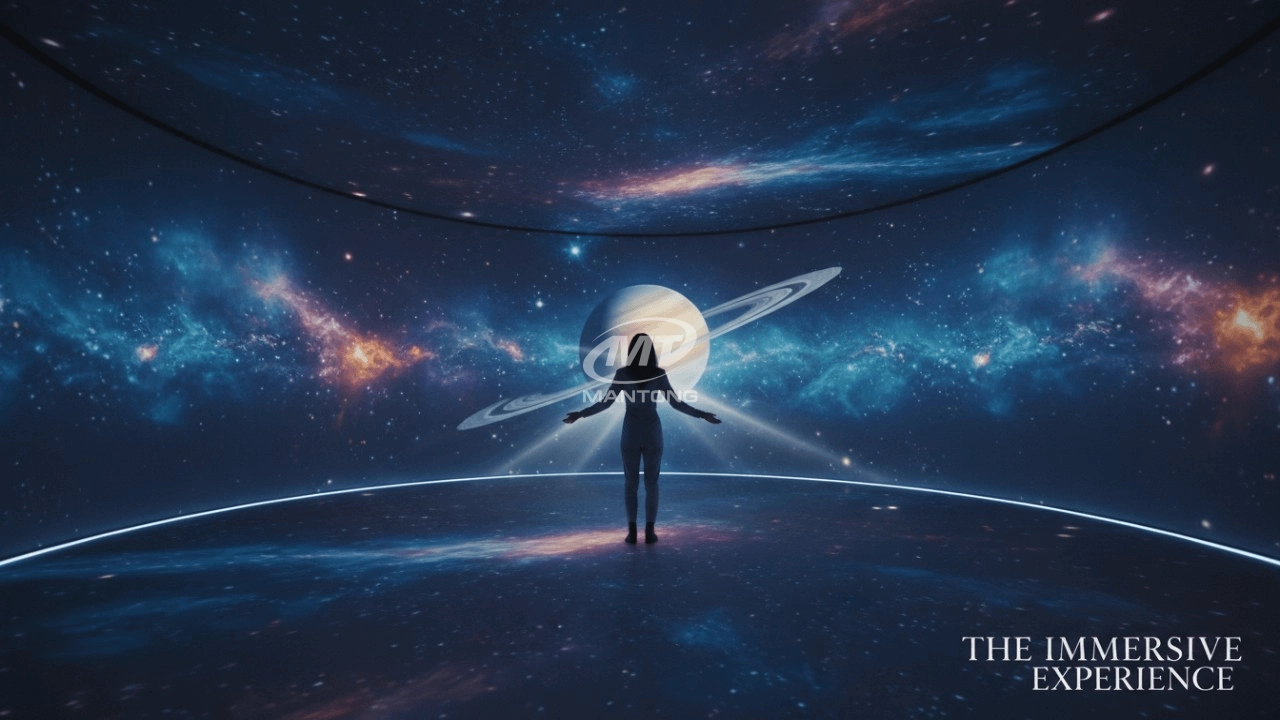


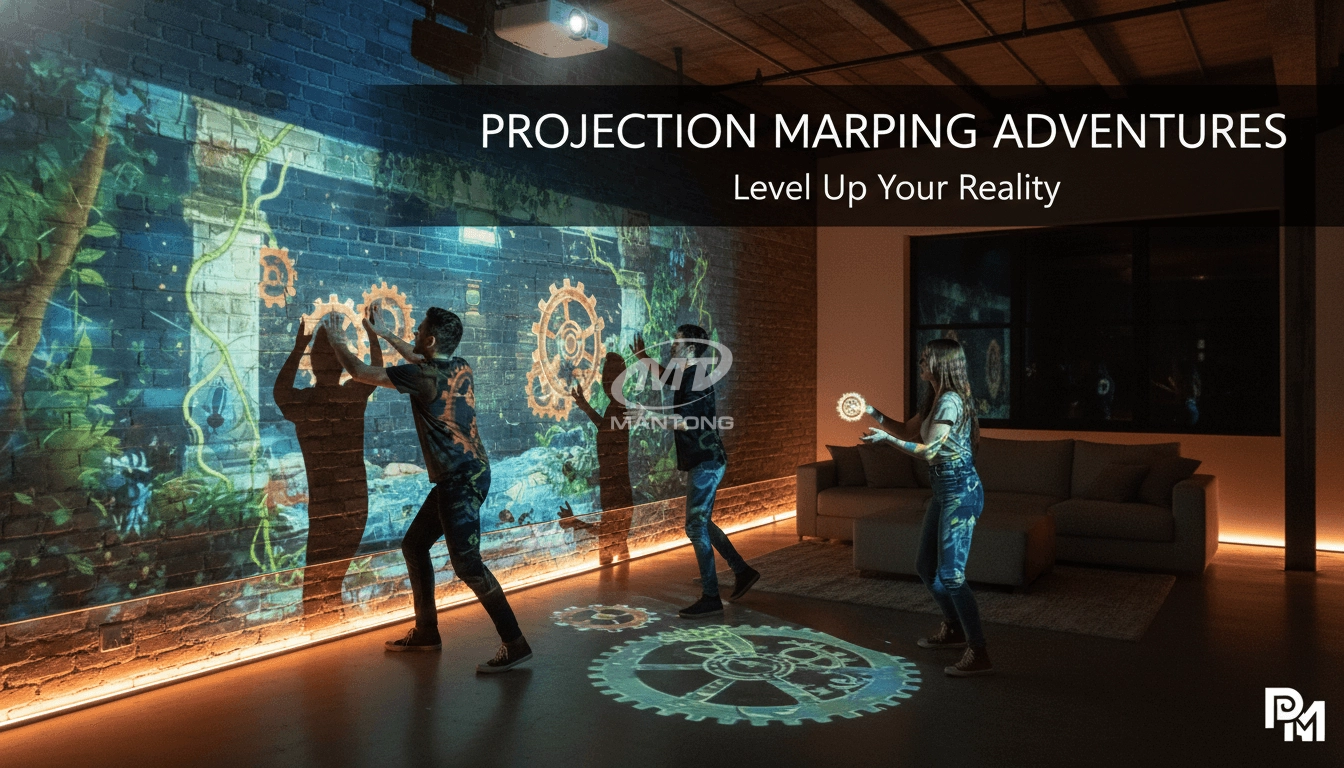
One-Stop Projection Solution Provider Since 2011
What's the application of Immersive projection ?
It can be used in various venues, such as art exhibition, entertainment venues, educational institution, Wedding hall /Banquet/Bar,Yoga Studio and so on. It often involves advanced projection techniques, multimedia content, and interactive elements to engage and captivate the audience's senses.
What's Immersive Projection ?
Immersive projection refers to a technology that creates a captivating and all-encompassing visual experience for viewers by projecting images or videos onto large surfaces, such as walls, floors, or even entire rooms. This technology aims to immerse the audience in a simulated environment, blurring the boundaries between the physical and virtual worlds.
How to install the projection equipment ?
1) Install the projector in a suitable position. We will provide you with a hanger, which you need to fix on the ceiling with
screws.
2) Connect projectors, computers and other accessories through wires.
3) After completing the above 2 steps, we will carry out the edge blending steps. Our team can complete it through remote
control.
In general, installation instructions for each project need to be specified on a project-by-project basis. The above is for
reference only.
What about the wall/floor material for the projection?
It’s recommended to choose a light-colored material with minimal reflectivity—pure white or light grey works best. the
common material is cement & plaster board
For optimal projection results, the surface should be free of any patterns or textures, as the projector will display content
directly onto it.
There are no specific material requirements; you may use any commonly available material in your local market, as long as it
meets the above conditions.
Are you trader or manufacturer ?
We are direct manufacturer who specialize in providing one-stop solution for different outdoor & indoor projection project with our stable software and qualified projectors
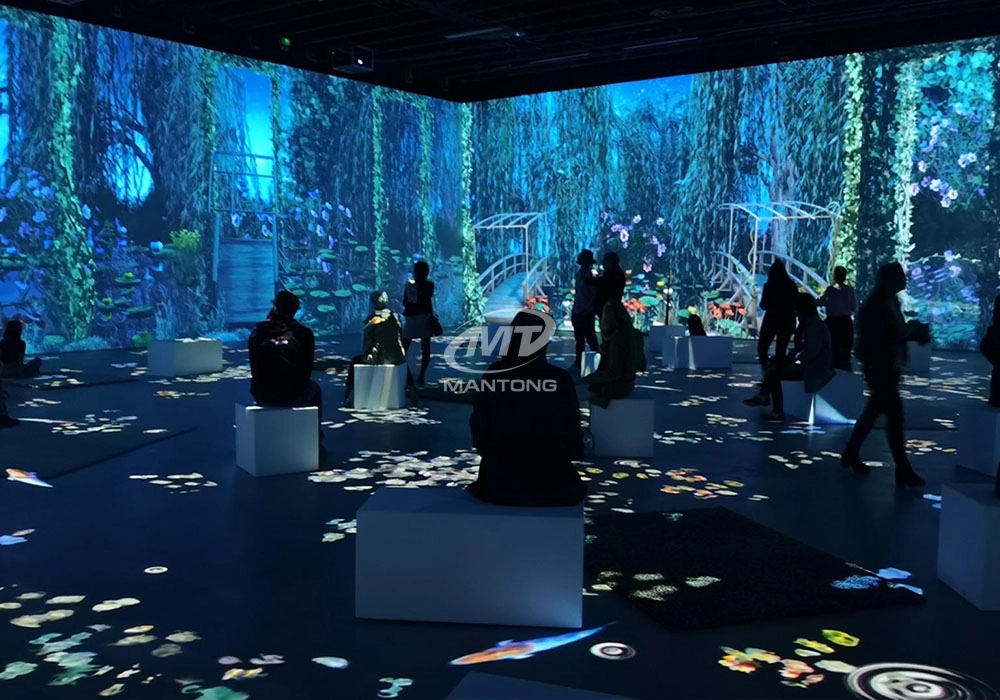
Transform any space with Mantong's immersive projection mapping systems. Our high-lumen projectors (up to 6500 LM) and custom software create captivating interactive experiences for floors and walls. Ideal for museums, events, retail, and hospitality. Each kit includes professional ceiling mounting and 80+ pre-loaded video contents and is backed by a 12-month warranty and CE certification. We offer full customization and support to bring your vision to life.
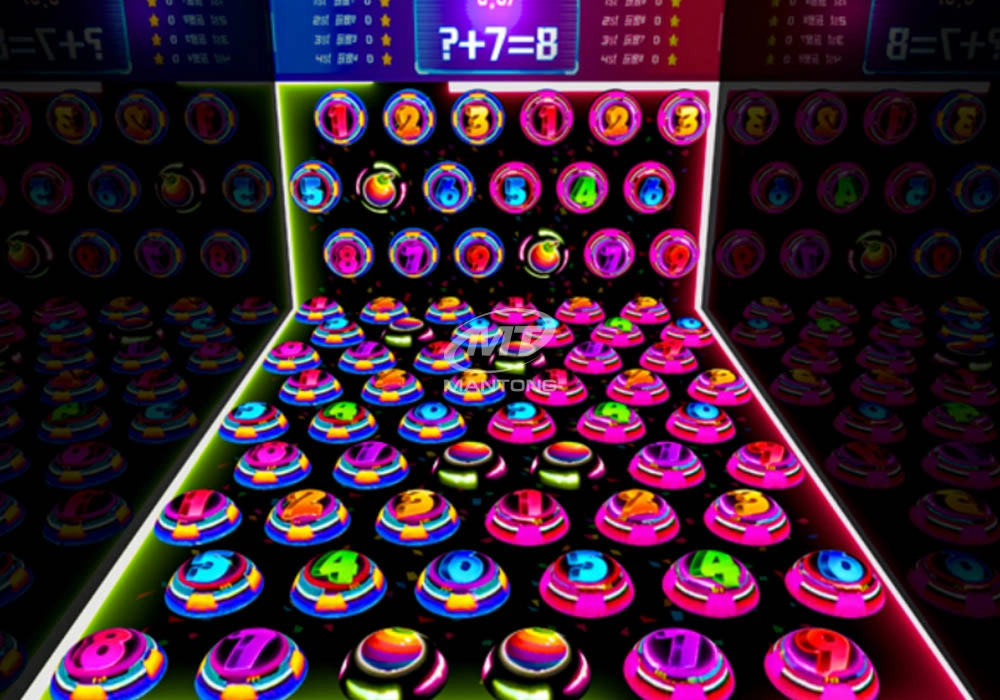
Rapidly Rotating Bouncing Sphere is an interactive space where participants jump on rotating spheres. As they step on it, the spheres surface will show special interactivity
Jumping on spheres of the same color in succession causes them to pop, releasing light particles. The more consecutive jumps, the greater the reward—caterpillars appear, and eventually, all spheres of that color burst, filling the space with light and even more caterpillars.
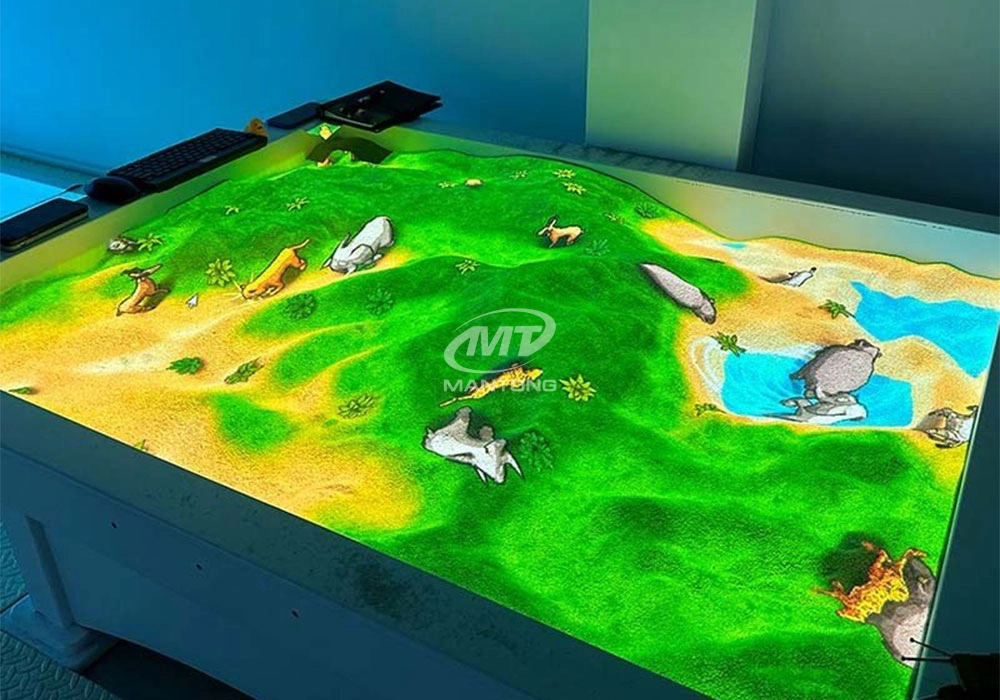
Bring imagination to life with interactive sandbox projection mapping games designed for kids’ play parks. Using cutting-edge projection technology and real-time motion sensing, children can dig, build, and explore virtual worlds directly in the sand. Educational, engaging, and endlessly fun — it’s the perfect blend of play and learning.
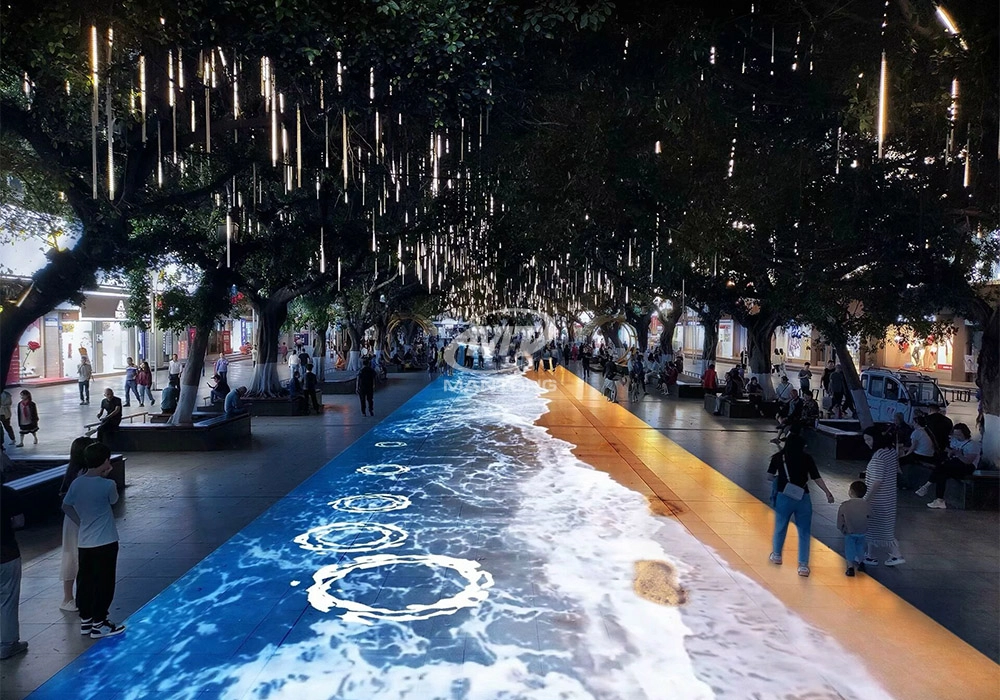
Combining projection mapping with 3D interactive ground projection technology brings an unprecedented immersive experience to outdoor scenes.
Contact Us to Start Your Interactive Projection Journey
Contact us now to discuss how to create innovative projection solutions for your space.

Kaida Business Center, Shixin Road, Panyu District,Guangzhou City, Guangdong Province, China.
ManTong
ManTong
ManTong