
What maintenance do interactive projectors for schools require?
- Interactive Projectors for Education: Essential Insights for Schools
- 1. What are interactive projectors, and how do they enhance classroom learning?
- 2. What key features should schools look for when selecting an interactive projector?
- 3. What is the cost range for interactive projectors suitable for classrooms?
- 4. How do interactive projectors support diverse learners and inclusive education?
- 5. What maintenance do interactive projectors for schools require?
- 6. How do interactive projectors integrate with educational software and content?
- 7. What are the latest trends in interactive projector technology for education?
- 8. How do interactive projectors support diverse learners and inclusive education?
- Conclusion: Why Choose Mantong Digital for Your Classroom Projection Needs?
- Latest Developments in Interactive Projector Technology for Education:
Interactive Projectors for Education: Essential Insights for Schools
Interactive projectors are transforming classrooms by turning any flat surface into an engaging, interactive learning environment. For educational institutions considering the adoption of these technologies, it's crucial to understand the key aspects to ensure effective integration and long-term value.
1. What are interactive projectors, and how do they enhance classroom learning?
Interactive projectors project images onto a surface, allowing users to interact directly with the content using touch or specialized pens. This interactivity fosters active participation, collaboration, and engagement among students, making learning more dynamic and effective.
2. What key features should schools look for when selecting an interactive projector?
When choosing an interactive projector, consider the following features:
Resolution: A minimum of 1080p HD is recommended for clear visuals; 4K resolution is ideal for detailed content.
Brightness: At least 4,000 lumens to ensure visibility in well-lit classrooms.
Touch Accuracy: Infrared or capacitive touch with multi-touch capability supports interactive learning.
Connectivity: Wireless options and compatibility with various devices enhance flexibility.
Durability: Features like dust resistance and long-lasting light sources reduce maintenance needs.
3. What is the cost range for interactive projectors suitable for classrooms?
Interactive projectors for classrooms typically range from $800 to $3,000, depending on features like resolution, interactivity options, and brand. ((https://www.mtprojection.com/guides/interactive-projectors-education-guide.html))
4. How do interactive projectors support diverse learners and inclusive education?
Interactive projectors cater to diverse learning styles by offering multisensory activities, adjustable difficulty levels, and support for various educational programs. They align with Universal Design for Learning (UDL) principles, accommodating different learning styles—kinesthetic, visual, and auditory—ensuring all students can participate and thrive. ((https://www.mtprojection.com/guides/interactive-projectors-education-guide.html))
5. What maintenance do interactive projectors for schools require?
Maintenance requirements for interactive projectors include:
Light Source Maintenance: Laser projectors often have light sources rated for 20,000+ hours, reducing the need for frequent replacements.
Calibration: Regular calibration ensures touch accuracy and optimal performance.
Software Updates: Keeping software up to date ensures access to the latest features and security patches.
Cleaning: Periodic cleaning of filters and lenses maintains image quality and projector longevity.
6. How do interactive projectors integrate with educational software and content?
Many interactive projectors come with built-in software or are compatible with popular educational applications, enabling teachers to create interactive lessons, access educational resources, and engage students effectively.
7. What are the latest trends in interactive projector technology for education?
Recent trends include integration with AI and cloud-based learning platforms, enhancing remote and hybrid learning capabilities. 4K resolution and HDR support are becoming standard in premium models, providing sharper visuals for detailed content. Projectors with built-in speakers and streaming capabilities are also gaining traction for multimedia lessons. ((https://www.mtprojection.com/guides/interactive-projectors-education-guide.html))
8. How do interactive projectors support diverse learners and inclusive education?
Interactive projectors cater to diverse learning styles by offering multisensory activities, adjustable difficulty levels, and support for various educational programs. They align with Universal Design for Learning (UDL) principles, accommodating different learning styles—kinesthetic, visual, and auditory—ensuring all students can participate and thrive. ((https://www.mtprojection.com/guides/interactive-projectors-education-guide.html))
Conclusion: Why Choose Mantong Digital for Your Classroom Projection Needs?
Mantong Digital offers a range of interactive projectors designed to meet the diverse needs of educational institutions. With a focus on durability, ease of use, and advanced features, Mantong's solutions provide excellent value and support for modern classrooms.
((https://www.mtprojection.com/interactive-projectors-classrooms-2025.html))
Latest Developments in Interactive Projector Technology for Education:
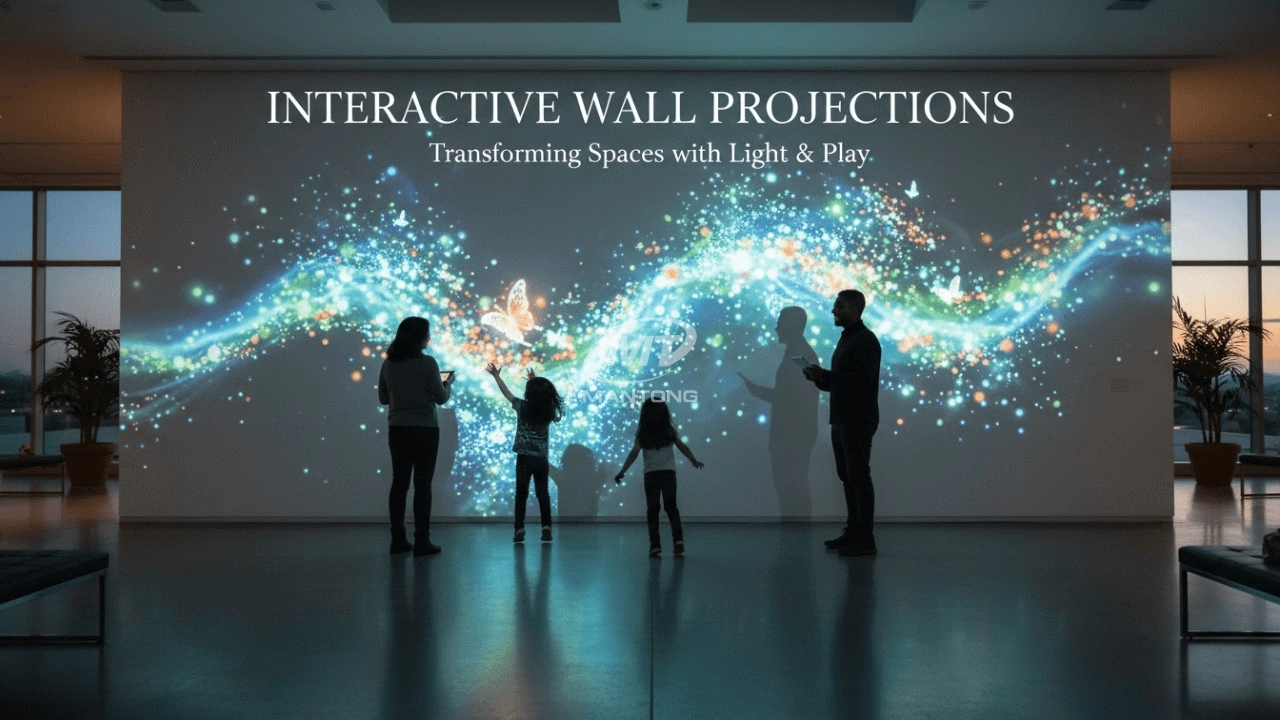


One-Stop Projection Solution Provider Since 2011
How to install the projection equipment ?
1) Install the projector in a suitable position. We will provide you with a hanger, which you need to fix on the ceiling with
screws.
2) Connect projectors, computers and other accessories through wires.
3) After completing the above 2 steps, we will carry out the edge blending steps. Our team can complete it through remote
control.
In general, installation instructions for each project need to be specified on a project-by-project basis. The above is for
reference only.
Are you trader or manufacturer ?
We are direct manufacturer who specialize in providing one-stop solution for different outdoor & indoor projection project with our stable software and qualified projectors
What's Immersive Projection ?
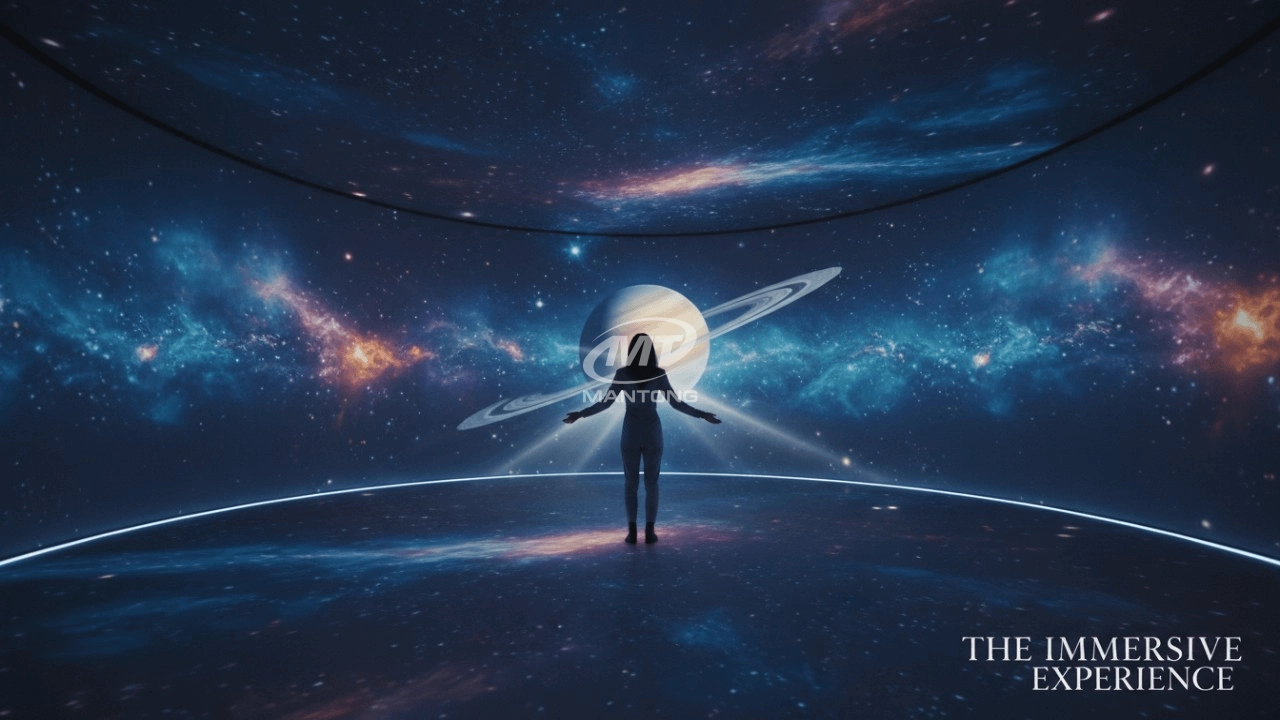
Immersive projection refers to a technology that creates a captivating and all-encompassing visual experience for viewers by projecting images or videos onto large surfaces, such as walls, floors, or even entire rooms. This technology aims to immerse the audience in a simulated environment, blurring the boundaries between the physical and virtual worlds.
What's the application of Immersive projection ?
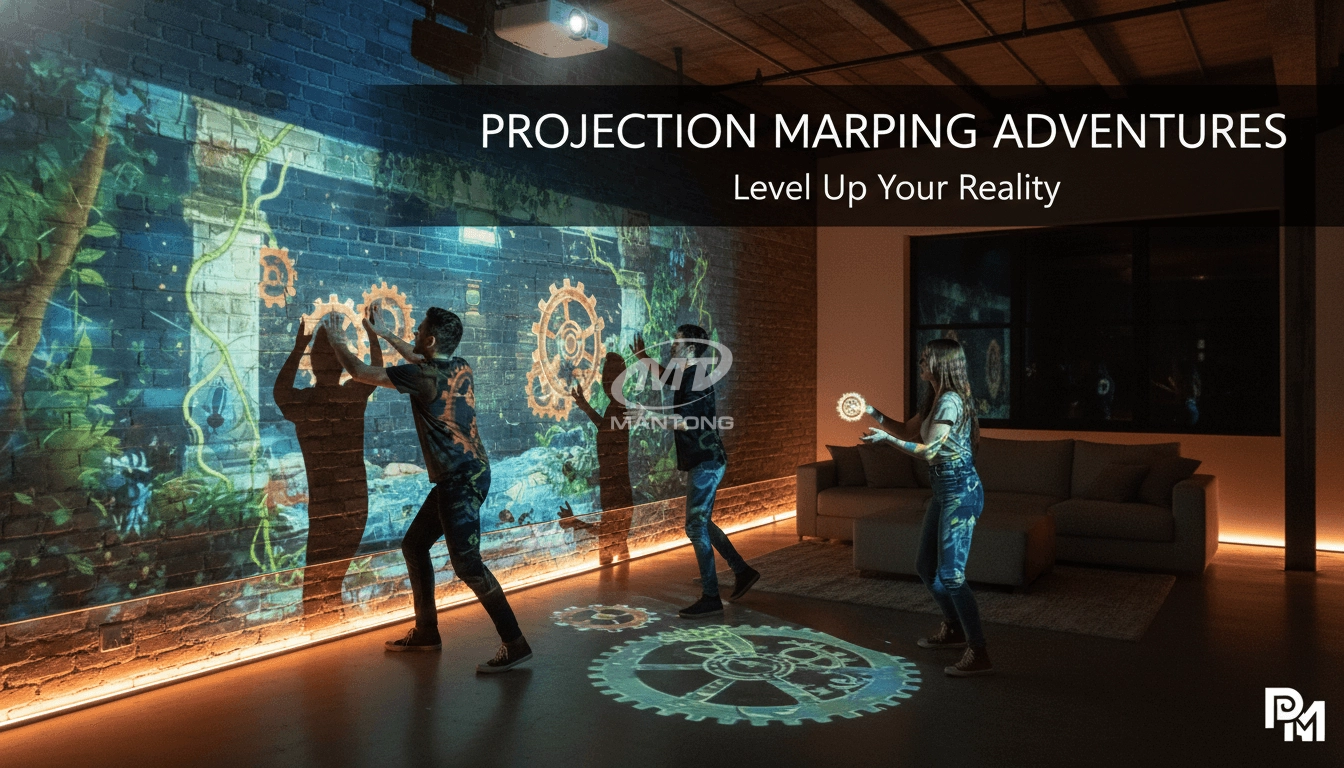
It can be used in various venues, such as art exhibition, entertainment venues, educational institution, Wedding hall /Banquet/Bar,Yoga Studio and so on. It often involves advanced projection techniques, multimedia content, and interactive elements to engage and captivate the audience's senses.
How to Write an Interactive-Effect Video Customisation Script ?
① Project Background: Briefly introduce the context in which this interactive scene will be used (e.g., exhibition, museum,
event space, children's area). Example: This scene is part of the “Underwater World” zone in a children's science museum,
designed to be engaging and exploratory.
②Visual Style / Atmosphere: What kind of visual mood are you aiming for? Please describe the color scheme, style, and any
references. it should focus solely on describing the visual aspects of the scene, supported by relevant charts or reference
images.
③ Interaction Points Overview:List each interactive hotspot along with the effect you'd like to trigger when the user
touches or clicks the area. example: when player touch the clownfish, it will swims away with bubble trail (animation effect)
and produce the bubble sound ( sound effect requirement )
④ Static Visual Reference:including but not limited to background image/video, a list of major visual elements (e.g., coral,
rocks, seaweed, fish), which elements should be interactive?
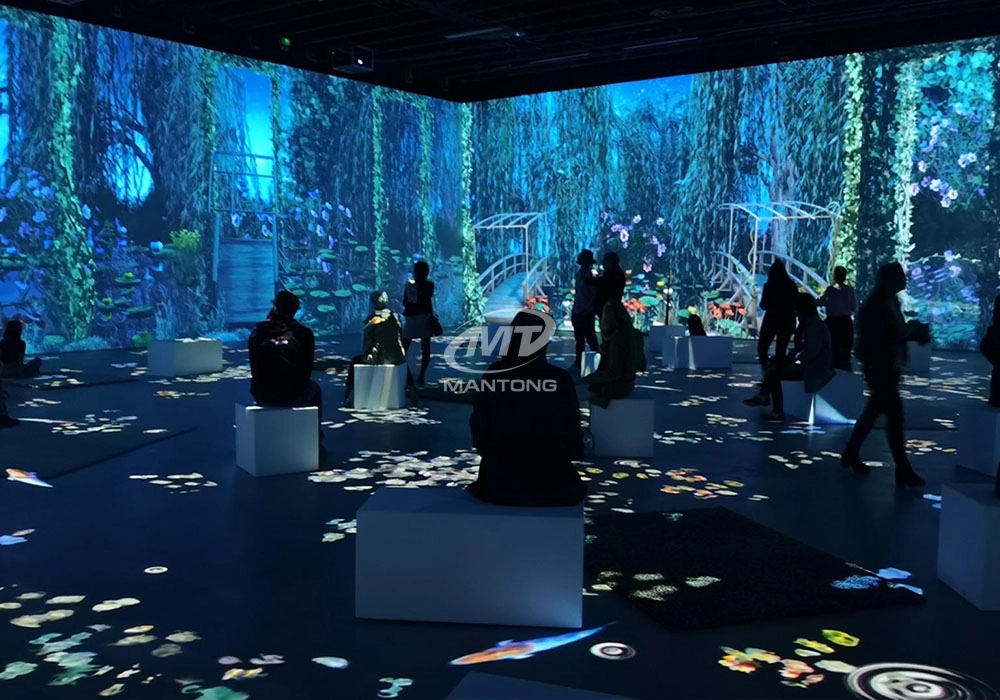
Transform any space with Mantong's immersive projection mapping systems. Our high-lumen projectors (up to 6500 LM) and custom software create captivating interactive experiences for floors and walls. Ideal for museums, events, retail, and hospitality. Each kit includes professional ceiling mounting and 80+ pre-loaded video contents and is backed by a 12-month warranty and CE certification. We offer full customization and support to bring your vision to life.
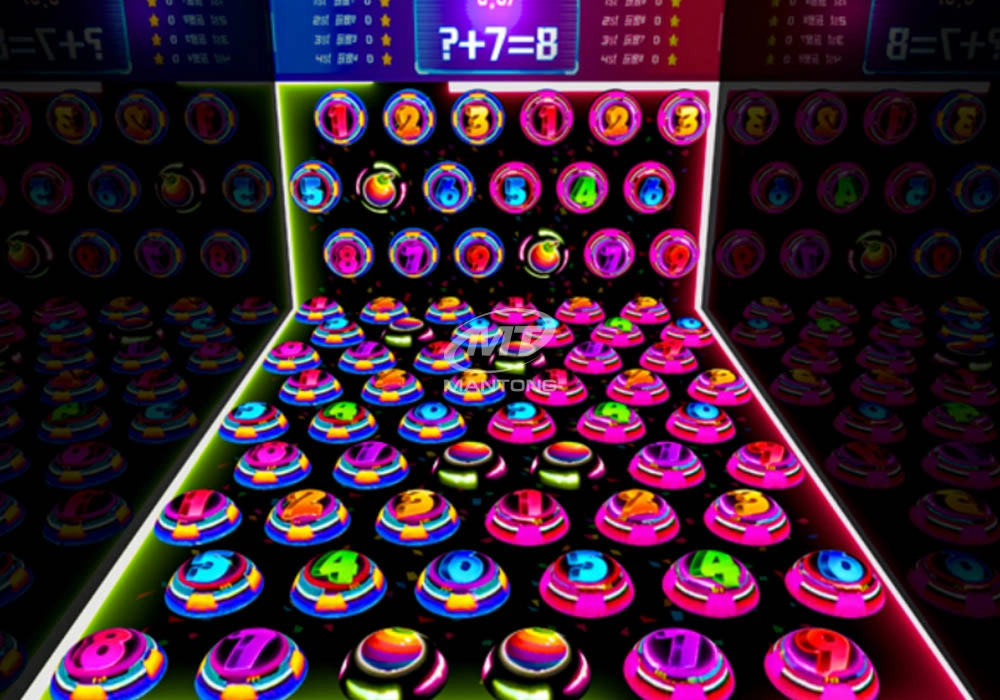
Rapidly Rotating Bouncing Sphere is an interactive space where participants jump on rotating spheres. As they step on it, the spheres surface will show special interactivity
Jumping on spheres of the same color in succession causes them to pop, releasing light particles. The more consecutive jumps, the greater the reward—caterpillars appear, and eventually, all spheres of that color burst, filling the space with light and even more caterpillars.
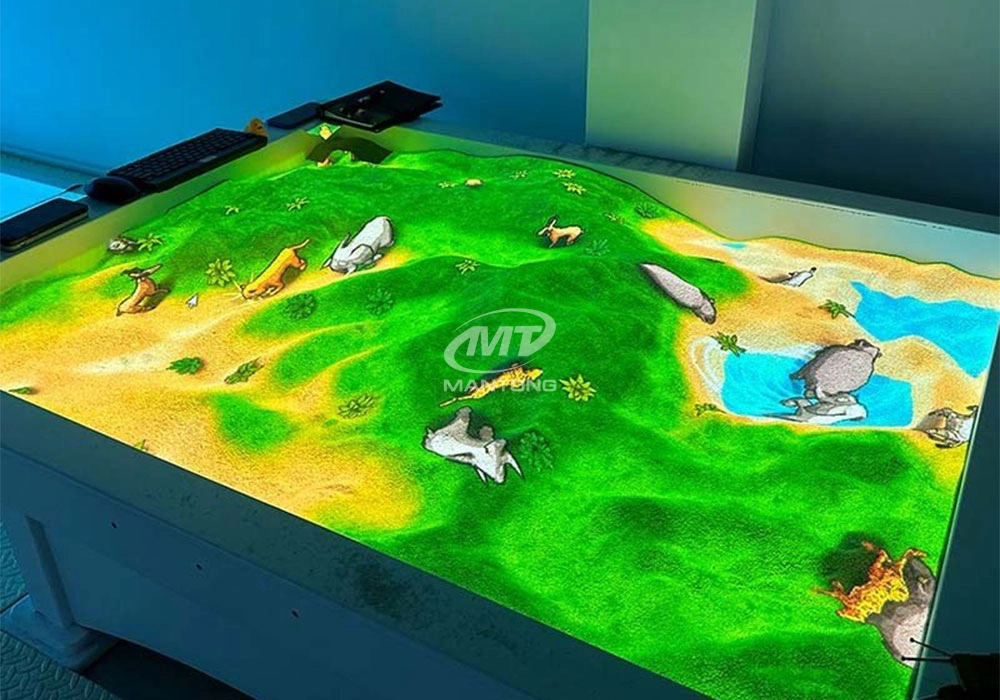
Bring imagination to life with interactive sandbox projection mapping games designed for kids’ play parks. Using cutting-edge projection technology and real-time motion sensing, children can dig, build, and explore virtual worlds directly in the sand. Educational, engaging, and endlessly fun — it’s the perfect blend of play and learning.
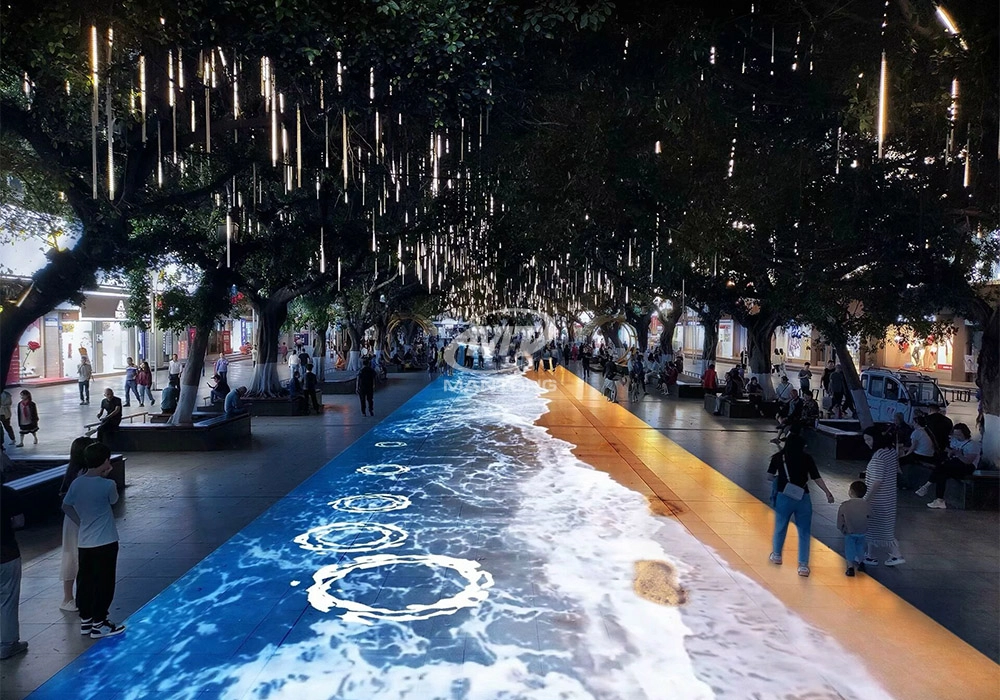
Combining projection mapping with 3D interactive ground projection technology brings an unprecedented immersive experience to outdoor scenes.
Contact Us to Start Your Interactive Projection Journey
Contact us now to discuss how to create innovative projection solutions for your space.

Kaida Business Center, Shixin Road, Panyu District,Guangzhou City, Guangdong Province, China.
ManTong
ManTong
ManTong