
What industries benefit most from immersive room technology? | Mantong Expert Guide
- Which Industries Benefit Most from Immersive Room Technology?
- What Are the Key Industries Adopting Immersive Room Technology?
- What Are the Cost Implications of Implementing Interactive Projection Systems?
- How Does Interactive Projection Integrate with Existing Systems?
- What Are the Maintenance and Support Needs for Immersive Room Technology?
- What Future Trends Should Buyers Consider Before Procurement?
Which Industries Benefit Most from Immersive Room Technology?
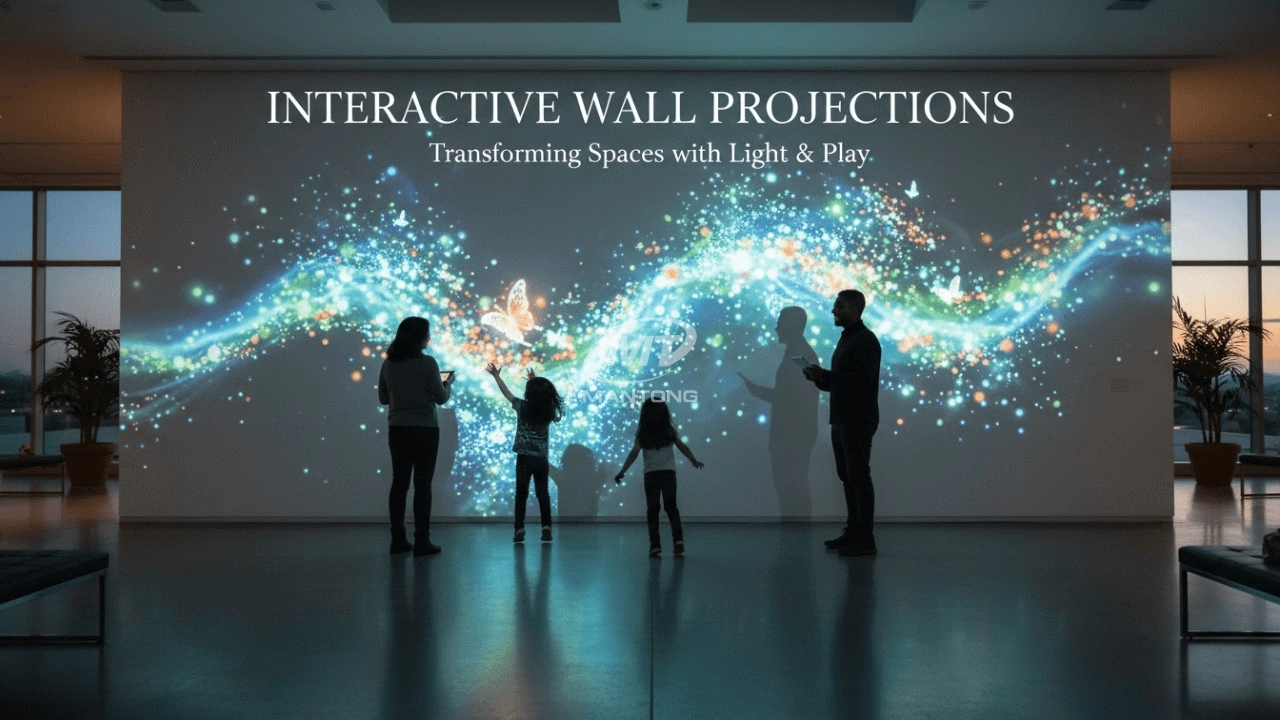
Immersive room technology, leveraging interactive projection systems, is revolutionizing how industries engage with audiences, train employees, and deliver experiences. According to recent data, the global immersive technology market was valued at USD 40.88 billion in 2024 and is projected to grow at a CAGR of 27.9% from 2025 to 2030 (Grand View Research). Industries are increasingly adopting this technology to create interactive, engaging environments. Below, we explore the top five industries benefiting most from immersive room technology and address key concerns for buyers in the interactive projection industry.
What Are the Key Industries Adopting Immersive Room Technology?
1. Education: Immersive rooms create dynamic learning environments where students can interact with 3D models, simulations, and virtual field trips. This technology enhances engagement and retention, with virtual reality in education markets showing significant growth projections for 2025-2034 (Market Research Future).2. Healthcare: Used for medical training and therapy, immersive rooms simulate surgeries and patient interactions, improving skills without risk. The integration of AR/VR in healthcare is driving adoption, as noted in a 2025 industry report (GlobeNewswire).3. Entertainment: Theme parks, museums, and cinemas use immersive projection to create captivating experiences. The immersive display market in entertainment is expected to grow from USD 3.8 billion in 2024 to USD 12.6 billion by 2030 at a CAGR of 22.4% (GlobeNewswire).4. Retail: Interactive projections transform shopping experiences with virtual try-ons and interactive displays, enhancing customer engagement (Peek Pro, 2024).5. Corporate Training: Companies use immersive rooms for simulations and interactive workshops, improving employee skills and collaboration (PwC, 2024).
What Are the Cost Implications of Implementing Interactive Projection Systems?
Cost is a primary concern for buyers. The price of immersive room technology varies based on hardware, software, and installation. Hardware alone is projected to reach USD 89.6 billion by 2030, with a significant CAGR (GlobeNewswire, 2025). Initial investments can range from $50,000 to over $200,000 for advanced setups, but long-term benefits like increased engagement and reduced training costs often outweigh the expense. Buyers should consider scalable solutions and maintenance costs when budgeting.
How Does Interactive Projection Integrate with Existing Systems?
Compatibility with current infrastructure is critical. Modern interactive projection systems are designed to integrate with existing AV setups, learning management systems (LMS), or enterprise software. Reports highlight real-time interactivity as a key driver for adoption across industries (GlobeNewswire, 2025). Buyers should ensure vendors provide support for API integrations and compatibility with platforms like Zoom or Microsoft Teams for corporate use.
What Are the Maintenance and Support Needs for Immersive Room Technology?
Ongoing maintenance is essential for optimal performance. Regular updates to software, calibration of projectors, and hardware checks are necessary to prevent downtime. Industry trends suggest opting for vendors with robust after-sales support and warranty programs (Blooloop, 2025). Buyers should inquire about service contracts and availability of local technicians to minimize operational disruptions.
What Future Trends Should Buyers Consider Before Procurement?
The immersive technology market is evolving rapidly, with XR (extended reality) technologies set to reshape industries by 2025 (Yord Studio, 2024). Buyers should look for systems that support future upgrades, such as 5G connectivity or AI-driven interactivity. Additionally, sustainability is becoming a focus, with innovations aimed at energy-efficient projections (Digital Realty, 2025). Investing in adaptable technology ensures long-term value.
Conclusion: Why Choose Mantong for Immersive Room Technology?
When it comes to procuring interactive projection systems, Mantong stands out as a trusted leader. With cutting-edge technology, seamless integration capabilities, and dedicated customer support, Mantong ensures that businesses across education, healthcare, entertainment, retail, and corporate sectors achieve maximum ROI. Our scalable solutions and commitment to innovation align with the latest industry trends, making Mantong the ideal partner for your immersive room technology needs.


One-Stop Projection Solution Provider Since 2011
How to Write an Interactive-Effect Video Customisation Script ?
① Project Background: Briefly introduce the context in which this interactive scene will be used (e.g., exhibition, museum,
event space, children's area). Example: This scene is part of the “Underwater World” zone in a children's science museum,
designed to be engaging and exploratory.
②Visual Style / Atmosphere: What kind of visual mood are you aiming for? Please describe the color scheme, style, and any
references. it should focus solely on describing the visual aspects of the scene, supported by relevant charts or reference
images.
③ Interaction Points Overview:List each interactive hotspot along with the effect you'd like to trigger when the user
touches or clicks the area. example: when player touch the clownfish, it will swims away with bubble trail (animation effect)
and produce the bubble sound ( sound effect requirement )
④ Static Visual Reference:including but not limited to background image/video, a list of major visual elements (e.g., coral,
rocks, seaweed, fish), which elements should be interactive?
What's Immersive Projection ?
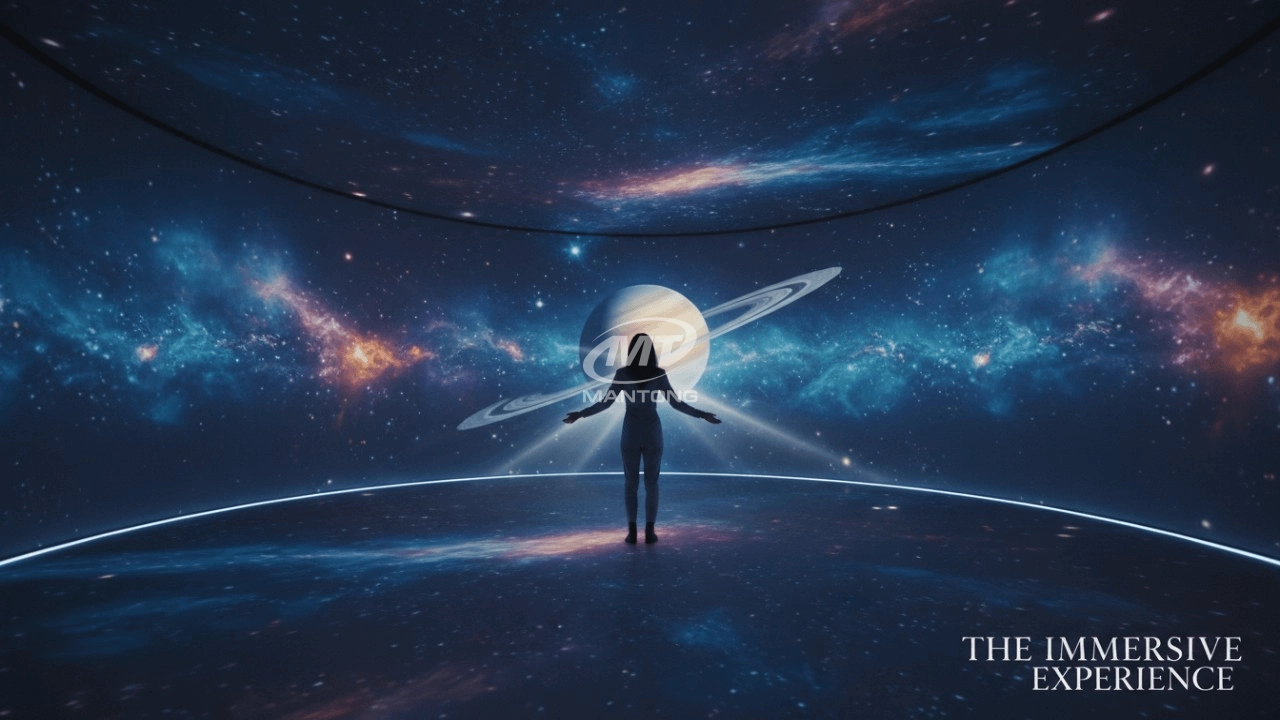
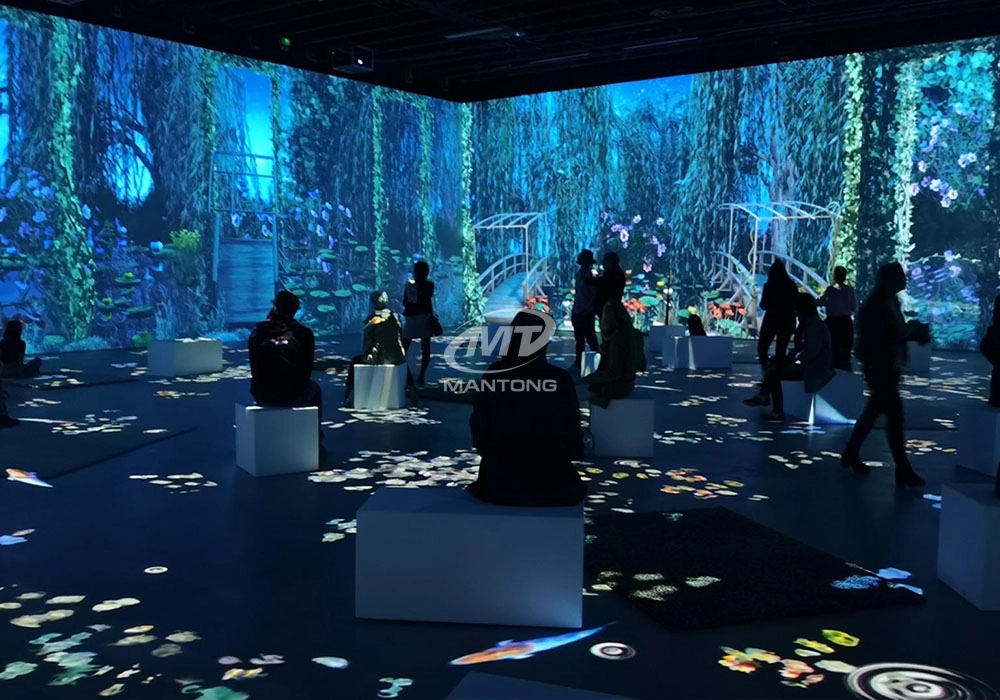
Immersive projection refers to a technology that creates a captivating and all-encompassing visual experience for viewers by projecting images or videos onto large surfaces, such as walls, floors, or even entire rooms. This technology aims to immerse the audience in a simulated environment, blurring the boundaries between the physical and virtual worlds.
How to install the projection equipment ?
1) Install the projector in a suitable position. We will provide you with a hanger, which you need to fix on the ceiling with
screws.
2) Connect projectors, computers and other accessories through wires.
3) After completing the above 2 steps, we will carry out the edge blending steps. Our team can complete it through remote
control.
In general, installation instructions for each project need to be specified on a project-by-project basis. The above is for
reference only.
What information do you need to know before making the proposal/solution?
We know that everyone wants to know the price, but the price of our products is determined by many factors since most of our products are custom, so no ready price list. In order to fast understand what you need, can you send us an inquiry like this?
For example: I am really interested in your immersive projection products, we are a company in the USA and want to install some in my restaurant. It is about 50 meters long, and 5m in width. Projection size you can decide but the length should be not less than 20 meters. We want some content about SeaWorld because our place is all about the sea. Thank you.
What's the application of Immersive projection ?
It can be used in various venues, such as art exhibition, entertainment venues, educational institution, Wedding hall /Banquet/Bar,Yoga Studio and so on. It often involves advanced projection techniques, multimedia content, and interactive elements to engage and captivate the audience's senses.
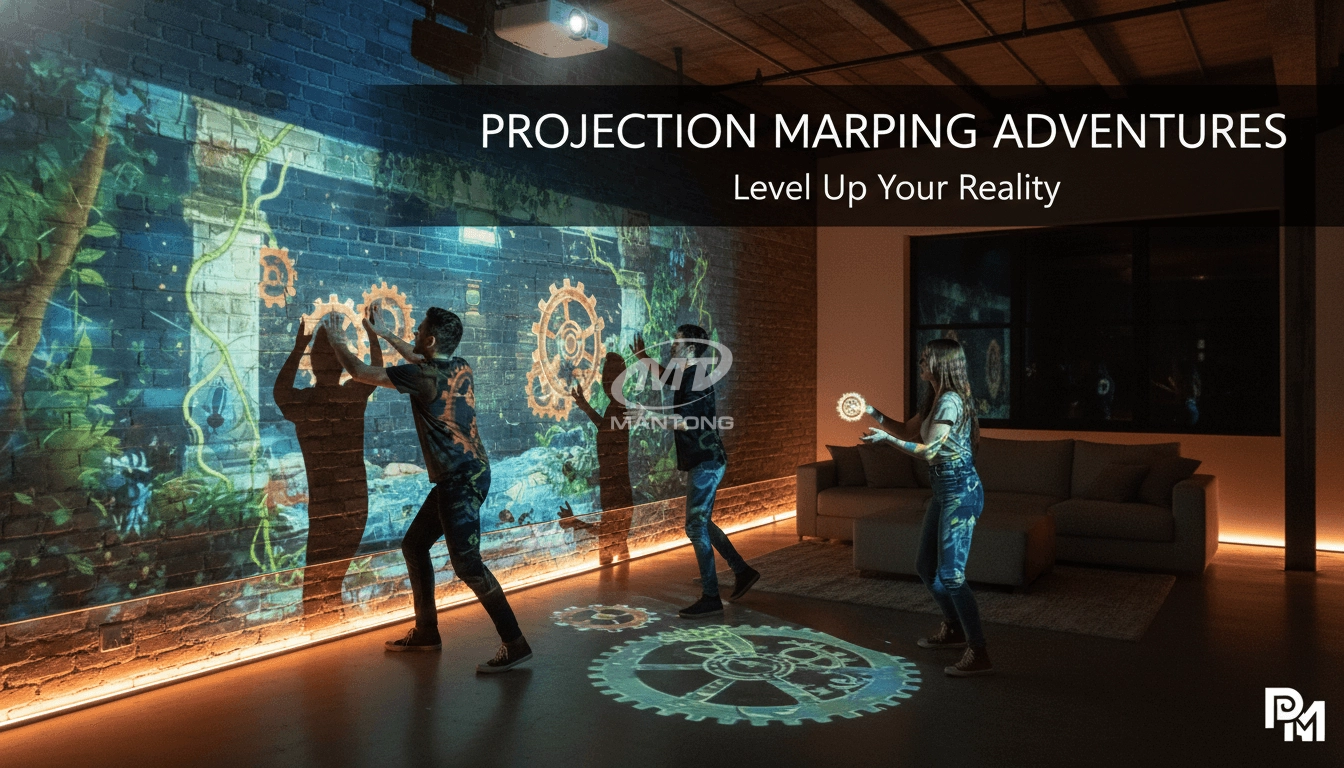
Transform any space with Mantong's immersive projection mapping systems. Our high-lumen projectors (up to 6500 LM) and custom software create captivating interactive experiences for floors and walls. Ideal for museums, events, retail, and hospitality. Each kit includes professional ceiling mounting and 80+ pre-loaded video contents and is backed by a 12-month warranty and CE certification. We offer full customization and support to bring your vision to life.
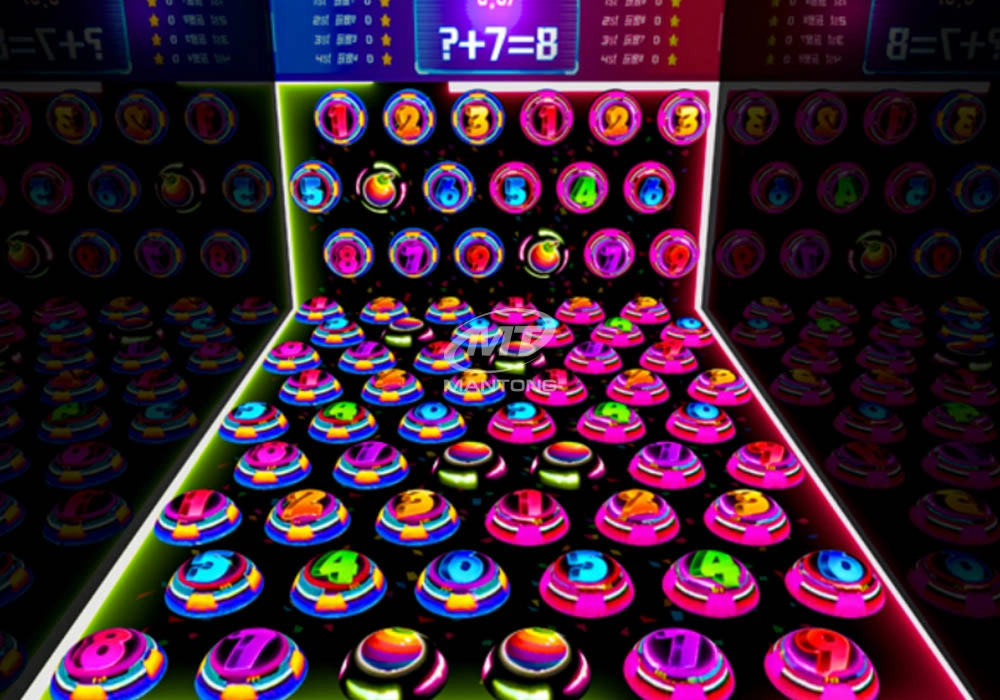
Rapidly Rotating Bouncing Sphere is an interactive space where participants jump on rotating spheres. As they step on it, the spheres surface will show special interactivity
Jumping on spheres of the same color in succession causes them to pop, releasing light particles. The more consecutive jumps, the greater the reward—caterpillars appear, and eventually, all spheres of that color burst, filling the space with light and even more caterpillars.
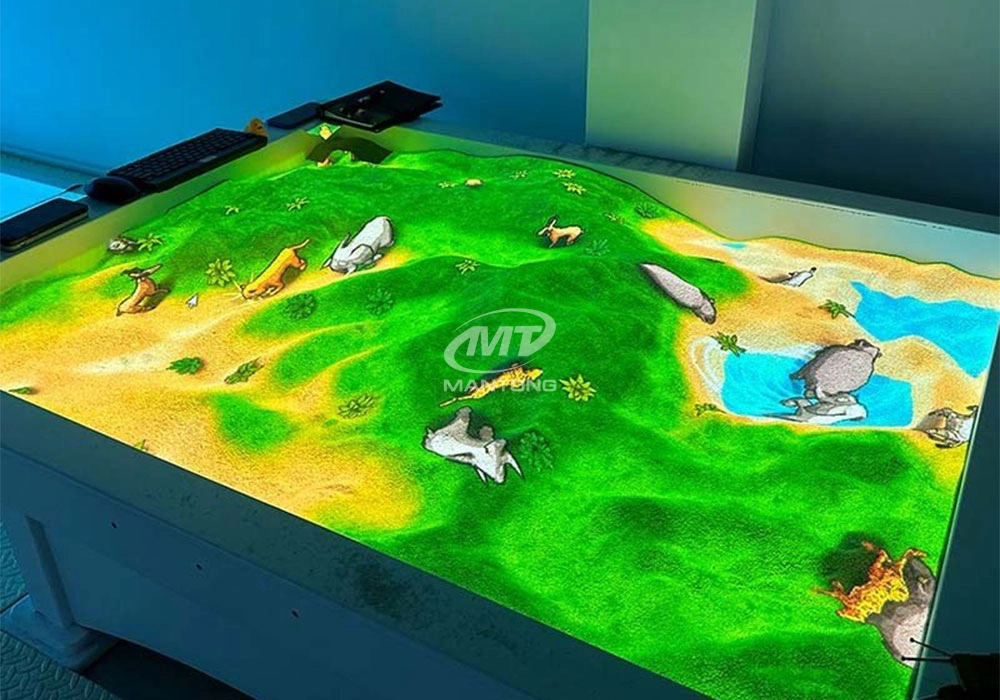
Bring imagination to life with interactive sandbox projection mapping games designed for kids’ play parks. Using cutting-edge projection technology and real-time motion sensing, children can dig, build, and explore virtual worlds directly in the sand. Educational, engaging, and endlessly fun — it’s the perfect blend of play and learning.
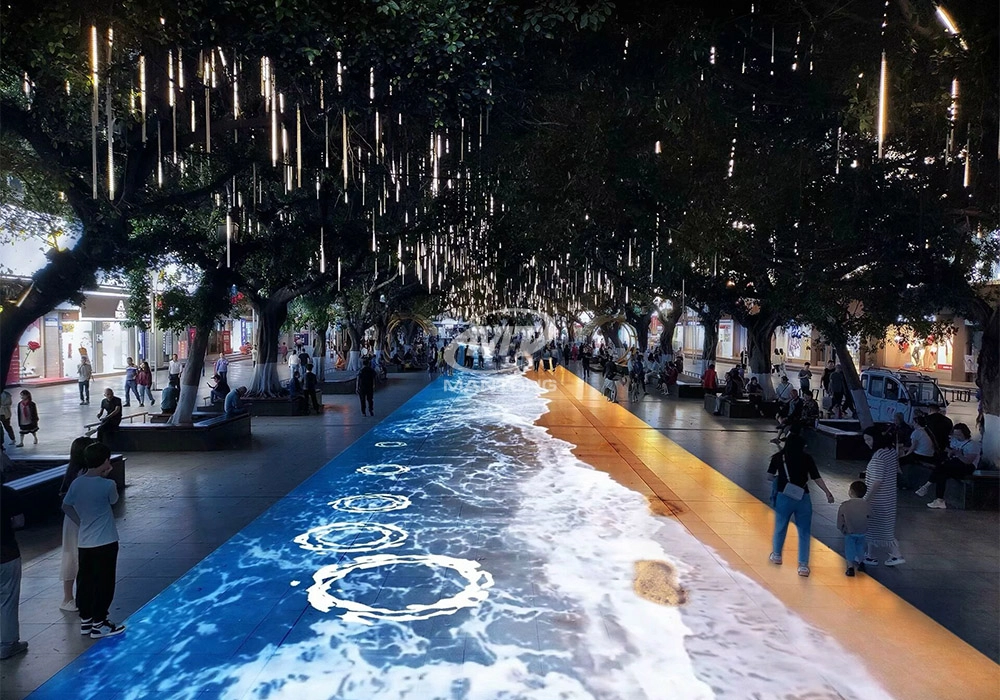
Combining projection mapping with 3D interactive ground projection technology brings an unprecedented immersive experience to outdoor scenes.
Contact Us to Start Your Interactive Projection Journey
Contact us now to discuss how to create innovative projection solutions for your space.

Kaida Business Center, Shixin Road, Panyu District,Guangzhou City, Guangdong Province, China.
ManTong
ManTong
ManTong