
How is immersive room technology used in education and training? | Mantong Expert Guide
- How is Immersive Room Technology Used in Education and Training?
- What Are the Key Applications of Immersive Rooms in Education?
- How Does Immersive Technology Benefit Training Programs?
- What Are the Costs and ROI of Implementing Immersive Room Technology?
- How Challenging is the Integration of Immersive Technology in Existing Systems?
- What Future Trends Should Buyers Consider for Immersive Room Technology?
How is Immersive Room Technology Used in Education and Training?
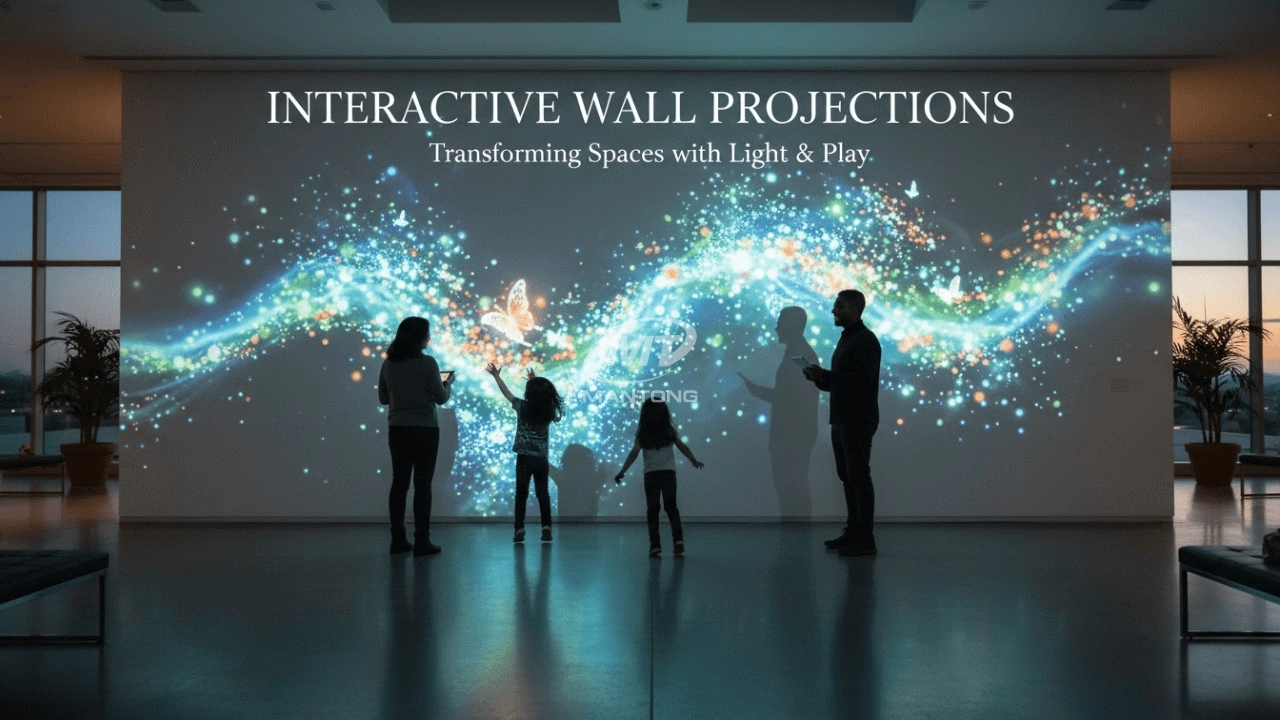
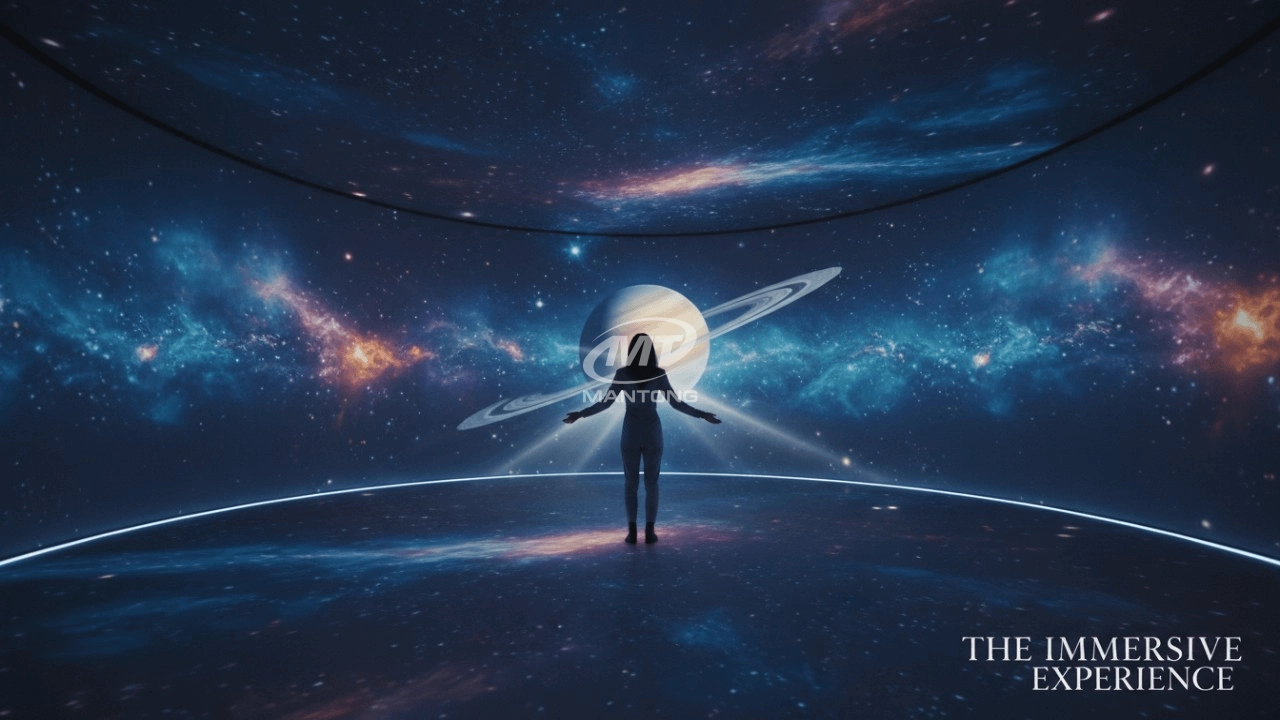
Immersive room technology, often powered by interactive projection, virtual reality (VR), augmented reality (AR), and 360-degree environments, is redefining the landscape of education and training. By creating interactive, engaging spaces, this technology allows learners to experience simulations, explore virtual worlds, and interact with content in ways traditional classrooms cannot. Recent advancements have made these solutions more accessible, with the global immersive simulator market projected to grow at a CAGR of 27.8% through 2032, as reported by Persistence Market Research. Below, we address five key questions that users in the interactive projection industry often ask when considering procurement for educational and training purposes, providing professional insights based on current trends and data.
What Are the Key Applications of Immersive Rooms in Education?
Immersive rooms are widely used in educational settings to enhance learning experiences. They enable students to explore historical events, scientific phenomena, and complex concepts through interactive simulations. For example, students can 'walk' through a virtual rainforest or dissect a 3D model of the human body without physical resources. According to a 2023 article from the World Economic Forum, immersive technologies are transforming education by making abstract concepts tangible and boosting engagement. Schools and universities are increasingly adopting these tools to supplement traditional teaching methods, with tools like interactive projection systems creating dynamic classroom environments.
How Does Immersive Technology Benefit Training Programs?
In professional and vocational training, immersive rooms provide safe, cost-effective simulations for high-risk or expensive scenarios. Medical students, for instance, can perform virtual surgeries, while aviation trainees use realistic flight simulators, as highlighted by Center Forward in 2024. These technologies reduce real-world risks and costs while improving skill retention. A systematic review on immersive technology in medical education, published in ScienceDirect, notes that VR and AR significantly enhance procedural training outcomes. Interactive projection systems in immersive rooms further allow trainees to interact with projected scenarios, making training more hands-on.
What Are the Costs and ROI of Implementing Immersive Room Technology?
Cost is a primary concern for institutions considering immersive room technology. Initial setup costs for VR hardware, interactive projection systems, and software can range from $10,000 to over $100,000 depending on the scale and customization, based on industry reports. However, the return on investment (ROI) is substantial due to reduced physical resource needs and improved learning outcomes. A 2025 report from Persistence Market Research indicates the immersive simulator market was valued at $10.6 billion in 2024, reflecting growing adoption and scalability. For procurement professionals, focusing on modular, upgradable systems can optimize long-term costs.
How Challenging is the Integration of Immersive Technology in Existing Systems?
Integration poses challenges such as compatibility with existing infrastructure, technical training for staff, and space requirements. However, recent innovations have made systems more user-friendly. For instance, SMART Technologies launched an affordable interactive display board at ITSE 2025, as reported by EdTech Innovation Hub, catering to schools with limited budgets. When procuring interactive projection solutions, it’s crucial to assess vendor support for installation and training. Partnering with providers offering comprehensive onboarding can mitigate integration hurdles, ensuring seamless adoption in educational environments.
What Future Trends Should Buyers Consider for Immersive Room Technology?
The future of immersive room technology in education and training is promising, with trends pointing toward AI integration, personalized learning experiences, and wider accessibility. According to a 2025 Hindustan Times article, institutions like Manav Rachna are training educators in immersive technologies, signaling a push for broader adoption. The EdTech market, including immersive solutions, is projected to reach $810.3 billion by 2033 at a CAGR of 13.9%, per London Daily News. Buyers should prioritize scalable solutions with AI capabilities and cloud-based content to future-proof their investments in interactive projection systems.
In conclusion, immersive room technology, supported by interactive projection, is a game-changer for education and training. By addressing user concerns about applications, benefits, costs, integration, and future trends, procurement professionals in the interactive projection industry can make informed decisions to enhance learning environments. As the market continues to grow, staying updated on innovations and vendor support will be key to maximizing the impact of these transformative tools.


One-Stop Projection Solution Provider Since 2011
Are you trader or manufacturer ?
We are direct manufacturer who specialize in providing one-stop solution for different outdoor & indoor projection project with our stable software and qualified projectors
What information do you need to know before making the proposal/solution?
We know that everyone wants to know the price, but the price of our products is determined by many factors since most of our products are custom, so no ready price list. In order to fast understand what you need, can you send us an inquiry like this?
For example: I am really interested in your immersive projection products, we are a company in the USA and want to install some in my restaurant. It is about 50 meters long, and 5m in width. Projection size you can decide but the length should be not less than 20 meters. We want some content about SeaWorld because our place is all about the sea. Thank you.
How to Write an Interactive-Effect Video Customisation Script ?
① Project Background: Briefly introduce the context in which this interactive scene will be used (e.g., exhibition, museum,
event space, children's area). Example: This scene is part of the “Underwater World” zone in a children's science museum,
designed to be engaging and exploratory.
②Visual Style / Atmosphere: What kind of visual mood are you aiming for? Please describe the color scheme, style, and any
references. it should focus solely on describing the visual aspects of the scene, supported by relevant charts or reference
images.
③ Interaction Points Overview:List each interactive hotspot along with the effect you'd like to trigger when the user
touches or clicks the area. example: when player touch the clownfish, it will swims away with bubble trail (animation effect)
and produce the bubble sound ( sound effect requirement )
④ Static Visual Reference:including but not limited to background image/video, a list of major visual elements (e.g., coral,
rocks, seaweed, fish), which elements should be interactive?
What about the wall/floor material for the projection?
It’s recommended to choose a light-colored material with minimal reflectivity—pure white or light grey works best. the
common material is cement & plaster board
For optimal projection results, the surface should be free of any patterns or textures, as the projector will display content
directly onto it.
There are no specific material requirements; you may use any commonly available material in your local market, as long as it
meets the above conditions.
What's Immersive Projection ?
Immersive projection refers to a technology that creates a captivating and all-encompassing visual experience for viewers by projecting images or videos onto large surfaces, such as walls, floors, or even entire rooms. This technology aims to immerse the audience in a simulated environment, blurring the boundaries between the physical and virtual worlds.
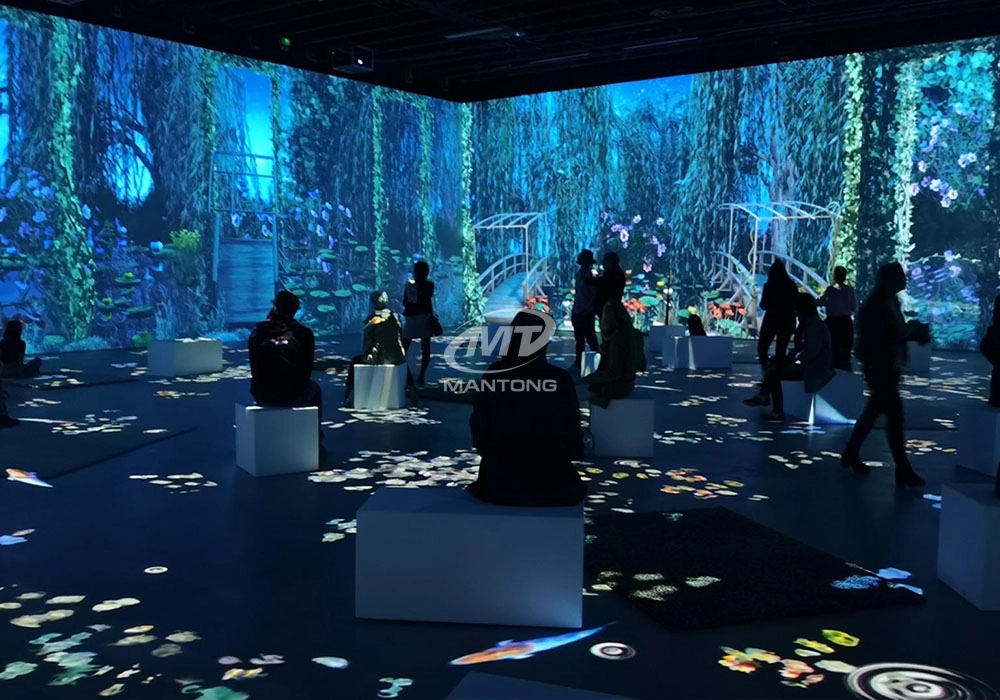
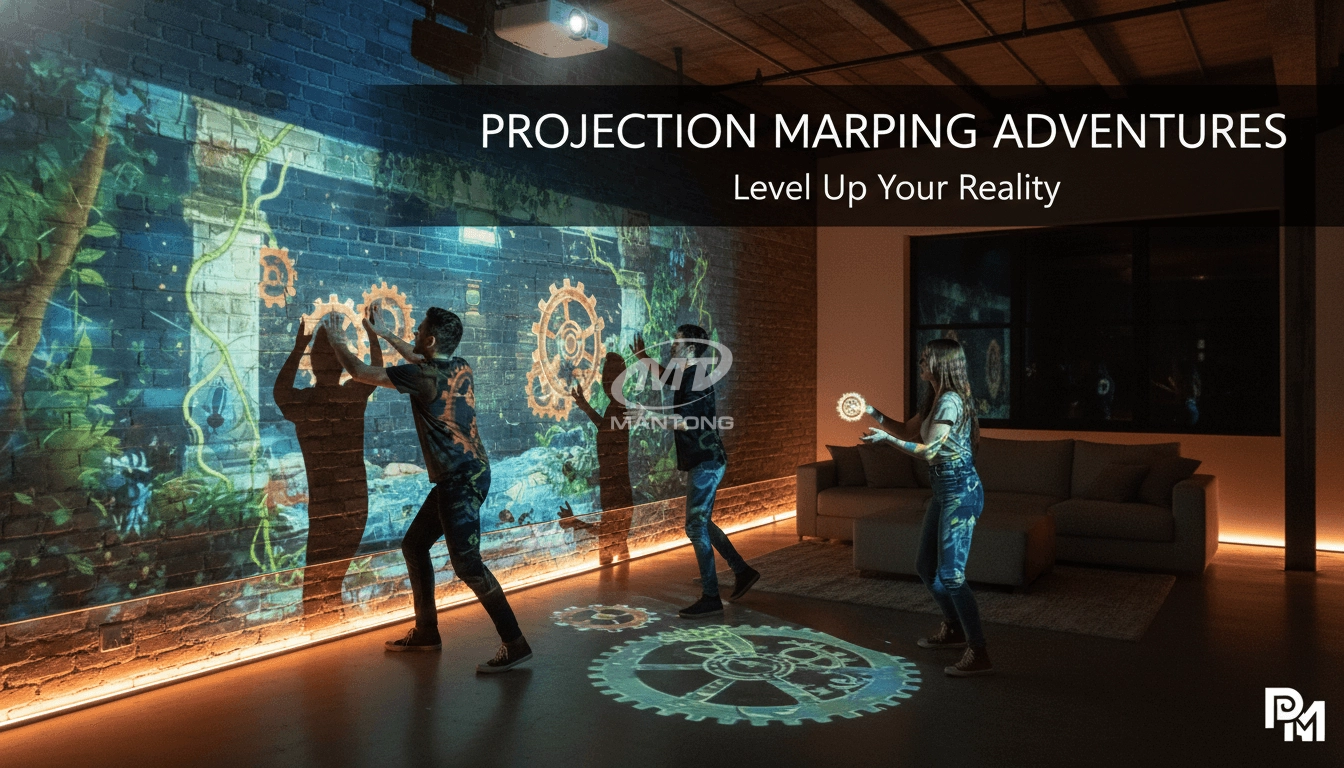
Transform any space with Mantong's immersive projection mapping systems. Our high-lumen projectors (up to 6500 LM) and custom software create captivating interactive experiences for floors and walls. Ideal for museums, events, retail, and hospitality. Each kit includes professional ceiling mounting and 80+ pre-loaded video contents and is backed by a 12-month warranty and CE certification. We offer full customization and support to bring your vision to life.
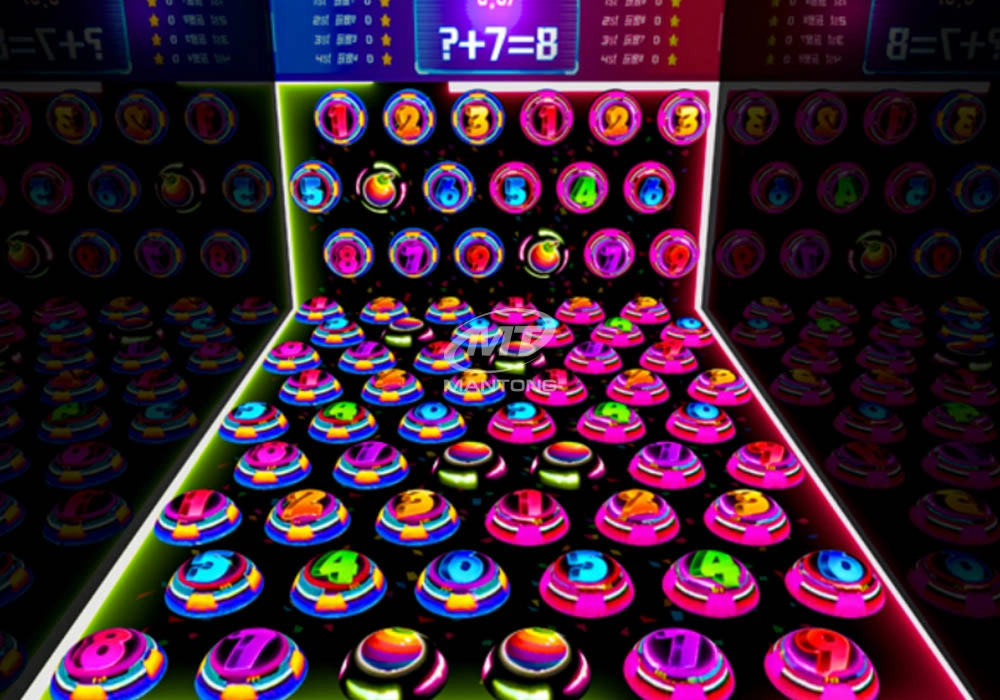
Rapidly Rotating Bouncing Sphere is an interactive space where participants jump on rotating spheres. As they step on it, the spheres surface will show special interactivity
Jumping on spheres of the same color in succession causes them to pop, releasing light particles. The more consecutive jumps, the greater the reward—caterpillars appear, and eventually, all spheres of that color burst, filling the space with light and even more caterpillars.
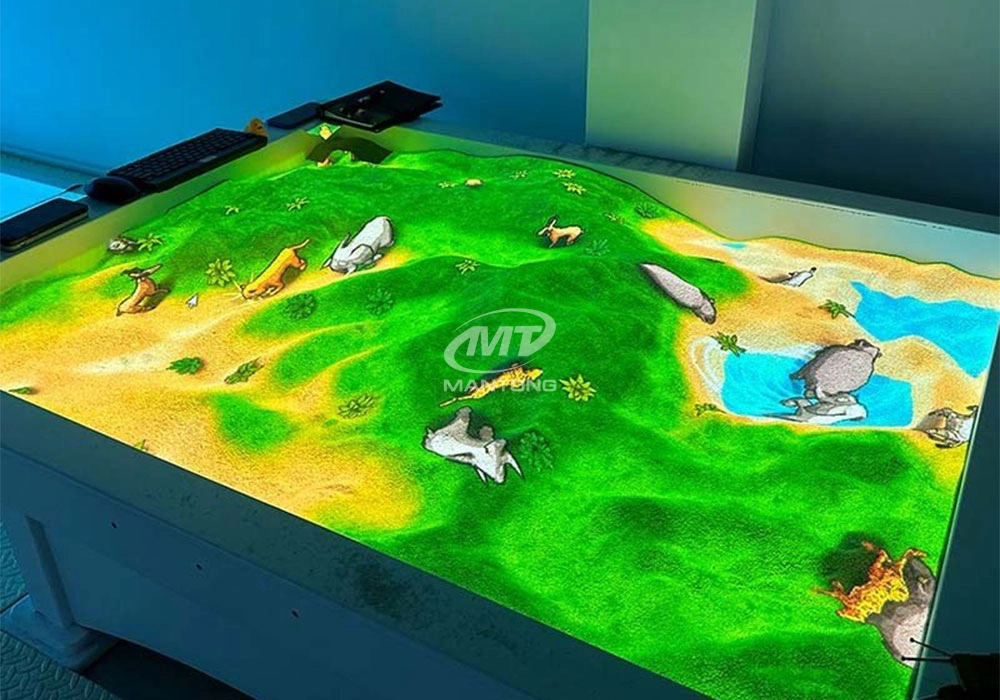
Bring imagination to life with interactive sandbox projection mapping games designed for kids’ play parks. Using cutting-edge projection technology and real-time motion sensing, children can dig, build, and explore virtual worlds directly in the sand. Educational, engaging, and endlessly fun — it’s the perfect blend of play and learning.
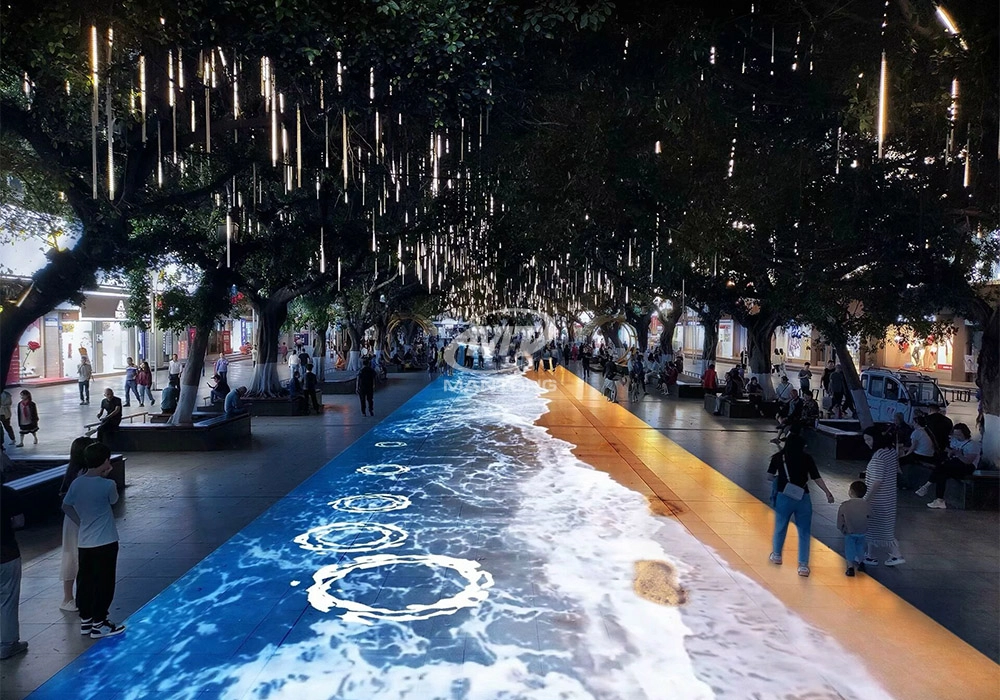
Combining projection mapping with 3D interactive ground projection technology brings an unprecedented immersive experience to outdoor scenes.
Contact Us to Start Your Interactive Projection Journey
Contact us now to discuss how to create innovative projection solutions for your space.

Kaida Business Center, Shixin Road, Panyu District,Guangzhou City, Guangdong Province, China.
ManTong
ManTong
ManTong