
Which software is needed after installing an interactive projector?
- Interactive Projector Installation: Essential Insights for Professionals
- 1. What are the key steps involved in installing an interactive projection system?
- 2. How do environmental factors affect the installation and performance of interactive projection systems?
- 3. What hardware is typically included when purchasing an interactive projector?
- 4. Which software is needed after installing an interactive projector?
- 5. What are the maintenance requirements for interactive projection systems?
- 6. How do interactive projection systems enhance user engagement?
- 7. What are the cost considerations for installing an interactive projection system?
- 8. How do interactive projection systems compare to traditional display methods?
- Conclusion: Why Choose Mantong for Your Interactive Projection Needs?
Interactive Projector Installation: Essential Insights for Professionals
Interactive projectors are revolutionizing various industries by transforming ordinary surfaces into dynamic, interactive displays. Whether for educational purposes, corporate presentations, or immersive entertainment, understanding the intricacies of installing and operating these systems is crucial. Below are some of the most pertinent questions and answers to guide professionals in the field.
1. What are the key steps involved in installing an interactive projection system?
The installation process typically includes:
Site Survey and Planning: Assessing the space, understanding user requirements, and planning the system layout.
Equipment Selection and Procurement: Choosing appropriate projectors, sensors, and interactive devices based on the planned setup.
Installation and Calibration: Setting up hardware, ensuring proper alignment, and calibrating the system for optimal performance.
Testing and Quality Assurance: Verifying system functionality, troubleshooting issues, and making necessary adjustments.
Training and Handover: Educating users on system operation and maintenance.
((https://www.mtprojection.com/interactive-projection-installation-guide-1.html))
2. How do environmental factors affect the installation and performance of interactive projection systems?
Environmental considerations include:
Ambient Light Levels: High ambient light can wash out projections; controlling lighting is essential for clear visuals.
Surface Characteristics: The color, texture, and reflectivity of projection surfaces impact image quality.
Space Dimensions: Room size and layout influence projection angles and image scaling.
Acoustic Properties: Sound quality is affected by room acoustics, necessitating potential adjustments.
((https://www.mtprojection.com/interactive-projection-installation-guide-1.html))
3. What hardware is typically included when purchasing an interactive projector?
When buying an interactive projector, most packages include:
The Projector Head: The optical and projection assembly (laser or lamp light source, imaging chip such as DLP or 3LCD, optics).
Interactive Pens or Styluses: One or two pens are commonly included. Pen technologies vary — active pens (battery/BT), electromagnetic pens (battery-free), or infrared/optical pens.
Mounting Kit or Basic Bracket: Some vendors include a generic ceiling/wall mount; higher-end purchases or installations usually require a certified mount or custom rig (often sold separately).
Cables and Adapters: Power cable, HDMI cable, USB type-A/USB-B or USB-C cable for touch/data, sometimes VGA or audio cables. Wireless dongles for projection are sometimes bundled.
Remote Control and Batteries: Remote for projector settings and source switching; batteries may or may not be included in every market.
Speakers: Many interactive projectors include built-in speakers (commonly in the single-digit to mid-teen watt range). For classrooms or meetings, external audio is often recommended.
Calibration Tools: Calibration pattern sheets, software-driven calibration wizards, or camera-based sensor arrays depending on technology (especially for camera-tracked pen systems).
Documentation and Warranty Card: Quick-start guide, safety manuals, and warranty information. Warranty durations often vary by vendor and model tier.
((https://www.mtprojection.com/what-s-included-with-an-interactive-projector-purchase.html))
4. Which software is needed after installing an interactive projector?
After installation, the following software components are typically required:
Interactive Software: Enables touch or pen-based interaction with projected content. Compatibility varies by operating system:
Windows and Linux: Support interactive functions with built-in interactive tools.
OS X: Requires the interactive driver and interactive tools to be installed for interactivity.
Calibration and Alignment Tools: Software-driven calibration wizards or camera-based sensor arrays to ensure accurate projection mapping.
Content Management Systems (CMS): Facilitate the management and scheduling of interactive content.
Maintenance and Monitoring Software: Allows for remote monitoring, diagnostics, and software updates to ensure optimal performance.
It's essential to verify the compatibility of these software components with your specific projector model and operating system to ensure seamless functionality.
5. What are the maintenance requirements for interactive projection systems?
Regular maintenance ensures longevity and optimal performance:
Cleaning: Periodic cleaning of projectors and sensors to prevent dust buildup.
Software Updates: Keeping system software up to date for security and functionality.
Hardware Inspections: Regular checks for wear and tear, replacing components as needed.
User Training: Ongoing education for users to maximize system capabilities.
((https://www.mtprojection.com/interactive-projection-installation-guide-1.html))
6. How do interactive projection systems enhance user engagement?
These systems offer:
Immersive Experiences: Engaging users through interactive visuals and sounds.
Educational Opportunities: Facilitating learning through interactive content.
Entertainment Value: Providing dynamic environments for games and interactive media.
Collaborative Interactions: Encouraging teamwork and social interaction through shared experiences.
((https://www.mtprojection.com/interactive-projection-installation-guide-1.html))
7. What are the cost considerations for installing an interactive projection system?
Costs vary based on:
System Complexity: More advanced systems with higher specifications increase costs.
Customization: Tailored solutions to meet specific needs may require additional investment.
Installation Services: Professional installation services add to the overall expense.
Maintenance: Ongoing maintenance and support services contribute to long-term costs.
((https://www.mtprojection.com/interactive-projection-installation-guide-1.html))
8. How do interactive projection systems compare to traditional display methods?
Advantages include:
Flexibility: Ability to project onto various surfaces without the need for physical screens.
Interactivity: Engaging users through touch or motion-based interactions.
Scalability: Easily adaptable to different room sizes and configurations.
Cost-Effectiveness: Potentially lower costs compared to installing multiple traditional displays.
((https://www.mtprojection.com/interactive-projection-installation-guide-1.html))
Conclusion: Why Choose Mantong for Your Interactive Projection Needs?
Mantong offers a comprehensive suite of interactive projection solutions tailored to diverse applications. With a focus on high-quality hardware, intuitive software, and exceptional customer support, Mantong ensures seamless integration and optimal performance for your interactive projection projects.
((https://www.mtprojection.com/interactive-projection-installation-guide.html))


One-Stop Projection Solution Provider Since 2011
What information do you need to know before making the proposal/solution?
We know that everyone wants to know the price, but the price of our products is determined by many factors since most of our products are custom, so no ready price list. In order to fast understand what you need, can you send us an inquiry like this?
For example: I am really interested in your immersive projection products, we are a company in the USA and want to install some in my restaurant. It is about 50 meters long, and 5m in width. Projection size you can decide but the length should be not less than 20 meters. We want some content about SeaWorld because our place is all about the sea. Thank you.
What about the wall/floor material for the projection?
It’s recommended to choose a light-colored material with minimal reflectivity—pure white or light grey works best. the
common material is cement & plaster board
For optimal projection results, the surface should be free of any patterns or textures, as the projector will display content
directly onto it.
There are no specific material requirements; you may use any commonly available material in your local market, as long as it
meets the above conditions.
What's the application of Immersive projection ?
It can be used in various venues, such as art exhibition, entertainment venues, educational institution, Wedding hall /Banquet/Bar,Yoga Studio and so on. It often involves advanced projection techniques, multimedia content, and interactive elements to engage and captivate the audience's senses.
Are you trader or manufacturer ?
We are direct manufacturer who specialize in providing one-stop solution for different outdoor & indoor projection project with our stable software and qualified projectors
How to install the projection equipment ?
1) Install the projector in a suitable position. We will provide you with a hanger, which you need to fix on the ceiling with
screws.
2) Connect projectors, computers and other accessories through wires.
3) After completing the above 2 steps, we will carry out the edge blending steps. Our team can complete it through remote
control.
In general, installation instructions for each project need to be specified on a project-by-project basis. The above is for
reference only.
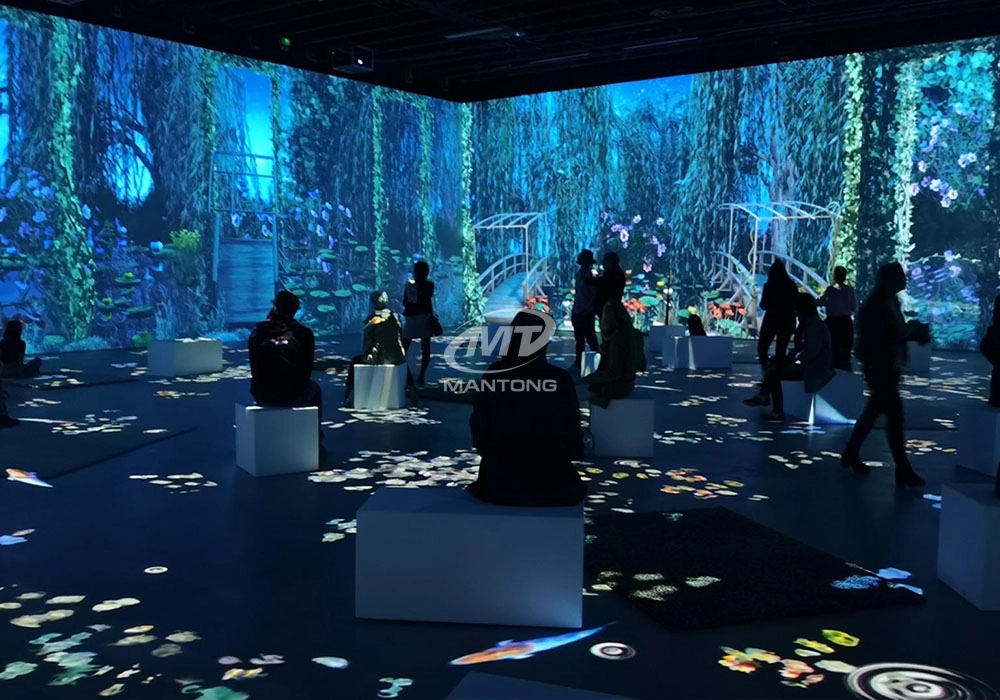
Transform any space with Mantong's immersive projection mapping systems. Our high-lumen projectors (up to 6500 LM) and custom software create captivating interactive experiences for floors and walls. Ideal for museums, events, retail, and hospitality. Each kit includes professional ceiling mounting and 80+ pre-loaded video contents and is backed by a 12-month warranty and CE certification. We offer full customization and support to bring your vision to life.
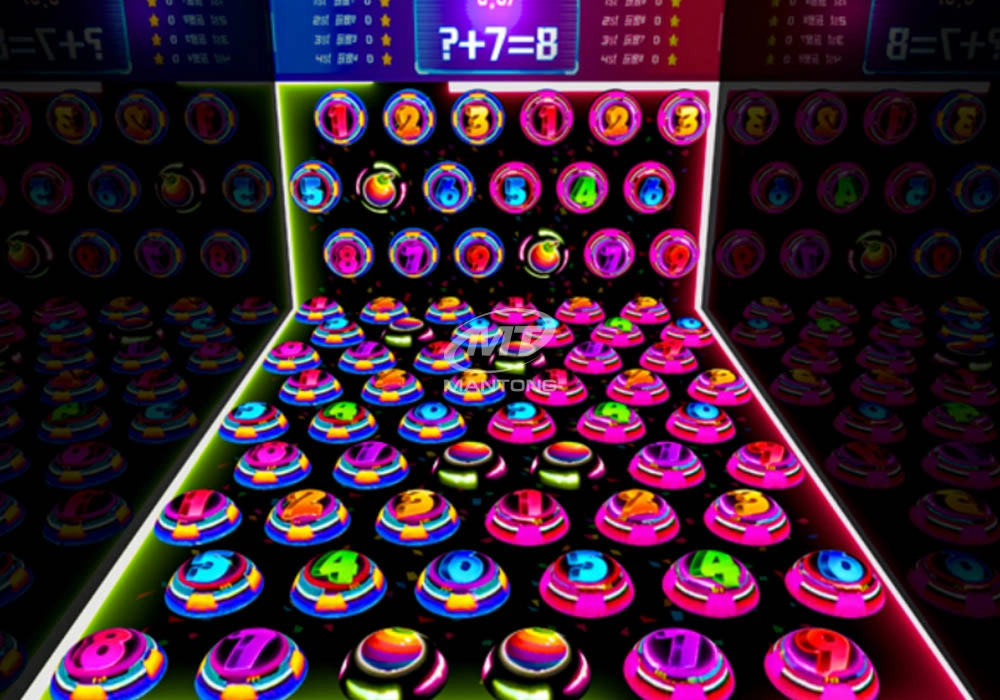
Rapidly Rotating Bouncing Sphere is an interactive space where participants jump on rotating spheres. As they step on it, the spheres surface will show special interactivity
Jumping on spheres of the same color in succession causes them to pop, releasing light particles. The more consecutive jumps, the greater the reward—caterpillars appear, and eventually, all spheres of that color burst, filling the space with light and even more caterpillars.
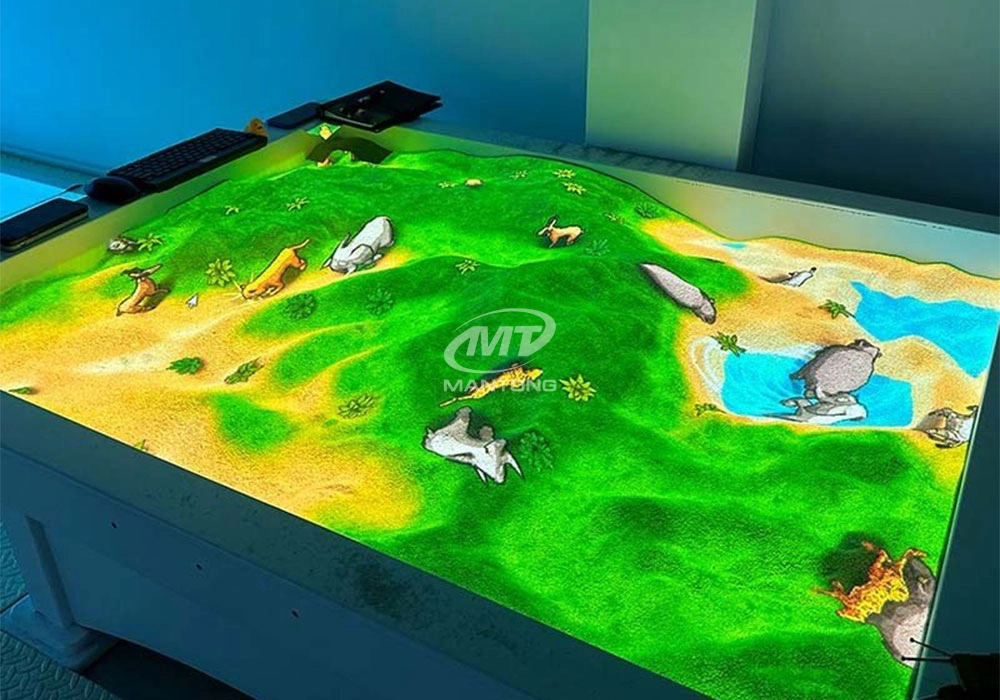
Bring imagination to life with interactive sandbox projection mapping games designed for kids’ play parks. Using cutting-edge projection technology and real-time motion sensing, children can dig, build, and explore virtual worlds directly in the sand. Educational, engaging, and endlessly fun — it’s the perfect blend of play and learning.
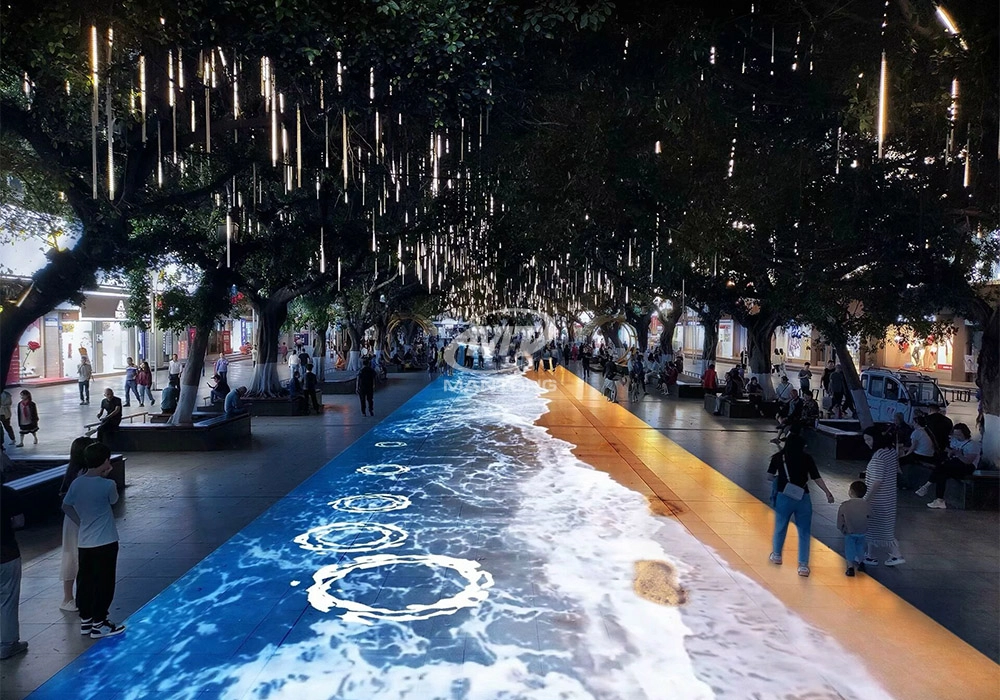
Combining projection mapping with 3D interactive ground projection technology brings an unprecedented immersive experience to outdoor scenes.
Contact Us to Start Your Interactive Projection Journey
Contact us now to discuss how to create innovative projection solutions for your space.

Kaida Business Center, Shixin Road, Panyu District,Guangzhou City, Guangdong Province, China.
ManTong
ManTong
ManTong