
How to set up an interactive projector in a small classroom?
- Interactive Projectors for Education: Essential Insights and Setup Guide
- 1. What are interactive projectors, and how do they enhance classroom engagement?
- 2. What key features should educators consider when selecting an interactive projector?
- 3. How do interactive projectors support diverse learners and inclusive education?
- 4. What are the installation considerations for setting up an interactive projector in a small classroom?
- 5. What are the maintenance requirements and total cost of ownership for interactive projectors?
- 6. How do interactive projectors integrate with educational software and content?
- 7. What are the latest trends in interactive projector technology for education?
- 8. How do interactive projectors compare to traditional interactive whiteboards?
- Conclusion: Why Choose Mantong for Your Interactive Projection Needs?
Interactive Projectors for Education: Essential Insights and Setup Guide
Interactive projectors are revolutionizing educational environments by transforming traditional teaching methods into dynamic, interactive experiences. This guide addresses common questions and provides expert insights to assist educators in selecting and setting up interactive projectors, particularly in small classrooms.
1. What are interactive projectors, and how do they enhance classroom engagement?
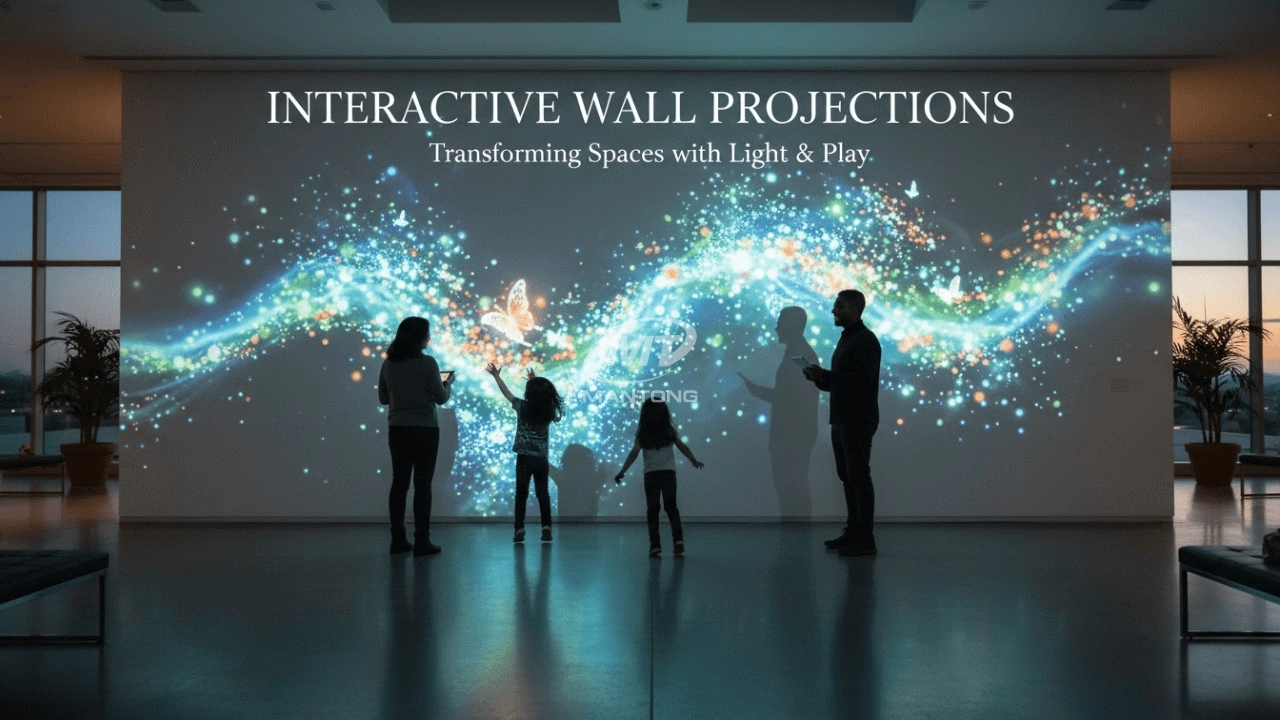
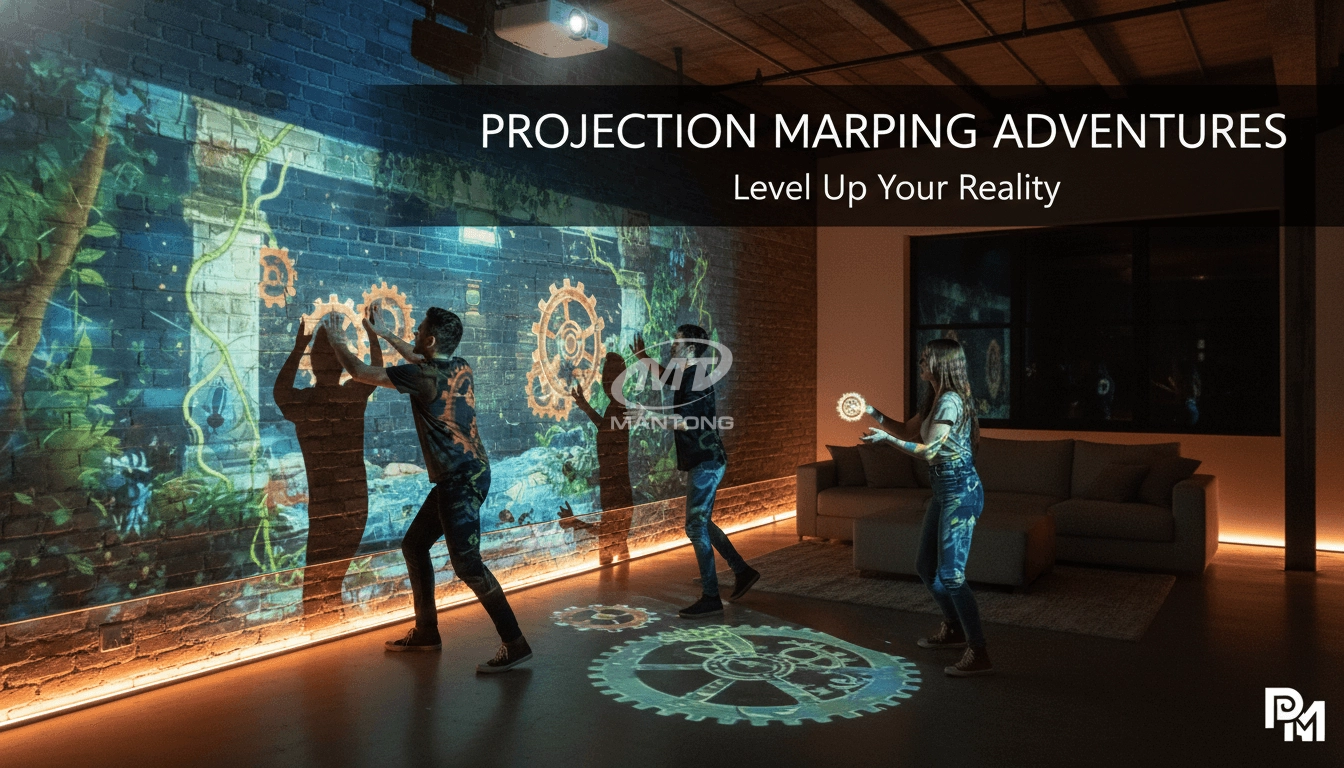
Interactive projectors project images onto any flat surface, such as a whiteboard or wall, and allow users to interact directly with the projected content. This hands-on approach fosters active participation, collaboration, and engagement among students, making learning more dynamic and effective.
2. What key features should educators consider when selecting an interactive projector?
When choosing an interactive projector, educators should prioritize the following features:
Resolution: A minimum of 1080p HD is recommended for clear visuals; 4K is preferred for detailed content.
Brightness: At least 4,000 lumens to ensure visibility in well-lit classrooms.
Touch Accuracy: Infrared or capacitive touch with multi-touch capability for smooth interaction.
Connectivity: Wireless options and compatibility with various devices for seamless integration.
Durability: Robust build quality and long-lasting light sources to withstand daily use.
3. How do interactive projectors support diverse learners and inclusive education?
Interactive projectors cater to various learning styles by offering multisensory activities, adjustable difficulty levels, and support for diverse educational programs. They align with Universal Design for Learning (UDL) principles, accommodating kinesthetic, visual, and auditory learners, ensuring all students can participate and thrive.
4. What are the installation considerations for setting up an interactive projector in a small classroom?
Setting up an interactive projector in a small classroom involves:
Space Assessment: Ensure sufficient distance between the projector and the projection surface to achieve the desired image size.
Mounting Options: Utilize wall mounts or ceiling mounts to save floor space and reduce clutter.
Connectivity Planning: Position the projector to allow easy access to power outlets and data connections.
Ambient Light Management: Control natural and artificial light sources to enhance image visibility.
Calibration: Perform calibration for touch accuracy and image alignment to ensure optimal performance.
5. What are the maintenance requirements and total cost of ownership for interactive projectors?
Maintenance considerations include:
Light Source Longevity: Laser projectors offer longer lifespans (up to 20,000 hours) compared to traditional lamps, reducing replacement costs.
Calibration: Regular calibration is necessary to maintain touch accuracy and image quality.
Software Updates: Budget for software subscription renewals or support contracts if interactive software requires them for full features or cloud services.
Training: Invest in professional development to train staff on integrating interactive projectors into teaching practices.
6. How do interactive projectors integrate with educational software and content?
Interactive projectors often come bundled with educational software that supports interactive lessons, multimedia presentations, and collaborative activities. Compatibility with various operating systems and devices ensures seamless integration into existing classroom setups.
7. What are the latest trends in interactive projector technology for education?
Recent trends include:
AI Integration: Enhanced features like real-time annotation, speech-to-text, and gesture recognition.
Cloud-Based Learning: Integration with cloud platforms for remote and hybrid learning environments.
High-Resolution Displays: Adoption of 4K resolution and HDR support for sharper visuals.
Built-In Speakers and Streaming: Projectors with integrated audio and streaming capabilities for multimedia lessons.
8. How do interactive projectors compare to traditional interactive whiteboards?
Interactive projectors offer several advantages over traditional interactive whiteboards:
Flexibility: They can project onto any flat surface, allowing for larger or smaller display areas as needed.
Cost-Effectiveness: Generally, interactive projectors are more affordable than interactive whiteboards.
Portability: Easier to move and set up in different locations within the classroom.
Space Efficiency: Ideal for classrooms with limited space, as they require less physical infrastructure.
Conclusion: Why Choose Mantong for Your Interactive Projection Needs?
Mantong offers a range of interactive projectors designed to meet the diverse needs of educational environments. With a focus on durability, ease of use, and advanced features, Mantong's solutions are tailored to enhance learning experiences and support effective teaching practices.
((https://www.mtprojection.com/guides/interactive-projectors-education-guide.html))


One-Stop Projection Solution Provider Since 2011
What information do you need to know before making the proposal/solution?
We know that everyone wants to know the price, but the price of our products is determined by many factors since most of our products are custom, so no ready price list. In order to fast understand what you need, can you send us an inquiry like this?
For example: I am really interested in your immersive projection products, we are a company in the USA and want to install some in my restaurant. It is about 50 meters long, and 5m in width. Projection size you can decide but the length should be not less than 20 meters. We want some content about SeaWorld because our place is all about the sea. Thank you.
Are you trader or manufacturer ?
We are direct manufacturer who specialize in providing one-stop solution for different outdoor & indoor projection project with our stable software and qualified projectors
How to Write an Interactive-Effect Video Customisation Script ?
① Project Background: Briefly introduce the context in which this interactive scene will be used (e.g., exhibition, museum,
event space, children's area). Example: This scene is part of the “Underwater World” zone in a children's science museum,
designed to be engaging and exploratory.
②Visual Style / Atmosphere: What kind of visual mood are you aiming for? Please describe the color scheme, style, and any
references. it should focus solely on describing the visual aspects of the scene, supported by relevant charts or reference
images.
③ Interaction Points Overview:List each interactive hotspot along with the effect you'd like to trigger when the user
touches or clicks the area. example: when player touch the clownfish, it will swims away with bubble trail (animation effect)
and produce the bubble sound ( sound effect requirement )
④ Static Visual Reference:including but not limited to background image/video, a list of major visual elements (e.g., coral,
rocks, seaweed, fish), which elements should be interactive?
What about the wall/floor material for the projection?
It’s recommended to choose a light-colored material with minimal reflectivity—pure white or light grey works best. the
common material is cement & plaster board
For optimal projection results, the surface should be free of any patterns or textures, as the projector will display content
directly onto it.
There are no specific material requirements; you may use any commonly available material in your local market, as long as it
meets the above conditions.
What's the application of Immersive projection ?
It can be used in various venues, such as art exhibition, entertainment venues, educational institution, Wedding hall /Banquet/Bar,Yoga Studio and so on. It often involves advanced projection techniques, multimedia content, and interactive elements to engage and captivate the audience's senses.
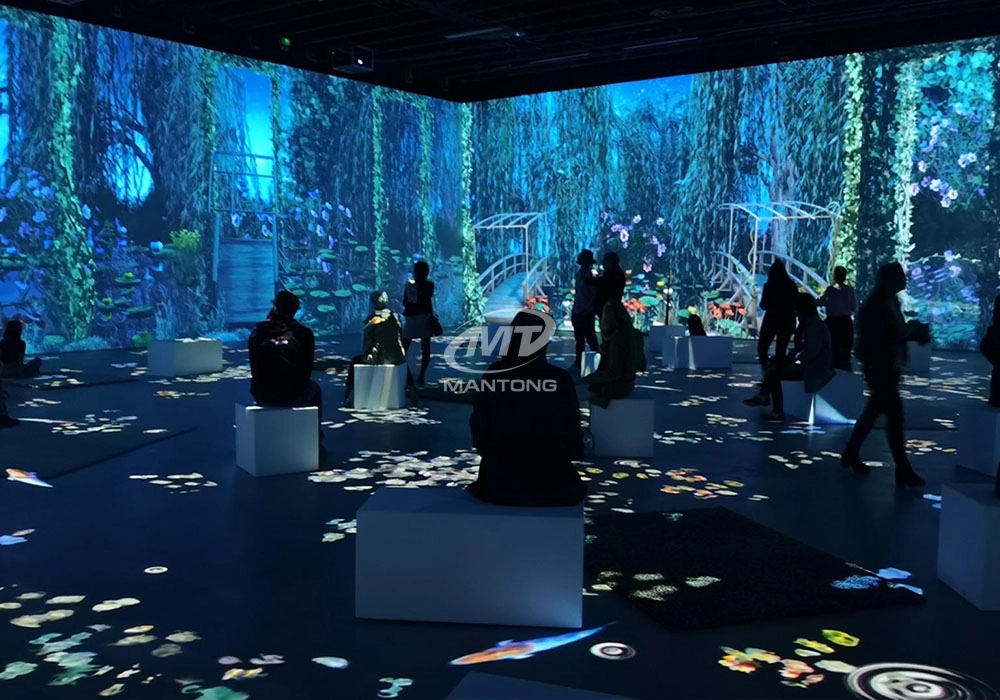
Transform any space with Mantong's immersive projection mapping systems. Our high-lumen projectors (up to 6500 LM) and custom software create captivating interactive experiences for floors and walls. Ideal for museums, events, retail, and hospitality. Each kit includes professional ceiling mounting and 80+ pre-loaded video contents and is backed by a 12-month warranty and CE certification. We offer full customization and support to bring your vision to life.
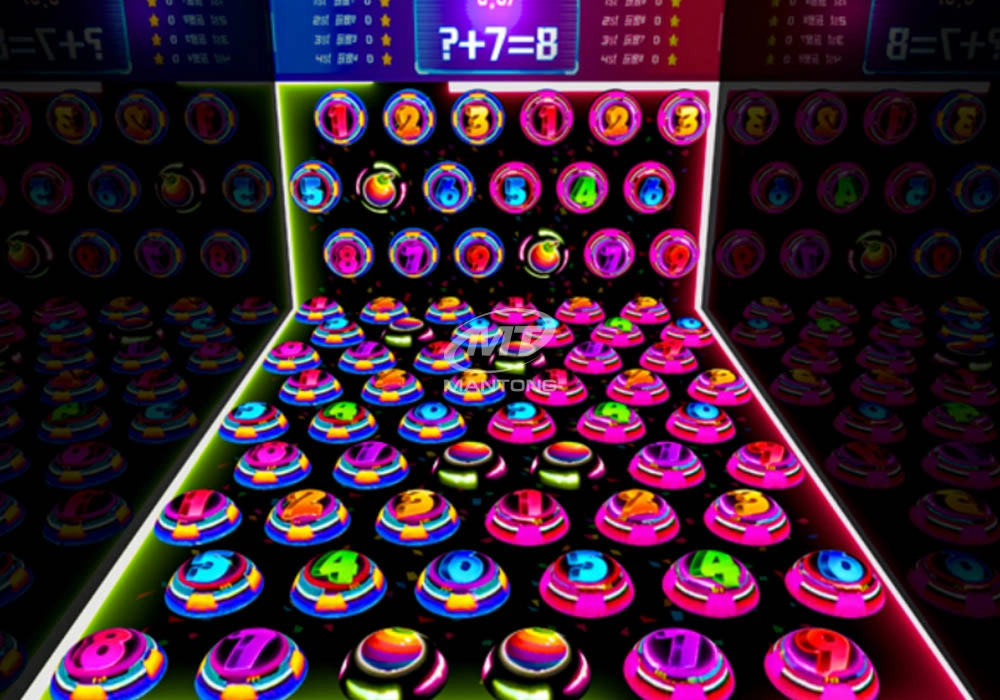
Rapidly Rotating Bouncing Sphere is an interactive space where participants jump on rotating spheres. As they step on it, the spheres surface will show special interactivity
Jumping on spheres of the same color in succession causes them to pop, releasing light particles. The more consecutive jumps, the greater the reward—caterpillars appear, and eventually, all spheres of that color burst, filling the space with light and even more caterpillars.
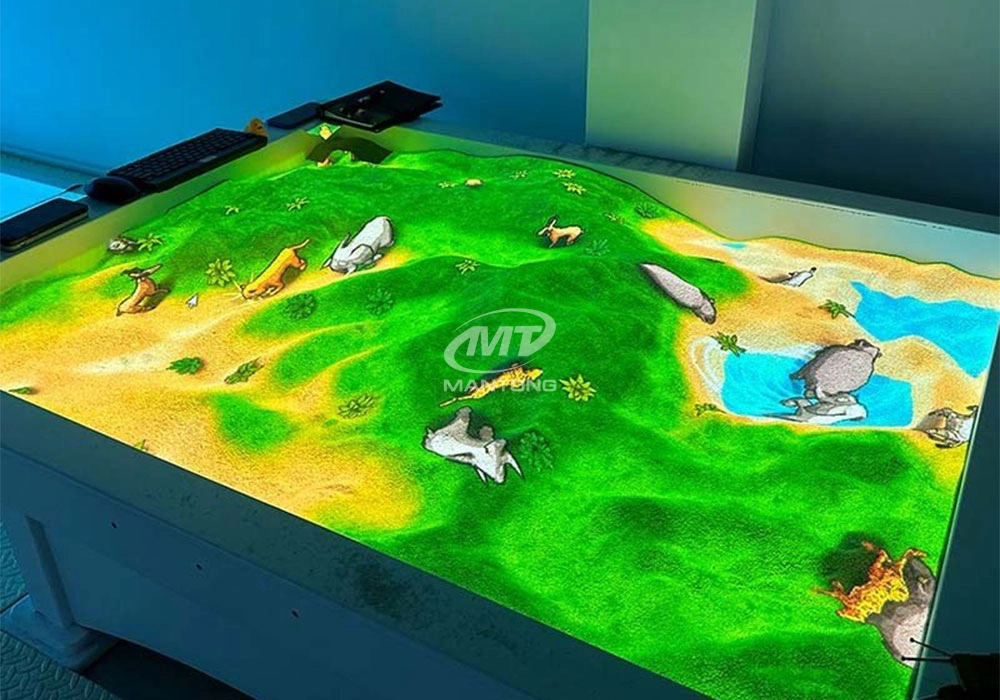
Bring imagination to life with interactive sandbox projection mapping games designed for kids’ play parks. Using cutting-edge projection technology and real-time motion sensing, children can dig, build, and explore virtual worlds directly in the sand. Educational, engaging, and endlessly fun — it’s the perfect blend of play and learning.
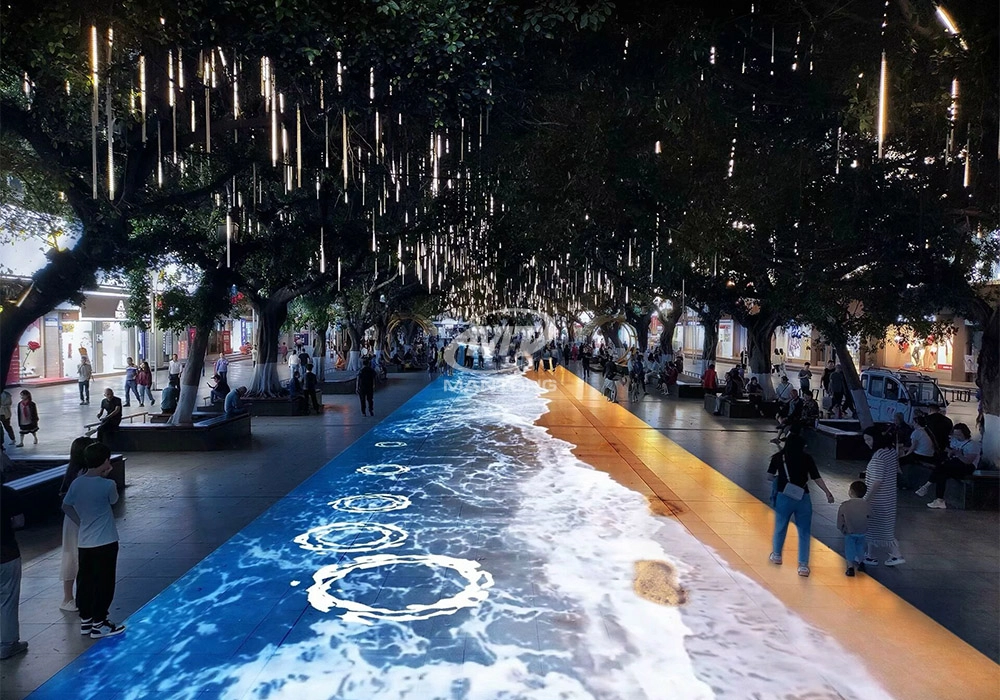
Combining projection mapping with 3D interactive ground projection technology brings an unprecedented immersive experience to outdoor scenes.
Contact Us to Start Your Interactive Projection Journey
Contact us now to discuss how to create innovative projection solutions for your space.

Kaida Business Center, Shixin Road, Panyu District,Guangzhou City, Guangdong Province, China.
ManTong
ManTong
ManTong